
- Key Takeaways
- Part 1. What is a high-rate discharge battery?
- Part 2. Core characteristics of high discharge rate batteries
- Part 3. Types of high-rate discharge batteries
- Part 4. Applications of high discharge batteries
- Part 5. High-rate vs standard battery: Key differences
- Part 6. How to choose the right high rate battery
- Part 7. FAQs about high-rate discharge battery
High-rate discharge batteries are essential in modern electronics and industrial systems. They deliver large amounts of power in a short time. This makes them ideal for devices that need instant energy, not just long runtime.
Key Takeaways
- A high-rate discharge battery can safely deliver high current (high C-rate) without damage or voltage drop.
- Low internal resistance is the key factor behind stable high discharge performance.
- Lithium-ion and LiPo are the most widely used high discharge rate battery types today.
- These batteries are critical in EVs, drones, power tools, and UPS systems.
- Compared to standard batteries, they prioritize power output over energy storage.
Part 1. What is a high-rate discharge battery?
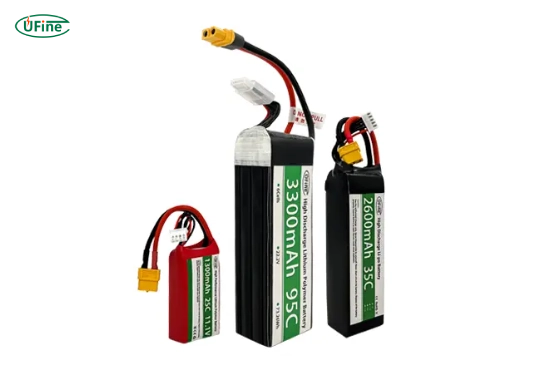
A high-rate discharge battery (also called a high power battery) is designed to deliver a large amount of current in a short period.
The performance is usually defined by battery discharge rate, often expressed as C-rate:
- 1C = full discharge in 1 hour
- 5C = full discharge in 12 minutes
- 10C+ = very high discharge capability
A high discharge battery typically operates at ≥3C, and in some applications (like drones), it can exceed 20C or even 50C.
These batteries are engineered with:
- Optimized electrode materials
- High conductivity electrolytes
- Low internal resistance design
- Reinforced thermal structures
👉 Learn more about customized solutions: high-rate discharge battery solutions
Part 2. Core characteristics of high discharge rate batteries
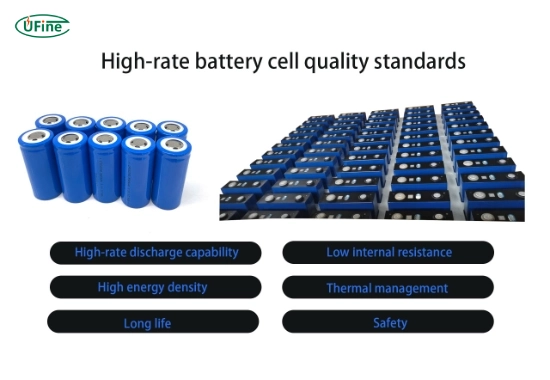
- Low Internal Resistance
This is the most critical feature.
Low resistance allows:- Higher current output
- Less heat generation
- Stable voltage during discharge
- High Power Output
A high rate battery can provide instant energy bursts. This is essential for motors, inverters, and high-load systems. - Fast Charge and Discharge
These batteries support rapid energy transfer. They can both:- Charge quickly
- Discharge at high current
- Thermal Stability
High discharge generates heat. Advanced designs include:- Heat-resistant materials
- Thermal management systems
For safety standards, refer to: UL battery safety standards
- Long Cycle Life Under High Load
Unlike standard batteries, high-rate designs maintain performance even under frequent high-current cycling.
Part 3. Types of high-rate discharge batteries
1 Lithium-ion batteries
- Most common high discharge rate battery
- High energy density + strong power output
- Used in EVs, tools, and energy systems
👉 Explore more lithium battery knowledge
2 Lithium polymer (lipo)
- Flexible pouch design
- Very high discharge rates (20C–100C)
- Ideal for drones and RC devices
3 Nickel-metal hydride (nimh)
- Moderate discharge capability
- Safer and more environmentally friendly than NiCd
- Used in hybrid vehicles and tools
4 Nickel-cadmium (nicd)
- Excellent high-rate performance
- Strong durability in extreme conditions
- Limited use due to environmental concerns
5 Lead-acid batteries
- Can deliver high surge currents
- Used in UPS and industrial systems
- Lower efficiency and heavier
6 Emerging: Graphene batteries
- Ultra-fast discharge and charge
- Improved thermal performance
- Still in early commercialization stage
Part 4. Applications of high discharge batteries
High-rate discharge batteries are used where instant power delivery is critical:
| Application | Why High Discharge Matters |
|---|---|
| Electric Vehicles (EVs) | Fast acceleration, regenerative braking |
| Drones & UAVs | Rapid thrust changes |
| Power Tools | High torque output |
| UPS Systems | Instant backup during outages |
| Renewable Energy | Handle peak load demand |
| Medical Devices | Reliable emergency power |
| Aerospace & Military | High reliability and power density |
Part 5. High-rate vs standard battery: Key differences
| Factor | High-Rate Discharge Battery | Standard Battery |
|---|---|---|
| Discharge Rate | High (≥3C, up to 50C+) | Low (≤1C) |
| Power Output | Very high | Moderate |
| Energy Density | Moderate to high | Often higher |
| Heat Management | Advanced | Basic |
| Cycle Life Under Load | Strong | Degrades faster |
| Cost | Higher | Lower |
| Use Case | Power-demanding devices | Long-duration devices |
Part 6. How to choose the right high rate battery
When selecting a high discharge rate battery, consider:
- Required Discharge Current
- Match battery C-rate with peak load demand
- Application Type
- Drone → ultra-high C-rate LiPo
- EV → high power lithium-ion
- UPS → lead-acid or LiFePO₄
- Thermal Conditions
- High discharge means more heat
- Ensure proper cooling design
- Cycle Life Requirements
- Frequent high-load usage requires robust chemistry like LiFePO₄
- Safety and Certification
- UL
- IEC 62133
- UN38.3
Part 7. FAQs about high-rate discharge battery
What is a high discharge rate battery?
It is a battery designed to deliver high current quickly, usually measured by a high C-rate.
What does battery discharge rate mean?
It describes how fast a battery releases energy. It is typically expressed in C-rate (e.g., 1C, 5C).
What is considered a high rate battery?
Generally, any battery above 3C is considered high rate. Advanced systems can exceed 20C or more.
Is a higher discharge rate better?
Not always. Higher discharge is better for power-demanding devices, but it may reduce efficiency or increase cost.
What happens if discharge rate is too high?
It can cause overheating, voltage drop, and reduced battery life if the battery is not designed for it.
Related Tags:

More Articles

JST vs Molex: The Right Battery Connector Choice
JST or Molex for your battery? Learn how connector selection affects current, voltage drop, reliability, and device performance.
Custom Battery Pricing: Costs Manufacturers Don’t Mention
A low battery quote may not be the final cost. Discover common hidden expenses that affect custom lithium battery projects.
Battery Wire Length: Hidden Cause of Power Loss
A longer battery wire can cause voltage drop, power loss, and unstable operation. Learn how wire length affects battery performance.
How Device Sleep Modes Affect Battery Life
Think sleep mode extends battery life? Learn why devices still drain power and how firmware, hardware, and batteries affect runtime.
LiPo Battery and PCB Design: Clearance, Insulation, and Placement
Learn how to optimize LiPo battery PCB clearance, insulation, placement, wiring, and thermal design—and avoid common integration mistakes.


