
- Part 1. Why battery connector selection matters
- Part 2. Understanding JST and Molex connector families
- Part 3. How contact resistance affects battery performance
- Part 4. Why connector current rating is not the only factor
- Part 5. Mechanical reliability: why connection stability matters
- Part 6. Why wire and connector selection should be considered together
- Part 7. Common battery connector selection mistakes
- Part 8. How custom battery suppliers help optimize connector selection
- Part 9. FAQs
Choosing between a JST and Molex battery connector is not simply about selecting the smallest connector or the most commonly used option. Both JST and Molex offer a wide range of connector families designed for different electrical and mechanical requirements. The right choice depends on factors such as current demand, available space, connection reliability, operating environment, and manufacturing needs.
For compact battery-powered devices, a JST connector may provide the right balance between size, weight, and performance. For applications that require stronger mechanical retention or higher current capability, a Molex connector may be more suitable. However, the connector itself is only one part of the design. Battery wires, PCB layout, and power requirements all need to work together to achieve reliable performance.
Key takeaways
- JST and Molex are connector brands with many different series, and the specific model matters more than the brand name.
- Battery connectors affect voltage stability, power efficiency, and long-term reliability.
- Contact resistance can create voltage drop and heat generation, especially in high-current applications.
- Connector current ratings should be evaluated with safety margins instead of being used at maximum values.
- Mechanical factors such as vibration resistance, retention force, and mating cycles are important for product reliability.
- The best connector choice depends on the complete battery system, including wires, PCB design, and application requirements.
Part 1. Why battery connector selection matters
A battery connector may appear to be a simple component, but it plays an important role in the complete power delivery path. The electrical connection between the battery and the device determines how efficiently energy can be transferred from the battery to the load.
The actual power path is:
Battery → Protection circuit → Wire → Connector → PCB → Device
Every part in this path introduces some resistance. While the resistance of a connector may seem insignificant in low-power devices, it becomes much more important when current increases.
For example, a wearable sensor drawing only a small amount of current may operate normally even with a compact connector. However, a robotics system with motors can experience noticeable performance issues if the connector creates excessive resistance during startup current spikes.
Connector selection can influence:
- Voltage stability
- Current delivery capability
- Heat generation
- Mechanical reliability
- Product lifetime
This is why battery connector selection should be considered during the early design stage instead of being treated as a final assembly detail.
Part 2. Understanding JST and Molex connector families
When comparing JST vs Molex, it is important to understand that neither company produces only one type of battery connector. Both manufacturers offer many connector series with different designs, sizes, and performance characteristics.
A small JST connector is not automatically less reliable than a Molex connector, and a Molex connector is not always the better choice. The actual connector specification, including terminal design, pitch size, contact structure, and current rating, determines whether it is suitable for a specific application.
Engineers should evaluate the connector based on the requirements of the product rather than choosing a connector simply because it is widely used.
1 What are JST battery connectors?
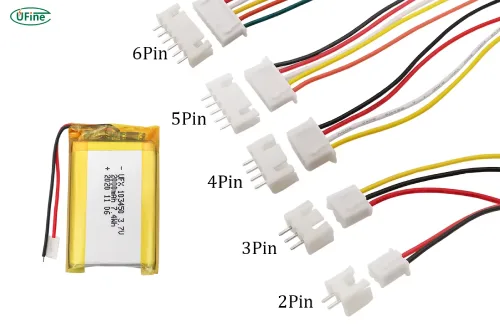
JST (Japan Solderless Terminal) connectors are widely used in compact electronic products because of their small size and lightweight design. They are especially common in LiPo battery applications where internal space is limited.
Popular JST series used in battery-powered devices include JST PH, JST GH, and JST XH connectors. These connector families are commonly found in applications such as:
- Wearable electronics
- Portable consumer devices
- IoT products
- Small robotics systems
- RC equipment
One of the main advantages of JST connectors is their compact footprint. When designing thin or lightweight products, the connector height and occupied PCB space can directly affect the overall product structure.
However, compact size also means engineers need to carefully check current requirements. A connector designed for a small sensor may not be suitable for a device with high current peaks.
2 What are Molex battery connectors?
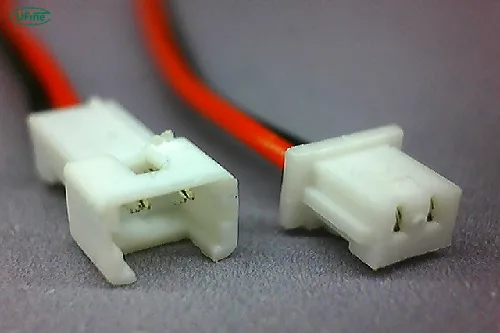
Molex connectors are widely used across consumer, industrial, and embedded electronics because the company provides a broad range of connector solutions.
Compared with many compact JST options, Molex offers connector families designed for different levels of electrical and mechanical performance. Some Molex connectors provide stronger locking structures, higher current capability, and improved resistance to vibration or mechanical stress.
For example, Molex Micro-Fit connectors are commonly used in applications where compact size and higher power capability are both required. Depending on the specific configuration, these connectors can support higher current levels than many small board-level connectors. (Molex)
Molex connectors are often considered for:
- Robotics equipment
- Industrial electronics
- Medical devices
- Embedded systems
- Products requiring stronger mechanical reliability
The main advantage of Molex is not simply higher current capability. It is the availability of different connector structures that allow engineers to select a solution based on electrical and mechanical requirements.
3 JST vs Molex: key differences
The following comparison provides a general overview. Actual performance depends on the specific connector series selected.
| Factor | JST | Molex |
|---|---|---|
| Size | Typically optimized for compact electronics | Available from compact to higher-power designs |
| Current capability | Depends on connector series | Wide range depending on connector family |
| Mechanical retention | Available in selected models | More options for locking and retention |
| Typical applications | Wearables, portable electronics, small devices | Consumer, industrial, embedded systems |
| Design flexibility | Good for space-limited products | Broad selection for different requirements |
The most important point is that connector series matters more than connector brand. A suitable JST connector can outperform an unsuitable Molex connector, and the opposite is also true.
4 JST vs Molex for different battery applications
For wearable devices and compact consumer electronics, space is usually the biggest limitation. Products such as smart wearables, portable sensors, and small IoT devices often benefit from compact JST connectors because they reduce weight and simplify internal layouts.
However, when moving into higher-power applications, connector selection becomes more complicated. Robotics systems, for example, often experience vibration and sudden current changes from motors. In these cases, a connector with stronger mechanical retention and better current capability may provide better long-term reliability.
Medical devices require a different approach. These products often prioritize consistency, safety, and long service life. Connector selection needs to consider not only electrical performance but also manufacturing quality and long-term contact stability.
IoT products usually focus on low power consumption and cost efficiency. A compact connector may be sufficient, but designers still need to consider production volume, assembly requirements, and future maintenance.
Part 3. How contact resistance affects battery performance
One of the most overlooked factors in connector selection is contact resistance.
Every connector has some resistance at the point where terminals make contact. This resistance is influenced by:
- Terminal material
- Contact pressure
- Surface plating
- Manufacturing quality
- Environmental conditions
The impact becomes more noticeable as current increases.
The voltage loss caused by resistance can be calculated using:
Voltage drop = Current × Resistance
Power converted into heat can be calculated using:
Power loss = Current² × Resistance
For low-current devices, this loss may be too small to affect operation. However, in high-current applications, even a small increase in resistance can reduce voltage stability and create additional heat.
For example, a motor-powered device may experience a temporary voltage drop when the motor starts. If the connector and wiring system cannot handle the current demand, the result may be slower startup, controller resets, or unstable operation.
Part 4. Why connector current rating is not the only factor
Many engineers look at connector specifications and focus only on the maximum current rating. However, real-world performance depends on more than a single number.
A connector rated for a certain current does not always mean it should continuously operate at that level. Temperature, enclosure design, wire size, and operating environment all influence actual performance.
For reliable designs, engineers usually consider:
- Continuous operating current
- Peak current
- Startup current
- Temperature conditions
- Required safety margin
This is particularly important for devices with motors, wireless communication modules, or other components that create sudden current changes.
A connector that performs well during normal operation may still fail if it cannot handle short but frequent current peaks.
Part 5. Mechanical reliability: why connection stability matters
Electrical performance is only one side of connector selection. Mechanical reliability is equally important, especially for products exposed to movement or vibration.
A connector must maintain stable contact despite:
- Product movement
- Mechanical shock
- Cable pulling
- Repeated assembly
Important mechanical factors include:
Retention force
A stronger retention structure helps prevent accidental disconnection.
Mating cycles
Products that require frequent battery replacement need connectors designed for repeated connection and disconnection.
Locking mechanism
Locking connectors can provide additional reliability in applications where movement or vibration is expected.
For example, a wearable device may prioritize compactness, while a robotic system may prioritize connection security. The best connector depends on the environment where the product will operate.
Part 6. Why wire and connector selection should be considered together
A battery connector cannot be evaluated separately from the wire connected to it.
The complete power path is:
Battery → Wire → Connector → PCB
If the wire and connector are not properly matched, the system may not achieve the expected performance.
For example, using a thick battery wire with a small connector can create a bottleneck where the connector limits current delivery. On the other hand, selecting an oversized connector for a very low-current application can increase cost, size, and unnecessary complexity.
A balanced design considers:
- Battery current requirements
- Wire gauge
- Connector rating
- Available installation space
- Assembly process
Wire-to-board vs wire-to-wire battery connectors
Another important design decision is whether to use a wire-to-board or wire-to-wire connector.
Wire-to-board connectors connect the battery cable directly to the PCB. They are useful when compact integration is important and the battery position is fixed.
Wire-to-wire connectors provide more flexibility because the battery can be positioned separately from the PCB. They are often easier to assemble and replace, although they introduce additional connection points into the system.
The choice depends on the product structure, manufacturing process, and maintenance requirements.
Part 7. Common battery connector selection mistakes
One common mistake is selecting a connector based only on brand recognition. JST and Molex both offer many connector families, and the actual specifications are more important than the manufacturer name.
Another mistake is designing around the connector’s maximum current rating without considering safety margins. Real applications often experience temperature changes and current spikes that affect connector performance.
Some teams also select connectors too late in the development process. Because connector size and position affect PCB layout, battery packaging, and wire routing, connector decisions should be made together with the battery design.
Ignoring the mechanical environment is another common issue. A connector that works well in a stationary device may not be suitable for products exposed to vibration or movement.
Part 8. How custom battery suppliers help optimize connector selection
Choosing the right battery connector is easier when the battery supplier understands the complete application.
A professional custom battery manufacturer can help evaluate:
- Connector type
- Wire length
- Wire gauge
- Battery dimensions
- Protection circuit requirements
- Product installation conditions
At Ufine Battery, we provide customized lithium battery solutions that include battery size, capacity, wire configuration, connector selection, and protection design based on specific product requirements.
By considering the battery, wiring, and connector together, engineers can avoid unnecessary redesigns and create a more reliable power system for their products.
Part 9. FAQs
1. Can I replace a JST battery connector with a Molex connector?
Not always. Although both connectors can be used for battery connections, they may have different pin sizes, pitch dimensions, current ratings, and mounting requirements. A replacement should be evaluated based on electrical and mechanical compatibility.
2. Does the battery connector affect charging speed?
Yes. The connector can influence charging performance through contact resistance and current capability. A connector with higher resistance may create additional voltage loss and heat during charging, especially when using higher charging currents.
3. How do I know what current rating my battery connector needs?
The connector current rating should be selected based on the device’s continuous current, peak current, and operating environment. It is recommended to include a safety margin rather than selecting a connector that only matches the maximum expected current.
4. What causes a battery connector to overheat?
Battery connector overheating is usually caused by excessive current, high contact resistance, poor terminal contact, unsuitable wire size, or operating the connector beyond its recommended conditions. Over time, heat can accelerate connector degradation.
5. How does connector plating affect battery performance?
Connector terminal plating helps improve corrosion resistance, contact stability, and electrical performance. Different plating materials and thicknesses can affect contact resistance and long-term reliability, especially in environments with humidity or frequent connection cycles.
Related Tags:

More Articles

Custom Battery Pricing: Costs Manufacturers Don’t Mention
A low battery quote may not be the final cost. Discover common hidden expenses that affect custom lithium battery projects.
Battery Wire Length: Hidden Cause of Power Loss
A longer battery wire can cause voltage drop, power loss, and unstable operation. Learn how wire length affects battery performance.
How Device Sleep Modes Affect Battery Life
Think sleep mode extends battery life? Learn why devices still drain power and how firmware, hardware, and batteries affect runtime.
LiPo Battery and PCB Design: Clearance, Insulation, and Placement
Learn how to optimize LiPo battery PCB clearance, insulation, placement, wiring, and thermal design—and avoid common integration mistakes.
Battery Calibration: Why Is Your Battery % Wrong?
Is your battery percentage inaccurate? Learn how battery calibration works, when you need it, and how to fix unexpected battery drops.


