

Industrial and autonomous robots — including AMRs (Autonomous Mobile Robots), AGVs (Automated Guided Vehicles), and various industrial logistics platforms — increasingly rely on advanced battery systems to sustain continuous operation, manage high current loads, and maintain reliability under demanding conditions. In logistics and manufacturing environments where uptime is critical, power systems are no longer “off-the-shelf” commodities; they must be engineered as integral system components to meet mission profiles, thermal constraints, and lifecycle expectations.
1. Industry challenges
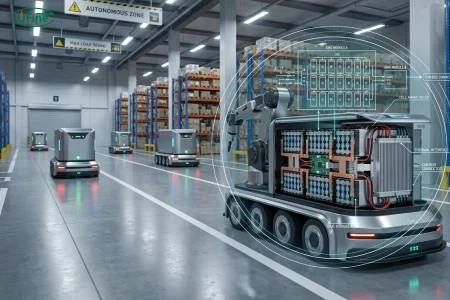
Industrial and autonomous robotics presents distinct power system demands that challenge conventional battery designs. These include:
1 Operational Reliability and Downtime Risk
Unplanned downtime in automated facilities can contribute significantly to operational losses, with power instability — such as voltage sag or unexpected shutdowns — often among the leading causes of production interruptions.
2 Rapid Market Expansion Drives Diverse Requirements
The AGV/AMR sector continues to grow rapidly in industrial markets. For example, over 93,000 industrial mobile robots were sold in China in 2022 — a nearly 30% year‑over‑year increase — with lithium‑ion batteries increasingly becoming the mainstream solution in these deployments.
3 Load Variability and High Peak Currents
Autonomous and guided robots exhibit highly variable load profiles. Walk cycles, lift operations, and tight navigation maneuvers can generate transient current peaks several times greater than average draw, stressing cells and interconnections if not engineered correctly.
4 Frequent Cycling and Long Service Life Expectations
In many warehouse, logistics, and manufacturing installations, robotic fleets operate multiple shifts per day — often resulting in thousands of charge–discharge cycles per year. Without robust design, batteries may lose capacity prematurely.
5 Thermal Management in Confined Spaces
Battery packs are typically enclosed within robot bodies with limited airflow. Accumulated heat from both the battery and adjacent electronics can accelerate degradation and reduce lifespan without proper thermal strategy.
6 Space and Mechanical Integration Constraints
Robotic platforms impose strict demands on size, weight distribution, and mechanical robustness, requiring battery designs that fit irregular volumes while minimizing impact on mobility and balance.

2. System-level solution overview
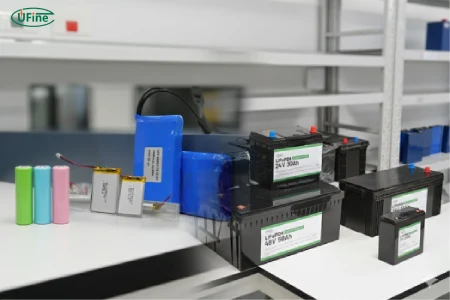
Robotic battery solutions must be designed with system behavior in mind, not as isolated components. A holistic engineering approach typically includes:
- Duty Profile Analysis: Assessing robot payload cycles, movement patterns, and recharge windows
- Chemistry and Configuration Selection: Matching cell chemistry and architecture to application requirements
- Electrical Architecture Planning: Optimizing series/parallel arrangements, voltage levels, and current paths
- Thermal and Mechanical Integration: Designing for heat dissipation, structural stresses, and vibration tolerance
- Lifecycle and Reliability Modelling: Anticipating capacity fade, expected torque profile changes, and service intervals
This solution framework ensures that power systems integrate mechanically and electrically with robot control architecture and expected operating environments.
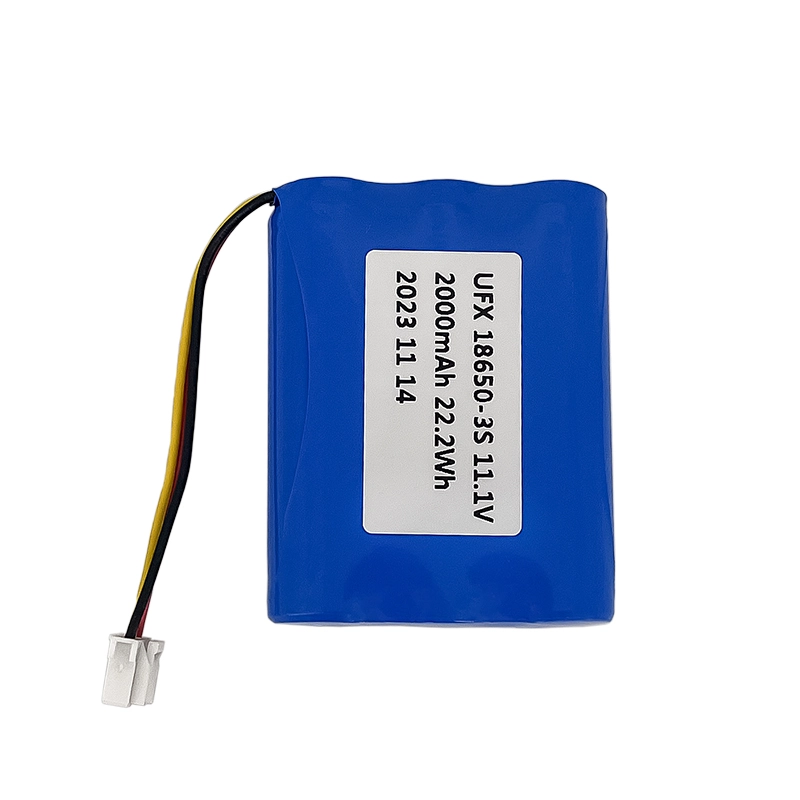
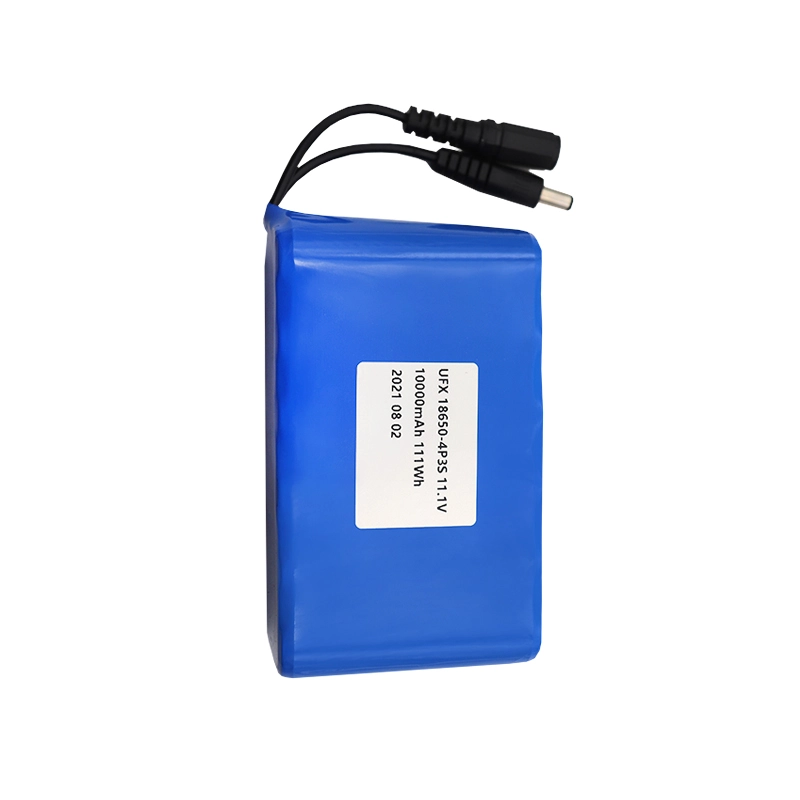
Ufine Battery has extensive experience engineering custom lithium battery systems — including Li-ion, LiFePO₄, and polymer cells — tailored to voltage, capacity, form factor, and discharge profiles to meet the unique requirements of industrial and autonomous robots.
Find Your Solution Now3. Key technical approaches
1 Challenge: Voltage Instability Under Peak Loads
Approach: Configure battery packs to deliver high instantaneous currents with minimized internal resistance and optimized parallel pathways to maintain voltage stability.
2 Challenge: Shortened Lifecycle Due to Frequent Cycling
Approach: Select cell chemistries and protective charge/discharge strategies focused on extended cycle life (e.g., LFP chemistries dominating current AGV/AMR applications).
3 Challenge: Thermal Accumulation in Sealed Environments
Approach: Incorporate thermal pathways, internal busbar design, and strategic placement to mitigate localized heat build‑up.
4 Challenge: Integration With Constrained Internal Space
Approach: Tailor form factors and pack layouts to robot chassis designs, preserving center of gravity and mechanical robustness.
4. Common industrial & autonomous robot battery types comparison
| Battery Type | Chemistry | Typical Voltage per Cell | Energy Density | Max Discharge Rate | Operating Temperature | Typical Application | Cycle Life | Form Factor |
|---|---|---|---|---|---|---|---|---|
| LiFePO₄ | Lithium Iron Phosphate | 3.2 V | Medium (90–120 Wh/kg) | Medium–High | -20°C to 60°C | AGV, AMR, Industrial Robots | 2000–4000 cycles | Prismatic / Custom |
| Li-ion NMC | Nickel Manganese Cobalt | 3.6–3.7 V | High (150–200 Wh/kg) | High | 0°C to 50°C | AMR, Robotics with high energy requirement | 1000–2000 cycles | Cylindrical / Prismatic |
| Li-ion LCO | Lithium Cobalt Oxide | 3.7 V | Very High (180–220 Wh/kg) | Medium | 0°C to 45°C | Small inspection robots, humanoid prototypes | 500–1000 cycles | Cylindrical / Pouch |
| Li-ion LMO | Lithium Manganese Oxide | 3.7 V | Medium (100–150 Wh/kg) | High | -10°C to 55°C | Robotics with high pulse loads | 1000–2000 cycles | Cylindrical / Pouch |
| Li-ion NCA | Nickel Cobalt Aluminum | 3.6–3.7 V | Very High (200 Wh/kg) | High | 0°C to 50°C | High-load industrial robots, autonomous vehicles | 1000–2000 cycles | Cylindrical / Prismatic |
| Li-ion Polymer | Li-ion variants in flexible pouch | 3.6–3.7 V | Medium–High | Medium | -10°C to 60°C | Robots with irregular space, custom chassis integration | 1000–2500 cycles | Flexible Pouch / Custom |
All battery types listed can be customized in size, voltage, capacity, and discharge characteristics by Ufine Battery to match your robotic system requirements.
5. Certifications & regulatory compliance
Battery systems for industrial robotic applications must meet global safety, transport, and performance standards:
Common Certifications
- UN 38.3: Mandatory transport safety for lithium batteries
- IEC 62133: Safety requirements for secondary cells and battery packs
- CE / UL: Regional safety and electromagnetic compliance
Regulatory Requirements by Market
Different regions have unique compliance needs:
- European Union: EU Battery Regulation covering design, safety, and recycling
- United States: DOE / DOT transport and handling standards
- Asia‑Pacific: National standards and industry certification bodies
Regulatory compliance planning is a critical component of engineering and supply readiness, especially for global deployment.
Learn more about Ufine Battery’s full range of certifications and compliance standards on our Certifications page.
6. R&D support for industrial & autonomous robot projects
Industrial robotic applications often involve multi‑stage development cycles. Engineering support throughout these phases improves time to deployment:
- Feasibility and Architecture Evaluation
- Prototype and Pilot Battery Integration
- Multi‑round Sample Iterations Based on System Testing
- Engineering Feedback During System Validation
- Mass Production and Quality Scaling Support
This collaborative approach ensures that battery systems evolve with robot control and power architectures, reducing integration risk.
Leveraging in-house R&D and flexible production lines, Ufine Battery supports multi-round prototype iterations, small-batch pilot testing, and scalable volume production for robotic applications of any complexity.
See our production process in action in the video below.
High Energy Density
It stores large amounts of energy in a smaller and lighter package
Longer Cycle Life
Withstands extensive charge and discharge cycles
Low Self-Discharge
Maintains power longer when not in use
Safety
Minimizes the risk of accidents and ensures safe operation
More Information About Industrial Robot Batteries
-
What battery chemistries are most common for industrial robots?
-
What cycle life should robotic batteries achieve?
-
How do robots manage battery degradation?
-
Can batteries be customized for unique chassis shapes?
-
What certifications matter for robot batteries?
Latest Blogs
About Lithium Battery Industry News
Dead Battery or Device Failure? How to Find the Cause
Think your device is broken? Learn how to tell if the problem comes from battery aging or hardware failure before replacing your electronics.
2026/09/22 Ufine

Why iPhone Duo Uses Two Batteries: The Engineering Behind Foldable Phone Power
Why do foldable phones need two batteries? Explore the engineering challenges behind iPhone Duo’s dual-battery architecture and future battery trends.
2026/09/21 Ufine
Solid-State Batteries: 3 Myths You Need to Know
Solid-state batteries promise safer EVs and longer range, but the reality is more complex. Discover the challenges behind this next-gen technology.
2026/09/21 Ufine

Battery Capacity vs Discharge Rate: The Choice Engineers Face
Higher capacity or higher discharge rate? Learn how to choose the right LiPo battery for longer runtime, stable power output, and better device performance.
2026/09/21 Ufine

Battery Cable Size Guide: Choose the Right Wire Fast
Not sure what battery cable size you need? Learn how to select the right wire gauge, terminal size, and cable for safer, more efficient battery systems.
2026/09/21 Ufine

How to build a12V 10.5Ah Li-ion battery pack with 18650 cells
Learn how to build a high-capacity 12V 10.5Ah battery pack with Ufine 18650 cells. Explore cell selection, 3S3P configuration, BMS wiring, and performance tests.
2026/09/20 Ufine

