
- Part 1. What is battery wire size?
- Part 2. What factors determine the right battery cable size?
- Part 3. Battery cable size chart: How to choose the correct wire gauge
- Part 4. How to calculate battery cable size
- Part 5. Battery terminal size: Matching terminals with cable selection
- Part 6. Common mistakes when choosing battery wire size
- Part 7. Battery cable recommendations for different applications
- Part 8. How Ufine Battery helps optimize battery cable design
- Part 9. Frequently asked questions about battery wire size
Global lithium-ion battery demand surpassed 1.5 TWh in 2025, growing by more than 35% compared with the previous year. Batteries are now widely used in electric vehicles, energy storage systems, robotics, portable electronics, and industrial equipment. IEA
However, selecting a suitable battery is only one part of creating a reliable power system. The cable connecting the battery to your device also directly affects performance, efficiency, and safety. A battery cable that is too thin may create excessive resistance, causing voltage drop, heat generation, and unstable operation.
Whether you are designing a wearable device, robot, power tool, or custom electronics product, understanding how to choose the correct battery wire size helps you build a safer and more efficient system.
Key takeaways
- Battery cable size depends on current, cable length, voltage, and operating environment.
- A thicker cable can reduce resistance and minimize voltage drop, but it is not always necessary.
- The correct battery cable size should be selected based on peak current rather than only average power consumption.
- Battery terminal size must match the cable gauge and current requirements to ensure a reliable connection.
- For custom battery applications, cable selection should be considered together with connectors, protection circuits, and battery design.
Part 1. What is battery wire size?
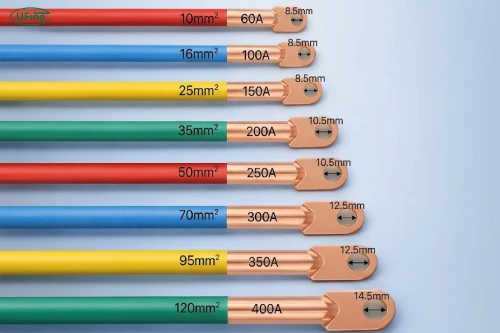
Battery wire size refers to the thickness or cross-sectional area of the conductor inside a battery cable. The wire size determines how much electrical current the cable can safely carry.
In North America, wire sizes are commonly measured using the American Wire Gauge (AWG) standard. In this system, a smaller AWG number represents a thicker wire. For example, a 10 AWG cable is thicker and can handle more current than an 18 AWG cable.
In other regions, cable size is often expressed in square millimeters (mm²), which directly represents the conductor cross-sectional area.
The relationship between wire size and current capacity is important because every cable has electrical resistance. When current flows through a cable, resistance generates heat. A larger cable reduces resistance, allowing current to flow more efficiently.
For battery-powered devices, choosing the correct battery cable size helps prevent:
- unnecessary energy loss
- reduced device performance
- cable overheating
- possible safety problems
It is also important to understand that battery capacity (mAh or Ah) does not directly determine cable size. A small battery with a high discharge rate may require a thicker cable than a larger battery designed for low-power applications.
Part 2. What factors determine the right battery cable size?
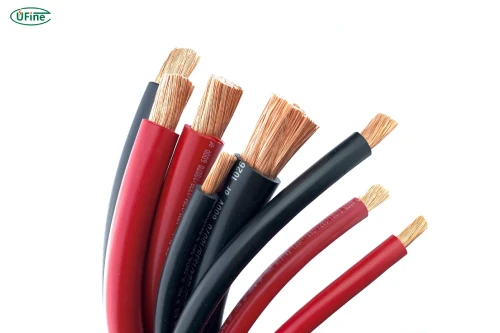
Choosing a battery cable is not simply about selecting the thickest wire available. The correct size depends on several design factors.
Current requirements
The most important factor when selecting a battery cable size is current.
Electrical current is measured in amperes (A). When your device requires more current, the cable must have enough capacity to carry that current safely.
For example:
- A wearable sensor may only require a small cable because it operates at low current.
- A robotic actuator or power tool may require a thicker cable because motors can draw high current, especially during startup.
When designing a battery system, always consider:
- continuous operating current
- maximum peak current
- startup current
A cable that works under normal conditions may still fail if the device suddenly requires a higher current.
Cable length and voltage drop
Cable length is another major factor affecting wire selection.
Longer cables create more resistance. As resistance increases, more voltage is lost before power reaches the device.
The basic relationship is:
Voltage drop = Current × Resistance
For low-voltage battery systems, voltage drop can have a noticeable impact. For example, a 3.7V LiPo battery powering a compact electronic device may experience performance issues if too much voltage is lost through an undersized cable.
A shorter cable usually allows a smaller wire size, while a longer cable may require a thicker conductor.
Battery voltage and system design
The operating voltage of your battery system also influences cable selection.
Low-voltage systems generally require higher current to deliver the same amount of power.
For example:
A 20W device:
- At 20V: approximately 1A current
- At 5V: approximately 4A current
Because the lower-voltage system carries more current, it usually requires a larger cable.
This is why many compact lithium battery applications need careful cable planning even when the battery size appears small.
Operating environment
The application environment also affects battery cable selection.
Different products may require different cable characteristics:
Portable electronics
Requirements:
- lightweight cable
- flexible structure
- small connector size
Robotics
Requirements:
- high flexibility
- vibration resistance
- higher current capability
Industrial equipment
Requirements:
- higher temperature resistance
- stronger insulation
- long-term reliability
For custom battery applications, cable material, insulation type, connector design, and installation method should all be considered together.
Part 3. Battery cable size chart: How to choose the correct wire gauge
A battery cable size chart is a useful reference when selecting the appropriate wire gauge for your application. It helps you compare current requirements with recommended cable sizes.
However, remember that these charts provide general guidance. The final choice should also consider cable length, allowable voltage drop, temperature, insulation material, and whether the current is continuous or intermittent. Electric Sizes
The table below provides a general reference for common low-voltage battery applications.
| Current requirement | Recommended wire size | Typical applications |
|---|---|---|
| 1–5A | 22–18 AWG | Sensors, small electronic devices |
| 5–15A | 18–14 AWG | Portable electronics, small battery systems |
| 15–30A | 14–10 AWG | Robotics, motors, power devices |
| 30–60A | 10–6 AWG | High-power equipment, battery packs |
| 60A+ | 6 AWG or larger | Industrial systems, large battery banks |
For example, a compact 3.7V LiPo battery used in a wearable device may only need a small flexible cable, while a high-rate battery powering a robot motor may require a much thicker cable to handle peak current.
When using a battery cable size chart, you should always check:
- maximum current instead of average current
- total cable length, including positive and negative wires
- acceptable voltage drop
- environmental conditions
Part 4. How to calculate battery cable size
If you want to select a more accurate battery cable size, you can follow a simple calculation process.
Step 1: Calculate the required current
If the power consumption of your device is known, you can calculate current using:
Current (A) = Power (W) ÷ Voltage (V)
Example:
A device requires:
- Power: 18.5W
- Battery voltage: 3.7V
Current:
18.5W ÷ 3.7V = 5A
This means the cable should safely support at least 5A, while also considering possible startup peaks.
Step 2: Measure the cable length
Cable length affects resistance.
For example:
- A 10cm cable between a battery and PCB may have minimal voltage loss.
- A 1-meter cable connecting a battery pack to a motor controller may require a larger wire.
For battery-powered products, especially low-voltage systems, cable length should never be ignored.
Step 3: Select a suitable wire gauge
After determining current and length:
- Find the maximum current requirement.
- Check the cable length.
- Select a wire gauge that provides enough current capacity.
Choosing a slightly larger cable can reduce resistance and improve reliability, but oversizing may increase cost, weight, and installation difficulty.
Part 5. Battery terminal size: Matching terminals with cable selection
Selecting the correct cable is only part of battery connection design. The battery terminal size must also match the cable and application requirements.
A poor terminal connection can create the same problems as an undersized cable, including:
- increased resistance
- heat generation
- unstable power delivery
- connection failure
When choosing a battery terminal, consider the following factors.
Terminal size and cable gauge
The terminal opening should match the conductor size of the cable.
For example:
- A small 20 AWG wire requires a compact terminal.
- A high-current cable such as 8 AWG or 4 AWG requires a larger terminal designed for higher current loads.
A mismatch between cable and terminal can create loose connections or poor electrical contact.
Current rating
The terminal should support the same or higher current rating as the battery cable.
For high-performance applications such as robotics, drones, and power tools, both the cable and terminal must handle peak current conditions.
Connector type
Different battery-powered products use different connection methods, including:
- JST connectors
- Molex connectors
- XT series connectors
- wire-to-board connectors
- ring terminals
For compact lithium battery applications, connector selection is often customized according to available space, current requirements, and product design.
Part 6. Common mistakes when choosing battery wire size
Many battery system problems are caused by incorrect cable selection. Here are several common mistakes to avoid.
Choosing cable size only based on battery capacity
Battery capacity (mAh) tells you how much energy a battery stores, but it does not directly determine cable size.
A 1000mAh high-rate LiPo battery may require a stronger cable than a 5000mAh battery designed for low-current applications.
Current output capability is the more important factor.
Ignoring peak current
Some devices consume much more current during startup than during normal operation.
Examples include:
- motors
- pumps
- robotic joints
- power tools
If you only calculate normal operating current, the cable may become overloaded during startup.
Using long and thin cables
A thin cable over a long distance creates higher resistance.
Possible results include:
- lower voltage reaching the device
- reduced motor performance
- unstable electronics
- unnecessary heat
For applications requiring stable power output, cable sizing should always include voltage drop considerations.
Part 7. Battery cable recommendations for different applications
Different products have different cable requirements. There is no single battery cable size that works for every application.
Wearable devices
Wearable products usually prioritize:
- compact size
- lightweight design
- flexibility
- comfortable integration
Applications such as smart watches, medical wearables, and portable sensors often use small battery cables with customized connectors.
Robotics and intelligent hardware
Robotics applications usually have more demanding requirements.
They may need:
- higher discharge current
- flexible cable movement
- reliable connectors
- protection against vibration
For example, a robotic arm or autonomous robot may experience sudden current changes when motors start or change direction.
Power tools
Power tools typically require:
- high current capability
- low resistance cables
- strong terminal connections
A properly selected cable helps maintain stable performance during heavy loads.
Part 8. How Ufine Battery helps optimize battery cable design
Battery cable selection is an important part of complete battery system design. For custom battery applications, the cable, connector, protection circuit, and battery structure should work together.
Ufine Battery provides customized lithium battery solutions for applications requiring specific size, voltage, capacity, discharge rate, and connection designs.
During battery customization, engineers can help optimize:
- battery dimensions
- cable length
- connector type
- protection circuit design
- discharge performance
For products with limited installation space, choosing the right battery cable and terminal design can improve reliability while keeping the overall product compact.
Part 9. Frequently asked questions about battery wire size
1. What happens if my battery cable is too small?
A battery cable that is too small creates higher electrical resistance, which can cause excessive heat, voltage drop, and reduced device performance. In high-current applications, an undersized cable may also shorten cable lifespan.
2. Does battery cable material affect performance?
Yes. Copper cables are commonly used because they provide excellent electrical conductivity and lower resistance compared with many other materials. Cable flexibility and insulation quality also affect reliability.
3. How does temperature affect battery cable selection?
Higher temperatures increase electrical resistance and can reduce the safe current capacity of a cable. Applications operating in hot environments may require larger cables or cables with higher temperature-rated insulation.
4. Should positive and negative battery cables be the same size?
In most battery systems, the positive and negative cables should have the same size because both carry the same current. Using different sizes may create uneven resistance and affect system performance.
5. Can a battery connector limit the performance of a cable?
Yes. Even if the cable size is correct, an undersized or poor-quality connector can increase resistance and limit current flow. The connector rating should match the cable and application requirements.
6. What is the difference between AWG and mm² cable size?
AWG is mainly used in North America, while mm² describes the conductor cross-sectional area and is common in many other regions. Both measurements indicate cable thickness but use different sizing systems.
Related Tags:

More Articles

Battery Capacity vs Discharge Rate: The Choice Engineers Face
Higher capacity or higher discharge rate? Learn how to choose the right LiPo battery for longer runtime, stable power output, and better device performance.
How to build a12V 10.5Ah Li-ion battery pack with 18650 cells
Learn how to build a high-capacity 12V 10.5Ah battery pack with Ufine 18650 cells. Explore cell selection, 3S3P configuration, BMS wiring, and performance tests.
Building an ESP32 Robot Dog with a Custom Lithium Battery
See how a maker combines 3D printing, ESP32 control, and a custom lithium pack to create a powerful and reliable robotic companion.
JST vs Molex: The Right Battery Connector Choice
JST or Molex for your battery? Learn how connector selection affects current, voltage drop, reliability, and device performance.
Custom Battery Pricing: Costs Manufacturers Don’t Mention
A low battery quote may not be the final cost. Discover common hidden expenses that affect custom lithium battery projects.


