
- Part 1. What is an 18650 battery?
- Part 2. 18650 battery specifications overview
- Part 3. 18650 battery voltage and capacity explained
- Part 4. Different types of 18650 battery chemistry
- Part 5. Important 18650 battery performance parameters
- Part 6. Protected vs unprotected 18650 battery
- Part 7. Flat top vs button top 18650 battery
- Part 8. 18650 battery pack configuration
- Part 9. Common applications of 18650 batteries
- Part 10. 18650 battery vs lithium polymer battery
- Part 11. How to choose the right 18650 battery
- Part 12. FAQs
An 18650 battery is one of the most widely used rechargeable lithium-ion battery cells in consumer electronics, industrial equipment, power tools, and energy storage systems. Known for its compact cylindrical design, high energy density, and reliable performance, the 18650 lithium battery has become a popular choice for manufacturers developing portable and high-power devices.
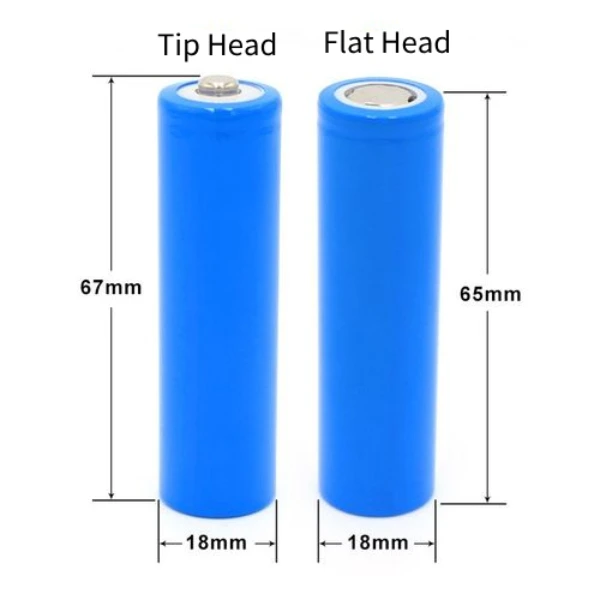
The name “18650” refers to the physical dimensions of the cell: 18mm in diameter and 65mm in length. The final “0” represents its cylindrical shape. Although all 18650 batteries share the same size standard, their performance can vary significantly depending on battery chemistry, capacity, discharge rate, internal resistance, and protection design.
Whether you are selecting cells for a battery pack, designing a new product, or looking for a reliable battery supplier, understanding 18650 battery specifications is essential.
Key takeaways
- An 18650 battery is a rechargeable cylindrical lithium-ion cell measuring 18mm × 65mm.
- Most 18650 lithium batteries have a nominal voltage of 3.6V or 3.7V and a fully charged voltage of 4.2V.
- Battery capacity, discharge rate, and internal resistance are key factors affecting performance.
- Protected and unprotected 18650 batteries serve different applications.
- Professional 18650 battery manufacturers can provide customized battery packs with optimized safety and performance.
Part 1. What is an 18650 battery?
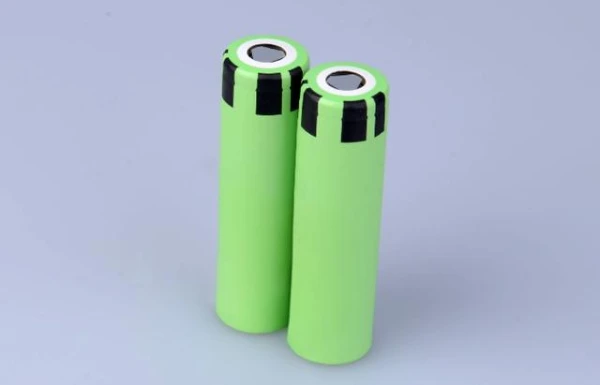
An 18650 battery is a rechargeable lithium-ion cylindrical cell commonly used in devices that require high energy density and stable power output.
Compared with traditional battery types, 18650 lithium batteries offer several advantages:
- High energy density
- Long cycle life
- Low self-discharge rate
- Stable discharge performance
- Compact size
A typical 18650 battery consists of several internal components:
- Cathode (positive electrode)
- Anode (negative electrode)
- Separator
- Electrolyte
- Current collectors
- Protective components
During charging, lithium ions move from the cathode to the anode. During discharge, lithium ions move back to the cathode, releasing electrical energy to power the device.
For more technical information about lithium-ion battery fundamentals, you can refer to educational resources from Battery University.
Part 2. 18650 battery specifications overview
Although 18650 batteries have standardized dimensions, their electrical characteristics can be different.
| Specification | Typical range |
|---|---|
| Battery type | Rechargeable lithium-ion cylindrical cell |
| Size | 18mm × 65mm |
| Nominal voltage | 3.6V / 3.7V |
| Fully charged voltage | 4.2V |
| Capacity | 1500mAh–3500mAh |
| Discharge capability | Standard to high-drain |
| Cycle life | 500–1000+ cycles |
| Application | Electronics, tools, battery packs, energy storage |
Choosing the correct specifications depends on your device requirements. A high-capacity cell is not always the best choice because some applications require higher discharge performance instead.
Part 3. 18650 battery voltage and capacity explained
18650 battery voltage
Most 18650 lithium batteries have a nominal voltage of 3.6V or 3.7V.
The typical voltage range is:
- Fully charged: 4.2V
- Nominal voltage: 3.6V–3.7V
- Discharged voltage: around 2.5V–3.0V depending on the battery design
If you need higher voltage, multiple 18650 batteries can be connected in series.
For example:
- 1 cell: 3.7V
- 2 cells in series: 7.4V
- 3 cells in series: 11.1V
18650 battery capacity
Battery capacity is measured in milliamp hours (mAh), which indicates how much energy the battery can store.
Common 18650 battery capacities include:
- 2000mAh
- 2500mAh
- 3000mAh
- 3500mAh
A higher capacity 18650 battery can provide longer runtime, but capacity is usually balanced against discharge capability, size limitations, and cost.
For example, a power tool may prioritize high discharge current, while a portable sensor may prioritize long operating time.
Part 4. Different types of 18650 battery chemistry
Different lithium-ion chemistries provide different performance characteristics.
NMC 18650 battery
Nickel manganese cobalt (NMC) batteries offer a good balance between energy density, power output, and cycle life.
Common applications include:
- Power tools
- Electric mobility devices
- Portable equipment
LiFePO4 18650 battery
Lithium iron phosphate (LiFePO4) batteries are known for excellent safety and long cycle life.
Advantages include:
- Better thermal stability
- Longer lifespan
- High safety performance
They are commonly used in energy storage and industrial applications.
LCO 18650 battery
Lithium cobalt oxide (LCO) batteries provide high energy density but have lower thermal stability compared with some newer chemistries.
They are mainly used in compact consumer electronics.
Part 5. Important 18650 battery performance parameters
Continuous discharge rate (CDR)
The continuous discharge rate indicates how much current an 18650 battery can safely provide continuously.
High-drain applications, such as power tools and high-performance flashlights, require batteries with higher CDR ratings.
Using a battery with insufficient discharge capability may cause:
- Excessive heat generation
- Reduced battery life
- Safety risks
Internal resistance
Internal resistance affects efficiency, heat generation, and overall battery performance.
A lower internal resistance usually means:
- Better power output
- Less energy loss
- Lower heat generation
When building an 18650 battery pack, cells should have similar internal resistance and capacity to ensure consistent performance.
Operating temperature
Temperature has a significant impact on lithium battery performance.
High temperatures can accelerate battery aging, while extremely low temperatures may reduce available capacity.
Professional battery designs often include thermal management and protection systems for demanding applications.
Part 6. Protected vs unprotected 18650 battery
A protected 18650 battery includes a built-in protection circuit board (PCB), while an unprotected 18650 battery does not.
Protected 18650 battery
A protected cell typically includes protection against:
- Overcharging
- Over-discharging
- Over-current
- Short circuits
- Excessive temperature
Protected batteries are often preferred for consumer devices where additional safety protection is required.
Unprotected 18650 battery
Unprotected cells are commonly used in professional battery packs where an external battery management system (BMS) provides protection.
They are often selected for:
- Industrial equipment
- Custom battery packs
- High-power applications
The right choice depends on your device design and safety requirements.
Part 7. Flat top vs button top 18650 battery
18650 batteries are available in two common terminal designs:
Flat top 18650 battery
A flat top battery has a flat positive terminal.
Advantages:
- Shorter overall length
- Commonly used in battery packs
- Suitable for professional assembly
Button top 18650 battery
A button top battery has a raised positive terminal.
Advantages:
- Better compatibility with some consumer devices
- Easier contact with spring-based battery holders
Before purchasing, always confirm whether your device requires a flat top or button top 18650 battery.
Part 8. 18650 battery pack configuration
Individual 18650 cells are often combined into battery packs to achieve higher voltage or capacity.
Series connection
Connecting cells in series increases voltage.
Example:
3 × 3.7V cells = 11.1V battery pack
Parallel connection
Connecting cells in parallel increases capacity.
Example:
3 × 3000mAh cells = 9000mAh battery pack
Many applications combine series and parallel connections to achieve the required voltage, capacity, and power output.
A professional 18650 battery pack design also requires:
- Battery management system (BMS)
- Cell matching
- Protection design
- Connector selection
- Thermal management
Part 9. Common applications of 18650 batteries
Due to their excellent balance between size and performance, 18650 batteries are widely used in:
- Flashlights
- Laptop battery packs
- Power tools
- Medical equipment
- Portable instruments
- Electric mobility devices
- Solar energy storage systems
- Industrial battery packs
For applications requiring specific voltage, capacity, or mechanical designs, manufacturers often choose custom 18650 battery solutions.
Part 10. 18650 battery vs lithium polymer battery
Both 18650 lithium batteries and lithium polymer batteries are widely used rechargeable battery technologies.
| Feature | 18650 battery | Lithium polymer battery |
|---|---|---|
| Shape | Cylindrical | Flexible pouch |
| Energy density | High | High |
| Custom shape | Limited | Excellent |
| Mechanical strength | Strong cylindrical structure | Flexible design |
| Applications | Tools, packs, industrial equipment | Wearables, IoT, portable electronics |
For devices requiring unique shapes and ultra-thin designs, lithium polymer batteries are often preferred. For standardized cylindrical cells and high-power applications, 18650 batteries remain a popular choice.
Part 11. How to choose the right 18650 battery
When selecting an 18650 battery, consider the following factors:
1. Check voltage requirements
Make sure the battery voltage matches your device or battery pack design.
2. Select suitable capacity
Higher capacity provides longer runtime but may reduce discharge capability.
3. Consider discharge requirements
High-power devices require high-drain 18650 batteries.
4. Choose the right chemistry
Select NMC, LiFePO4, or other chemistries based on safety, lifespan, and performance requirements.
5. Verify safety certifications
Reliable batteries should meet industry safety requirements such as UN38.3, IEC 62133, and UL standards.
You can learn more about international battery safety standards from International Electrotechnical Commission (IEC).
Custom 18650 battery solutions
For manufacturers developing specialized products, standard 18650 cells may not always meet all requirements.
A professional battery manufacturer can provide customized solutions including:
- Custom battery pack design
- Voltage and capacity configuration
- Protection circuit design
- Connector customization
- Battery testing and certification support
Ufine Battery provides custom 18650 battery solutions for consumer electronics, industrial equipment, medical devices, and other applications requiring reliable lithium battery performance.
Part 12. FAQs
Are all 18650 batteries rechargeable?
Yes. Most 18650 batteries are rechargeable lithium-ion cells, but they must be charged with a compatible lithium battery charger.
What voltage is an 18650 battery?
Most 18650 batteries have a nominal voltage of 3.6V or 3.7V, with a full charge voltage of 4.2V.
How long does an 18650 battery last?
The lifespan depends on usage conditions, charging habits, temperature, and battery quality. Many quality 18650 batteries can provide 500–1000+ charge cycles.
Can I use different 18650 batteries together?
It is not recommended. Battery packs should use cells with matching capacity, voltage, internal resistance, and aging characteristics.
Related Tags:

More Articles
Buck vs. Boost vs. Buck-Boost Converter: Which Is Best for Battery?
Not sure which converter your battery-powered device needs? Compare Buck, Boost, and Buck-Boost designs and discover what affects voltage stability and runtime.
How to Match 18650 Cells for a Reliable Battery Pack?
Building an 18650 battery pack? Learn how to compare cell capacity, voltage, and internal resistance to avoid mismatches and improve reliability.
Why Do 18650 Battery Packs Get Hot During Discharge?
Is your 18650 battery pack overheating under load? Learn what causes excess heat, how to spot dangerous symptoms, and what to do next.
18650 Battery BMS: How to Get the Specs Right
Learn how to choose a BMS for an 18650 battery pack. Compare voltage, current ratings, protection features, and balancing before you buy.
Why Does My Ring Camera Battery Drain So Fast or Stop Charging?
Is your Ring camera battery draining fast or not charging? Discover common causes, practical fixes, and when to replace the battery.


