- Part 1. What is the 18650 battery capacity?
- Part 2. Highest capacity 18650
- Part 3. What is the highest capacity 18650?
- Part 4. Why 18650 batteries have a capacity limit
- Part 5. What affects 18650 capacity?
- Part 6. Is the higher the 18650 battery capacity, the better?
- Part 7. High capacity 18650 price
- Part 8. Common 18650 battery capacity range
- Part 9. Best high capacity 18650 battery manufacturers
- Part 10. The future of highest capacity 18650 batteries
- Part 11. FAQs
Part 1. What is the 18650 battery capacity?
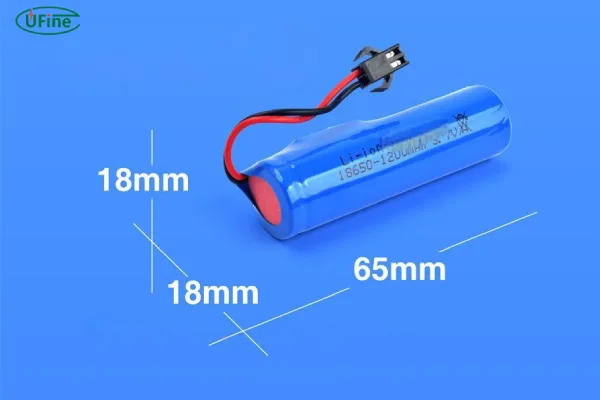
Common 18650 batteries are divided into lithium-ion batteries and lithium-iron phosphate batteries. Lithium-ion batteries are available in voltages of 3.6V and 4.2V. The voltage of a lithium iron phosphate battery is 3.2V.
Before we get into the highest capacity 18650 batteries, let’s understand what battery capacity is. Think of battery capacity as the fuel tank in your car. It tells you how much energy the battery can store and deliver. We measure this in milliamp-hours (mAh). The higher the mAh, the more energy the battery can store, which means longer runtime for your devices.
To calculate the battery capacity, you can use this simple formula:
Capacity (mAh)=Energy (Wh)/Voltage (V)*1000
For example, if a battery has 12Wh of energy and a voltage of 3.7V, its capacity would be approximately 3243mAh. This means the battery can provide 3243 milliamps of current for one hour.
Part 2. Highest capacity 18650
Let’s talk about the top-performing 18650 batteries with the highest available capacities.
Since the size of the 18650 lithium-ion battery pack is fixed, its maximum capacity has always attracted a lot of attention. In recent years, the technology of various manufacturers has improved, and the production capacity has increased accordingly. Samsung, Panasonic, LG, Sony, and Toshiba can reach over 3600 mAh.
These batteries are at the forefront of technology, providing the longest runtimes for various applications.
- Panasonic NCR18650G: 3600mAh
- Samsung INR18650-35E: 3500mAh
- LG MJ1: 3500mAh
Although some manufacturers’ 18650 batteries can reach the maximum, the capacity range of 2600 ~ 3000 mAh has the best stability and consistency. Moreover, there are still many difficulties in mass production of these highest-capacity 18650 batteries.
Part 3. What is the highest capacity 18650?
As of now, the Panasonic NCR18650G holds the record for the highest capacity 18650 battery, boasting an impressive 3600mAh. This battery is ideal for applications requiring long runtimes and consistent performance. Its advanced technology ensures it stays ahead in the game, providing reliable power for a variety of uses.’
18650 vs 21700 vs 26650 batteries
As demand for higher capacity grows, newer formats are emerging.
| Type | Capacity Range | Notes |
|---|---|---|
| 18650 | 3000–3600mAh | Most common legacy format |
| 21700 | 4000–6000mAh | Higher energy density |
| 26650 | 4000–6000mAh | Larger size, niche use |
21700 batteries generally outperform 18650 in capacity and efficiency.
Part 4. Why 18650 batteries have a capacity limit
The 18650 form factor has been widely used for decades in laptops, flashlights, and electric devices. However, its capacity ceiling is defined by three core constraints:
1. Fixed Physical Size
The 18×65mm cylindrical volume limits how much active material can be stored.
2. Chemistry Limitations
Most high-capacity 18650 cells use:
-
NMC (Nickel Manganese Cobalt)
-
NCA (Nickel Cobalt Aluminum)
These chemistries balance energy density, stability, and lifespan—but each has a theoretical limit.
To better understand how battery chemistry affects energy density and performance, you can explore this detailed guide on lithium battery types comparison, including NMC, LFP, and LTO differences.
3. Safety and Heat Management
Increasing capacity too aggressively increases:
- Internal resistance
- Heat generation
- Risk of degradation or thermal instability
In practice, the 3500–3600mAh range represents the safest engineering balance.
High-capacity lithium-ion cells also raise important safety considerations, especially under heat and overcharge conditions, which are explained in our guide on lithium battery overheating risks and causes.
Part 5. What affects 18650 capacity?
Understanding these factors can help you maintain your batteries and get the most out of them.
Several factors can impact the capacity of an 18650 battery:
- Temperature: Extreme temperatures, both hot and cold, can reduce a battery’s capacity and performance.
- Age: Batteries naturally degrade over time, losing capacity as they age.
- Usage Patterns: Frequent charging and discharging can accelerate capacity loss.
- Quality of Materials: Higher quality materials and manufacturing processes result in better capacity retention and overall performance.
Real vs rated capacity
Battery capacity is usually measured under ideal lab conditions:
- 0.2C discharge rate
- 25°C temperature
- Controlled voltage cutoff
In real-world usage:
- Capacity may drop by 5–10%
- High discharge loads reduce usable mAh
- Cold temperatures significantly reduce performance
Part 6. Is the higher the 18650 battery capacity, the better?
Capacity vs energy density vs discharge rate
A common misconception is that higher capacity always means better performance. In reality, battery performance involves trade-offs:
| Factor | Meaning | Trade-off |
|---|---|---|
| Capacity (mAh) | Runtime | Higher capacity often reduces output power |
| Energy Density (Wh/kg) | Efficiency | Limited by chemistry |
| Discharge Rate (A) | Power output | High-drain cells usually have lower capacity |
Higher-capacity 18650 batteries are optimized for runtime, not high power output.
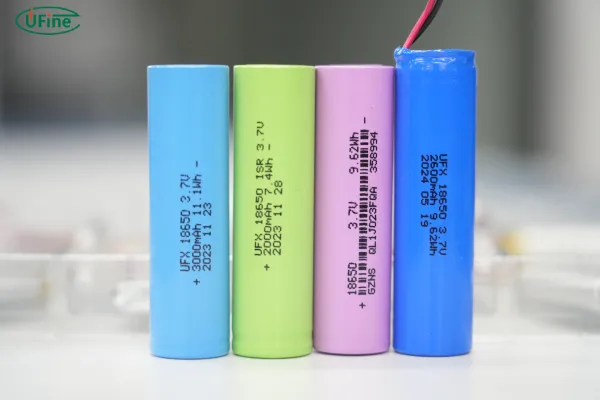
Not necessarily. While higher capacity batteries provide longer runtimes, they also come with trade-offs. Higher capacity often means a larger size and increased cost.The capacity of the 18650 lithium-ion battery pack is an important selling point for the manufacturer. It is worth noting that many buyers misunderstand that the actual discharge current will be larger if the capacity is higher.
But it’s quite the opposite.
18650 lithium-ion battery packs are generally divided into capacity type and rate type. Capacity type is the key to reflecting high capacity. However, the discharge current is generally lower than 1C and the current is small. The magnification type can discharge at high current, but has low capacity and short usage time.
Additionally, the battery’s discharge rate, lifespan, and overall quality are crucial factors to consider.
Sometimes, a lower capacity battery with a higher discharge rate and longer lifespan may be more suitable for your needs.
Finally, the high capacity of the 18650 lithium-ion battery comes with a high price.
The price of 18650 lithium-ion battery is directly proportional to the capacity. The larger the capacity, the greater the energy efficiency ratio, and the more raw materials used, the more expensive the price will be.
On the other hand, the key factor that determines the capacity of 18650 lithium-ion battery is the structure of the raw materials. Therefore, the prices of lithium cobalt oxide, lithium manganate, ternary materials, and lithium iron phosphate will be different.
So, the balance between capacity and price is very important.
Part 7. High capacity 18650 price
High capacity 18650 batteries usually come at a premium price due to their advanced technology and higher energy density.
The price of high-capacity 18650 batteries may vary due to factors such as production technology, brand, battery material, capacity, voltage, purchase quantity, etc.
It’s a good idea to shop around and compare different sources to get the best deal.
How to identify fake high-capacity 18650 batteries
Fake batteries are common in online marketplaces. Here are warning signs:
- Extremely high claimed capacity (5000mAh+)
- No recognizable brand (Samsung, LG, Panasonic missing)
- Very light weight (<40g)
- Unrealistic pricing
- Poor or missing safety markings
| Feature | Real 18650 | Fake 18650 |
|---|---|---|
| Capacity | 3000–3600mAh | 5000–12000mAh |
| Weight | 45–50g | 25–35g |
| Brand | Recognized OEM | Generic/no-name |
| Safety | Tested | Unknown |
Part 8. Common 18650 battery capacity range
The 18650 battery capacity is usually 1200mAh-3000mAh, and the ordinary capacity is 2200mAh-3600mAh.
Here’s a quick overview:
- 1200mAh – 2500mAh: These are often found in older models or budget options. They’re still useful for low-power devices.
- 2500mAh – 3000mAh: This range offers a good balance between capacity, size, and cost. Many mid-range applications, like standard flashlights and basic power tools, use these batteries.
- 3000mAh – 3600mAh: These are high-capacity batteries suitable for demanding applications like high-performance laptops, advanced power tools, and electric vehicles.
High capacity vs high drain batteries
High-capacity batteries are not the same as high-power batteries.
- High-capacity (e.g., MJ1, GA): longer runtime
- High-drain (e.g., VTC series): higher power output
Choosing the wrong type can result in:
- overheating
- reduced lifespan
- poor device performance
Part 9. Best high capacity 18650 battery manufacturers
When it comes to buying high-capacity 18650 batteries, it’s important to choose reliable manufacturers.
Here are the top 10 manufacturers known for their quality and performance:
- Panasonic
- Samsung
- BYD
- CATL
- LG Chem
- Sony
- SK Innovation
- Hitachi Chemical
- Lishen
- Hitachi Chemical
These brands are trusted for their performance, safety, and longevity, making them a good choice for any high-capacity 18650 battery needs.
Part 10. The future of highest capacity 18650 batteries
The development trend of the highest capacity 18650 batteries is driven by the need for better energy density, longer cycle life, improved safety, and more sustainable materials. While the 18650 battery has been a staple in many industries, advances in technology continue to push the boundaries of its performance. Here are some key trends shaping the future of high-capacity 18650 batteries:
1. Increasing Energy Density
- Higher Capacity Cells: The capacity of 18650 batteries has been steadily increasing over time. Currently, the highest capacity cells range between 3500 mAh to 3600 mAh, but research is ongoing to push this further, potentially reaching 4000 mAh or higher. This increase in energy density allows more power to be stored in the same form factor.
- Improved Cathode Materials: One key trend is the use of new cathode materials, such as nickel-rich NCM (Nickel-Cobalt-Manganese) and NCA (Nickel-Cobalt-Aluminum) chemistries, which offer higher energy density compared to traditional cobalt-based chemistries.
2. Enhanced Safety Features
- Solid-State Technology: Solid-state lithium batteries are emerging as a future trend, which could revolutionize the 18650 format. Solid-state batteries replace the liquid electrolyte with a solid electrolyte, making the battery more stable and less prone to leakage or thermal runaway, thus improving safety.
- Thermal Management: New designs for 18650 cells are incorporating advanced thermal management systems to minimize the risk of overheating, especially as capacities rise. This is particularly important in high-drain applications like electric vehicles (EVs) and power tools.
3. Longer Cycle Life
- Advanced Electrolytes and Additives: Researchers are working on developing electrolytes and additives that can enhance the longevity of 18650 batteries by reducing degradation during charging and discharging. This is critical as higher capacity cells typically experience more stress, which can reduce cycle life.
- Optimized Charging Algorithms: Another trend is the development of smarter charging systems that can optimize the charging process to extend the life of the battery. Adaptive charging can prevent overcharging and undercharging, which in turn preserves battery health.
4. Sustainability and Eco-Friendliness
- Cobalt-Free Designs: Reducing or eliminating the use of cobalt, a material associated with environmental and ethical concerns, is becoming a priority in battery development. New chemistries like LiFePO4 (Lithium Iron Phosphate) and nickel-rich cathodes are being explored as alternatives.
- Recycling Initiatives: As the demand for lithium-ion batteries grows, so does the need for better recycling methods. Companies are investing in technologies to recycle and reuse battery materials, which is expected to impact the production of high-capacity 18650 cells.
5. Fast Charging Capabilities
- High-Rate Charging: As demand for faster charging solutions increases, especially for portable electronics and EVs, 18650 batteries are being designed to support faster charging without sacrificing safety or cycle life. Improvements in the anode materials, such as the incorporation of silicon, help batteries accept higher charging currents.
6. Applications in High-Demand Sectors
- Electric Vehicles (EVs): Although newer 21700 and 4680 batteries are being favored in EVs, the 18650 battery remains in use, particularly in smaller electric vehicles and other devices. Increasing capacity and improving thermal management are vital trends for EV applications.
- Portable Devices and Power Tools: The need for lightweight, high-capacity batteries in laptops, drones, medical devices, and power tools continues to drive innovation in 18650 battery development.
7. Cost-Effective Manufacturing
- Process Improvements: As the technology matures, manufacturers are finding ways to make the production of high-capacity 18650 batteries more cost-effective. Advances in automation and material sourcing will help reduce costs while maintaining high energy performance.
8. Hybrid Technologies
- Lithium-Sulfur and Lithium-Air: Research into hybrid battery technologies like lithium-sulfur and lithium-air batteries could potentially increase the energy density far beyond current lithium-ion technology, with the possibility of these advances being applied to the 18650 form factor in the future.
Part 11. FAQs
What is the energy capacity (Wh) of a 18650 battery?
Most high-capacity 18650 batteries typically store around 10–13 watt-hours (Wh) of energy. The exact value depends on the cell’s nominal voltage and its rated capacity in mAh.
How long does a 3500mAh 18650 battery last in real-world use?
The runtime of a 3500mAh 18650 battery depends heavily on the device’s power consumption. In low-drain applications like flashlights, it can last for many hours or even days, while in high-drain devices, the runtime will be significantly shorter due to faster energy consumption.
Can 18650 batteries be combined to increase capacity?
18650 batteries can be connected in parallel to increase total pack capacity or in series to increase voltage. However, this does not increase the capacity of a single cell; it only increases the total energy of the battery pack.
Why are modern laptops no longer using single 18650 cells?
Many modern laptops have moved away from single 18650 cells because newer formats like pouch cells and 21700-based packs offer higher energy density, better space utilization, and improved thermal management within compact designs.
Related Tags:

More Articles
Dead Battery or Device Failure? How to Find the Cause
Think your device is broken? Learn how to tell if the problem comes from battery aging or hardware failure before replacing your electronics.
Why iPhone Duo Uses Two Batteries: The Engineering Behind Foldable Phone Power
Why do foldable phones need two batteries? Explore the engineering challenges behind iPhone Duo’s dual-battery architecture and future battery trends.
Solid-State Batteries: 3 Myths You Need to Know
Solid-state batteries promise safer EVs and longer range, but the reality is more complex. Discover the challenges behind this next-gen technology.
Battery Capacity vs Discharge Rate: The Choice Engineers Face
Higher capacity or higher discharge rate? Learn how to choose the right LiPo battery for longer runtime, stable power output, and better device performance.
Battery Cable Size Guide: Choose the Right Wire Fast
Not sure what battery cable size you need? Learn how to select the right wire gauge, terminal size, and cable for safer, more efficient battery systems.