- Key takeaways
- Part 1. Why do 18650 battery packs get hot during discharge?
- Part 2. Is it normal for an 18650 battery pack to get warm?
- Part 3. What should you do if your 18650 battery pack gets hot?
- Part 4. How to troubleshoot an 18650 battery pack that keeps getting hot
- Part 5. How to reduce heat in 18650 battery packs
- FAQs
In April 2026, the U.S. National Institute of Standards and Technology (NIST) published research based on 77 controlled experiments involving 18650 and 21700 lithium-ion cells, investigating how heat exposure and early warning signs affect battery fire risks. The study highlights an important point: recognizing abnormal heating early matters because a failing lithium-ion battery can continue developing dangerous conditions even after the initial heat source is removed.
So, what if your 18650 battery pack gets hot while powering an electric tool, portable device, or DIY project? Is the temperature rise normal, or is something wrong?
Some heat generation is expected during discharge. However, excessive or rapidly increasing temperatures can indicate high current demand, aging cells, poor electrical connections, or inadequate heat dissipation. In more serious cases, overheating may signal an internal battery fault.
The key is to understand why the heat is developing, recognize warning signs, and know when to stop using the battery pack.
Key takeaways
- 18650 battery packs generate heat during discharge because of internal resistance and electrochemical processes.
- High discharge current, aging cells, poor connections, and insufficient cooling can increase temperature.
- A warm battery pack is not automatically unsafe, but rapid heating or localized hot spots deserve attention.
- If you notice swelling, unusual odors, hissing, or smoke, move away and seek emergency assistance when necessary.
- Correct cell selection, suitable electrical connections, and effective thermal management help reduce overheating risks.
Part 1. Why do 18650 battery packs get hot during discharge?
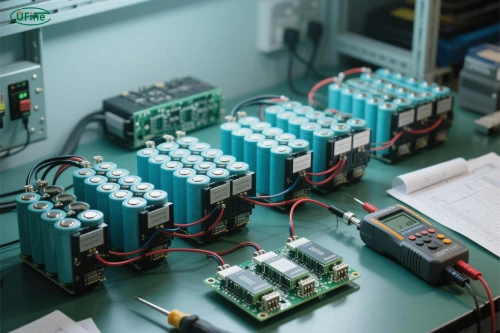
A lithium-ion battery converts stored chemical energy into electrical energy. This process also generates heat. According to OSHA’s lithium-ion battery safety guidance, battery hazards can include overheating, fire, and thermal runaway when cells are damaged or operated under unsafe conditions.
Several factors determine how much heat an 18650 battery pack produces.
1 Internal resistance generates heat
Every battery cell has internal resistance. As current flows through the cell, some electrical energy is converted into heat.
A simplified relationship is:
Heat generation ≈ I^2 x R
Here, I represents current in amperes, and R represents resistance in ohms.
This relationship explains why current matters so much. Under otherwise comparable conditions, doubling the current can increase resistive heating to approximately four times its previous level.
For example, an 18650 cell powering a low-current sensor may remain relatively cool, while the same type of cell supplying a high-power motor can experience much greater heating.
Actual battery heat generation also depends on electrochemical polarization, temperature, state of charge, and other factors. The formula illustrates resistive heating rather than predicting the exact temperature of a real battery pack.
2 High discharge current increases temperature
Devices such as power tools, pumps, motors, and high-performance portable equipment can demand substantial current. If the load exceeds the cell’s intended operating range, heat generation can rise significantly.
One common misunderstanding is that a higher-capacity battery automatically supports a higher discharge current. Capacity, usually expressed in mAh or Ah, indicates how much charge a cell can store. It does not, by itself, establish how much current the cell can safely deliver.
You need to check the manufacturer’s continuous discharge rating, any peak-current restrictions, and the specified operating temperature range.
3 Electrical connections can create localized hot spots
Heat does not always come from inside the cells. Loose connectors, poor welds, corroded contacts, undersized wires, and high-resistance joints can also generate heat.
The same basic relationship applies:
Power loss = I^2 x R
Because resistance-related heating increases with the square of current, even a relatively small resistance at a connection can become important when the current is high.
If one connector or a small area of an 18650 pack becomes much hotter than the surrounding cells, do not assume the entire pack is simply warming up normally. A localized fault may require professional inspection.
4 Heat can accumulate inside the battery pack
A battery pack contains several heat-producing cells, often arranged close together. If the enclosure restricts airflow or the thermal path is poor, the heat may not escape quickly enough.
High ambient temperatures make the problem harder to manage. A pack operating inside a sealed device or near a motor may therefore become hotter than a similar pack operating in a cooler, better-ventilated environment.
The important distinction is between heat being generated and heat being removed. A pack can overheat when heat generation exceeds its ability to dissipate that heat.
Part 2. Is it normal for an 18650 battery pack to get warm?
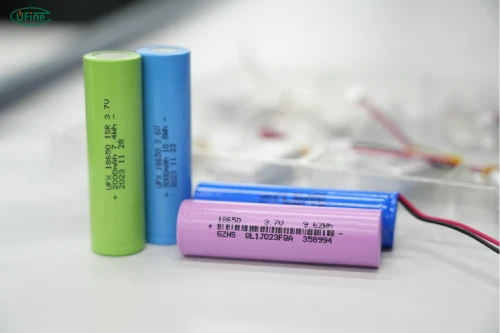
A slight temperature increase during discharge does not necessarily mean your battery pack has a problem. The important question is whether the temperature remains within the cell manufacturer’s operating limits and whether the heating matches the load and operating conditions.
For example, a battery pack supplying a demanding load may become warmer than one powering a small electronic device. That difference alone does not prove a fault.
However, a battery pack that suddenly becomes much hotter than usual should not be treated as normal.
Pay attention if the pack keeps getting hotter during operation, heats up noticeably under a light load, or develops a localized hot spot. These changes may indicate excessive current, a failing cell, a poor connection, or insufficient cooling.
Warning signs you should never ignore
Stop using the battery pack if you notice rapid temperature increases, swelling, leaking, unusual chemical odors, hissing, crackling, or smoke. These signs can indicate a serious battery fault.
If the pack is smoking, venting gas, or showing signs of fire, do not try to disconnect, dismantle, or carry it away. Move away from the area, keep others clear, and contact emergency services as appropriate. Battery failures can escalate quickly, and smoke from lithium-ion batteries can contain hazardous substances.
Even if the pack cools down afterward, that does not prove it is safe to use again.
Why surface temperature can be misleading
The temperature you feel on the outside of a battery pack may not represent the hottest point inside it. Heat takes time to travel from an internal cell to the enclosure, and the result depends on the pack’s construction, insulation, sensor position, and airflow.
A single temperature reading can also miss a localized hot spot. For engineering applications, temperature measurements should be made with appropriate sensors and compared with the cell manufacturer’s limits under controlled conditions.
There is no single surface temperature that can be used to classify every 18650 battery pack as safe or unsafe. Different cells and pack designs have different operating limits.
Part 3. What should you do if your 18650 battery pack gets hot?
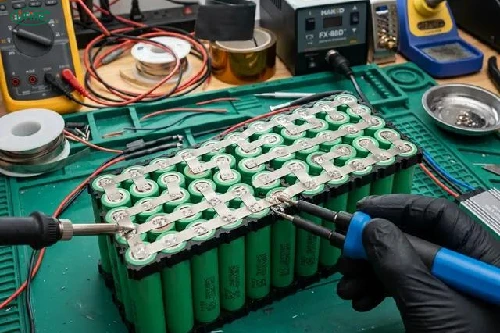
If you discover that your battery pack is hotter than expected, the priority is to prevent further heating without putting yourself at risk.
Stop the load and assess the situation
If the pack is unusually hot but shows no immediate signs of failure, stop the device and discontinue use. Do not continue running a motor or other high-power load just to see whether the temperature rises further.
If there is swelling, smoke, hissing, leakage, or a strong unusual odor, do not handle the pack. Move away and seek emergency assistance if the situation presents an immediate danger.
Let the battery cool safely
If there are no signs of an active battery failure and the pack can be left safely where it is, follow the manufacturer’s instructions and allow it to cool naturally in a safe location away from combustible materials.
Do not put a hot battery pack in a refrigerator, immerse it in water, or attempt to force it to cool using extreme methods. If it is showing dangerous warning signs, do not approach it to relocate it.
Investigate before using it again
Once the situation is safe, review the operating conditions. Was the device drawing more current than expected? Was the battery pack enclosed in a hot environment? Did the heating start suddenly, or has it become progressively worse over several weeks?
These details can help a qualified technician identify the likely cause.
A pack that has experienced significant or unexplained overheating should be professionally assessed before reuse. Do not assume that replacing the BMS or tightening a connector will solve the problem without determining whether the cells have also been damaged.
Part 4. How to troubleshoot an 18650 battery pack that keeps getting hot
When a battery pack repeatedly overheats, the pattern of heating can provide useful clues. The following table can help narrow down possible causes, but it cannot confirm a fault on its own.
| Observed symptom | Possible explanation | Recommended next step |
|---|---|---|
| Heating mainly under heavy loads | Excessive discharge current | Verify load demand and cell specifications |
| Heating even under light loads | Cell damage or abnormal resistance | Stop using the pack and arrange an inspection |
| One area is much hotter than the rest | High-resistance connection or localized fault | Stop operation and have the pack inspected |
| Temperature rises during prolonged discharge | Heat accumulation or insufficient cooling | Review operating conditions and thermal design |
| The pack becomes hotter than it used to | Aging cells or a developing fault | Stop use if the change is abnormal and investigate before reuse |
For a battery engineer or qualified technician, additional measurements may help distinguish between possible causes.
For instance, comparing the voltage before and during a normal, controlled load can reveal an unusually large voltage drop. If the current is known, the measured voltage drop can help estimate the effective resistance of the measured circuit section.
However, this is not a definitive cell-health test. Voltage drop can include contributions from the cells, connections, wiring, and other components. Measurements also vary with temperature, state of charge, and test method.
Do not perform load tests on a battery pack that is already showing signs of damage or serious overheating. Safety assessment comes first.
Part 5. How to reduce heat in 18650 battery packs
Preventing excessive heat starts with matching the cells to the application. It also requires attention to electrical connections, current distribution, and the way the pack releases heat.
Match cell discharge capability to the load
Choose 18650 cells according to the device’s actual power requirements, not just the capacity printed on the label. Check the cell manufacturer’s discharge-current limits and operating-temperature specifications.
For equipment with motors or other demanding loads, consider both sustained current and short startup surges. A design that works under a light bench load may behave differently during real-world operation.
Ufine Battery offers customized battery pack solutions tailored to your voltage, capacity, discharge current, and size requirements — from prototype development to mass production.
Find Your Battery SolutionUnderstand how parallel cells share current
Adding cells in parallel can reduce the average current carried by each cell, assuming the cells and connections share current appropriately. However, the current is not always distributed evenly.
Differences in internal resistance, cell condition, wiring paths, and contact resistance can cause some cells to carry more current and generate more heat than others.
For this reason, adding more cells in parallel does not automatically eliminate overheating. Cells should be appropriately matched, and the pack’s interconnections should be designed to support reasonably balanced current distribution.
Check voltage drop and connection resistance
During professional testing, voltage-drop measurements can help identify excessive resistance in a connection or current path. A larger-than-expected voltage drop under a known load may indicate that some electrical energy is being lost as heat.
For a measured circuit section, the basic relationship is:
Resistance (ohms) = Voltage drop (V) / Current (A)
This calculation is useful only when the voltage drop and current correspond to the same measured path and operating condition. It should not be treated as a substitute for proper cell testing or a complete battery safety assessment.
Design the BMS and thermal system together
The battery management system should match the pack’s chemistry, series configuration, current requirements, and protection needs. Temperature monitoring may also be appropriate for applications where the pack experiences demanding loads or limited cooling.
However, a BMS cannot prevent every internal cell failure, and it does not eliminate normal resistive heating. The cells, BMS, wiring, connectors, and enclosure must all be considered as one system.
FAQs
1. Can a high-capacity 18650 battery pack still overheat?
Yes. High capacity does not guarantee low internal resistance, high discharge capability, or effective cooling. A high-capacity pack can still overheat if it is damaged, overloaded, or poorly designed.
2. Does a higher discharge rating mean an 18650 battery will run cooler?
Not necessarily. A cell with a higher permitted discharge rating may be better suited to a demanding load, but actual heating depends on its resistance, current, temperature, and operating conditions.
3. Can a BMS detect every cause of battery overheating?
No. A BMS can monitor specific electrical and temperature conditions supported by its design, but it may not detect every internal defect or localized hot spot. Appropriate cell selection, pack construction, and thermal monitoring remain important.
4. Does adding more 18650 cells in parallel always reduce heat?
No. Parallel cells can share current, but uneven current distribution, poor connections, or mismatched cells may still cause excessive heating. The complete pack design determines the result.
5. Should an 18650 battery pack be reused after serious overheating?
Not until it has been appropriately assessed. Significant overheating may damage cells or other components even if the pack appears normal after cooling. Packs with swelling, leakage, smoke, or other signs of failure should not be put back into service without qualified evaluation.
Related Tags:

More Articles

How to Match 18650 Cells for a Reliable Battery Pack?
Building an 18650 battery pack? Learn how to compare cell capacity, voltage, and internal resistance to avoid mismatches and improve reliability.
18650 Battery BMS: How to Get the Specs Right
Learn how to choose a BMS for an 18650 battery pack. Compare voltage, current ratings, protection features, and balancing before you buy.
Why Does My Ring Camera Battery Drain So Fast or Stop Charging?
Is your Ring camera battery draining fast or not charging? Discover common causes, practical fixes, and when to replace the battery.
Battery Pack Overheating? Causes and Solutions
Is your battery pack getting too hot? Learn the common causes, identify potential risks, and discover practical ways to prevent overheating.
How to Select Battery Wire Gauge for High-Current Robot Applications
Not sure which wire gauge your robot needs? Compare AWG sizes, calculate current and voltage drop, and find a safer battery wiring solution.