- Key Takeaways
- Part 1. Lithium battery temperature range overview
- Part 2. Minimum operating temperature for lithium batteries
- Part 3. Why cold temperatures reduce lithium battery performance
- Part 4. Charging risks in cold temperatures
- Part 5. Factors that determine the minimum lithium battery temperature
- Part 6. How to charge lithium batteries safely in cold weather
- Part 7. FAQ: lithium battery temperature limits
Lithium batteries operate safely only within a specific temperature range. When temperatures drop too low, battery capacity decreases, internal resistance rises, and charging can become unsafe.
For most lithium batteries, the discharge temperature range is −20°C to 60°C, while charging should stay between 0°C and 45°C. LiPo batteries can work in cold environments, but performance may decline significantly below −10°C.
This guide explains the LiPo battery temperature range, minimum lithium battery temperature, and safe charging practices to help engineers and device designers prevent cold-weather battery damage.
Key Takeaways
- The typical lithium ion battery temperature range for discharge is −20°C to 60°C, while charging should only occur between 0°C and 45°C.
- Most LiPo batteries can discharge down to about −10°C to −20°C, but performance drops significantly as temperature decreases.
- Low temperatures slow lithium-ion movement and increase internal resistance, causing voltage drop, reduced capacity, and weaker discharge performance.
- Charging lithium batteries below 0°C can cause lithium plating, which permanently damages cells and reduces battery lifespan.
- Battery systems used in cold environments often require preheating, insulation, or BMS temperature protection.
- For extreme cold applications, specialized lithium chemistries or heated battery packs may be required.
Part 1. Lithium battery temperature range overview
Lithium batteries—including lithium-ion (Li-ion) and lithium polymer (LiPo) cells—operate safely within defined temperature limits.
Typical Lithium Battery Operating Temperature
| Battery Condition | Temperature Range |
|---|---|
| Discharge Temperature | −20°C to 60°C (−4°F to 140°F) |
| Charging Temperature | 0°C to 45°C (32°F to 113°F) |
| Long-Term Storage | −20°C to 25°C (−4°F to 77°F) |
These limits define the lithium ion battery temperature limits recommended by most manufacturers.
Temperature Effects on Lithium Batteries
| Temperature Range | Impact on Battery |
|---|---|
| Above 60°C (140°F) | Risk of overheating, swelling, or thermal runaway |
| 0°C – 45°C | Safe charging and optimal battery operation |
| −20°C – 0°C | Reduced capacity and increased internal resistance |
| Below −20°C | Severe power loss and possible cell damage |
Authoritative battery safety guidance can also be found from organizations like the UL Safety Standards and U.S. Department of Energy.
Part 2. Minimum operating temperature for lithium batteries
Different lithium chemistries tolerate cold environments differently.
| Battery Type | Typical Minimum Discharge Temperature |
|---|---|
| Lithium-ion (Li-ion) | −20°C (−4°F) |
| Lithium-polymer (LiPo) | −10°C to −20°C (14°F to −4°F) |
| LiFePO₄ (LFP) | −20°C to −30°C with heating |
In most practical applications:
- LiPo batteries typically operate down to −10°C to −20°C
- Performance degradation begins well above this level
- At low temperatures, batteries may still function but experience:
- Lower usable capacity
- Slower voltage recovery
- Reduced discharge rate
If you are selecting a battery for winter applications, see: Best Batteries for Cold Weather Applications
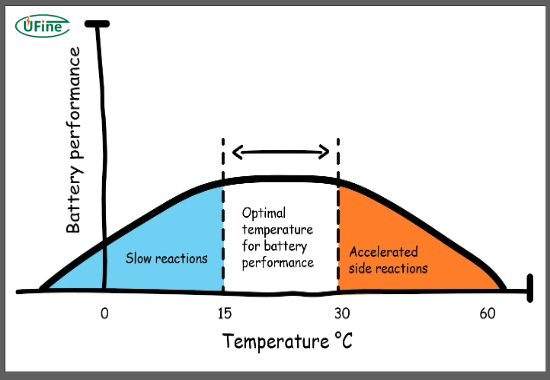
Part 3. Why cold temperatures reduce lithium battery performance
Cold environments affect several electrochemical processes inside lithium cells.
1 Reduced lithium-ion mobility
Lithium batteries rely on lithium ions moving through the electrolyte between electrodes.
At low temperatures:
- Electrolyte viscosity increases
- Ion diffusion slows
- Electrochemical reactions become less efficient
This directly reduces battery output power.
2 Increased internal resistance
As temperatures drop:
- Electrolyte conductivity decreases
- Electrode materials become less reactive
Higher internal resistance results in:
- Voltage sag during discharge
- Reduced peak current capability
This is why drones, power tools, and RC devices often lose power in winter conditions.
3 Capacity loss in cold weather
Cold temperatures can significantly reduce available battery capacity.
Typical capacity reduction:
| Temperature | Available Capacity |
|---|---|
| 25°C | ~100% |
| 0°C | ~80–90% |
| −10°C | ~60–70% |
| −20°C | ~40–50% |
Even though the battery still contains energy, it cannot deliver that energy efficiently at low temperatures.
4 Voltage depression during discharge
When discharging under load in cold conditions:
- Voltage drops faster than normal
- Devices may shut down early due to low-voltage protection
This phenomenon is common in drones, electric scooters, outdoor sensors, and handheld electronics.
Part 4. Charging risks in cold temperatures
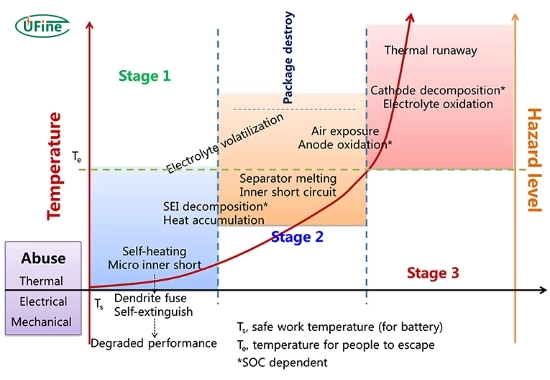
Charging lithium batteries in cold weather is more dangerous than discharging them.
When charging below 0°C:
- Lithium ions cannot intercalate properly into the anode
- Lithium plating may occur
Lithium plating can cause:
- Permanent capacity loss
- Internal short circuits
- Safety hazards
For this reason, most lithium battery manufacturers prohibit charging below 0°C.
Part 5. Factors that determine the minimum lithium battery temperature
Several design and chemistry factors affect how well a battery performs in cold conditions.
1 Battery chemistry
Different cathode materials behave differently in low temperatures.
Examples:
- LCO (Lithium Cobalt Oxide) – moderate cold tolerance
- NMC (Nickel Manganese Cobalt) – widely used in EVs and electronics
- LiFePO₄ – improved thermal stability but limited cold charging capability
Electrolyte formulation also influences cold-temperature conductivity.
2 Electrolyte composition
Electrolytes consist of lithium salts dissolved in organic solvents.
Cold-optimized electrolytes include additives that:
- Lower freezing points
- Improve ion transport
- Stabilize electrode reactions
High-performance industrial batteries often use special low-temperature electrolyte blends.
3 Cell design and construction
Battery engineering also impacts cold performance.
Important factors include:
- Electrode thickness
- Separator material
- Electrode surface area
- Cell geometry
Optimized designs can reduce resistance and improve power output in cold environments.
4 Battery pack thermal design
For battery packs used in vehicles or outdoor equipment:
- Insulation
- Thermal pads
- Active heating systems
may be integrated to maintain safe operating temperatures.
Modern battery packs often rely on a Battery Management System (BMS) to regulate temperature.
Part 6. How to charge lithium batteries safely in cold weather
If lithium batteries must be used in winter conditions, follow these recommended practices.
Ensure the battery is within the safe charging range of 0°C to 45°C before charging. Temperature sensors or BMS monitoring systems are recommended.
If the battery is cold: bring it indoors, allow it to warm naturally, or use controlled battery heaters if necessary. Never charge a frozen battery.
Low temperatures slow electrochemical reactions. Using a lower charging current can reduce stress on the battery and improve safety.
Fast charging in cold conditions can cause uneven lithium deposition, excessive heat generation, and reduced battery lifespan. Always disable fast-charge modes in cold environments.
For outdoor equipment or vehicles: insulated battery cases, heated battery enclosures, or thermal wraps can help maintain safe operating temperatures.
Modern lithium battery packs often include BMS protection features such as temperature sensors, low-temperature charge cutoff, and thermal shutdown protection. These systems automatically prevent charging when temperatures are too low.
Part 7. FAQ: lithium battery temperature limits
What is the minimum operating temperature for LiPo batteries?
Most LiPo batteries can discharge down to about −10°C to −20°C, although capacity and power output drop significantly below 0°C.
What is the typical lithium ion battery temperature range?
The standard lithium ion battery operating temperature range is: Discharge: −20°C to 60°C; Charge: 0°C to 45°C. Operating outside this range can damage the battery or reduce lifespan.
Can lithium batteries work below −20°C?
Some lithium batteries can technically operate below −20°C, but performance drops dramatically and permanent damage may occur without proper thermal management.
Why can’t lithium batteries charge in cold temperatures?
Charging below 0°C can cause lithium plating, where metallic lithium forms on the anode. This reduces battery capacity and may lead to internal short circuits.
What is the ideal lithium battery operating temperature?
The optimal temperature for lithium battery performance is around 20°C–25°C (68°F–77°F). At this range, batteries deliver maximum capacity, efficiency, and lifespan.
Related Tags:

More Articles

Battery Calibration: Why Is Your Battery % Wrong?
Is your battery percentage inaccurate? Learn how battery calibration works, when you need it, and how to fix unexpected battery drops.
Battery Calibration Guide: Fix SOC Errors in Lithium Systems
SOC accuracy problems can reduce device reliability. Learn how battery calibration, BMS, and fuel gauge optimization improve lithium battery performance.
How Internal Resistance Limits LiPo Battery Performance
Your LiPo Battery may have enough capacity but still fail under load. Discover how Internal Resistance causes voltage sag, heat, and power loss.
What Engineers Can Learn From a Discharge Curve for LithiumBattery?
What can a discharge curve for lithium ion battery tell engineers? Learn how voltage, C-rate, temperature, and capacity affect real-world performance.