
- Part 1. Understand the real cost structure of a custom battery
- Part 2. Why custom batteries cost more than standard batteries
- Part 3. Hidden cost #1: Poor battery requirement definition
- Part 4. Hidden cost #2: Unexpected engineering and design changes
- Part 5. Hidden cost #3: Certification and testing expenses
- Part 6. Hidden cost #4: Tooling and low-volume production costs
- Part 7. Hidden cost #5: Quality problems and production delays
- Part 8. Hidden cost #6: Shipping and logistics expenses
- Part 9. Hidden cost #7: Minimum order quantity and inventory risks
- Part 10. How to compare battery manufacturers beyond price
- Part 11. How to request a more accurate battery quote
- Part 12. FAQs
The lowest battery quote is not always the lowest project cost. When buying custom lithium batteries, many unexpected expenses appear after the initial quotation, including redesign fees, certification costs, tooling charges, testing requirements, shipping issues, and production delays.
To avoid budget surprises, you need to evaluate the complete cost of a custom battery project—not just the price per battery.
Key takeaways
- Custom battery costs include much more than the battery cell price.
- Unclear requirements are one of the biggest causes of unexpected expenses.
- Certification, tooling, testing, and design changes should be considered early.
- A reliable battery manufacturer can help reduce development costs and avoid delays.
- The cheapest quotation may create higher costs during mass production.
- A detailed battery RFQ helps manufacturers provide more accurate pricing.
- Total project cost matters more than the initial unit price.
Part 1. Understand the real cost structure of a custom battery
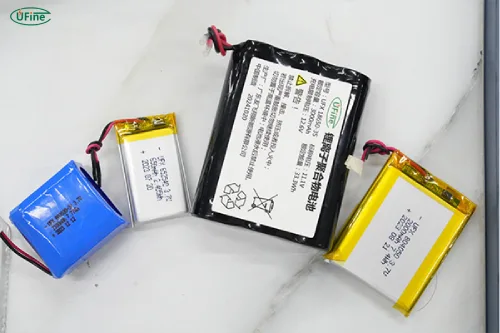
Many buyers focus on one number when comparing battery manufacturers:
Battery price per unit
However, a custom lithium battery project usually includes many additional costs.
A custom battery may involve:
- Battery cell selection
- Custom dimensions
- Protection circuit design
- Connector and wire customization
- Testing
- Certification
- Packaging
- Logistics
The final cost depends on the entire battery solution, not only the cell itself.
For example, two manufacturers may provide different quotations:
Manufacturer A:
- Lower battery unit price
- Limited engineering support
- Additional charges for modifications later
Manufacturer B:
- Slightly higher initial price
- Better technical support
- Fewer redesign cycles
- Faster production approval
In many cases, Manufacturer B creates a lower total project cost.
| Cost item | Examples |
|---|---|
| Battery components | Cell, PCM/BMS, protection components |
| Customization | Size, shape, voltage, capacity |
| Electrical design | Wire, connector, protection settings |
| Testing | Reliability testing, performance validation |
| Certification | UN38.3, IEC, UL, regional compliance |
| Logistics | Packaging, transportation, storage |
Part 2. Why custom batteries cost more than standard batteries

Standard batteries are produced in fixed sizes and specifications.
Custom batteries require additional engineering because they must match a specific product.
Common customization requirements include:
- Special battery dimensions
- Ultra-thin designs
- Curved or irregular shapes
- Custom voltage configurations
- Specific connector types
- Customized wire length
- Special discharge requirements
For example, a wearable device may require a thin LiPo battery that fits inside a limited enclosure. A robotics application may need a battery with high discharge capability and a specific connector position.
These requirements affect manufacturing processes, testing procedures, and overall project cost.
How custom battery manufacturers help reduce total costs
A professional custom battery manufacturer does more than manufacture batteries. The right manufacturer can help identify potential problems before they become expensive changes during production.
For example, an experienced manufacturer can provide support with:
- Battery specification selection
- Cell performance matching
- Mechanical integration
- Connector and wiring design
- Prototype evaluation
These early decisions can reduce unnecessary redesigns, testing cycles, and production delays.
At Ufine Battery, we focus on providing customized lithium battery solutions for different product requirements, including battery size, capacity, voltage, shape, connector configuration, and other specifications. With engineering support throughout the development process, customers can evaluate battery solutions earlier and reduce potential risks before mass production.
For projects requiring special designs, such as compact electronics, wearable devices, IoT products, or other space-limited applications, working with a manufacturer that understands both battery manufacturing and product integration can help control the total project cost.
Part 3. Hidden cost #1: Poor battery requirement definition
One of the most common causes of unexpected costs is incomplete product information during the quotation stage.
A customer may initially provide:
“We need a 3.7V 1000mAh battery.”
However, important information may be missing:
- What is the peak current?
- How much space is available?
- What connector is required?
- What is the operating temperature?
- How many cycles are expected?
- Which market will the product be sold in?
Later, problems appear:
- The battery cannot provide enough current.
- The connector does not fit.
- The battery size needs to change.
- The protection circuit requires modification.
These changes increase development time and cost.
Before requesting a battery quote, you should prepare clear requirements.
Important information includes:
| Requirement category | Information to provide |
|---|---|
| Electrical | Voltage, capacity, charging voltage, discharge current |
| Mechanical | Battery size, thickness, shape limitations |
| Integration | Connector type, wire length, installation location |
| Application | Device type, operating environment, target market |
A detailed RFQ helps manufacturers understand the real project requirements and provide more accurate pricing.
Part 4. Hidden cost #2: Unexpected engineering and design changes
Custom battery development often requires several design discussions before moving into production.
Problems usually happen when the battery is treated as a simple component rather than part of the entire product system.
Common examples:
Battery does not fit the enclosure
A battery may meet electrical requirements but fail mechanically.
Possible solutions:
- Change battery dimensions
- Modify the enclosure
- Adjust PCB placement
Each change may require additional samples and testing.
Battery performance does not match the application
A device may require more power than expected.
For example:
A small robot may use a 2000mAh battery, but the motor requires high peak current during startup.
The battery may need:
- Higher discharge capability
- Different cell selection
- Updated protection design
Identifying these requirements early prevents expensive redesigns later.
Part 5. Hidden cost #3: Certification and testing expenses
Battery certification is another cost that many buyers underestimate.
Depending on the application and target market, custom batteries may require different compliance documents and tests.
Common requirements include:
- UN38.3 for transportation
- IEC 62133 for battery safety
- UL standards for certain North American applications
- CE-related compliance requirements
- RoHS requirements
UN38.3 focuses on lithium battery transportation safety, while standards such as IEC 62133 address battery safety for applicable product categories. The exact requirements depend on the battery type, application, and destination market.
Certification costs may include:
- Laboratory testing fees
- Additional samples
- Documentation preparation
- Engineering adjustments
| Certification | Main purpose |
|---|---|
| UN38.3 | Lithium battery transportation safety |
| IEC 62133 | Portable lithium battery safety |
| UL standards | Safety requirements for applicable markets |
| CE/RoHS | Market compliance and environmental requirements |
A common mistake is considering certification only after the battery design is complete.
Certification requirements should be discussed at the beginning because they can influence:
- Cell selection
- Protection circuit design
- Battery structure
- Testing schedule
Part 6. Hidden cost #4: Tooling and low-volume production costs
Some custom batteries require additional manufacturing preparation.
Examples include:
- Special fixtures
- Custom production tools
- Unique packaging structures
- Special-shaped battery forming processes
This is especially common for:
- Ultra-thin LiPo batteries
- Curved batteries
- Irregular-shaped batteries
Before starting development, ask manufacturers:
- Is tooling required?
- Is there a one-time tooling fee?
- Who owns the tooling?
- Will future orders require additional charges?
Understanding these details prevents unexpected costs during production.
Part 7. Hidden cost #5: Quality problems and production delays
A low-cost manufacturer may appear attractive initially, but quality problems can create much higher expenses.
Possible hidden costs include:
- Failed batches
- Replacement products
- Production downtime
- Customer complaints
- Delayed product launch
Battery quality problems are especially expensive because batteries are often integrated deeply into the final product design.
A reliable manufacturer should provide:
- Consistent production quality
- Battery testing procedures
- Traceability
- Technical support
Manufacturer experience can directly affect the total cost of ownership.
Part 8. Hidden cost #6: Shipping and logistics expenses
Lithium batteries have special transportation requirements.
Additional costs may come from:
- Dangerous goods shipping
- Special packaging
- Customs delays
- Storage fees
- Shipping restrictions
These costs are often overlooked during early budgeting.
To reduce logistics risks:
- Confirm shipping requirements early
- Prepare required battery documents
- Choose appropriate packaging methods
- Plan production schedules carefully
A battery that is cheaper to manufacture may not be cheaper to deliver.
Part 9. Hidden cost #7: Minimum order quantity and inventory risks
Some manufacturers offer lower prices with higher minimum order quantities (MOQ).
While a lower unit price may look attractive, excessive inventory creates risks:
- Higher upfront investment
- Storage costs
- Product changes before inventory is used
- Cash flow pressure
For new product development, flexible MOQ can sometimes be more valuable than the lowest possible unit price.
A good battery manufacturer should help balance:
- Production cost
- Inventory requirements
- Project stage
- Future demand
Part 10. How to compare battery manufacturers beyond price
Price is important, but it should not be the only evaluation factor.
When comparing custom battery manufacturers, consider:
| Evaluation factor | Questions to ask |
|---|---|
| Experience | Have they developed similar batteries before? |
| Engineering support | Can they help optimize battery design? |
| Certifications | Can they provide required documents? |
| Quality control | How are batteries tested before shipment? |
| MOQ flexibility | Can they support prototypes and mass production? |
| Lead time | Can they meet your product schedule? |
A manufacturer with stronger technical capability can often reduce hidden costs throughout the project.
Part 11. How to request a more accurate battery quote
A good battery RFQ should include enough information for manufacturers to understand the project.
Include:
Product information
- Device type
- Application environment
- Target market
Battery requirements
- Voltage
- Capacity
- Dimensions
- Maximum current
- Charging requirements
Mechanical requirements
- Battery installation space
- Connector location
- Wire requirements
- Shape limitations
The more complete the information, the more accurate the quotation will be.
Part 12. FAQs
1. Are battery samples included in custom battery pricing?
It depends on the supplier and project requirements. Some suppliers include sample costs in the development process, while others charge separately for prototypes, materials, or engineering preparation.
2. What information should I provide to get an accurate custom battery quote?
You should provide details such as battery voltage, capacity, dimensions, current requirements, charging method, connector type, wire requirements, application environment, and target market. More complete information helps suppliers avoid inaccurate quotations.
9. Why do battery quotations from different suppliers vary so much?
Different quotations may include different assumptions about battery cells, protection circuits, testing requirements, certifications, production processes, and quality standards. A lower quotation may not always include the same level of service or requirements.
10. Should certification requirements be considered before designing a custom battery?
Yes. Certification requirements should be discussed at the beginning of the project because they may influence battery materials, protection circuits, testing procedures, and production planning.
11. Does battery MOQ affect the final project cost?
Yes. Higher MOQ can reduce unit cost but may increase inventory risk and upfront investment. For new products, flexible MOQ can sometimes be more valuable than the lowest possible battery price.
Related Tags:

More Articles

Battery Wire Length: Hidden Cause of Power Loss
A longer battery wire can cause voltage drop, power loss, and unstable operation. Learn how wire length affects battery performance.
How Device Sleep Modes Affect Battery Life
Think sleep mode extends battery life? Learn why devices still drain power and how firmware, hardware, and batteries affect runtime.
LiPo Battery and PCB Design: Clearance, Insulation, and Placement
Learn how to optimize LiPo battery PCB clearance, insulation, placement, wiring, and thermal design—and avoid common integration mistakes.
Battery Calibration: Why Is Your Battery % Wrong?
Is your battery percentage inaccurate? Learn how battery calibration works, when you need it, and how to fix unexpected battery drops.
Battery Calibration Guide: Fix SOC Errors in Lithium Systems
SOC accuracy problems can reduce device reliability. Learn how battery calibration, BMS, and fuel gauge optimization improve lithium battery performance.


