
- Key takeaways
- Part 1. What is a blower battery and why it matters?
- Part 2. Types of batteries used in leaf blowers
- Part 3. How voltage affects blower performance?
- Part 4. What ah means in a blower battery?
- Part 5. Battery chemistry and performance stability in leaf blower batteries
- Part 6. Leaf blower battery brand compatibility and system locking
- Part 7. Built-in vs removable leaf blower battery systems
- Part 8. Runtime expectations for leaf blower batteries
- Part 9. Can you use third-party leaf blower batteries?
- Part 10. How to choose the right battery for blower?
- Part 11. How to extend leaf blower battery life?
- Part 12. Applications of blower batteries
- Part 13. FAQs about leaf blower batteries
A battery for blower is not just a power source. It directly controls airflow strength, runtime, and tool lifespan. If the battery is not matched correctly, performance drops immediately and the blower may feel weak even if the motor is high quality.
This guide explains how to choose the right battery for leaf blower based on voltage, capacity, chemistry, and compatibility. It is written for both homeowners and professional users who want stable performance and longer runtime.
Key takeaways
- Voltage controls blower power output
- Ah controls runtime, not power
- Lithium-ion is the standard battery type
- Brand compatibility is often proprietary
- Higher Ah improves runtime but increases weight
- 36V–80V systems are preferred for heavy-duty use
- Third-party batteries must match voltage and protection system
Part 1. What is a blower battery and why it matters?
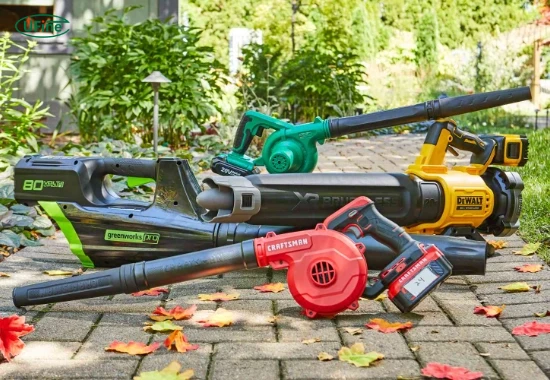
A blower is a handheld tool that generates airflow to remove leaves, dust, and debris. In battery-powered models, the blower battery acts as the main energy system.
Battery quality affects three core performance factors:
- Airflow strength (power delivery)
- Runtime per charge
- Heat and long-term durability
If the battery cannot deliver stable current, the blower motor will reduce speed under load.
Part 2. Types of batteries used in leaf blowers
Most modern leaf blower batteries use lithium-based chemistry, but older types still exist.
Nickel-Cadmium (NiCd)
- Old generation technology
- Heavy and low energy density
- Memory effect reduces usable capacity
- Rare in modern tools
Nickel-Metal Hydride (NiMH)
- Better than NiCd
- Still bulky and inefficient
- Limited use in power tools
Lithium-Ion (Li-ion)
- Standard for modern battery for blower systems
- High energy density
- Lightweight and fast charging
- Stable voltage output during discharge
For any new purchase or upgrade, lithium-ion is the practical choice for both runtime and performance consistency.
Part 3. How voltage affects blower performance?
Voltage determines how much power the motor can deliver. Higher voltage systems generate stronger airflow.
| Voltage Range | Use Case |
|---|---|
| 18V–20V | Light cleaning, small yards |
| 36V–40V | Medium residential use |
| 56V–80V | Heavy-duty and commercial use |
A mismatch in voltage can cause:
- Reduced airflow
- Motor overload
- Possible controller damage
Always match the voltage requirement of the blower exactly.
Part 4. What ah means in a blower battery?
Ah (amp-hour) defines energy storage capacity. It does not increase power but increases runtime.
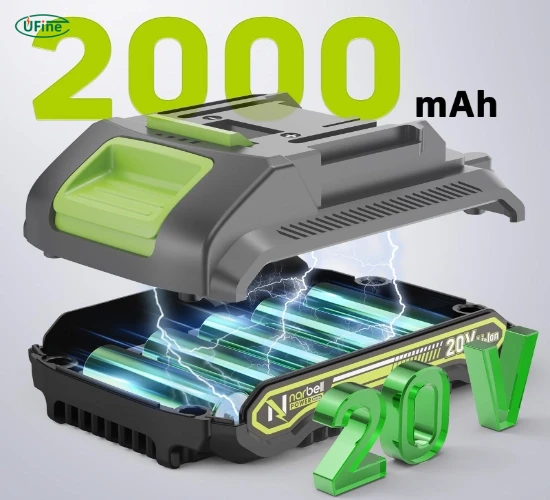
- 2.0Ah → short runtime (light tasks)
- 4.0Ah → balanced weight and runtime
- 6.0Ah+ → long runtime, heavier battery pack
A higher Ah battery for leaf blower is useful for large properties or commercial cleaning where downtime must be minimized.
Part 5. Battery chemistry and performance stability in leaf blower batteries
Lithium-ion batteries dominate modern blower systems because they provide:
- Stable discharge curve
- High cycle life
- Lower self-discharge rate
- Better safety when paired with BMS
Related reading: LiPo vs LiFePO4 battery comparison
Part 6. Leaf blower battery brand compatibility and system locking
Most blower brands use proprietary battery platforms.
Examples:
- DeWalt 20V batteries only fit DeWalt tools
- Makita batteries are not cross-compatible
- Ryobi systems are locked within their ecosystem
Using incompatible batteries may lead to:
- No startup response
- Charging failure
- Overcurrent protection triggering
For OEM or custom applications, manufacturers often design custom lithium-ion battery packs to match exact mechanical and electrical specs.
Part 7. Built-in vs removable leaf blower battery systems
Built-in Battery
- Compact design
- No swapping needed
- Charging downtime required
Removable Battery
- Supports battery swapping
- Better for continuous work
- Slightly heavier tool body
For most users, removable systems are more practical for long-duration work.
Part 8. Runtime expectations for leaf blower batteries
Runtime depends on load, motor efficiency, and battery capacity.
| Battery Size | Runtime |
|---|---|
| 2.0Ah | 15–20 minutes |
| 4.0Ah | 30–45 minutes |
| 5.0Ah+ | 45–60+ minutes |
Turbo mode significantly reduces runtime due to higher current draw.
Part 9. Can you use third-party leaf blower batteries?
Third-party leaf blower batteries can work, but quality varies widely.
Advantages
- Lower cost
- More capacity options
- Wider availability
Risks
- Inconsistent cell quality
- Poor thermal control
- Shorter cycle life
- Warranty issues
For industrial or OEM-level reliability, custom-designed battery packs with proper BMS protection are safer than generic replacements.
Related reading: Battery management system basics
Part 10. How to choose the right battery for blower?
Use this selection logic:
- Match voltage exactly
- Choose lithium-ion chemistry
- Select Ah based on runtime need
- Check physical compatibility
- Confirm protection system (BMS)
- Prefer certified or OEM-grade suppliers
Part 11. How to extend leaf blower battery life?
Proper usage can significantly extend battery for blower lifespan:
- Avoid full discharge cycles
- Store at room temperature
- Use original charger only
- Recharge periodically during storage
- Keep terminals clean and dry
A quality lithium-ion battery can reach 300–500 cycles under normal use.
Part 12. Applications of blower batteries
Battery-powered blowers are widely used in:
- Residential yard cleaning
- Landscaping services
- Commercial property maintenance
- Construction site cleanup
- Roadside debris removal
Higher voltage systems are preferred in professional environments due to sustained airflow performance.
Part 13. FAQs about leaf blower batteries
What is the best battery for leaf blower?
Lithium-ion batteries with matched voltage and at least 4.0Ah capacity are widely used for stable runtime and performance.
Can I use a higher Ah battery in my blower?
Yes, if voltage matches. Higher Ah increases runtime but also increases weight.
How long does a blower battery last?
Typically 2–3 years or 300–500 charge cycles, depending on usage and charging habits.
Why does my blower battery drain fast?
High speed mode, cold temperature, or aged cells can reduce runtime significantly.
Are all leaf blower batteries interchangeable?
No. Most systems are brand-locked and require exact voltage and connector matching.
Related Tags:

More Articles

JST vs Molex: The Right Battery Connector Choice
JST or Molex for your battery? Learn how connector selection affects current, voltage drop, reliability, and device performance.
Custom Battery Pricing: Costs Manufacturers Don’t Mention
A low battery quote may not be the final cost. Discover common hidden expenses that affect custom lithium battery projects.
Battery Wire Length: Hidden Cause of Power Loss
A longer battery wire can cause voltage drop, power loss, and unstable operation. Learn how wire length affects battery performance.
How Device Sleep Modes Affect Battery Life
Think sleep mode extends battery life? Learn why devices still drain power and how firmware, hardware, and batteries affect runtime.
LiPo Battery and PCB Design: Clearance, Insulation, and Placement
Learn how to optimize LiPo battery PCB clearance, insulation, placement, wiring, and thermal design—and avoid common integration mistakes.


