- Key takeaways
- Part 1. What does bms mean?
- Part 2. Why is a bms important?
- Part 3. Main components of a battery management system
- Part 4. How does a battery management system work?
- Part 5. Understanding soc and soh in a bms
- Part 6. Types of cell balancing in a bms
- Part 7. Common applications of battery management systems
- Part 8. How to choose a good bms supplier?
- Part 9. BMS FAQs
Do you often see BMS, battery BMS, or Battery Management System when checking lithium batteries?
A BMS is the electronic “brain” of a rechargeable battery pack. It monitors, protects, and optimizes battery performance to ensure safety, efficiency, and long lifespan.
Without a BMS, lithium batteries are prone to overcharging, deep discharge, overheating, and cell imbalance, which can reduce battery life or cause safety issues.
This guide explains what a Battery Management System is, how it works, its components, applications, and tips for choosing a reliable BMS.
Key takeaways
- BMS stands for Battery Management System.
- A BMS monitors voltage, current, temperature, State of Charge (SOC), and State of Health (SOH).
- It protects batteries from overcharge, over-discharge, overcurrent, short circuits, and overheating.
- Cell balancing is one of the most important BMS functions for extending battery life.
- BMS systems are widely used in electric vehicles, energy storage systems, medical devices, consumer electronics, and industrial equipment.
- Choosing the right BMS is critical for battery safety, reliability, and long-term performance.
Part 1. What does bms mean?
A Battery Management System (BMS) is an electronic control system designed to monitor, protect, and manage rechargeable battery packs.
Its primary purpose is to ensure that batteries operate within safe limits while delivering the best possible performance and lifespan.
A modern BMS continuously monitors:
- Cell voltage
- Pack voltage
- Charge and discharge current
- Battery temperature
- State of Charge (SOC)
- State of Health (SOH)
Based on this information, the BMS makes real-time decisions to protect the battery and optimize performance.
Think of a BMS as the battery’s safety manager. While battery cells store energy, the BMS ensures that energy is used safely and efficiently.
Part 2. Why is a bms important?
Lithium batteries offer high energy density and long cycle life, but they are sensitive to operating conditions.
Without a BMS, batteries may experience:
- Overcharging
- Deep discharging
- Excessive current
- Overheating
- Cell voltage imbalance
- Thermal runaway risks
A properly designed Battery Management System helps:
| Benefit | Description |
|---|---|
| Improved Safety | Prevents dangerous operating conditions |
| Longer Lifespan | Reduces battery degradation |
| Better Performance | Maintains optimal charging and discharging |
| Higher Reliability | Detects faults before failure occurs |
| Lower Maintenance Costs | Improves battery health management |
Part 3. Main components of a battery management system
A Battery Management System consists of several key hardware and software elements.
1. Voltage sensors
Voltage sensors monitor individual battery cells and the overall battery pack.
They help the BMS detect:
- Overvoltage
- Undervoltage
- Cell imbalance
Accurate voltage monitoring is essential for safe battery operation.
2. Current sensors
Current sensors measure charge and discharge current in real time.
Their functions include:
- Overcurrent protection
- Charge calculation
- Energy consumption tracking
- Short-circuit detection
Many users searching for BMS sensor are typically referring to these voltage and current sensing components.
3. Temperature sensors
Temperature has a major impact on battery safety and lifespan.
Temperature sensors allow the BMS to:
- Detect overheating
- Prevent thermal runaway
- Adjust charging rates
- Improve battery longevity
4. Battery management unit (BMU)
The BMU serves as the central controller.
It:
- Processes sensor data
- Executes protection algorithms
- Controls balancing functions
- Communicates with external systems
5. Cell balancing circuit
Individual cells naturally age at different rates.
The balancing circuit equalizes cell voltages to maintain consistency throughout the battery pack.
6. Protection circuit
Protection circuits disconnect the battery when unsafe conditions occur, such as:
- Overcharge
- Over-discharge
- Short circuit
- Excessive current
- High temperature
7. Communication interface
Many advanced BMS solutions communicate through:
- CAN Bus
- RS485
- UART
- Modbus
- Bluetooth
This allows real-time monitoring and diagnostics.
Part 4. How does a battery management system work?
A BMS performs four major functions simultaneously.
Battery monitoring
The system continuously measures:
- Voltage
- Current
- Temperature
- SOC
- SOH
This data provides a complete picture of battery status.
Battery protection
When unsafe conditions are detected, the BMS automatically takes action.
Examples include:
- Stopping charging during overvoltage
- Disconnecting loads during deep discharge
- Limiting current during overload conditions
- Activating thermal protection
Cell balancing
Over time, some cells charge faster than others.
The BMS balances these cells to:
- Increase usable capacity
- Improve pack efficiency
- Extend battery lifespan
Communication and diagnostics
Modern BMS systems communicate battery information to:
- Electric vehicle controllers
- Energy storage systems
- Smart chargers
- Monitoring software
This enables predictive maintenance and fault detection.
Part 5. Understanding soc and soh in a bms
Two of the most important BMS calculations are SOC and SOH.
State of Charge (SOC)
SOC indicates how much energy remains in the battery.
It is similar to a fuel gauge in a vehicle.
Examples:
- 100% SOC = Fully charged
- 50% SOC = Half charged
- 0% SOC = Fully discharged
State of Health (SOH)
SOH measures battery aging.
It estimates how much original capacity remains after repeated charging cycles.
Examples:
- 100% SOH = New battery
- 85% SOH = Moderate aging
- 70% SOH = Significant capacity loss
Accurate SOC and SOH estimation helps users plan maintenance and battery replacement.
Part 6. Types of cell balancing in a bms
Passive balancing
Passive balancing removes excess energy from high-voltage cells through resistors.
Advantages:
- Simple design
- Low cost
- High reliability
Disadvantages:
- Wastes energy as heat
Active balancing
Active balancing transfers energy between cells.
Advantages:
- Higher efficiency
- Better performance for large battery packs
Disadvantages:
- More complex circuitry
- Higher cost
Active balancing is commonly used in EV and energy storage applications.
Part 7. Common applications of battery management systems
Battery Management Systems are used wherever rechargeable battery packs are deployed.
Electric vehicles (EVs)
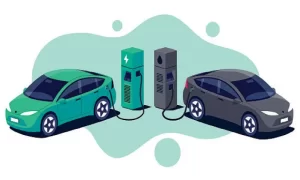
BMS technology is essential for electric vehicle battery safety, range optimization, and thermal management.
Energy storage systems (ESS)

Energy storage systems rely on BMS technology to manage large lithium battery banks connected to solar and wind power systems.
Consumer electronics

Smartphones, laptops, tablets, and wearable devices use compact BMS solutions to maximize battery life.
Medical equipment

Medical devices require highly reliable battery monitoring to ensure uninterrupted operation.
Telecommunications

Telecom backup systems use BMS technology to maintain network uptime.
Marine and RV systems

BMS solutions help protect batteries used in harsh outdoor environments.
Industrial equipment
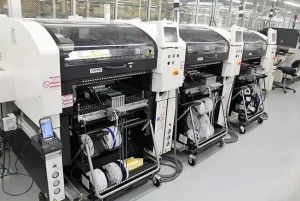
Forklifts, AGVs, robots, and industrial automation systems all depend on advanced battery management.
Part 8. How to choose a good bms supplier?
Not all BMS solutions offer the same level of safety and performance.
When evaluating a supplier, consider the following:
| Selection Factor | Why It Matters |
|---|---|
| Battery Chemistry Support | Compatibility with Li-ion, LiFePO4, NMC, etc. |
| Protection Functions | Overcharge, over-discharge, short-circuit protection |
| Balancing Technology | Active or passive balancing |
| Communication Protocols | CAN, RS485, UART, Modbus |
| Customization Capability | Supports specific application requirements |
| Certifications | Compliance with safety standards |
| Technical Support | Engineering assistance and after-sales support |
For custom battery packs, the BMS should be designed together with the battery to ensure optimal performance.
You may also find these resources useful:
Part 9. BMS FAQs
What does BMS stand for in batteries?
BMS stands for Battery Management System. It is an electronic control system that monitors and protects rechargeable battery packs by managing voltage, current, temperature, and cell balancing.
What is the main purpose of a Battery Management System?
The primary purpose of a BMS is to ensure battery safety, maximize performance, extend battery lifespan, and prevent conditions such as overcharging, deep discharging, overheating, and short circuits.
Can a lithium battery work without a BMS?
Technically yes, but it is not recommended. Without a BMS, lithium batteries are more vulnerable to overcharge, over-discharge, cell imbalance, and thermal runaway risks.
What is the difference between SOC and SOH?
SOC (State of Charge) indicates the remaining battery capacity, while SOH (State of Health) reflects the battery’s overall condition and remaining useful life.
Do all rechargeable batteries need a BMS?
Most lithium-ion and LiFePO4 battery packs require a BMS. Some simple battery systems may use basic protection circuits, but advanced rechargeable battery packs generally need a dedicated Battery Management System for safe operation.
Related Tags:

More Articles
LiFePO4 Voltage Chart Guide: Everything You Need to Know
Check the LiFePO4 voltage chart for 3.2V, 12V, 24V and 51.2V batteries. Compare SOC, charging voltage, cutoff limits and internal resistance.
Lithium Ion Cell Sizes: A Comprehensive Guide
Compare lithium ion cell sizes with a chart of dimensions, capacity ranges, cell types, applications, and key factors for selecting the right battery.
6 Volt Tractor Battery vs 12 Volt: Which One Fits Your Farm Equipment Best?
Compare 6V and 12V tractor batteries. Learn which voltage fits vintage or modern tractors, which specifications matter, and how to convert safely.
The Ultimate Guide to a Molten Salt Battery
Learn how a molten salt battery works, its main types, advantages, disadvantages, operating temperature, safety, and grid energy storage uses.
2000mAh Battery Runtime: How Long Will It Last in Real Devices?
Learn how to calculate 2000mAh battery runtime and backup time. See real device examples, power-loss factors, and battery replacement checks.