
- Key Takeaways
- Part 1. What is a lithium ion battery?
- Part 2. Types of lithium ion batteries for solar
- Part 3. Key factors when choosing a lithium ion battery for solar
- Part 4. Lithium ion vs lead-acid batteries for solar
- Part 5. Best lithium battery brands for solar (2026)
- Part 6. How to choose the best lithium battery for solar (quick guide)
- Part 7. FAQs about lithium ion batteries for solar
Solar energy systems need reliable storage to work day and night. A lithium ion battery for solar stores excess energy during the day and releases it when needed. But not all batteries perform the same. This guide helps you compare types, specs, and real-world use cases to choose the best option.
Key Takeaways
- LiFePO₄ is the best lithium battery for solar in most cases due to safety, long cycle life, and stability.
- Focus on usable capacity (kWh), cycle life, and efficiency (>95%), not just price.
- Lithium batteries outperform lead-acid in lifespan, depth of discharge, and maintenance.
- For home solar, choose modular, scalable systems to match future energy needs.
- The best lithium battery brands for solar include Ufine, Tesla, BYD, LG, and Pylontech depending on budget and application.
Part 1. What is a lithium ion battery?
A lithium-ion battery is a rechargeable battery that moves lithium ions between electrodes to store and release energy.
In a solar system, it works as an energy buffer:
- Stores excess solar power during the day
- Supplies electricity at night or during outages
- Improves energy independence and system efficiency
Why lithium ion batteries are ideal for solar systems
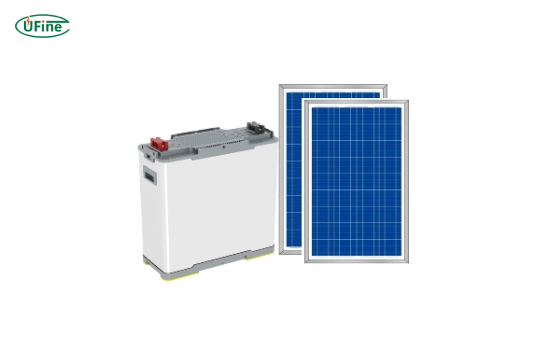
Compared to traditional storage, lithium ion batteries for solar panels offer clear advantages:
- High Energy Density
- More energy in less space. Ideal for residential installations.
- Long Lifespan
- Typically 10–15 years or up to 6,000 cycles.
- High Efficiency
- Round-trip efficiency often ≥95%, minimizing energy loss.
- Deep Depth of Discharge (DoD)
- Up to 80–90% usable capacity, unlike lead-acid (~50%).
- Low Maintenance
- No watering, no equalization charging.
- Modular & Scalable
- You can expand capacity as your solar system grows.
Part 2. Types of lithium ion batteries for solar
Choosing the right chemistry is critical for performance and safety.
1 Lithium iron phosphate (lifepo₄) — best overall
- Cycle life: 4,000–6,000+
- Safety: Excellent thermal stability
- Best for: Home solar, off-grid systems
Pros:
- Long lifespan
- High safety
- Stable performance
Cons:
- Slightly lower energy density
👉 Best lithium battery for solar in most residential and commercial systems
2 Lithium nickel manganese cobalt (nmc)
- Energy density: High
- Best for: Compact systems, hybrid use
Pros:
- Lightweight
- High capacity per size
Cons:
- Shorter lifespan than LiFePO₄
- Lower thermal stability
3 Lithium titanate (lto)
- Cycle life: Up to 20,000
- Best for: Industrial and extreme environments
Pros:
- Ultra-long life
- Fast charging
- Wide temperature range
Cons:
- High cost
- Lower energy density
4 Lithium cobalt oxide (lco)
- Use case: Consumer electronics
❌ Not recommended for solar due to safety and lifespan limitations.
Part 3. Key factors when choosing a lithium ion battery for solar
- Capacity (kWh)
- Determines how much energy you can store
- Typical home: 5–15 kWh
- Cycle Life
- Indicates durability
- Aim for ≥4,000 cycles
- Efficiency
- Look for ≥95% round-trip efficiency
- Depth of Discharge (DoD)
- Higher DoD = more usable energy
- Ideal: ≥80%
- Battery Management System (BMS)
- Protects against overcharge, overheating, short circuits
- Cost per kWh (Lifecycle Cost)
- Evaluate cost per cycle, not just upfront price
👉 When selecting a system, weight and installation flexibility also matter. You can explore this in more detail in our guide on choosing a lightweight lithium battery for solar applications, especially for space-limited setups.
Part 4. Lithium ion vs lead-acid batteries for solar
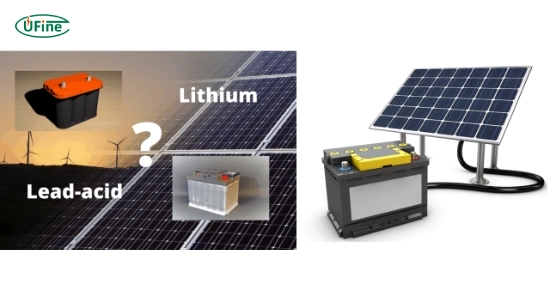
| Feature | Lithium Ion | Lead-Acid |
|---|---|---|
| Lifespan | 10–15 years | 3–5 years |
| Efficiency | ≥95% | 70–85% |
| DoD | 80–90% | ~50% |
| Maintenance | None | High |
| Cost (long-term) | Lower | Higher |
✅ Conclusion: Lithium-ion batteries are the better long-term investment for solar systems.
Part 5. Best lithium battery brands for solar (2026)
If you’re searching for the best lithium battery brands for solar, these are widely used:
- Ufine Battery
- Focus: LiFePO₄ custom solutions
- Best for: OEM, industrial, residential
- Tesla Powerwall
- High capacity, smart energy management
- Ideal for home solar systems
- LG Energy Solution (RESU)
- Compact and efficient
- Trusted global brand
- BYD Battery-Box
- Modular and scalable
- Strong for residential and commercial
- Pylontech
- Cost-effective
- Popular in off-grid systems
- SimpliPhi Power
- High safety LiFePO₄ systems
- Reliable performance
Part 6. How to choose the best lithium battery for solar (quick guide)
| Scenario | Recommended Type | Why |
|---|---|---|
| Home solar | LiFePO₄ | Safe, long life |
| Off-grid | LiFePO₄ / LTO | Reliability |
| Portable systems | NMC | Compact |
| Industrial | LTO | Extreme durability |
Industry data from the International Energy Agency shows that lithium ion batteries for solar are now the dominant choice for residential energy storage due to their efficiency and long lifecycle.
Research from NREL also confirms that LiFePO₄ chemistry provides better thermal stability, making it safer for home solar installations.
Part 7. FAQs about lithium ion batteries for solar
What is the best lithium ion battery for solar panels?
LiFePO₄ batteries are the best choice for most solar systems due to their safety, long lifespan, and stable performance.
How long do lithium ion batteries for solar last?
Most lithium ion batteries last 10–15 years or 3,000–6,000 cycles, depending on usage and quality.
Are lithium ion batteries safe for home solar systems?
Yes. Modern systems include a BMS (Battery Management System) for protection against overheating, overcharging, and short circuits.
How much does a lithium ion solar battery cost?
Typically $5,000–$10,000 per unit, depending on capacity, brand, and installation.
Which lithium battery is best for solar in Pakistan or hot climates?
LiFePO₄ and LTO batteries perform better in high temperatures due to strong thermal stability, making them suitable for regions like Pakistan.
Related Tags:

More Articles
Buck vs. Boost vs. Buck-Boost Converter: Which Is Best for Battery?
Not sure which converter your battery-powered device needs? Compare Buck, Boost, and Buck-Boost designs and discover what affects voltage stability and runtime.
How to Match 18650 Cells for a Reliable Battery Pack?
Building an 18650 battery pack? Learn how to compare cell capacity, voltage, and internal resistance to avoid mismatches and improve reliability.
Why Do 18650 Battery Packs Get Hot During Discharge?
Is your 18650 battery pack overheating under load? Learn what causes excess heat, how to spot dangerous symptoms, and what to do next.
18650 Battery BMS: How to Get the Specs Right
Learn how to choose a BMS for an 18650 battery pack. Compare voltage, current ratings, protection features, and balancing before you buy.
Why Does My Ring Camera Battery Drain So Fast or Stop Charging?
Is your Ring camera battery draining fast or not charging? Discover common causes, practical fixes, and when to replace the battery.


