- Part 1. Lithium polymer vs. lithium ion: Are they really different?
- Part 2. 6 differences between lithium polymer and lithium ion power banks
- Part 3. How long does a power bank last?
- Part 4. Can you take a lithium polymer power bank on a plane?
- Part 5. How to choose a lithium polymer battery for power bank manufacturing
- Part 6. FAQs
Power banks have become an everyday travel essential. According to an International Air Transport Association (IATA) passenger survey, 44% of travelers carry a power bank when flying, making portable battery safety and capacity more relevant than ever.
But when choosing a power bank, you may notice two common terms: lithium polymer and lithium ion. Are they actually different battery technologies? Does one offer better capacity, longer lifespan, or greater safety?
The answer is more nuanced than you might expect. Understanding the differences can help you choose a power bank that fits your devices, lifestyle, and travel needs.
Key takeaways
-
Lithium polymer (LiPo) power banks generally use pouch-format lithium-ion cells, while conventional lithium-ion power banks may use cylindrical or prismatic cells.
-
Pouch cells offer greater flexibility in battery shape and thickness, making them suitable for slim and compact power banks.
-
Neither battery format automatically provides better energy density, cycle life, or safety. Cell chemistry, design, and protection systems matter.
-
A power bank’s advertised mAh capacity is not the same as its usable USB output capacity because voltage conversion consumes energy.
Part 1. Lithium polymer vs. lithium ion: Are they really different?
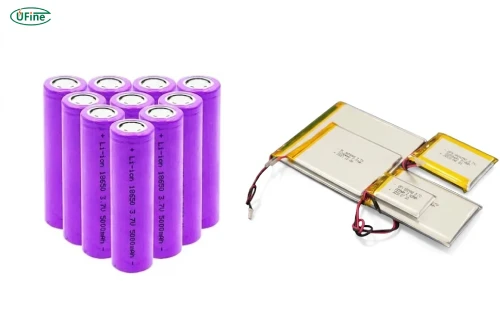
First, let’s clear up a common misconception: lithium polymer batteries are generally a type of lithium-ion battery.
The term “lithium polymer” is widely used in the consumer electronics industry to describe rechargeable lithium-ion cells with a flexible pouch enclosure. These cells typically contain layered electrodes, a separator, and an electrolyte. The pouch packaging replaces the rigid metal casing found in conventional cylindrical cells.
A traditional lithium-ion power bank, on the other hand, often uses cylindrical cells such as 18650 or 21700 batteries.
Therefore, the main difference you encounter when comparing these power banks is often the cell format and packaging, rather than two completely different battery chemistries.
This distinction matters because battery packaging influences how manufacturers design a power bank, including its thickness, shape, internal layout, and weight.
Part 2. 6 differences between lithium polymer and lithium ion power banks
2.1 Battery shape and space utilization
One of the biggest advantages of pouch-format LiPo cells is their flexible dimensions.
Unlike standard cylindrical cells, pouch cells can be manufactured in different lengths, widths, and thicknesses. This makes them easier to integrate into flat or irregularly shaped enclosures.
For example, a slim 5,000mAh power bank may benefit from a thin pouch cell that fits behind its circuit board and charging components.
Cylindrical cells are more standardized and mechanically robust, but their round shape can leave unused gaps inside a flat enclosure.
2.2 Energy density and actual capacity
Energy density determines how much energy a battery stores relative to its weight or volume.
However, don’t assume every LiPo battery has a higher energy density than every cylindrical lithium-ion cell. The actual result depends on electrode materials, cell design, manufacturing quality, and operating conditions.
When comparing power banks, look beyond the advertised mAh figure. A 10,000mAh rating alone does not tell you how much energy the battery stores or how much power your phone will receive.
For a more meaningful comparison, check the watt-hour (Wh) rating.
2.3 Weight and portability
Pouch cells use lightweight laminated packaging rather than a rigid cylindrical metal can. This can reduce cell-level packaging weight and allow manufacturers to develop thinner products.
That said, the total power bank weight also depends on its housing, circuit board, cooling design, connectors, and battery capacity.
If portability is your priority, compare the actual dimensions and weight of the complete product instead of judging it by battery format alone.
2.4 Battery lifespan and charge cycles
Battery lifespan is influenced more by cell chemistry and operating conditions than by whether a cell uses pouch or cylindrical packaging.
Repeated full charging and discharging, high temperatures, excessive charging voltage, and prolonged storage at high states of charge can accelerate battery aging.
For example, a power bank regularly exposed to heat inside a parked car may lose capacity faster than one used and stored under moderate conditions.
When evaluating cycle life, check the manufacturer’s testing conditions. A claim of 500 cycles is more meaningful when you also know the charging voltage, discharge rate, temperature, and remaining-capacity threshold used in the test.
2.5 Battery swelling and thermal safety
Pouch batteries can swell as gas accumulates inside the cell during aging, abnormal operation, or certain failure conditions.
Overcharging, overheating, internal defects, and repeated stress can contribute to gas generation. Swelling is not simply a cosmetic issue: it may indicate that the cell is damaged or deteriorating.
If your power bank becomes noticeably swollen, stop using and charging it. Do not press, puncture, or attempt to flatten the battery.
Safety also depends on the battery protection circuit, which should help prevent overcharging, over-discharging, overcurrent, and short circuits. Proper cell selection, insulation, mechanical support, and thermal design are equally important.
2.6 Cost and manufacturing considerations
Cylindrical cells benefit from standardized dimensions and established mass-production processes, which can make sourcing and assembly more straightforward.
Pouch cells offer greater customization flexibility, but non-standard dimensions may require additional development and manufacturing considerations.
For manufacturers, the best choice depends on the target product’s dimensions, capacity, production volume, and cost requirements.
| Comparison | Lithium-ion pouch cell (LiPo) | Cylindrical lithium-ion cell |
|---|---|---|
| Packaging | Flexible laminated pouch | Rigid metal casing |
| Shape | Customizable dimensions | Standardized cylindrical shape |
| Design flexibility | High | More limited |
| Mechanical protection | Requires suitable external support | Rigid casing provides protection |
| Typical applications | Slim power banks, compact electronics | Standard and multi-cell power banks |
Part 3. How long does a power bank last?
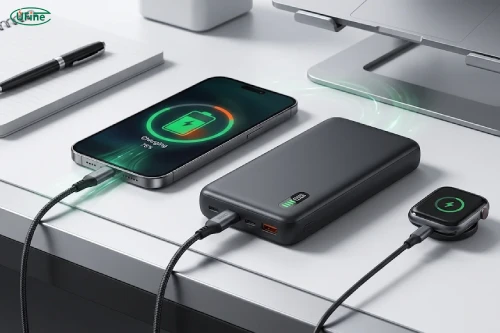
How long a power bank lasts depends on two things: how long it can power your devices on a single charge and how many years it can continue working before its battery capacity noticeably declines.
3.1 How many times can a power bank charge your phone?
The number of charges depends on the power bank’s capacity, your phone’s battery size, and energy lost during voltage conversion.
For example, a 10,000mAh power bank rated at 3.7V stores approximately 37Wh of energy. Assuming 85% conversion efficiency, around 31.45Wh is available for USB output.
A smartphone with a 5,000mAh battery rated at 3.85V stores approximately 19.25Wh. Therefore, the power bank could theoretically provide about 1.6 full charges under these assumptions.
3.2 Estimated charging times for different power bank capacities
The following table assumes a 5,000mAh smartphone battery, a 3.85V nominal phone battery voltage, and 85% power bank conversion efficiency.
| Power Bank Capacity | Stored Energy (3.7V) | Estimated Full Charges |
|---|---|---|
| 5,000mAh | 18.5Wh | 0.8 times |
| 10,000mAh | 37Wh | 1.6 times |
| 20,000mAh | 74Wh | 3.3 times |
| 27,000mAh | 99.9Wh | 4.4 times |
These are estimates rather than guaranteed results. Actual charging performance varies with device power consumption, cable quality, charging temperature, and conversion efficiency.
3.3 How long does a power bank last before needing replacement?
A power bank’s service life depends on its battery cycle life, charging habits, operating temperature, and overall component quality.
With repeated use, lithium-ion cells gradually lose their ability to store energy. You may notice that your power bank charges your phone fewer times than it did when new, takes longer to recharge, or shuts down unexpectedly.
For manufacturers, choosing cells with suitable cycle-life specifications and designing effective thermal and charging management systems can help maintain performance over repeated charging cycles.
Part 4. Can you take a lithium polymer power bank on a plane?
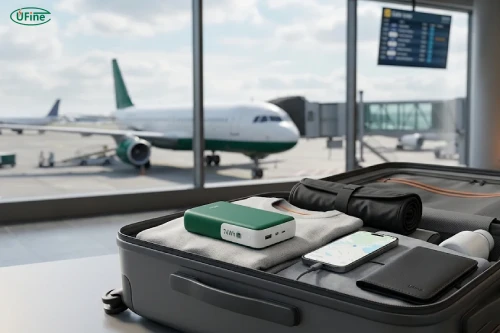
Yes, lithium polymer power banks are generally permitted on passenger aircraft when they meet applicable lithium-ion battery restrictions. However, airline rules have become more specific in 2026.
According to the 2026 ICAO Technical Instructions, passengers may carry no more than two power banks. Recharging power banks onboard aircraft is prohibited, and passengers are advised against using them to charge other portable electronic devices during the flight.
4.1 Understanding the 100Wh and 160Wh limits
Battery capacity for air travel is measured in watt-hours (Wh), not just mAh.
The following examples assume a nominal battery voltage of 3.7V:
| Power bank capacity | Energy rating | General travel category |
|---|---|---|
| 5,000mAh | 18.5Wh | Within 100Wh |
| 10,000mAh | 37Wh | Within 100Wh |
| 20,000mAh | 74Wh | Within 100Wh |
| 27,000mAh | 99.9Wh | Within 100Wh |
| 40,000mAh | 148Wh | Requires airline approval where permitted |
Generally, batteries up to 100Wh are permitted in carry-on baggage. Batteries above 100Wh and up to 160Wh may require airline approval. Batteries exceeding 160Wh are generally prohibited on passenger aircraft.
Always check the actual Wh rating printed on the product rather than relying only on its advertised mAh capacity.
4.2 Carry-on vs. checked baggage
Power banks are treated as spare lithium batteries. They must be carried in hand baggage, not checked baggage.
Keep the power bank protected against physical damage and short circuits. If your carry-on bag is taken at the boarding gate for placement in the aircraft hold, remove the power bank and keep it with you.
A swollen, damaged, or recalled power bank should not be taken onboard.
Part 5. How to choose a lithium polymer battery for power bank manufacturing
If you’re developing a power bank, choosing a battery involves more than selecting a capacity.
Start with the required output power and energy. A 5,000mAh compact power bank and a 20,000mAh fast-charging model have different requirements for cell capacity, discharge current, and thermal management.
Next, consider the available internal space. Measure the enclosure carefully and determine the maximum battery length, width, and thickness. Custom pouch cells can help manufacturers use otherwise wasted space.
You should also verify the cell’s nominal voltage, maximum charging voltage, recommended charging current, continuous discharge current, and operating temperature range.
Finally, evaluate the protection circuit and relevant safety testing. Depending on the target market and product design, requirements may include UN38.3 transportation testing and applicable UL or IEC standards.
For products with unusual dimensions or specific performance requirements, a custom LiPo battery can offer greater design flexibility than an off-the-shelf cell.
Ufine Battery customizes battery capacity, voltage, and dimensions to fit your power bank designs.
Contact Ufine NowPart 6. FAQs
1. What Is the Difference Between a LiPo Pouch Cell and an 18650 Battery?
A LiPo pouch cell uses flexible laminated packaging and can be manufactured in different dimensions. An 18650 battery has a standardized cylindrical metal casing with a diameter of approximately 18mm and a length of 65mm. The main differences are packaging, dimensions, and integration flexibility.
2. Can You Charge a Lithium Polymer Power Bank Overnight?
A properly designed power bank should have a charging control circuit that terminates or manages charging when the battery reaches its specified voltage. However, use a compatible charger, avoid damaged products, and do not charge a swollen or overheating power bank unattended.
3. Why Does a Power Bank Lose Charge When Not in Use?
Power banks experience self-discharge even when disconnected from devices. Their internal protection and power-management circuits may also consume a small amount of energy in standby mode. High storage temperatures and battery aging can increase capacity loss.
4. Does Fast Charging Reduce the Lifespan of a Lithium Polymer Power Bank?
It can accelerate battery aging if the charging current generates excessive heat or exceeds the cell’s recommended limits. However, fast charging within the battery manufacturer’s specifications, supported by a suitable charging management system, can be used without necessarily causing abnormal degradation.
5. What Happens If a Lithium Polymer Power Bank Gets Too Hot?
Excessive heat can accelerate electrolyte degradation, increase internal pressure, and damage battery components. If a power bank becomes unusually hot, disconnect it if safe to do so and stop using it. If it swells, smokes, or shows signs of thermal failure, keep away and follow appropriate emergency procedures.
Related Tags:

More Articles

Swollen Laptop Battery? Don’t Ignore These Signs
Is your laptop case bulging? Find out why lithium batteries swell, what risks you should know, and how to handle a swollen battery safely.
200 Amp Lithium Battery: Better Than Lead-Acid?
Is a 200Ah lithium battery worth the extra cost? Compare runtime, lifespan, usable power, and long-term savings before you buy.
Where to Find Reliable LiPo Battery Suppliers for OEM Projects
Looking for LiPo battery suppliers? Discover where to find reliable manufacturers and how to avoid costly sourcing mistakes.
How to Choose the Right 2S Shorty LiPo Battery for Your RC Car?
Not sure which 2S Shorty LiPo to buy? Compare battery specs, popular brands, prices, and performance to find the right fit for your RC car.
What Happens If One Cell in a Battery Pack Goes Bad? How to Fix It
Found a faulty battery cell? Discover how to identify the problem, whether one cell can be replaced, and how to fix a battery pack safely.