- Key Takeaways
- Part 1. Understanding ebike battery systems
- Part 2. Electric bike battery types
- Part 3. How to choose the right ebike battery?
- Part 4. Ebike battery maintenance tips
- Part 5. Common ebike battery problems
- Part 6. Electric bicycle battery manufacturers: what matters most?
- Part 7. Ebike battery applications
- Part 8. FAQs about ebike batteries
An ebike battery powers the motor, affects riding range, and influences overall bike performance. Modern electric bike battery types mainly include lithium-ion, LiFePO4, and older lead-acid systems.
Choosing the right ebike battery depends on voltage, capacity, weight, charging speed, and application. This guide explains battery types, key components, range calculation, maintenance tips, and how to choose batteries for electric bicycles.
Key Takeaways
- Lithium-ion batteries are the dominant electric bike battery type because they offer high energy density, lower weight, and longer cycle life.
- Most modern ebikes use 36V, 48V, or 52V battery systems.
- Battery capacity (Wh) directly affects riding range and power delivery.
- A high-quality Battery Management System (BMS) improves safety and battery lifespan.
- NMC and LiFePO4 are the two most common lithium battery chemistries for e-bikes.
- Proper charging and storage can significantly extend ebike battery life.
- Reliable electric bicycle battery manufacturers focus on cell quality, thermal protection, waterproof design, and cycle performance.
Part 1. Understanding ebike battery systems
An ebike battery stores electrical energy and supplies power to the motor controller and drive system. Modern batteries for electric bicycles combine battery cells, electronic protection systems, connectors, and housing into one integrated pack.
Main components of an ebike battery
Battery Cells
Battery cells are the core of every ebike battery.
Most modern electric bicycles use lithium-ion cells because they provide:
- High energy density
- Lightweight design
- Stable discharge performance
- Long cycle life
- Fast charging capability
Cells are connected in series and parallel to create the required voltage and capacity.
Common cell formats include:
- 18650 cells
- 21700 cells
- Pouch cells
For example, many high-performance electric bike battery manufacturers now use 21700 lithium-ion cells because they offer higher capacity and improved thermal performance.
Related reading: 18650 Rechargeable Battery Guide
Battery Management System (BMS)
The Battery Management System controls and protects the battery pack.
A quality BMS helps prevent:
- Overcharging
- Over-discharging
- Overcurrent
- Short circuits
- Overheating
The BMS also balances cell voltage and improves long-term battery stability.
In high-power ebike applications, an advanced BMS is critical for safety and cycle life.
Battery housing and casing
The casing protects the battery from:
- Water
- Dust
- Vibration
- Mechanical shock
Electric bike batteries commonly use aluminum alloy or reinforced plastic housings with IP-rated waterproof protection.
Common mounting styles include:
| Battery Type | Mounting Position | Common Use |
|---|---|---|
| Downtube battery | Frame downtube | City and mountain e-bikes |
| Rear rack battery | Rear carrier | Commuter bikes |
| Integrated battery | Inside frame | Premium ebikes |
| External removable battery | Outside frame | Delivery and fleet bikes |
Connectors and wiring
Battery connectors transfer power between the battery, controller, and motor.
Poor-quality connectors can cause:
- Voltage drop
- Heat buildup
- Power instability
High-current ebike systems usually require robust anti-spark connectors and waterproof cabling.
Part 2. Electric bike battery types
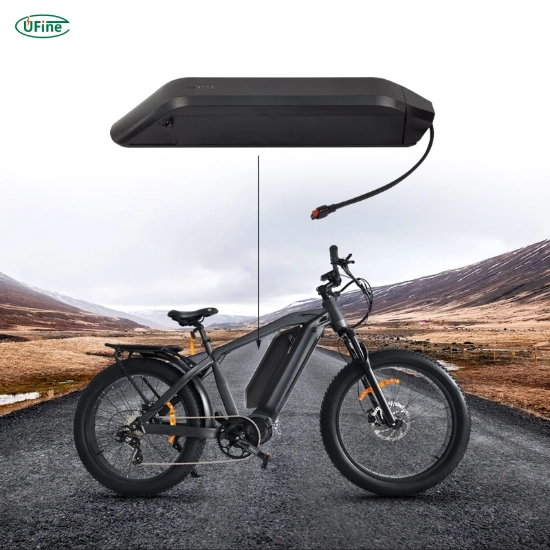
There are several electric bike battery types on the market, but lithium-ion batteries dominate modern ebike systems.
Lithium-ion (Li-ion) batteries
Lithium-ion batteries are the standard choice for modern e-bikes.
Advantages include:
- High energy density
- Lower weight
- Long lifespan
- Fast charging
- Minimal maintenance
Most premium ebike battery systems today use either NMC or LiFePO4 chemistry.
NMC batteries (Nickel Manganese Cobalt)
NMC batteries are widely used in electric bicycles because they provide:
- Higher energy density
- Compact size
- Strong acceleration performance
- Good balance between weight and range
NMC batteries are common in:
- Urban commuter e-bikes
- Folding ebikes
- Performance mountain e-bikes
LiFePO4 batteries (Lithium Iron Phosphate)
LiFePO4 batteries focus more on safety and lifespan.
Advantages include:
- Excellent thermal stability
- Longer cycle life
- Higher safety
- Better durability in industrial applications
They are commonly used in:
- Cargo e-bikes
- Delivery fleets
- Shared mobility systems
- Commercial electric bicycles
Related reading: Types of Lithium Batteries Explained
Nickel-Metal Hydride (NiMH) batteries
NiMH batteries were once common in early electric bicycles.
However, they are now less popular because they are:
- Heavier
- Less energy-dense
- Bulkier
- Less efficient than lithium batteries
Lead-acid batteries
Lead-acid batteries are mostly outdated in modern ebikes.
Disadvantages include:
- Very heavy weight
- Short cycle life
- Slow charging
- Low efficiency
They are still found in some low-cost electric bikes in developing markets.
Part 3. How to choose the right ebike battery?
Choosing the correct ebike battery depends on riding style, motor power, terrain, and range requirements.
1. Battery capacity (Wh)
Battery capacity determines how far the bike can travel.
Battery energy is usually measured in watt-hours (Wh).
Formula:
Wh = V × Ah
Examples:
| Battery | Approximate Range |
|---|---|
| 36V 10Ah (360Wh) | 25–50 km |
| 48V 15Ah (720Wh) | 50–100 km |
| 52V 20Ah (1040Wh) | 80–150 km |
Actual range depends on:
- Rider weight
- Terrain
- Pedal assist level
- Wind resistance
- Tire pressure
- Motor efficiency
2. Voltage
Common ebike battery voltages include:
- 36V
- 48V
- 52V
Higher voltage systems usually provide:
- Better acceleration
- Improved hill climbing
- Higher top speed
The battery voltage must match the motor controller specifications.
3. Cell quality
Battery performance depends heavily on cell quality.
Top-tier cell suppliers include:
- Samsung
- LG Energy Solution
- Panasonic
- EVE Energy
Premium electric bicycle battery manufacturers usually specify cell origin clearly.
4. Cycle life
Cycle life refers to how many charge cycles the battery can complete before capacity drops significantly.
Typical values:
| Battery Chemistry | Typical Cycle Life |
|---|---|
| NMC | 800–1500 cycles |
| LiFePO4 | 2000–5000 cycles |
| Lead-acid | 300–500 cycles |
5. Waterproof protection
For outdoor use, IP-rated protection is important.
Look for:
- Waterproof connectors
- Sealed casing
- Shock-resistant housing
This is especially important for:
- Mountain e-bikes
- Delivery bikes
- Rental fleets
6. Removable vs integrated batteries
| Type | Advantages | Limitations |
|---|---|---|
| Removable battery | Easy charging and replacement | Slightly larger |
| Integrated battery | Cleaner appearance | Harder to service |
Part 4. Ebike battery maintenance tips
Good maintenance can extend battery lifespan and improve safety.
Store at moderate temperature
Ideal storage temperature: 0°C ≤ T ≤ 20°C
Avoid:
- Direct sunlight
- Freezing temperatures
- Hot car interiors
High temperatures accelerate lithium battery degradation.
Avoid full discharge
Deep discharge can damage lithium-ion cells.
For best lifespan:
- Keep battery charge between 20% and 80% when possible
- Recharge before complete depletion
- Do not leave the battery empty for long periods
Use the correct charger
Always use:
- Manufacturer-approved chargers
- Correct voltage output
- Proper charging current
Using incompatible chargers can damage the BMS or cells.
Clean battery contacts
Dirty connectors increase electrical resistance.
Regularly clean:
- Charging ports
- Battery terminals
- Connector pins
Use a dry cloth only.
Inspect for damage
Check periodically for:
- Swelling
- Cracks
- Loose wiring
- Water ingress
- Abnormal heat
Stop using the battery immediately if abnormalities appear.
Part 5. Common ebike battery problems
Reduced range
Possible causes:
- Aging cells
- Cold weather
- Underinflated tires
- High motor load
Battery not charging
Potential issues:
- Faulty charger
- BMS protection mode
- Damaged charging port
- Internal cell imbalance
Overheating
Overheating may result from:
- High discharge current
- Poor ventilation
- Charger mismatch
- Internal short circuits
Voltage sag
Voltage drop under heavy load can occur when:
- Battery capacity is low
- Cells are aging
- Current demand is too high
Part 6. Electric bicycle battery manufacturers: what matters most?
When evaluating electric bike battery manufacturers, focus on engineering capability instead of only price.
Important factors include:
- Cell sourcing consistency
- BMS quality
- Pack assembly process
- Thermal management
- Waterproof design
- OEM/ODM capability
- UN38.3 certification
- IEC62133 compliance
Professional battery suppliers should also provide:
- Custom voltage and capacity options
- Communication protocols
- Mechanical design support
- Fast prototyping
- Long-term supply stability
Related reading: Custom Lithium Battery Manufacturer
Part 7. Ebike battery applications
Different battery systems are optimized for different electric bicycle applications.
| Application | Recommended Battery Type | Key Requirement |
|---|---|---|
| Urban commuting | NMC lithium-ion | Lightweight and long range |
| Mountain e-bike | High-rate lithium-ion | High discharge power |
| Cargo ebike | LiFePO4 | Durability and safety |
| Delivery fleet | LiFePO4 | Long cycle life |
| Folding ebike | Compact NMC pack | Small size |
| Shared mobility | Industrial lithium pack | High reliability |
Part 8. FAQs about ebike batteries
How long does an ebike battery last?
Most lithium-ion ebike batteries last between 3 and 5 years or around 800–1500 charge cycles. LiFePO4 batteries can last much longer with proper maintenance.
What is the best electric bike battery type?
Lithium-ion batteries are the best overall option for modern electric bicycles because they provide the best balance of weight, performance, range, and lifespan.
Can I upgrade my ebike battery capacity?
Yes. Many electric bicycles support larger-capacity battery packs if the voltage and connector type remain compatible with the motor controller.
How much does an ebike battery cost?
Most ebike batteries cost between $300 and $1000 depending on voltage, capacity, cell brand, and battery chemistry.
What voltage is best for an electric bicycle?
36V systems are common for commuter bikes, while 48V and 52V systems are preferred for higher speed, hill climbing, and heavy-load applications.
Related Tags:

More Articles
Dead Battery or Device Failure? How to Find the Cause
Think your device is broken? Learn how to tell if the problem comes from battery aging or hardware failure before replacing your electronics.
Why iPhone Duo Uses Two Batteries: The Engineering Behind Foldable Phone Power
Why do foldable phones need two batteries? Explore the engineering challenges behind iPhone Duo’s dual-battery architecture and future battery trends.
Solid-State Batteries: 3 Myths You Need to Know
Solid-state batteries promise safer EVs and longer range, but the reality is more complex. Discover the challenges behind this next-gen technology.
Battery Capacity vs Discharge Rate: The Choice Engineers Face
Higher capacity or higher discharge rate? Learn how to choose the right LiPo battery for longer runtime, stable power output, and better device performance.
Battery Cable Size Guide: Choose the Right Wire Fast
Not sure what battery cable size you need? Learn how to select the right wire gauge, terminal size, and cable for safer, more efficient battery systems.