
- Key Takeaways
- Part 1. What is an 18650 rechargeable battery?
- Part 2. 18650 battery specifications
- Part 3. 18650 battery 3.7v explained
- Part 4. Common 18650 battery chemistries
- Part 5. Protected vs unprotected 18650 batteries
- Part 6. Advantages of 18650 rechargeable batteries
- Part 7. Disadvantages of 18650 batteries
- Part 8. Charging a 18650 battery correctly
- Part 9. 18650 battery uses and applications
- Part 10. How to choose the right 18650 rechargeable battery?
- Part 11. 18650 battery maintenance and storage tips
- Part 12. 18650 battery vs other lithium battery formats
- Part 13. FAQs about 18650 rechargeable batteries
The 18650 rechargeable battery is a popular lithium-ion cell used in power tools, EVs, medical devices, flashlights, and energy storage systems. Standard 18650 battery specifications include a 3.7V nominal voltage, high energy density, and rechargeable performance with long cycle life.
This guide explains 18650 battery specs, charging methods, safety considerations, common applications, and how to choose the right 18650 Li-ion rechargeable battery for industrial and OEM projects.
Key Takeaways
- An 18650 battery is a cylindrical lithium-ion rechargeable battery measuring 18mm × 65mm.
- Standard nominal voltage is 3.6V or 3.7V.
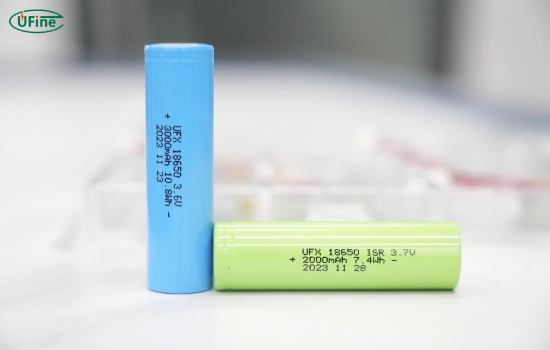
- Typical capacity ranges from 1800mAh to 3600mAh.
- Different chemistries offer different balances of safety, energy density, and discharge performance.
- High-drain 18650 batteries are commonly used in power tools, EV packs, and robotics.
- Proper charging is critical for battery lifespan and safety.
- Protected and unprotected 18650 cells serve different applications.
- OEM battery pack design requires matching voltage, current, temperature, and BMS requirements.
Part 1. What is an 18650 rechargeable battery?
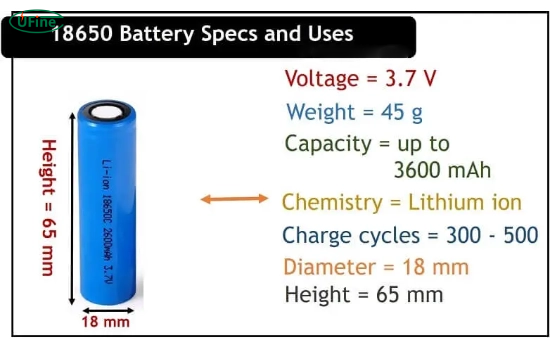
An 18650 rechargeable battery is a cylindrical lithium-ion cell named after its physical dimensions:
- 18mm diameter
- 65mm length
Most 18650 batteries use lithium-ion chemistry and operate at a nominal voltage of 3.6V or 3.7V.
Compared with older nickel-based batteries, 18650 Li-ion rechargeable batteries provide:
- Higher energy density
- Lower self-discharge
- Longer cycle life
- Better voltage stability
- Faster charging capability
These advantages make them ideal for portable electronics and industrial battery systems.
Part 2. 18650 battery specifications
Understanding 18650 battery specifications is essential when selecting cells for OEM battery packs or electronic devices.
Standard 18650 battery specs:
| Specification | Typical Range |
|---|---|
| Diameter | 18mm |
| Length | 65mm |
| Chemistry | Lithium-ion |
| Nominal Voltage | 3.6V–3.7V |
| Full Charge Voltage | 4.2V |
| Cut-Off Voltage | 2.5V–3.0V |
| Capacity | 1800mAh–3600mAh |
| Weight | 45g–50g |
| Cycle Life | 300–1000 cycles |
| Max Continuous Discharge | 5A–30A+ |
| Operating Temperature | -20°C to 60°C |
Part 3. 18650 battery 3.7v explained
Many users search for “18650 battery 3.7 V” because 3.7V is the nominal voltage of most lithium-ion 18650 cells.
In practice:
- Fully charged voltage: 4.2V
- Nominal operating voltage: 3.6V–3.7V
- Recommended discharge limit: around 3.0V
Voltage drops gradually during discharge.
Part 4. Common 18650 battery chemistries
Different lithium chemistries affect battery safety, lifespan, and power output.
| Chemistry | Features | Common Applications |
|---|---|---|
| NMC (LiNiMnCoO2) | Balanced performance | EVs, e-bikes |
| LCO (LiCoO2) | High energy density | Laptops |
| INR | High capacity + high drain | Power tools |
| IMR | Safer high-drain chemistry | Vapes, flashlights |
| LiFePO4 | Long cycle life, safer | Energy storage |
For industrial applications, chemistry selection should match discharge current, thermal conditions, and required cycle life.
You can also read our guide on types of lithium batteries to compare lithium chemistries in detail.
Part 5. Protected vs unprotected 18650 batteries
1 Protected 18650 battery
Protected cells include a built-in PCB (protection circuit board) that helps prevent:
- Overcharging
- Over-discharging
- Short circuits
- Overcurrent
These batteries are safer for consumer devices.
2 Unprotected 18650 battery
Unprotected cells do not include internal safety circuits.
They are commonly used in:
- Custom battery packs
- Industrial systems
- Robotics
- High-drain devices
These applications rely on an external Battery Management System (BMS).
Part 6. Advantages of 18650 rechargeable batteries
- High energy density
- 18650 rechargeable batteries store a large amount of energy in a compact size. This helps reduce overall device weight and size.
- Long cycle life
- Most quality cells support hundreds of charge-discharge cycles before noticeable capacity loss.
- Stable voltage output
- Voltage remains relatively stable during discharge, improving device performance consistency.
- High discharge capability
- Some high-drain 18650 cells support continuous discharge rates above 20A, making them suitable for demanding equipment.
- Rechargeability
- Compared with disposable batteries, rechargeable battery 18650 cells significantly reduce long-term operating costs.
Part 7. Disadvantages of 18650 batteries
- Thermal runaway risk
- Improper charging, physical damage, or internal defects may cause overheating or thermal runaway.
- For battery safety standards, refer to the UL safety standards and the IEC battery testing standards.
- Capacity degradation
- All lithium-ion batteries lose capacity over time due to chemical aging.
- Strict charging requirements
- Charging a 18650 battery requires controlled voltage and current. Incorrect chargers may damage the cell or reduce lifespan.
Part 8. Charging a 18650 battery correctly
Charging safety is one of the most important topics for lithium-ion batteries.
Standard charging process:
Most 18650 rechargeable batteries use the CC/CV charging method:
- Constant Current (CC)
- Constant Voltage (CV)
Standard charging voltage is: 4.2V
Best practices for charging a 18650 battery:
- Use chargers designed for lithium-ion batteries
- Avoid charging above 4.2V
- Avoid deep discharge below 2.5V
- Do not charge unattended in high-temperature environments
- Use matched cells in multi-cell packs
Fast charging considerations:
Fast charging increases heat generation and may shorten cycle life if not properly managed.
For OEM products, thermal management and BMS design are critical.
Part 9. 18650 battery uses and applications
The versatility of 18650 batteries makes them common across many industries.
-
Consumer electronics
- Laptops, tablets, portable speakers, power banks.
-
Flashlights and tactical equipment
- 18650 batteries are widely used in high-lumen LED flashlights because they provide stable voltage and high current output.
-
Power tools
- Cordless drills, saws, and industrial tools rely on high-drain 18650 cells for continuous power delivery.
-
Electric vehicles and e-bikes
- Many EV battery packs use multiple 18650 lithium-ion rechargeable cells connected in series and parallel.
-
Medical devices
- Portable medical equipment requires reliable and rechargeable power solutions.
-
Energy storage systems
18650 batteries are used in:
- UPS systems
- Solar storage
- Portable energy stations
-
Robotics and drones
- Engineers use 18650 cells in robotics because of their excellent balance between weight, energy density, and discharge performance.
Part 10. How to choose the right 18650 rechargeable battery?
Consider capacity:
Higher mAh means longer runtime.
Examples:
- 2000mAh–2600mAh: high-drain applications
- 3000mAh–3600mAh: long runtime applications
Check discharge current:
Devices like power tools require high continuous discharge ratings.
Evaluate safety requirements:
For consumer electronics, protected cells are often preferred.
Verify dimensions:
Protected batteries may be slightly longer than standard 65mm cells.
Match the application:
| Application | Recommended Feature |
|---|---|
| Flashlights | High-drain capability |
| Medical devices | Stable voltage |
| Energy storage | Long cycle life |
| Robotics | Balanced capacity and discharge |
| E-bikes | High current output |
For customized battery packs, visit our custom lithium battery solutions page.
Part 11. 18650 battery maintenance and storage tips
Storage recommendations:
- Store at 40%–60% charge for long-term storage
- Keep in cool, dry environments
- Avoid direct sunlight
Temperature control:
High temperatures accelerate battery aging.
Low temperatures temporarily reduce capacity and discharge performance.
Regular inspection:
Replace cells showing:
- Swelling
- Leakage
- Corrosion
- Physical dents
- Excessive heat during use
Part 12. 18650 battery vs other lithium battery formats
| Battery Type | Size | Advantages | Common Uses |
|---|---|---|---|
| 18650 | Cylindrical | Mature, reliable | Tools, EVs |
| 21700 | Larger cylindrical | Higher capacity | EVs, storage |
| LiPo | Pouch | Lightweight | Drones |
| Prismatic | Flat cell | Space efficient | Energy storage |
You may also compare 18650 vs 21700 batteries for newer battery pack designs.
Part 13. FAQs about 18650 rechargeable batteries
What is the lifespan of an 18650 rechargeable battery?
Most 18650 rechargeable batteries last between 300 and 1000 cycles depending on chemistry, charging habits, and operating temperature.
Can I charge any 18650 battery with the same charger?
No. Always use a charger compatible with lithium-ion 18650 batteries and verify charging voltage and current specifications.
What is the difference between protected and unprotected 18650 batteries?
Protected cells include built-in safety circuits. Unprotected cells require external battery management systems.
Are 18650 batteries safe for industrial applications?
Yes, when combined with proper BMS design, thermal management, and certified charging systems.
Can 18650 batteries be connected in series or parallel?
Yes. Series connections increase voltage, while parallel connections increase capacity. Cells should always be matched by voltage, capacity, and age.
Related Tags:

More Articles

Comparative Analysis: 14500 Battery Vs. 18650 Battery
Compare 14500 vs 18650 batteries by size, voltage, capacity, runtime, discharge current, charging, safety, and applications to choose the right cell.
12V Lithium-Ion What Voltage at Fully Charged and Why Your Battery Might Not Reach It
Check the 12V lithium battery voltage chart for 3S Li-ion and 4S LiFePO4. Learn full charge, resting voltage, charger limits, and fault checks.
LiFePO4 Voltage Chart Guide: Everything You Need to Know
Check the LiFePO4 voltage chart for 3.2V, 12V, 24V and 51.2V batteries. Compare SOC, charging voltage, cutoff limits and internal resistance.
Lithium Ion Cell Sizes: A Comprehensive Guide
Compare lithium ion cell sizes with a chart of dimensions, capacity ranges, cell types, applications, and key factors for selecting the right battery.
6 Volt Tractor Battery vs 12 Volt: Which One Fits Your Farm Equipment Best?
Compare 6V and 12V tractor batteries. Learn which voltage fits vintage or modern tractors, which specifications matter, and how to convert safely.


