
- Key Takeaways
- Part 1. Why lithium battery for rv is better than lead-acid options
- Part 2. How we tested the best lithium battery for rv and camper use
- Part 3. Best lithium battery for rv: Quick comparison table
- Part 4. Top 10 lithium battery for rv and camper systems (ranked & reviewed)
- Part 5. How to choose the best lithium battery for rv and camper use
- Part 6. Best lithium battery for rv: Key buying factors (quick answer)
- Part 7. Common misconceptions about lithium battery for rv systems
- Part 8. Best lithium battery for rv and camper: FAQs
Disclosure: Ufine Battery is our own product. We included it in this list because of its relevance for RV applications. However, all batteries were evaluated using the same criteria to ensure a fair and balanced comparison.
Finding the best lithium battery for RV, camper, or off-grid systems can be challenging. With so many lithium RV battery options available, it’s important to compare real performance, not just specifications.
In this guide, we analyze the best lithium battery for RV use cases, including camper setups and solar-powered systems. We compare 10 popular batteries based on cycle life, discharge performance, and long-term value to help you choose the right solution.
Key Takeaways
- LiFePO4 batteries are the best choice for RV and camper systems due to long lifespan, safety, and deep discharge capability.
- Lithium RV batteries offer 3000–5000 cycles, far exceeding AGM’s 500–1000 cycles.
- A 12V 100Ah LiFePO4 battery is the most common and balanced option for standard RV use.
- Key selection factors include capacity (Ah), cycle life, BMS protection, weight, and compatibility.
- Lithium batteries provide higher usable capacity, faster charging, and lighter weight than AGM or flooded batteries.
Part 1. Why lithium battery for rv is better than lead-acid options
Choosing a lithium battery for RV or camper systems offers significant advantages over traditional AGM or flooded batteries. Lithium RV batteries are now the preferred option for both recreational and off-grid applications.
- Higher usable capacity: Lithium batteries allow deeper discharge (80–100% DOD)
- Longer lifespan: Typically 3000–5000 cycles vs 500–1000 cycles for lead-acid
- Faster charging: Ideal for solar charging and generator use
- Lighter weight: Easier installation in RV and camper setups
- Stable performance: Consistent voltage output under load
For RV owners using solar panels or running high-load appliances, a lithium battery for camper or RV setups provides better efficiency and reliability.
Part 2. How we tested the best lithium battery for rv and camper use
To determine the best lithium battery for RV and camper applications, we evaluated 10 batteries based on real-world usage scenarios, including off-grid camping, solar systems, and continuous appliance operation.
- Cycle life: Estimated lifespan under repeated charge-discharge cycles
- Discharge performance: Stability when powering RV appliances
- BMS protection: Safety features such as overcharge, overcurrent, and temperature control
- Weight & size: Practical fit for RV battery compartments
- Cost per kWh: Long-term value rather than upfront cost
We combined manufacturer specifications with application-based analysis to ensure a consistent and fair comparison across all lithium RV batteries.
Part 3. Best lithium battery for rv: Quick comparison table
| Battery | Type | Capacity | Cycle Life | Best For |
|---|---|---|---|---|
| Ufine LiFePO₄ | Lithium | 100Ah | 4000+ | High-performance RV systems |
| Battle Born | LiFePO₄ | 100Ah | 3000–5000 | Off-grid RV & camper |
| Renogy AGM | AGM | 100Ah | 500–1000 | Budget RV setups |
| Litime Mini | LiFePO₄ | 100Ah | 4000+ | Compact camper use |
| Redodo LiFePO₄ | LiFePO₄ | 100Ah | 4000–15000 | Long lifespan applications |
Part 4. Top 10 lithium battery for rv and camper systems (ranked & reviewed)
1 Renogy deep cycle AGM battery 12v 100ah
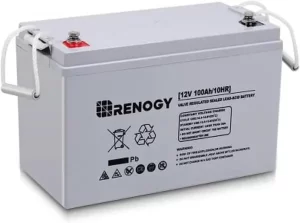
Best for: Budget RV battery setups
Pros:
- Stable performance in cold weather
- Low self-discharge rate
- Durable and vibration-resistant
Cons:
- Heavier than lithium RV batteries
- Shorter lifespan (500–1000 cycles)
Bottom line: A reliable entry-level option, but less efficient than lithium batteries for long-term RV use.
2 Ufine 12v 100ah LiFePO4 battery
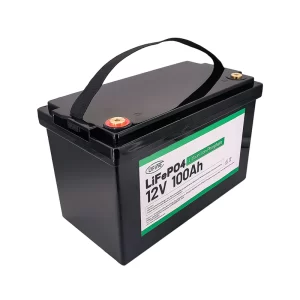
Best for: High-performance RV and solar systems
Pros:
- Stable voltage output under continuous RV loads
- High discharge rate (up to 5C) for appliances
- Long cycle life suitable for off-grid use
Cons:
- Higher upfront cost than AGM batteries
- May require compatible charger for older RV systems
Bottom line: A strong lithium battery for RV users who prioritize performance, lifespan, and solar integration.
3 Interstate batteries agm deep cycle battery
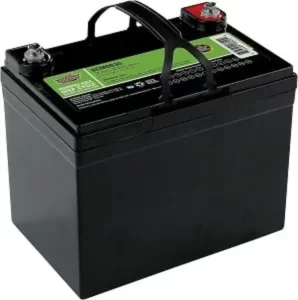
Best for: Lightweight backup RV power
Pros:
- Compact and lightweight design
- Reliable in cold conditions
- Maintenance-free AGM structure
Cons:
- Lower capacity (35Ah)
- Shorter cycle life
Bottom line: Suitable for small RV or backup systems, but not ideal for full-time use.
4 Duracell ultra flooded deep cycle marine & rv battery
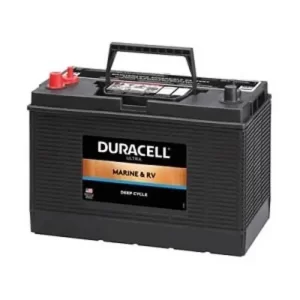
Best for: Traditional RV setups with low budget
Pros:
- Affordable and widely available
- Good capacity for basic RV needs
- Suitable for marine and RV use
Cons:
- Requires maintenance
- Heavy and less efficient
Bottom line: A cost-effective option, but less convenient compared to lithium RV batteries.
5 Redodo 12v 100ah lifepo₄ lithium battery
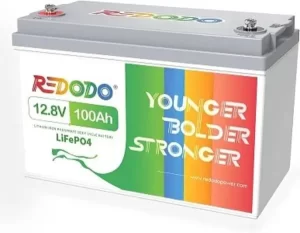
Best for: Long lifespan lithium RV battery use
Pros:
- High cycle life (up to 4000+ cycles)
- Long service life up to 10 years
- Reliable performance for RV systems
Cons:
- Compatibility may vary with older systems
Bottom line: A solid lithium battery for RV users looking for long-term durability.
6 Litime 12v 100ah mini lifepo₄ lithium battery
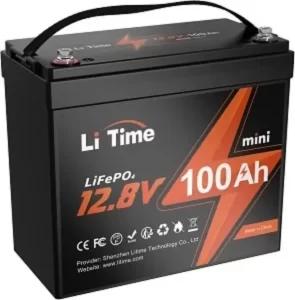
Best for: Compact camper and small RV systems
Pros:
- Lightweight and space-saving design
- IP65 waterproof rating
- Suitable for limited installation space
Cons:
- May have compatibility issues with some setups
Bottom line: Ideal for camper vans and compact RV installations.
7 Optima batteries d34m bluetop
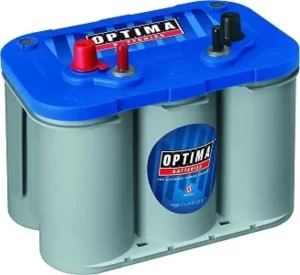
Best for: Hybrid starting and deep-cycle RV use
Pros:
- High cold-cranking amps (CCA)
- Dual-purpose functionality
- Fast recharge capability
Cons:
- Lower capacity (55Ah)
Bottom line: Useful for RV setups requiring both starting and deep-cycle functions.
8 Weize 12v 100ah gel battery
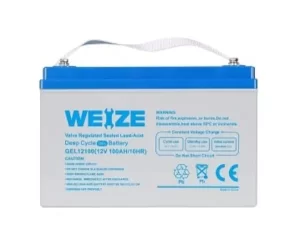
Best for: Maintenance-free RV systems
Pros:
- Spill-proof and sealed design
- Low maintenance requirements
- Suitable for solar and RV use
Cons:
- Heavier than lithium batteries
- Sensitive to overcharging
Bottom line: A reliable alternative to AGM batteries, but less efficient than lithium options.
9 X2power agm deep cycle battery
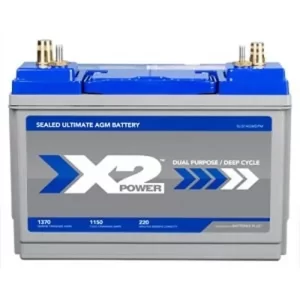
Best for: High CCA performance in RV systems
Pros:
- High cold-cranking performance
- Maintenance-free AGM design
- Durable construction
Cons:
- Heavy weight
- Limited cycle life
Bottom line: Suitable for high-demand AGM applications but not as efficient as lithium RV batteries.
10 Battle born lifepo₄ deep cycle battery
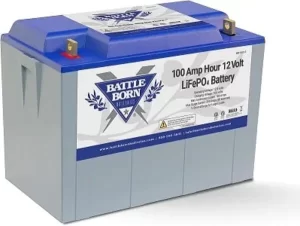
Best for: Premium off-grid RV and camper systems
Pros:
- Long cycle life (3000–5000 cycles)
- Built-in BMS protection
- Reliable performance for solar RV systems
Cons:
- Higher price compared to alternatives
Bottom line: A premium lithium battery for RV users seeking reliability in off-grid and solar setups.
Part 5. How to choose the best lithium battery for rv and camper use
Choosing the best lithium battery for RV or camper systems depends on your power requirements, installation space, and budget. Below is a quick checklist to help you make the right decision.
- Capacity (Ah): Choose based on daily power consumption. Most RV users prefer 100Ah or higher.
- Battery type: LiFePO₄ is the safest and most stable lithium battery for RV applications.
- Cycle life: Look for 3000+ cycles for long-term value.
- Compatibility: Ensure your RV charger, inverter, and solar system support lithium batteries.
- Weight & size: Important for camper vans or compact RV setups.
- Budget: Balance upfront cost with long-term savings.
For most users, a 12V 100Ah LiFePO₄ battery offers the best balance between performance, lifespan, and cost.
Part 6. Best lithium battery for rv: Key buying factors (quick answer)
If you’re looking for a quick answer, here’s how to choose the best lithium RV battery:
- ✔ Choose LiFePO₄ chemistry for safety and lifespan
- ✔ Select at least 100Ah capacity for standard RV use
- ✔ Ensure compatibility with your RV electrical system
- ✔ Prioritize batteries with built-in BMS protection
- ✔ Compare cost per kWh, not just upfront price
Part 7. Common misconceptions about lithium battery for rv systems
Many RV owners hesitate to switch to lithium batteries due to common misunderstandings. Here are the facts:
- Myth: Lithium batteries are too expensive
Fact: While the upfront cost is higher, the longer lifespan and efficiency reduce total cost over time - Myth: All lithium batteries are the same
Fact: LiFePO₄ batteries offer better safety and cycle life compared to other lithium-ion types - Myth: Lithium batteries are not suitable for RV systems
Fact: Lithium batteries are widely used in modern RV, camper, and off-grid setups
Part 8. Best lithium battery for rv and camper: FAQs
What is the best lithium battery for RV use?
The best lithium battery for RV depends on your needs. LiFePO₄ batteries are generally the top choice due to their long lifespan, safety, and stable performance in RV and camper systems.
What size lithium battery do I need for an RV?
Most RV users choose a 12V 100Ah lithium battery. Larger systems or off-grid setups may require multiple batteries depending on energy usage.
Are lithium batteries better than AGM for RV?
Yes, lithium batteries offer longer lifespan, faster charging, lighter weight, and higher usable capacity compared to AGM batteries.
What is the best lithium battery for camper and off-grid use?
For camper and off-grid applications, LiFePO₄ batteries with high cycle life and built-in BMS protection are typically the best option.
What is the best budget lithium battery for RV?
The best budget lithium battery for RV is one that balances cost, cycle life, and safety. Entry-level LiFePO₄ batteries can offer good value compared to traditional lead-acid options.
Related Tags:

More Articles

Comparative Analysis: 14500 Battery Vs. 18650 Battery
Compare 14500 vs 18650 batteries by size, voltage, capacity, runtime, discharge current, charging, safety, and applications to choose the right cell.
12V Lithium-Ion What Voltage at Fully Charged and Why Your Battery Might Not Reach It
Check the 12V lithium battery voltage chart for 3S Li-ion and 4S LiFePO4. Learn full charge, resting voltage, charger limits, and fault checks.
LiFePO4 Voltage Chart Guide: Everything You Need to Know
Check the LiFePO4 voltage chart for 3.2V, 12V, 24V and 51.2V batteries. Compare SOC, charging voltage, cutoff limits and internal resistance.
Lithium Ion Cell Sizes: A Comprehensive Guide
Compare lithium ion cell sizes with a chart of dimensions, capacity ranges, cell types, applications, and key factors for selecting the right battery.
6 Volt Tractor Battery vs 12 Volt: Which One Fits Your Farm Equipment Best?
Compare 6V and 12V tractor batteries. Learn which voltage fits vintage or modern tractors, which specifications matter, and how to convert safely.


