
- Part 1. What is a battery outboard motor?
- Part 2. How do battery outboards work?
- Part 3. Why are battery outboards replacing gas outboards?
- Part 4. Are electric outboard motors efficient?
- Part 5. How do battery outboards help the environment?
- Part 6. How quiet are battery outboards?
- Part 7. The rise of lithium batteries in boating
- Part 8. How long can battery outboards run?
- Part 9. Are battery outboards charging easily and fast?
- Part 10. Future trends in battery outboards
- Part 11. FAQs about battery outboards
Battery outboards are revolutionizing the future of boating by offering a cleaner, quieter, and more efficient alternative to traditional gas-powered motors. With the rise of lithium battery technology, electric outboard motors are becoming the go-to choice for eco-conscious boaters, anglers, and even commercial users. This shift is not just a trend; it’s a permanent transformation in how we navigate the water.
Part 1. What is a battery outboard motor?
A battery outboard motor is an electric propulsion system designed for boats. Instead of using gasoline or diesel fuel, it runs on electricity stored in a battery—typically a lithium-ion battery. The motor converts this electrical energy into mechanical power, spinning the propeller and moving the boat forward.
These motors are easy to install, require almost no maintenance, and are ideal for small to medium-sized boats like dinghies, fishing boats, and pontoons.
Part 2. How do battery outboards work?
Battery outboards work by drawing power from a high-capacity battery pack. This power feeds into an electric motor, which turns the propeller. The system is controlled by a throttle, just like a traditional outboard, but without the smell, smoke, or noise.
The key components include:
- Electric motor
- Battery (usually lithium)
- Speed controller
- Throttle and steering system
Everything is solid-state and simplified, reducing the risk of mechanical failure and cutting down significantly on maintenance costs.
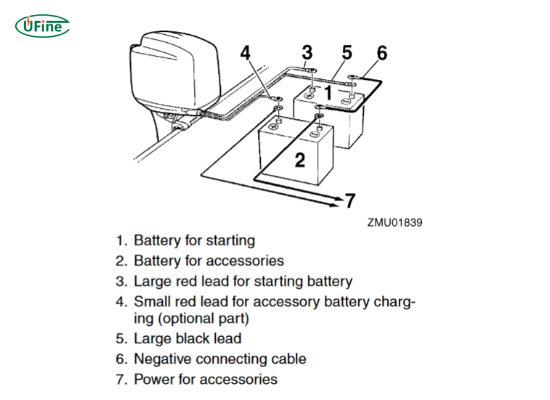
Part 3. Why are battery outboards replacing gas outboards?
Why are battery outboards better than gas-powered motors?
Battery outboards are better because they are more efficient, generate zero emissions, and operate nearly silently, offering a smoother and more eco-friendly boating experience.
Let’s break down the comparison:
| Feature | Battery Outboards | Gas Outboards |
|---|---|---|
| Fuel Type | Electricity | Gasoline |
| Emissions | Zero | High CO2 and pollutants |
| Noise | Very quiet | Loud |
| Maintenance | Minimal | Frequent (oil changes, filters) |
| Running Cost | Very low | High |
| Instant Torque | Yes | No |
| Start-up | Instant, button-press | Manual pull or electric start |
Battery outboards provide instant torque, which means better control and faster response. Plus, there’s no carburetor to clean, no fuel to spill, and no engine warm-up time.
Part 4. Are electric outboard motors efficient?
Yes, electric outboard motors are extremely efficient. They convert up to 90% of electrical energy into propulsion, compared to gas motors that lose most energy as heat.
This results in:
- Longer range per charge
- Lower energy cost per mile
- Less heat and wear on components
Efficiency also means smaller motors can do more work, reducing the weight and size of the propulsion system.
Part 5. How do battery outboards help the environment?
Battery outboards are zero-emission systems. Unlike gas engines, they don’t release harmful pollutants into the air or water. This is especially important in protected waters and marine parks, where wildlife preservation matters.
Key environmental benefits:
- Zero carbon emissions
- No oil or fuel leaks
- Preserve aquatic life by reducing noise pollution
- Enable boating in restricted zones
The transition to electric is not just about performance. It’s about preserving nature while enjoying it.
Part 6. How quiet are battery outboards?
Battery outboards are nearly silent. When running, they produce only a soft hum. This makes them perfect for:
- Fishing (no noise to scare the fish)
- Sightseeing (hear nature, not an engine)
- Residential lakes (where noise is a concern)
In comparison, gas motors can reach 85-90 decibels, which is loud enough to disturb both people and wildlife.
Part 7. The rise of lithium batteries in boating
Lithium batteries are the heart of modern electric outboards. Compared to lead-acid batteries, lithium ones are:
- Lighter
- Smaller
- Longer-lasting
- Faster to charge
A key player in this space is Ufine, a brand known for custom lithium battery solutions. Our batteries are designed to be:
- Lightweight with high energy density
- Durable and water-resistant
- Smart, with built-in battery management systems
This makes Ufine’s battery packs ideal for both recreational and commercial boating applications.
Part 8. How long can battery outboards run?
Battery outboard range depends on three main factors:
- Battery capacity (measured in kWh)
- Motor power (watts or HP)
- Speed and load (boat size, current, wind)
For example:
- A 4kWh lithium battery can power a 3kW motor for over 1 hour at full throttle or 3+ hours at cruising speed.
- Larger battery systems can provide full-day operations on a single charge.
With solar charging or backup packs, range anxiety is becoming less of a concern.
Part 9. Are battery outboards charging easily and fast?
Charging a battery outboard is as easy as plugging in your phone. Most systems are compatible with:
- Standard AC outlets
- Solar panels
- DC fast chargers
Charging time varies:
- 2 to 8 hours for a full charge, depending on capacity and charger
- Fast chargers can cut this time in half
Portable solar panels also allow off-grid charging, making these systems great for long expeditions.
Part 10. Future trends in battery outboards
The future of boating is undoubtedly electric. Here’s what we can expect:
- Higher energy density batteries: More power in smaller packages
- Smart systems: Integrated GPS, app control, real-time diagnostics
- Sustainable materials: Eco-friendly designs and recycling systems
- Increased adoption: Marinas adding charging stations, regulations favoring electric boats
With governments pushing for zero-emission transport, battery outboards will soon become the default choice for both leisure and professional use.
Part 11. FAQs about battery outboards
What is the main advantage of battery outboards?
The main advantage is their clean, quiet, and low-maintenance operation, making boating more enjoyable and eco-friendly.
Can battery outboards replace gas engines for all boats?
Yes, especially for small to mid-sized boats. Larger vessels are adopting hybrid systems, but pure electric is catching up fast.
How long do lithium batteries last?
Ufine lithium batteries can last up to 10 years or more, with over 2000 charge cycles if properly maintained.
Are battery outboards safe to use?
Absolutely. They come with built-in safety features like overcharge protection, waterproof casings, and thermal management systems.
Is it worth switching to an electric outboard?
Yes. Over time, you save money on fuel and maintenance, enjoy a better user experience, and reduce your environmental impact.
Related Tags:

More Articles

Battery Capacity vs Discharge Rate: The Choice Engineers Face
Higher capacity or higher discharge rate? Learn how to choose the right LiPo battery for longer runtime, stable power output, and better device performance.
Battery Cable Size Guide: Choose the Right Wire Fast
Not sure what battery cable size you need? Learn how to select the right wire gauge, terminal size, and cable for safer, more efficient battery systems.
How to build a12V 10.5Ah Li-ion battery pack with 18650 cells
Learn how to build a high-capacity 12V 10.5Ah battery pack with Ufine 18650 cells. Explore cell selection, 3S3P configuration, BMS wiring, and performance tests.
Building an ESP32 Robot Dog with a Custom Lithium Battery
See how a maker combines 3D printing, ESP32 control, and a custom lithium pack to create a powerful and reliable robotic companion.
JST vs Molex: The Right Battery Connector Choice
JST or Molex for your battery? Learn how connector selection affects current, voltage drop, reliability, and device performance.


