- Key Takeaways
- Part 1. Why motorcycle batteries lose charge so quickly?
- Part 2. How a battery tender improves motorcycle performance?
- Part 3. Types of motorcycle battery tenders
- Part 4. Motorcycle battery tender connectors explained
- Part 5. What size battery tender for motorcycle batteries?
- Part 6. How many amps for a motorcycle battery tender?
- Part 7. Battery tender vs battery maintainer
- Part 8. How to choose the best motorcycle battery tender?
- Part 9. Motorcycle battery tender features to look for before buying
- Part 10. Can you leave a motorcycle battery tender connected overnight?
- Part 11. Motorcycle battery tender compatibility chart
- Part 12. Common motorcycle battery tender mistakes
- Part 13. FAQs about motorcycle battery tenders
A motorcycle battery tender keeps your battery charged during storage and prevents voltage loss, sulfation, and starting problems. It is one of the easiest ways to extend motorcycle battery life.
In this guide, you will learn:
- How a battery tender motorcycle charger works
- What size battery tender for motorcycle batteries is best
- Recommended amps for AGM and lithium batteries
- Differences between smart chargers and trickle chargers
- How to choose the best motorcycle battery tender for storage and daily use
Key Takeaways
- A smart battery tender automatically maintains safe voltage levels
- Most motorcycle batteries work best with a 0.75A–1.25A charger
- Lithium batteries require a lithium-compatible tender
- Smart maintainers are safer than old-style trickle chargers
- SAE quick connectors make charging easier for daily use
- The best motorcycle battery tender depends on battery chemistry and storage habits
- Long-term float charging is safe only with smart maintainers
Part 1. Why motorcycle batteries lose charge so quickly?
Motorcycle batteries are smaller than car batteries. They also face longer storage periods and more temperature changes.
Even when parked, motorcycles still consume small amounts of power through:
- Clocks
- ECU memory
- GPS systems
- Alarm systems
- USB accessories
Cold weather makes the problem worse. Battery voltage drops faster in winter, especially for lead-acid batteries.
If voltage remains low for too long, sulfation forms on the battery plates. This reduces capacity permanently.
Using a motorcycle battery charger or battery maintainer prevents this damage by keeping the voltage stable.
Part 2. How a battery tender improves motorcycle performance?
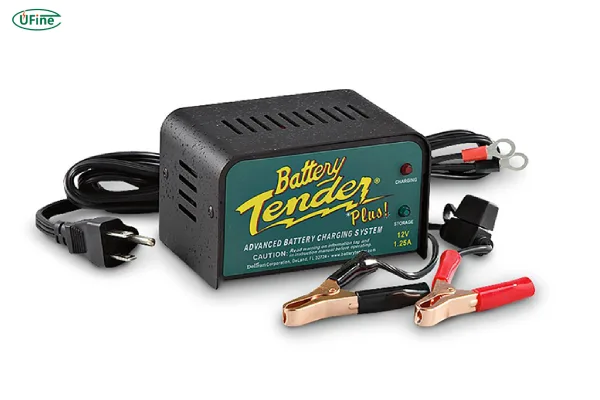
A battery tender motorcycle charger does more than recharge the battery. It continuously monitors voltage and adjusts charging automatically.
Benefits include:
- Faster engine starts
- Better cold-weather performance
- Longer battery lifespan
- Reduced sulfation buildup
- Lower replacement costs
- Stable voltage during storage
Unlike traditional chargers, a smart battery tender stops charging when the battery is full and switches into maintenance mode.
This makes it safe for overnight charging or seasonal storage.
According to the Battery Council International, maintaining proper charge levels is one of the most effective ways to extend battery service life.
Part 3. Types of motorcycle battery tenders
Not every battery tender for motorcycle batteries works the same way. Understanding the differences helps avoid charging damage.
1 Smart battery tenders
Smart chargers automatically switch between charging, absorption, and float modes.
They are the best choice for:
- Daily riders
- Winter storage
- AGM batteries
- Gel batteries
- Lithium motorcycle batteries
Advantages:
- No overcharging
- Automatic voltage control
- Safer for long-term connection
- Better battery lifespan
For most riders, this is the best battery tender for motorcycle use.
2 Trickle chargers
Trickle chargers continuously push current into the battery.
They are cheaper but less safe because they:
- Can overcharge batteries
- Generate heat
- Shorten battery lifespan
Unless monitored carefully, they are not ideal for modern motorcycle batteries.
If you use lithium batteries, avoid old trickle chargers completely.
You can also read our guide on overcharging lithium batteries.
3 Multi-bank battery tenders
These chargers maintain multiple motorcycles at the same time.
Best for:
- Dealers
- Workshops
- Collectors
- Multi-bike garages
A 4-bank system can charge several batteries independently without voltage imbalance.
4 Solar motorcycle battery tenders
Solar tenders use solar panels to maintain battery voltage.
Good for:
- Outdoor parking
- Remote garages
- Seasonal vehicles
Limitations:
- Slow charging speed
- Sunlight dependent
- Less effective in winter
They work best as maintenance tools rather than primary chargers.
Part 4. Motorcycle battery tender connectors explained
The connector type affects convenience and reliability.
Most motorcycle battery tender systems use SAE quick-disconnect connectors.
Common connector types:
| Connector Type | Best Use | Advantages |
|---|---|---|
| SAE Ring Terminal | Permanent installation | Fast daily connection |
| Alligator Clips | Temporary charging | Easy testing |
| USB Charging Adapter | Accessory charging | Multi-function use |
| Weatherproof SAE | Outdoor riding | Better moisture protection |
For riders who frequently charge their bikes, SAE ring terminals are the most practical option.
Part 5. What size battery tender for motorcycle batteries?
This is one of the most searched questions online: “What size battery tender for motorcycle batteries?”
The answer depends on battery capacity and chemistry.
Recommended charger size:
| Battery Type | Recommended Tender Size |
|---|---|
| Small motorcycles | 0.75A |
| Standard street bikes | 1A–1.25A |
| Touring motorcycles | 1.25A–2A |
| Lithium LiFePO4 batteries | Lithium-compatible 1A–2A |
Most motorcycles use a 12V electrical system.
A 0.75A–1.25A smart charger is ideal for most applications.
Using excessive amperage can overheat smaller batteries.
Part 6. How many amps for a motorcycle battery tender?
A common mistake is assuming higher amps charge better.
Battery tenders are designed for maintenance, not rapid charging.
General guidelines:
- 0.75A → ideal for storage maintenance
- 1.25A → best balance for daily riders
- 2A → acceptable for larger touring bikes
- 5A+ → usually too high for small motorcycle batteries
For lithium batteries, always use a charger with a dedicated lithium mode.
Lithium charging voltages differ from lead-acid charging profiles.
Learn more about LiFePO4 voltage charging characteristics.
Part 7. Battery tender vs battery maintainer
Many riders use these terms interchangeably.
Battery Tender
“Battery Tender” is actually a brand from Deltran.
Battery Maintainer
“Battery maintainer” is the generic term for any charger that automatically maintains voltage.
In practice, both terms usually mean:
- Smart charger
- Automatic float charging
- Long-term maintenance charging
So when people search for:
- battery tender motorcycle battery
- battery tender battery for motorcycle
- battery tender for a motorcycle
They usually mean a smart battery maintainer.
Part 8. How to choose the best motorcycle battery tender?
The best motorcycle battery tender depends on how you ride and what battery chemistry you use.
For daily riders:
- 1A–1.25A smart maintainer
- Automatic float mode
- Reverse polarity protection
Best for: Frequent starting, urban commuting, weekend riding
For winter storage:
- Long-term maintenance mode
- Temperature compensation
- Waterproof housing
This is critical for cold-climate riders.
For lithium motorcycle batteries:
Lithium batteries require special charging algorithms.
Use only lithium-compatible chargers for:
- LiFePO4 batteries
- Lithium iron phosphate packs
Standard lead-acid chargers may damage lithium batteries.
If you use custom lithium motorcycle batteries, explore custom lithium battery solutions from Ufine Battery.
For garages with multiple bikes:
- Multi-bank chargers
- Independent channel monitoring
- Smart balancing functions
Ideal for: Dealerships, rental fleets, motorcycle workshops
Part 9. Motorcycle battery tender features to look for before buying
The best battery tender for motorcycle battery maintenance should include these safety features:
| Feature | Why It Matters |
|---|---|
| Automatic shutoff | Prevents overcharging |
| Float mode | Safe long-term maintenance |
| Reverse polarity protection | Prevents wiring damage |
| Spark-proof connection | Improves safety |
| Temperature compensation | Better winter charging |
| Lithium compatibility | Required for LiFePO4 batteries |
Cheap chargers often lack these protections.
Part 10. Can you leave a motorcycle battery tender connected overnight?
Yes — if it is a smart charger.
Modern battery tenders automatically enter float mode once charging finishes.
This means they:
- Stop active charging
- Monitor voltage safely
- Top off power only when needed
This makes them safe for:
- Overnight charging
- Winter storage
- Long-term garage parking
However, traditional trickle chargers should not remain connected continuously.
They may:
- Overheat batteries
- Cause water loss
- Reduce battery lifespan
Always verify the charger supports:
- Float charging
- Auto shutoff
- Long-term maintenance mode
Part 11. Motorcycle battery tender compatibility chart
| Battery Chemistry | Tender Compatibility |
|---|---|
| Flooded Lead Acid | Yes |
| AGM | Yes |
| Gel | Yes |
| LiFePO4 Lithium | Only lithium-compatible chargers |
| NMC Lithium | Check manufacturer recommendations |
Using the wrong charger profile is one of the main causes of premature battery failure.
Part 12. Common motorcycle battery tender mistakes
- Using a car charger
- Car chargers often exceed 5A output. That is too aggressive for many motorcycle batteries.
- Using lead-acid mode on lithium batteries
- Lithium batteries require different charging voltages. Incorrect charging can damage cells permanently.
- Leaving a dead battery uncharged
- A deeply discharged battery sulfates quickly. Charge it as soon as possible.
- Ignoring connector corrosion
- Dirty SAE connectors increase resistance and reduce charging efficiency. Inspect connectors regularly.
Part 13. FAQs about motorcycle battery tenders
What is the best motorcycle battery tender for winter storage?
A smart charger with float mode and temperature compensation is best for winter storage. Lithium riders should choose a lithium-compatible maintainer.
Can a battery tender charge a completely dead motorcycle battery?
Sometimes. If voltage drops too low, smart chargers may not recognize the battery. In that case, a recovery charger may be needed.
Is a motorcycle battery tender better than a trickle charger?
Yes. Smart battery tenders automatically stop charging and are safer for long-term use.
Can I use one battery tender for multiple motorcycles?
Yes, but only one battery at a time unless you use a multi-bank charger.
How often should I use a battery tender motorcycle charger?
If the bike sits unused for more than a week, connecting a battery tender helps maintain voltage and battery health.
Related Tags:

More Articles

JST vs Molex: The Right Battery Connector Choice
JST or Molex for your battery? Learn how connector selection affects current, voltage drop, reliability, and device performance.
Custom Battery Pricing: Costs Manufacturers Don’t Mention
A low battery quote may not be the final cost. Discover common hidden expenses that affect custom lithium battery projects.
Battery Wire Length: Hidden Cause of Power Loss
A longer battery wire can cause voltage drop, power loss, and unstable operation. Learn how wire length affects battery performance.
How Device Sleep Modes Affect Battery Life
Think sleep mode extends battery life? Learn why devices still drain power and how firmware, hardware, and batteries affect runtime.
LiPo Battery and PCB Design: Clearance, Insulation, and Placement
Learn how to optimize LiPo battery PCB clearance, insulation, placement, wiring, and thermal design—and avoid common integration mistakes.