- Key takeaways
- Part 1. What is a 14V battery
- Part 2. How a 14V battery works
- Part 3. Common types of 14V batteries
- Part 4. 14V battery voltage explained
- Part 5. Key features of 14V battery
- Part 6. Applications of 14V battery
- Part 7. 14V vs 12V vs 18V battery comparison
- Part 8. 14 volt car battery vs 14V battery
- Part 9. Advantages of 14V lithium battery
- Part 10. How to choose a 14V battery
- Part 11. 14V battery maintenance tips
- Part 12. Can a 14V battery replace 12V
- Part 13. FAQs about 14V batteries
A 14V battery is a rechargeable power source that delivers higher voltage than a standard 12V battery, making it suitable for tools, drones, electronics, and other portable devices that require moderate power.
Most 14V lithium batteries use four lithium-ion cells in series, resulting in a nominal voltage of 14.4V or 14.8V. These are commonly referred to as 14V batteries in general usage.
Key takeaways
- 14V batteries typically mean 14.4V or 14.8V lithium packs.
- Most use a 4S lithium-ion configuration.
- They offer a balance between 12V compactness and 18V power.
- Widely used in tools, drones, medical and portable devices.
- Not the same as a standard 12V car battery.
- Always verify voltage range, BMS, and charger compatibility.
Part 1. What is a 14V battery
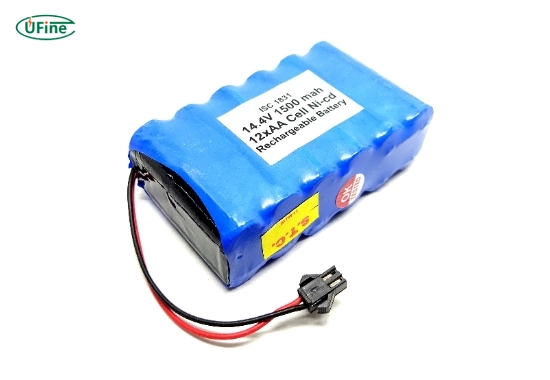
A 14V battery is a rechargeable pack with a nominal voltage around 14V, commonly rated at 14.4V or 14.8V depending on chemistry.
Most 14V lithium batteries use a 4S structure (four cells in series). Each cell is about 3.7V, resulting in 14.8V nominal and up to 16.8V when fully charged.
This means devices must support the full voltage range, not just the nominal value.
Part 2. How a 14V battery works
A 14V battery stores energy chemically and outputs DC power when connected to a device.
In lithium designs, cells are connected in series for voltage and in parallel for capacity (e.g., 4S1P or 4S2P).
A BMS is essential to protect against overcharge, over-discharge, short circuit, and overheating.
Part 3. Common types of 14V batteries
Different chemistries affect performance, safety, and cost.
1. 14V lithium-ion battery
High energy density, lightweight, and widely used in tools, drones, and electronics.
2. 14V LiPo battery
Flexible shape, ideal for compact or custom designs like drones and handheld devices.
3. NiMH battery
Safer but heavier and less efficient; now less common.
4. Lead-acid battery
Low cost and high surge current, but heavy with shorter lifespan.
Part 4. 14V battery voltage explained
Actual voltage varies with charge level and chemistry.
| Battery Type | Structure | Nominal | Full Charge | Notes |
|---|---|---|---|---|
| Lithium-ion | 4S | 14.4V–14.8V | 16.8V | Common in portable devices |
| LiFePO4 | 4S | 12.8V | 14.6V | Used as 12V replacement |
| Lead-acid | 6 cells | 12V | ~14.4V | Charging voltage explains “14V car battery” |
Always design for full voltage range to avoid damage.
Part 5. Key features of 14V battery
- Higher output: More power than 12V systems.
- Compact balance: Smaller than 18V packs.
- Efficient runtime: High energy density.
- Rechargeable: Long cycle life.
- Stable voltage: Better performance under load.
- Protection support: BMS and safety features.
- Customizable: Flexible for OEM designs.
Compare system design here: high voltage battery vs low voltage battery.
Part 6. Applications of 14V battery
Used where moderate power and portability are required.
| Application | Reason | Key Factors |
|---|---|---|
| Power tools | Balanced torque and weight | High current, heat control |
| Drones | High power-to-weight | C-rate, weight |
| Medical devices | Stable portable power | Safety, reliability |
| Cameras | Long runtime | Voltage stability |
| Industrial tools | Portable operation | Durability |
| Vehicle systems | Operate near 14V | Voltage compatibility |
| Solar backup | Energy storage | Controller, safety |

Part 7. 14V vs 12V vs 18V battery comparison
Each voltage suits different power needs.
| Feature | 12V | 14V | 18V |
|---|---|---|---|
| Power | Low–medium | Medium | High |
| Structure | 3S / 4S LiFePO4 | 4S | 5S |
| Size | Small | Balanced | Larger |
| Use | Light devices | General tools | Heavy-duty tools |
See more: high voltage lithium-ion batteries.

Part 8. 14 volt car battery vs 14V battery
They are not the same.
Car batteries are nominal 12V but charge around 14V. A true 14V lithium battery has a higher operating range and different charging requirements.
Do not replace a car battery with a lithium 14V pack unless the system supports it.
Part 9. Advantages of 14V lithium battery
- Higher efficiency and output
- Lower current for same power
- Lighter than lead-acid
- Flexible design (LiPo)
- Faster charging
- Long cycle life
Part 10. How to choose a 14V battery
Focus on key technical factors:
1. Voltage range
Ensure device supports up to 16.8V.
2. Chemistry
Li-ion for density, LiFePO4 for safety.
3. Capacity
Higher Ah = longer runtime.
4. Discharge rate
Match load requirements.
5. BMS
Essential for safety and protection.
6. Charger
Must match battery specs.
7. Certification
Check UN38.3, IEC standards: IEC 62133-2.
8. Custom needs
Confirm size, connector, and design details.
Part 11. 14V battery maintenance tips
- Use correct charger
- Avoid deep discharge
- Store in cool, dry place
- Keep partial charge for storage
- Do not use damaged packs
- Inspect connectors regularly
More insights: high voltage battery guide.
Part 12. Can a 14V battery replace 12V
Only if the device supports the higher voltage range.
A 14.8V lithium battery can reach 16.8V, which may damage 12V-only devices.
Always verify compatibility before replacement.
Part 13. FAQs about 14V batteries
What is a 14V battery used for?
It is commonly used in mid-power devices such as cordless tools, drones, cameras, medical devices, and portable instruments. It provides more output than 12V systems while keeping size and weight manageable.
Is a 14V lithium battery the same as a 14.8V battery?
Generally yes. A 14.8V battery is the standard nominal voltage for a 4-cell (4S) lithium-ion pack, and it is often labeled as 14V for simplicity.
Can I charge a 14V battery with a 12V charger?
No. A 12V charger cannot reach the required charging voltage (typically up to 16.8V for lithium-ion), so it will not charge properly and may cause safety issues.
Is a 14 volt car battery really 14V?
No. Most car batteries are 12V nominal. The system voltage rises to around 14V only during charging when the engine is running.
Is a 14V battery better than an 18V battery?
It depends on the application. 14V is better for lighter, compact devices, while 18V is preferred for higher power and heavy-duty use.
Related Tags:

More Articles

Best 24V Lithium Battery: Top 10 Compared
Discover the top 24V lithium batteries. We compare capacity, price, cycle life, safety features, and the best options for different applications.
Top LFP Cell Manufacturers in China You Should Know
Looking for reliable LiFePO4 cells? Explore China's top LFP battery manufacturers, key technologies, production capabilities, and supplier selection tips.
Check If Your Charger Works: Simple Test Guide
Think your battery charger's broken? Quick tests can show you for sure. See if it’s the charger or the battery that's causing issues. Read more.
Best Camera Batteries: 7 Brands Compared & Tested
Looking for the best camera battery? Compare 7 top brands, including OEM and third-party options, to find the right battery for your camera.
What You Need to Know About Portable Fan Batteries
Discover the best portable electric fan battery, its types, lifespan, and maintenance tips. Learn how to choose the right one and keep it running longer.