
- Key Takeaways (Quick Answers For Buyers)
- Part 1. What is a 12v motorcycle battery?
- Part 2. Are motorcycle batteries 12v?
- Part 3. Why choosing the right 12v motorcycle battery matters?
- Part 4. Types of 12v motorcycle batteries
- Part 5. 12v motorcycle battery size chart & dimensions
- Part 6. Key specifications to compare for a 12v motorcycle battery
- Part 7. How to choose the right battery? (Application-Based Guide)
- Part 8. 12V motorcycle battery maintenance tips for longer battery life
- Part 9. FAQs about 12v motorcycle batteries
A 12V motorcycle battery powers engine start-up and all onboard electronics. Choosing the correct battery affects starting reliability, safety, and long-term cost. This guide explains battery types, motorcycle battery dimensions, key specs, and how to select the best 12 volt motorcycle battery for your bike.
Key Takeaways (Quick Answers For Buyers)
- Most modern motorcycles use a 12V motorcycle battery; confirm voltage and size before buying.
- Battery fitment depends on motorcycle battery dimensions, terminal layout, and capacity.
- AGM is the most balanced option; lithium is lighter with longer life but higher cost.
- CCA matters for cold starts; Ah matters for accessory runtime.
- Wrong battery size or specs can cause starting failure or electrical issues.
Part 1. What is a 12v motorcycle battery?
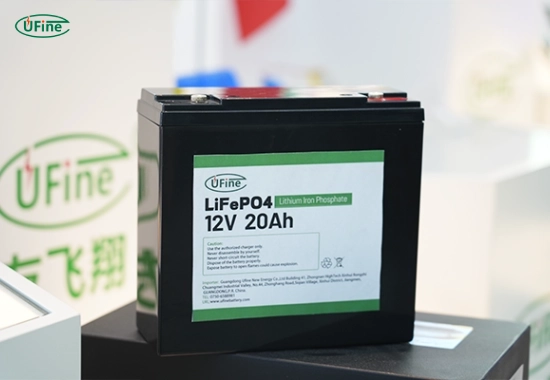
A 12 volt motorcycle battery is a rechargeable power source that delivers stable voltage for ignition and electronics such as lights, ECUs, and sensors.
Most bikes today use 12V systems. Older or vintage models may use 6V, so always verify before replacing.
Part 2. Are motorcycle batteries 12v?
Yes, are motorcycle batteries 12V is a common question. The answer is:
- Modern motorcycles: Almost all use 12V systems
- Classic/older models: Some use 6V systems
Always check your owner’s manual or battery label before purchasing.
Part 3. Why choosing the right 12v motorcycle battery matters?
Choosing the correct motorcycle battery 12V is not just about fit. It directly impacts:
- Starting performance: Incorrect CCA leads to slow or failed ignition
- Electrical stability: Sensitive electronics need stable voltage
- Safety: Mismatched batteries can overheat or fail under load
- Cost efficiency: Wrong batteries degrade faster and require early replacement
Part 4. Types of 12v motorcycle batteries
1Lead-Acid Batteries (Flooded & Agm)
- Flooded (wet): Low cost, requires maintenance
- AGM (Absorbent Glass Mat): Sealed, vibration-resistant, maintenance-free
AGM is the most widely used upgrade for daily riders.
2Lithium Motorcycle Batteries
Lithium batteries are becoming popular due to:
- Up to 70% lighter weight
- Higher cycle life
- Fast charging capability
For more options, see: lithium motorcycle battery recommendations
3Gel Batteries
- Spill-proof and sealed
- Better deep-cycle stability than flooded batteries
- Lower CCA compared to AGM or lithium
Part 5. 12v motorcycle battery size chart & dimensions
Battery fitment depends on physical size. Below is a simplified 12V motorcycle battery size chart based on common industry codes:
| Model Code | Typical Dimensions (mm) | Common Use |
|---|---|---|
| YTX4L-BS | 114 × 71 × 86 | Small bikes, scooters |
| YTX7A-BS | 150 × 87 × 93 | Mid-size motorcycles |
| YTX9-BS | 150 × 87 × 105 | Sport bikes |
| YTX12-BS | 150 × 87 × 130 | Touring bikes |
| YTX14-BS | 150 × 87 × 145 | Large engines |
Key fitment factors:
- Length × width × height
- Terminal position (left/right polarity)
- Mounting orientation
Always match dimensions exactly to avoid vibration damage or loose connections.
Part 6. Key specifications to compare for a 12v motorcycle battery
When selecting a 12 volt motorcycle battery, focus on these engineering parameters:
- Cold Cranking Amps (CCA): Indicates starting power in cold conditions. Higher CCA = better cold start performance.
- Amp-Hour (Ah): Measures energy capacity. Higher Ah = longer runtime for accessories.
- Internal Resistance: Lower resistance improves efficiency and voltage stability.
- Cycle Life: Lithium: up to 2000+ cycles; AGM: ~300–500 cycles.
For battery performance standards, refer to organizations like SAE International.
Comparison: Which 12V Motorcycle Battery Type Is Best
| Type | Weight | Lifespan | Maintenance | Performance | Cost |
|---|---|---|---|---|---|
| Flooded Lead-Acid | Heavy | 3–5 years | Required | Basic | Low |
| AGM | Medium | 3–5 years | None | Balanced | Medium |
| Lithium | Very Light | 5–10 years | None | High | High |
| Gel | Medium | 3–5 years | None | Stable | Medium |
Selection insight:
- Daily commuting → AGM
- Performance/racing → Lithium
- Budget replacement → Flooded
Part 7. How to choose the right battery? (Application-Based Guide)
| Use Case | Recommended Type | Key Requirement |
|---|---|---|
| Daily commuting | AGM | Reliability, low maintenance |
| Cold climate riding | AGM or Lithium | High CCA |
| Racing / performance | Lithium | Lightweight, high discharge |
| Long storage bikes | AGM or Gel | Low self-discharge |
Part 8. 12V motorcycle battery maintenance tips for longer battery life
- Charge regularly if unused
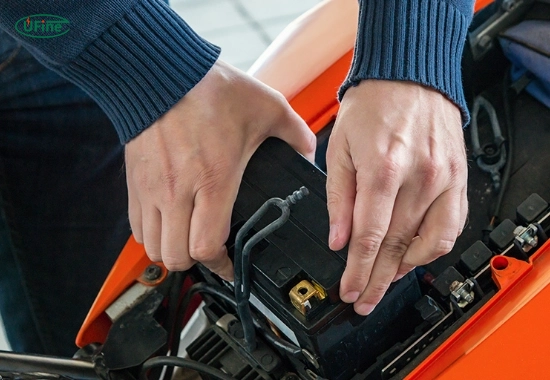
- Use a smart charger (trickle charger for storage)
- Clean terminals to avoid corrosion
- Avoid deep discharge for lead-acid batteries
For lithium battery design and quality control, see battery production process.
1 Should You Buy A Used Motorcycle Battery
The keyword used motorcycle battery often appears in searches, but it is generally not recommended:
- Unknown cycle history
- Reduced capacity
- Higher failure risk
Used batteries may be acceptable for testing, but not for reliable riding.
2 How Much Does A 12V Motorcycle Battery Cost
- Flooded: $50–$150
- AGM: $100–$200
- Lithium: $200–$500+
Price depends on brand, capacity, and technology.
Part 9. FAQs about 12v motorcycle batteries
What is the typical lifespan of a 12V motorcycle battery?
Most last 3–5 years. Lithium batteries can last longer with proper use.
How do I know the correct motorcycle battery dimensions?
Check your manual or match the original battery code (e.g., YTX9-BS).
Can I upgrade from lead-acid to lithium?
Yes, if voltage and BMS compatibility match your motorcycle system.
Why does my motorcycle battery fail quickly?
Common reasons include over-discharge, poor charging, or wrong battery size.
Is CCA important for all motorcycles?
Yes, especially in cold climates or high-compression engines.
Related Tags:

More Articles

Comparative Analysis: 14500 Battery Vs. 18650 Battery
Compare 14500 vs 18650 batteries by size, voltage, capacity, runtime, discharge current, charging, safety, and applications to choose the right cell.
12V Lithium-Ion What Voltage at Fully Charged and Why Your Battery Might Not Reach It
Check the 12V lithium battery voltage chart for 3S Li-ion and 4S LiFePO4. Learn full charge, resting voltage, charger limits, and fault checks.
LiFePO4 Voltage Chart Guide: Everything You Need to Know
Check the LiFePO4 voltage chart for 3.2V, 12V, 24V and 51.2V batteries. Compare SOC, charging voltage, cutoff limits and internal resistance.
Lithium Ion Cell Sizes: A Comprehensive Guide
Compare lithium ion cell sizes with a chart of dimensions, capacity ranges, cell types, applications, and key factors for selecting the right battery.
6 Volt Tractor Battery vs 12 Volt: Which One Fits Your Farm Equipment Best?
Compare 6V and 12V tractor batteries. Learn which voltage fits vintage or modern tractors, which specifications matter, and how to convert safely.


