- Key Takeaways
- Part 1. What is a d size rechargeable battery?
- Part 2. What are nimh d size rechargeable batteries?
- Part 3. What are rechargeable lithium d batteries?
- Part 4. Lithium vs. nimh d size rechargeable batteries
- Part 5. How many mah does a d battery have?
- Part 6. D size rechargeable battery runtime, high-drain, and cold-weather performance
- Part 7. Charging and safety differences between lithium and nimh d batteries
- Part 8. Best rechargeable d batteries by application
- Part 9. How to choose the best d cell rechargeable battery
- Part 10. D size rechargeable battery cost, storage, and recycling
- Part 11. FAQs about d size rechargeable batteries
D size rechargeable batteries are used in flashlights, radios, toys, medical equipment, emergency devices, and industrial instruments. Their large cylindrical format provides more space for energy storage than AA or C batteries.
The two main rechargeable options are NiMH and lithium. NiMH D batteries usually provide 1.2V. Rechargeable lithium D batteries may provide 1.5V, 3.2V, 3.6V, or 3.7V. This voltage difference means they are not always interchangeable.
Key Takeaways
- D size describes the battery’s physical format. It does not define its voltage, chemistry, or capacity.
- NiMH rechargeable D batteries normally provide 1.2V and work in many devices designed for alkaline D cells.
- Rechargeable lithium D batteries may output 1.5V, 3.2V, 3.6V, or 3.7V. Always confirm device compatibility.
- Compare watt-hours, discharge current, and usable energy instead of comparing mAh alone.
- NiMH is often better for standard household devices. Lithium is better when weight, energy density, or standby time is more important.
Part 1. What is a d size rechargeable battery?
A D size battery is a large cylindrical cell. A typical D cell is about 61.5 mm high and 33.2 mm in diameter. Small differences may occur because of terminal design, protective circuits, or outer casing.
The same D size housing may contain several battery chemistries:
- 1.5V alkaline primary battery
- 1.2V NiMH rechargeable battery
- 1.5V regulated rechargeable lithium battery
- 3.2V LiFePO4 rechargeable cell
- 3.6V or 3.7V lithium-ion D cell
- 3.6V primary lithium cell
Therefore, physical fit does not confirm electrical compatibility. Check the battery label, device voltage range, and charger before replacing a battery.
For more information about physical size and runtime differences, see our D battery vs. C battery size and capacity comparison.
Part 2. What are nimh d size rechargeable batteries?
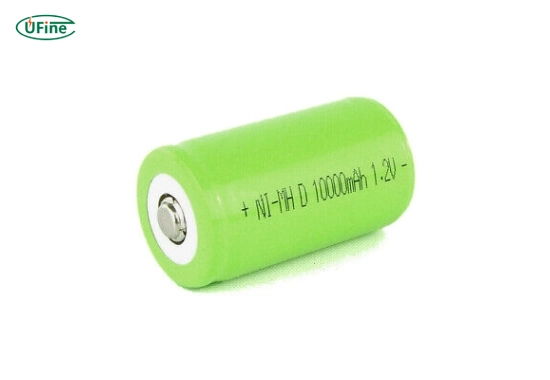
NiMH stands for nickel-metal hydride. Rechargeable NiMH D batteries normally have a nominal voltage of 1.2V. Their rated capacity often ranges from about 2,500mAh to more than 10,000mAh, depending on the internal construction and test conditions.
A full-size NiMH D cell usually provides more capacity than a product that places a smaller cell inside a D-shaped shell. Buyers should check the rated capacity, weight, and discharge test data instead of relying only on the outer size.
Advantages of NiMH D batteries
- Compatible with many devices designed for alkaline D batteries
- Stable voltage during most of the discharge cycle
- Good continuous and pulse-current performance
- Lower initial cost than many lithium options
- Simple replacement and wide charger availability
- Lower thermal runaway risk than conventional lithium-ion
Limitations of NiMH D batteries
- Lower energy density than lithium-ion
- Higher weight for the same stored energy
- Higher self-discharge in standard NiMH cells
- Reduced capacity and voltage at low temperatures
- Possible heat generation during fast charging or overcharging
Low-self-discharge NiMH batteries are a better option for emergency devices and equipment that remains unused for long periods. Standard high-capacity NiMH batteries may provide longer runtime per charge but can lose stored energy faster.
Actual NiMH performance depends on charge rate, discharge current, temperature, storage conditions, and depth of discharge. The NiMH battery performance and charging handbook provides additional technical information about these factors.
Our guide to size D NiMH battery voltage and capacity explains this chemistry in more detail.
Part 3. What are rechargeable lithium d batteries?
Rechargeable lithium D batteries are not one standard product. Their chemistry, voltage, charging method, and protection requirements can differ greatly.
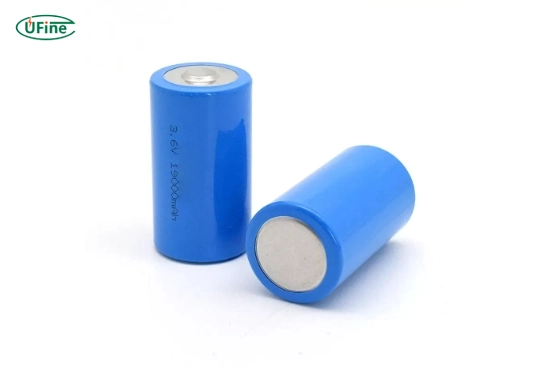
3.6V or 3.7V lithium-ion D cells
A standard lithium-ion D cell normally provides 3.6V or 3.7V nominal voltage. Many models charge to 4.2V, although the exact limit depends on the cell chemistry.
A lithium-ion D cell offers high energy density and lower weight. However, it cannot directly replace a 1.2V NiMH cell or a 1.5V alkaline battery. The device must support the lithium-ion voltage range.
The cell or battery pack should also have suitable protection against overcharge, over-discharge, overcurrent, short circuits, and excessive temperature.
3.2V LiFePO4 D cells
A LiFePO4 D cell normally provides about 3.2V nominal voltage and charges to about 3.65V. It has lower energy density than many conventional lithium-ion chemistries but can provide good thermal stability and long cycle life.
A 3.2V LiFePO4 cell is still not a direct replacement for a 1.2V NiMH D battery.
Regulated 1.5V rechargeable lithium D batteries
Some rechargeable lithium D batteries contain a lithium-ion cell, protection circuit, and voltage converter inside the D size housing. The internal cell may operate at 3.6V or 3.7V, while the electronic circuit provides a regulated 1.5V output.
These batteries can provide stable voltage, low weight, and low self-discharge. They may work as replacements for alkaline D batteries in compatible devices.
However, the internal converter has a maximum output current. The battery may shut down when the device exceeds this limit. Its flat 1.5V output may also prevent some battery indicators from showing the remaining capacity accurately.
Some regulated lithium D batteries use a dedicated charger. Others have a built-in USB charging port. Always follow the product instructions.
Primary lithium D cells are not rechargeable
Some lithium D batteries use primary lithium chemistry, such as lithium thionyl chloride. They offer long shelf life but are not rechargeable. Never place a primary lithium D cell in a charger.
Read our guide to lithium D cell chemistry and applications to understand the difference between primary and rechargeable lithium batteries.
Part 4. Lithium vs. nimh d size rechargeable batteries
| Feature | NiMH D Battery | Rechargeable Lithium D Battery |
|---|---|---|
| Common nominal voltage | 1.2V | 1.5V regulated, 3.2V, 3.6V, or 3.7V |
| Device compatibility | Works in many alkaline D battery devices | Depends on output voltage and internal electronics |
| Energy density | Moderate | Usually higher |
| Weight | Usually heavier | Usually lighter |
| High-current performance | Good with a quality full-size cell | Good when the cell and protection circuit support the load |
| Self-discharge | Moderate; lower in low-self-discharge models | Usually low |
| Cycle life | Often several hundred cycles | Often several hundred cycles; LiFePO4 may provide more |
| Charging method | NiMH charger with correct charge termination | Charger designed for the exact lithium chemistry |
| Cold-temperature discharge | Usable, with reduced voltage and capacity | Often better, depending on cell design |
| Low-temperature charging | Limited by manufacturer specifications | Usually not allowed below 0°C without a special design |
| Initial cost | Usually lower | Usually higher |
| Best use | Household devices and existing 1.5V systems | Purpose-built equipment and low-weight applications |
Part 5. How many mah does a d battery have?
The mAh of a D battery depends on its chemistry, internal construction, discharge current, cutoff voltage, and test conditions.
- NiMH D battery: commonly about 2,500mAh to more than 10,000mAh
- Lithium-ion D cell: model-specific and normally rated at 3.6V or 3.7V
- LiFePO4 D cell: model-specific and normally rated at 3.2V
- Regulated 1.5V lithium D battery: rating method depends on the manufacturer
A higher D cell battery mAh rating does not always mean more stored energy. This is especially important when comparing NiMH and lithium batteries at different voltages.
Compare watt-hours instead of mAh alone
Use the following formula:
Watt-hours = Nominal voltage × Capacity in amp-hours
For example:
- 1.2V × 10Ah NiMH battery = 12Wh
- 3.6V × 5Ah lithium-ion battery = 18Wh
The lithium-ion cell in this example has half the mAh value but stores 50% more nominal energy.
When comparing lithium rechargeable battery sizes or chemistries, check:
- Nominal voltage
- Rated capacity
- Rated energy in Wh
- Discharge test current
- End-of-discharge voltage
- Maximum continuous current
- Maximum pulse current
Part 6. D size rechargeable battery runtime, high-drain, and cold-weather performance
Which D size rechargeable battery lasts longer?
Neither chemistry always lasts longer. Runtime depends on usable watt-hours, load current, device efficiency, temperature, and discharge cutoff.
A simple estimate is:
Runtime in hours ≈ Usable battery energy in Wh ÷ Device power in W
A rechargeable lithium D battery may run longer when it stores more usable energy and the device supports its voltage. Its low self-discharge also makes it suitable for backup equipment and long-term standby use.
NiMH may provide better practical runtime in a device designed for 1.2V to 1.5V batteries. It can deliver high pulse current without relying on an internal voltage converter.
Which battery is better for high-drain devices?
Quality NiMH D cells have low internal resistance and good pulse-current performance. They are often suitable for motor-driven toys, radios, large flashlights, and other devices designed around a 1.2V battery system.
Lithium batteries offer higher energy density and lower weight. They work well in equipment designed for lithium power. However, the cell, protection circuit, contacts, connector, and wiring must all support the required current.
For a regulated 1.5V rechargeable lithium D battery, check both maximum continuous current and pulse current. High capacity does not guarantee a high discharge rate.
How do D batteries perform in cold temperatures?
Cold temperatures increase internal resistance and reduce usable capacity. NiMH batteries can discharge below 0°C, but voltage and runtime normally decrease.
Many standard lithium-ion cells can discharge at around -20°C. Special low-temperature batteries may operate below this level. Actual performance depends on chemistry, cell construction, and load current.
Charging lithium-ion batteries is more restricted than discharging them. Standard lithium-ion cells should normally not be charged below 0°C unless the manufacturer approves a specific low-temperature charging method.
For outdoor equipment, check:
- Minimum charging temperature
- Minimum discharge temperature
- Capacity retention at the required temperature
- Maximum discharge current at low temperature
Request temperature-specific discharge curves when selecting a battery for winter or outdoor use.
Part 7. Charging and safety differences between lithium and nimh d batteries
NiMH and lithium batteries require different charging methods. A charger that physically accepts a D cell may still use the wrong charging profile.
| Safety Item | NiMH D Battery | Lithium D Battery |
|---|---|---|
| Required charger | NiMH charger with reliable charge termination | Charger matched to the exact lithium chemistry and voltage |
| Protection | Charge and temperature control required | PCM or BMS protection is normally required |
| Cell mixing | Do not mix different ages, capacities, or charge levels | Do not mix unmatched cells |
| Charging temperature | Follow the manufacturer’s specified range | Strict temperature control is required |
| Damaged batteries | Stop using leaking or overheated cells | Stop using swollen, dented, leaking, or overheated cells |
Portable rechargeable nickel cells may be evaluated under IEC 62133-1 safety requirements for nickel systems. Portable lithium cells and batteries are covered separately by IEC 62133-2 safety requirements for lithium systems.
For practical charger selection, see our rechargeable D battery charger compatibility guide.
Part 8. Best rechargeable d batteries by application
| Application | Recommended Battery | Why |
|---|---|---|
| Household flashlights and radios | Low-self-discharge NiMH | Broad compatibility and simple charging |
| High-drain toys and motor devices | High-current NiMH | Good pulse-current performance |
| Emergency and backup equipment | Low-self-discharge NiMH or regulated 1.5V lithium | Better charge retention during storage |
| Cold-weather equipment | Validated low-temperature lithium or NiMH | Requires temperature-specific performance data |
| Medical equipment | Device-approved battery only | Safety and validation requirements are critical |
| Industrial instruments | Protected lithium or NiMH battery pack | Selection depends on voltage, load, and service interval |
| New OEM equipment | Purpose-designed lithium battery system | Voltage, capacity, protection, and connector can be optimized |
For existing household devices, low-self-discharge NiMH cells are often the simplest choice. For new equipment, a purpose-designed lithium battery system may provide better energy density and lower weight.
Part 9. How to choose the best d cell rechargeable battery
1. Confirm voltage compatibility
Check the device label, manual, circuit design, or original battery. Do not assume every battery that fits the compartment will work.
For example, four cells connected in series provide very different voltages:
- Four NiMH cells: about 4.8V nominal
- Four alkaline cells: about 6V nominal
- Four 3.6V lithium-ion cells: about 14.4V nominal
Replacing NiMH cells with unregulated lithium-ion cells could damage the device.
2. Compare usable energy in Wh
Calculate the energy required from the device’s average power and target runtime. Use watt-hours rather than selecting a battery from its mAh rating alone.
3. Check continuous and pulse current
Motors, pumps, radio transmitters, speakers, and high-power LEDs can draw high startup current. The battery and protection circuit must support both normal and peak loads.
4. Match the charger and temperature range
Use a charger designed for the exact chemistry. Also confirm charging and discharging limits for the intended environment.
- NiMH chargers use chemistry-specific charge termination.
- Standard lithium-ion cells normally use constant-current and constant-voltage charging.
- LiFePO4 cells require a lower charge voltage than conventional lithium-ion cells.
- Regulated 1.5V lithium batteries may require a dedicated charger or USB input.
5. Test the battery in the actual device
Datasheet values support initial selection, but final performance must be tested in the target product. Test normal load, peak load, temperature limits, low-battery behavior, and repeated charging.
For industrial and OEM projects, also confirm required specifications, safety reports, transport documents, and cell traceability before mass production.
Part 10. D size rechargeable battery cost, storage, and recycling
NiMH batteries usually have a lower initial cost. Lithium batteries may cost more because they can include protection, voltage regulation, or charging electronics.
Total cost should include battery price, charger cost, usable energy per cycle, expected cycle life, and replacement labor. NiMH often provides good value for frequently used household devices. Lithium may offer better value when low weight, long standby time, or fewer replacements are important.
Store rechargeable D batteries in a cool, dry place. Protect the terminals from metal objects and do not use leaking, swollen, dented, or overheated batteries.
Lithium-ion batteries should not be placed in household waste or curbside recycling bins. The EPA guidance for recycling used lithium-ion batteries recommends taking them to a separate battery recycling or household hazardous waste collection point and protecting the terminals before transport.
Part 11. FAQs about d size rechargeable batteries
Can I replace a NiMH D battery with a lithium D battery?
Only when the voltage, current, and charging system are compatible. A 3.2V, 3.6V, or 3.7V lithium cell cannot directly replace a 1.2V NiMH battery. A regulated 1.5V lithium D battery may work in some alkaline-powered devices, but compatibility must still be confirmed.
Do rechargeable NiMH D batteries need a special charger?
Yes. Use a NiMH charger that supports D size cells and provides correct charge termination. Do not use a lithium-only charger.
Are all lithium D batteries rechargeable?
No. Some lithium D cells are primary and must never be recharged. Only charge a battery clearly labeled as rechargeable, and match the charger to its exact chemistry.
What is the best mAh for a rechargeable D battery?
There is no universal best capacity. Higher mAh can provide longer runtime only when voltage and test conditions are similar. When comparing lithium and NiMH D batteries, compare watt-hours, discharge current, and usable energy.
What is the difference between D2 and D4 batteries?
D2 and D4 are not standard D battery sizes or chemistries. They usually refer to charger models, charging channels, or product versions. Check the manufacturer’s charger specifications for supported battery size and chemistry.
Related Tags:

More Articles

JST vs Molex: The Right Battery Connector Choice
JST or Molex for your battery? Learn how connector selection affects current, voltage drop, reliability, and device performance.
Custom Battery Pricing: Costs Manufacturers Don’t Mention
A low battery quote may not be the final cost. Discover common hidden expenses that affect custom lithium battery projects.
Battery Wire Length: Hidden Cause of Power Loss
A longer battery wire can cause voltage drop, power loss, and unstable operation. Learn how wire length affects battery performance.
How Device Sleep Modes Affect Battery Life
Think sleep mode extends battery life? Learn why devices still drain power and how firmware, hardware, and batteries affect runtime.
LiPo Battery and PCB Design: Clearance, Insulation, and Placement
Learn how to optimize LiPo battery PCB clearance, insulation, placement, wiring, and thermal design—and avoid common integration mistakes.