- Key takeaways
- Part 1. What is a 3s lipo battery?
- Part 2. Why is a 5000mah 3s lipo battery popular for rc projects?
- Part 3. How to choose the right c rating for a 3s 5000mah lipo battery?
- Part 4. Best connector types for rc 3s lipo batteries
- Part 5. What to check before buying a 3s lipo battery 5000mah?
- Part 6. 3s lipo battery vs 2s and 4s lipo batteries
- Part 7. How to charge a 3s 5000mah lipo battery safely?
- Part 8. How to store a 3s lipo battery properly?
- Part 9. Common 3s lipo battery mistakes to avoid
- Part 10. How to dispose of a damaged 3s lipo battery?
- Part 11. Performance tips for rc 3s lipo battery users
- Part 12. FAQs about 3s lipo battery 5000mah
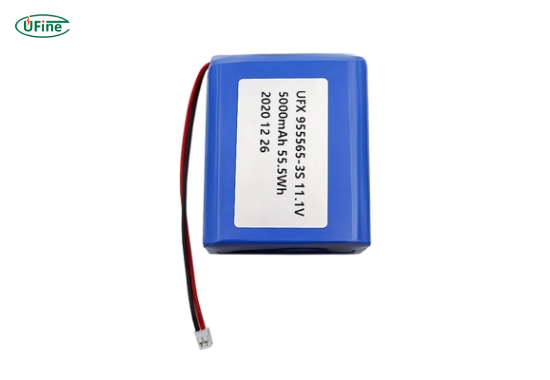
A 3S LiPo battery 5000mAh is one of the most popular battery choices for RC cars, FPV drones, RC boats, and airplanes. It offers a good balance of power, runtime, weight, and cost for many hobby setups.
However, choosing the right 5000mAh 3S LiPo battery is not only about capacity. Voltage compatibility, C rating, connector type, battery size, and charging safety all affect performance and battery life.
This guide explains how to choose the best RC 3S LiPo battery for your project, how to avoid common mistakes, and how to improve safety and lifespan.
Key takeaways
- A 3S LiPo battery has a nominal voltage of 11.1V and is widely used in RC cars, drones, planes, and boats.
- A 5000mAh 3S LiPo battery offers a strong balance between runtime and weight.
- C rating determines how much current the battery can safely deliver.
- Connector compatibility is critical for safe power transfer.
- Proper charging and storage can significantly extend LiPo battery life.
- Always match the battery to your ESC, motor, and RC platform requirements.
Part 1. What is a 3s lipo battery?
A 3S LiPo battery contains three lithium polymer cells connected in series. Each cell has a nominal voltage of 3.7V, so the total nominal voltage becomes:
3.7V × 3 = 11.1V
A fully charged 3S battery reaches 12.6V, while the safe minimum voltage is typically around 9.0V.
Compared with older battery types like NiMH batteries, LiPo batteries offer:
- Higher energy density
- Lower weight
- Faster throttle response
- Higher discharge capability
- Better performance under load
Because of these advantages, RC 3S LiPo batteries are commonly used in:
| RC Application | Typical Use |
|---|---|
| RC Cars | Bashing, racing, drifting |
| FPV Drones | Freestyle and cinematic flying |
| RC Boats | High-speed watercraft |
| RC Airplanes | Sport and aerobatic flight |
| Crawlers & Trucks | Long runtime applications |
For higher-voltage systems, some hobbyists also compare 3S packs with 4S or 6S batteries. However, 3S remains one of the most versatile setups for medium-power RC systems.
Part 2. Why is a 5000mah 3s lipo battery popular for rc projects?
The “5000mAh” specification describes battery capacity. In simple terms, it affects how long the battery can power your RC model before recharge.
A 5000mAh 3S LiPo battery is popular because it balances:
- Runtime
- Weight
- Physical size
- Power delivery
untime vs weight balance
Higher-capacity batteries like 7000mAh or 10000mAh provide longer runtime, but they also:
- Increase vehicle weight
- Reduce agility
- Stress motors and suspension
- Affect flight performance in drones
For most RC hobby projects, a 3S LiPo battery 5000mAh provides enough runtime without making the setup too heavy.
Typical runtime estimate
Battery runtime depends on current draw.
For example: (5000mAh ÷ 50A) × 60 ≈ 6 minutes
If your RC setup draws 50A continuously, runtime will be around 6 minutes.
Actual runtime varies depending on:
- Driving style
- Terrain
- Propeller load
- Motor efficiency
- Ambient temperature
Part 3. How to choose the right c rating for a 3s 5000mah lipo battery?
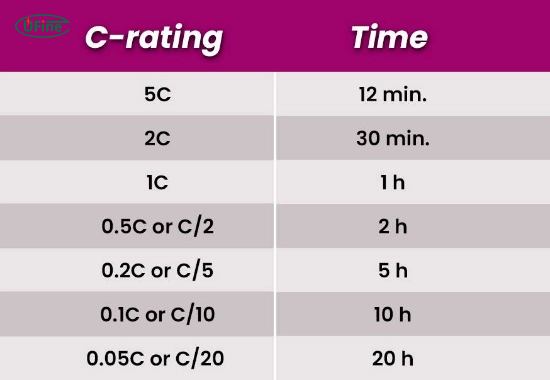
The C rating determines how much current a LiPo battery can safely discharge.
C rating formula
A 5000mAh battery equals 5Ah.
Maximum continuous discharge current: 5Ah × 30C = 150A
So a 30C 3S 5000mAh LiPo battery can theoretically deliver 150A continuously.
Recommended c ratings for rc applications
| RC Type | Recommended C Rating |
|---|---|
| RC Crawlers | 20C–35C |
| RC Cars | 35C–80C |
| FPV Drones | 50C–120C |
| RC Boats | 50C+ |
| RC Airplanes | 25C–60C |
Why c rating matters
A low C rating may cause:
- Voltage sag
- Excessive heat
- Reduced acceleration
- Battery puffing
- Shortened battery life
An excessively high C rating may increase:
- Cost
- Battery weight
- Internal resistance complexity
The best approach is to choose a battery slightly above your system’s actual current demand.
For more details, read: What Does C Mean in Batteries?
Part 4. Best connector types for rc 3s lipo batteries
Connector compatibility is often overlooked, but it directly affects safety and efficiency.
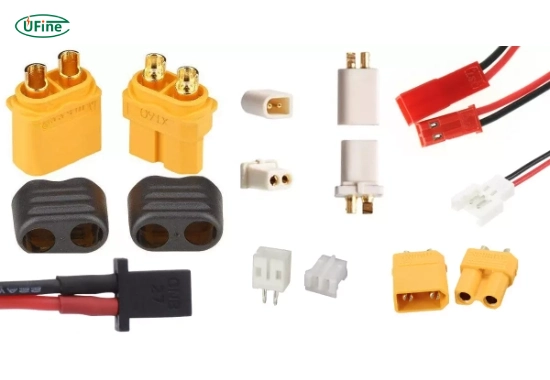
Common connector types include:
| Connector | Common Applications |
|---|---|
| XT60 | Drones, mid-size RC cars |
| XT90 | High-current RC systems |
| Deans (T Plug) | RC cars and boats |
| EC3 / EC5 | Larger RC vehicles |
| TRX | Traxxas models |
XT60 vs XT90
XT60 connectors are common for standard 3S LiPo battery 5000mAh setups because they handle moderate current loads efficiently.
XT90 connectors are better for:
- Higher amperage systems
- Large RC trucks
- High-power boats
- Aggressive acceleration setups
Related reading: XT60 vs XT90 Battery Connector Comparison
Part 5. What to check before buying a 3s lipo battery 5000mah?
1. Voltage compatibility
Always verify your:
- ESC voltage range
- Motor voltage rating
- Manufacturer recommendations
Installing a 3S battery into a 2S-only system may damage:
- ESC
- Motor
- Receiver electronics
2. Battery dimensions
Not all 5000mAh 3S LiPo batteries share the same dimensions.
Before buying, check:
- Length
- Width
- Height
- Battery tray clearance
This is especially important for:
- Racing chassis
- Compact FPV drones
- RC airplanes
3. Weight
Battery weight affects:
- Handling
- Jump balance
- Flight efficiency
- Steering response
Lighter packs improve agility, while heavier packs may improve stability in some RC trucks and boats.
4. Internal resistance
Lower internal resistance usually means:
- Better voltage stability
- Lower heat generation
- Improved power delivery
High-quality cells maintain performance better during heavy throttle use.
5. Brand quality
Reliable brands generally provide:
- Better cell matching
- Safer construction
- More accurate C ratings
- Longer cycle life
Avoid extremely cheap, unbranded packs with unrealistic specifications.
You can also explore custom lithium battery solutions from Ufine Battery for RC, industrial, and high-discharge applications.
Part 6. 3s lipo battery vs 2s and 4s lipo batteries
Many RC hobbyists compare battery voltages before upgrading.
| Battery Type | Voltage | Characteristics |
|---|---|---|
| 2S LiPo | 7.4V | Beginner-friendly, lower speed |
| 3S LiPo | 11.1V | Balanced power and control |
| 4S LiPo | 14.8V | Higher speed and acceleration |
A 3S 5000mAh LiPo is often the “middle ground” because it provides:
- Noticeably more power than 2S
- Better control than extreme 4S setups
- Reduced drivetrain stress compared with higher voltages
Part 7. How to charge a 3s 5000mah lipo battery safely?
Proper charging significantly improves battery lifespan and safety.
Recommended charging settings
For a 5000mAh battery: 1C = 5A
A 1C charge rate equals 5A.
Best practices
- Use a balance charger
- Select the correct cell count (3S)
- Charge on a fire-resistant surface
- Never leave charging batteries unattended
- Stop using damaged batteries immediately
For LiPo charging safety standards, refer to the National Fire Protection Association (NFPA) and the Federal Aviation Administration (FAA) battery safety guidance.
Part 8. How to store a 3s lipo battery properly?
Incorrect storage is one of the biggest reasons LiPo batteries fail early.
Ideal storage voltage
Recommended storage voltage: 3.8V per cell
For a 3S battery: 3.8V × 3 = 11.4V
Storage tips
- Store in a cool, dry place
- Use a LiPo-safe storage bag
- Avoid fully charged long-term storage
- Keep away from metal objects
- Inspect for swelling regularly
Part 9. Common 3s lipo battery mistakes to avoid
Using the wrong c rating
Low discharge capability may cause:
- Battery overheating
- Voltage drop
- ESC shutdown
Over-discharging
Never discharge below: 3.0V per cell
Deep discharge permanently damages LiPo cells.
Using damaged batteries
Stop using batteries with:
- Puffing
- Swelling
- Torn wrapping
- Burn marks
- Unbalanced cells
Poor cooling
High battery temperatures reduce cycle life quickly. Good airflow is critical for:
- RC boats
- Racing cars
- FPV drones
Part 10. How to dispose of a damaged 3s lipo battery?
LiPo batteries should never be thrown into household trash.
Safe disposal process:
- Fully discharge the battery
- Isolate damaged terminals
- Place in a non-flammable container
- Bring it to a certified recycling facility
You can locate recycling centers through Call2Recycle.
Avoid puncturing or crushing damaged LiPo cells.
Part 11. Performance tips for rc 3s lipo battery users
Use a quality esc
A better ESC improves:
- Throttle response
- Voltage stability
- Thermal protection
- Battery efficiency
Carry multiple packs
Many RC hobbyists rotate multiple 3S LiPo battery 5000mAh packs during long sessions.
Monitor temperature
Battery temperatures above approximately 60°C (140°F) can reduce lifespan and increase safety risks.
Infrared thermometers are useful for monitoring:
- Battery temperature
- ESC temperature
- Motor temperature
Part 12. FAQs about 3s lipo battery 5000mah
What does 3S mean in a LiPo battery?
“3S” means three battery cells are connected in series, producing a nominal voltage of 11.1V.
Is a 5000mAh 3S LiPo battery good for RC cars?
Yes. A 5000mAh 3S LiPo battery is one of the most common choices for RC cars because it provides strong power and practical runtime.
How long will a 3S 5000mAh LiPo battery last?
Runtime depends on current draw, driving style, and terrain. Most RC vehicles achieve roughly 5–20 minutes per charge.
Can I replace a 2S battery with a 3S battery?
Only if your ESC, motor, and drivetrain support 3S voltage. Otherwise, electronic damage may occur.
What is the safest way to charge a 3S LiPo battery?
Use a LiPo-compatible balance charger at the correct settings, typically 1C charging rate, and charge inside a fire-resistant LiPo bag.
Related Tags:

More Articles
12V Lithium-Ion What Voltage at Fully Charged and Why Your Battery Might Not Reach It
Check the 12V lithium battery voltage chart for 3S Li-ion and 4S LiFePO4. Learn full charge, resting voltage, charger limits, and fault checks.
LiFePO4 Voltage Chart Guide: Everything You Need to Know
Check the LiFePO4 voltage chart for 3.2V, 12V, 24V and 51.2V batteries. Compare SOC, charging voltage, cutoff limits and internal resistance.
Lithium Ion Cell Sizes: A Comprehensive Guide
Compare lithium ion cell sizes with a chart of dimensions, capacity ranges, cell types, applications, and key factors for selecting the right battery.
6 Volt Tractor Battery vs 12 Volt: Which One Fits Your Farm Equipment Best?
Compare 6V and 12V tractor batteries. Learn which voltage fits vintage or modern tractors, which specifications matter, and how to convert safely.
The Ultimate Guide to a Molten Salt Battery
Learn how a molten salt battery works, its main types, advantages, disadvantages, operating temperature, safety, and grid energy storage uses.