
- Key takeaways
- Part 1. What is a diesel battery?
- Part 2. How does a diesel battery work?
- Part 3. Why diesel engines need more battery power
- Part 4. Types of diesel batteries
- Part 5. Why do diesel trucks have two batteries?
- Part 6. Diesel battery charger for trucks
- Part 7. How to jumpstart a diesel truck with two batteries
- Part 8. Which diesel batteries last the longest?
- Part 9. How to maintain diesel batteries
- Part 10. Common diesel battery problems
- Part 11. How to choose the best diesel battery
- Part 12. Diesel battery environmental safety and recycling considerations
- Part 13. FAQs about diesel batteries
Diesel batteries are essential for starting diesel engines in trucks, RVs, and heavy-duty machines. Compared with gasoline systems, diesel engines need higher cranking power due to higher compression ratios.
This guide explains what diesel batteries are, how they work, main types, and how to choose the right one for different applications.
Key takeaways
- Diesel batteries provide high Cold Cranking Amps (CCA) for engine starting
- Diesel engines require more power than gasoline engines due to compression ignition
- Dual-battery systems are common in heavy-duty trucks
- AGM and LiFePO4 batteries offer the best performance and lifespan
- Proper maintenance significantly improves battery life
- Selection depends on CCA, reserve capacity, and application type
Part 1. What is a diesel battery?
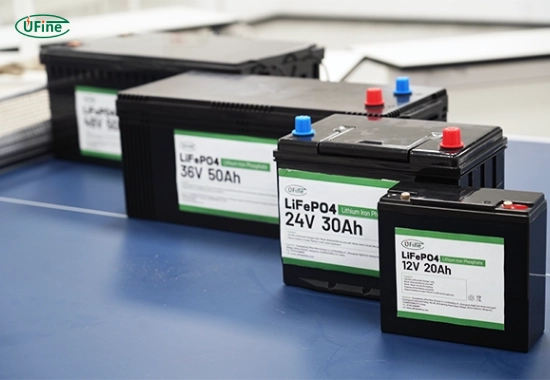
A diesel battery is a high-capacity rechargeable battery designed specifically to start and support diesel engines. These engines are widely used in:
- Pickup trucks and heavy-duty diesel trucks
- Semi-trailers and logistics fleets
- RVs and motorhomes
- Agricultural and construction machinery
- Marine vessels and backup generators
Compared to standard car batteries, diesel batteries deliver higher starting power, stronger vibration resistance, and better performance under extreme temperatures.
Part 2. How does a diesel battery work?
When you turn the ignition key, the diesel battery delivers a high burst of electrical current to the starter motor. This action cranks the engine and initiates combustion.
Diesel engines do not use spark plugs. Instead, they rely on compression ignition, which requires more energy to start. That is why diesel batteries must provide significantly higher starting power.
Once the engine starts:
- The alternator recharges the battery
- Electrical systems (lights, ECU, sensors) are powered
- The battery stabilizes voltage for the entire vehicle system
Without a strong battery, even a fully functional diesel engine cannot start.
Part 3. Why diesel engines need more battery power
Diesel engines are harder to start compared to gasoline engines due to:
- Higher compression ratio → requires more cranking force
- No spark ignition system → relies on compression heat
- Larger engine components → heavier mechanical load
- Cold start resistance → diesel fuel thickens in low temperatures
Because of this, diesel batteries must deliver high Cold Cranking Amps (CCA) to ensure reliable startup in all conditions.
Part 4. Types of diesel batteries
1. Flooded lead-acid batteries (FLA)
- Traditional lead-acid design with liquid electrolyte
- Affordable and widely used
- Requires periodic maintenance (water refill)
- Lower resistance to deep cycling
2. AGM batteries (Absorbent Glass Mat)
- Electrolyte absorbed in fiberglass mats
- Maintenance-free and sealed design
- Strong vibration resistance
- Higher cost but better performance
3. Gel batteries
- Gel-based electrolyte structure
- Excellent deep-cycle performance
- Stable in vibration-heavy environments
- Sensitive to overcharging
4. Lithium iron phosphate (LiFePO4) batteries
- Advanced lithium chemistry for heavy-duty systems
- Extremely long lifespan and lightweight design
- Fast charging and deep discharge capability
- Higher upfront cost but lowest lifecycle cost
👉 Learn more about lithium technology: LiFePO4 Battery
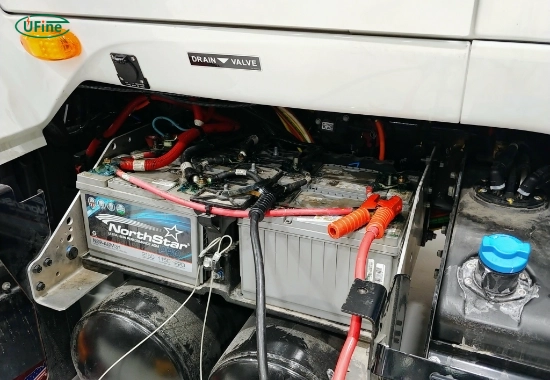
Part 5. Why do diesel trucks have two batteries?
Many diesel trucks use a dual battery system to support high electrical demand.
Main reasons include:
- Higher starting power for large diesel engines
- Cold-weather reliability in low-temperature environments
- Power supply for electronics (GPS, infotainment, sensors)
- Load balancing between two batteries
- Backup redundancy in case one battery fails
Common vehicles include Ford Super Duty, RAM HD series, and GMC Sierra HD trucks.
Part 6. Diesel battery charger for trucks
A diesel battery charger is designed for high-capacity systems and dual battery setups.
Key features:
- High amperage output for fast charging
- Dual-bank charging capability
- Smart charging control (prevents overcharging)
- Temperature compensation
- Compatibility with AGM, flooded, gel, and lithium batteries
Popular charger brands include NOCO, CTEK, and Schumacher.
Part 7. How to jumpstart a diesel truck with two batteries
Proper jumpstarting procedure is critical for safety:
- Turn off all electrical systems
- Connect red clamp to positive terminal of dead battery
- Connect red clamp to donor battery
- Connect black clamp to donor negative terminal
- Attach final black clamp to engine block (ground point)
- Start donor vehicle
- Start diesel truck
- Let engine run 15–30 minutes
⚠️ Never connect both negative terminals directly. Always use a ground point to avoid sparks.
Part 8. Which diesel batteries last the longest?
Battery lifespan depends on chemistry and usage:
- AGM batteries: 4–7 years typical lifespan
- LiFePO4 batteries: 8–10+ years lifespan
- Flooded batteries: 3–4 years lifespan
Long-life performance depends on:
- Charging quality
- Temperature control
- Depth of discharge cycles
Part 9. How to maintain diesel batteries
Proper maintenance improves reliability and lifespan:
- Clean terminals to prevent corrosion
- Check voltage regularly (12.6–12.8V full charge)
- Inspect electrolyte levels (for flooded batteries)
- Use a battery maintainer for idle vehicles
- Perform load testing every 6–12 months
💡 Tip: Always replace both batteries at the same time in dual systems.
Part 10. Common diesel battery problems
- Sulfation → reduces capacity over time
- Parasitic drain → electrical load when engine is off
- Corroded terminals → weak or unstable connection
- Overcharging → battery swelling or leakage
- Temperature stress → performance loss in extreme heat or cold
Regular inspection helps prevent sudden failure.
Part 11. How to choose the best diesel battery
When selecting a diesel battery, focus on:
- CCA rating → must meet engine starting requirements
- Reserve capacity (RC) → supports accessories and backup load
- Battery type → AGM for durability, LiFePO4 for long life
- Group size compatibility → proper physical fit
- Brand reliability → ensure consistent performance
Part 12. Diesel battery environmental safety and recycling considerations
Diesel batteries contain lead, acid, or lithium materials that require proper handling:
- Always recycle through certified centers
- Avoid open flame near flooded batteries (hydrogen gas risk)
- Use protective gloves and goggles
- Follow local disposal regulations
- Prefer sealed AGM or lithium for lower environmental risk
For industry standards, see the official guidelines from the Battery Council International safety and recycling standards, which outline proper battery handling, recycling, and environmental compliance practices.
Part 13. FAQs about diesel batteries
What is the best battery for diesel trucks?
AGM and LiFePO4 batteries are the most reliable options due to high CCA and long lifespan.
Why do diesel engines need high CCA batteries?
Because diesel engines require more cranking power due to higher compression ratios.
Can I use a car battery in a diesel truck?
Not recommended. Car batteries usually cannot deliver enough starting current for diesel engines.
How long do diesel batteries last?
Typically 3–10 years depending on battery type, maintenance, and usage conditions.
What happens if one battery fails in a dual system?
The system may still start temporarily, but both batteries should be replaced to avoid imbalance.
Related Tags:

More Articles

JST vs Molex: The Right Battery Connector Choice
JST or Molex for your battery? Learn how connector selection affects current, voltage drop, reliability, and device performance.
Custom Battery Pricing: Costs Manufacturers Don’t Mention
A low battery quote may not be the final cost. Discover common hidden expenses that affect custom lithium battery projects.
Battery Wire Length: Hidden Cause of Power Loss
A longer battery wire can cause voltage drop, power loss, and unstable operation. Learn how wire length affects battery performance.
How Device Sleep Modes Affect Battery Life
Think sleep mode extends battery life? Learn why devices still drain power and how firmware, hardware, and batteries affect runtime.
LiPo Battery and PCB Design: Clearance, Insulation, and Placement
Learn how to optimize LiPo battery PCB clearance, insulation, placement, wiring, and thermal design—and avoid common integration mistakes.


