
If you’re into RC cars, drones, FPV racing, robotics, or electric vehicles, you’ve probably come across this question: Should I use a 2S or a 3S LiPo battery? It sounds like a simple choice, but once you dive into it, there’s much more to consider than just an extra cell.
Choosing between a 2S vs 3S LiPo battery is about more than just speed and power—it’s about performance, compatibility, safety, and your personal goals. Whether you’re a beginner looking for reliability or an enthusiast chasing raw power, understanding the full scope of what each battery offers will help you make the right choice.
Key takeaways
- 2S LiPo = 7.4V nominal and 8.4V fully charged.
- 3S LiPo = 11.1V nominal and 12.6V fully charged.
- The “S” indicates the number of cells connected in series.
- 3S can provide higher speed or power in compatible systems, but it is not automatically better than 2S.
- For an RC car, always check the motor and ESC voltage ratings before switching from 2S to 3S.
- Battery capacity, measured in mAh, is different from the S rating and should not be used alone to compare battery performance.
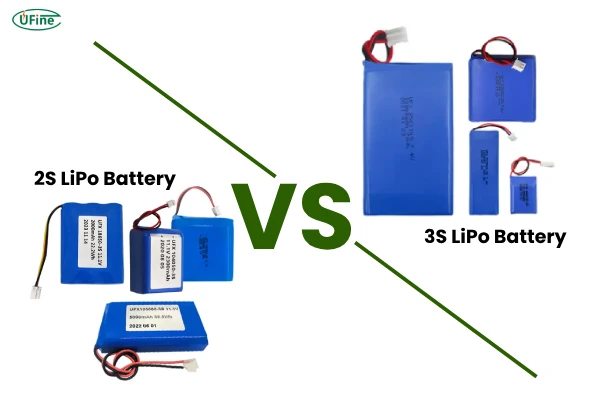
Part 1. 2S vs 3S LiPo: what are the key differences?
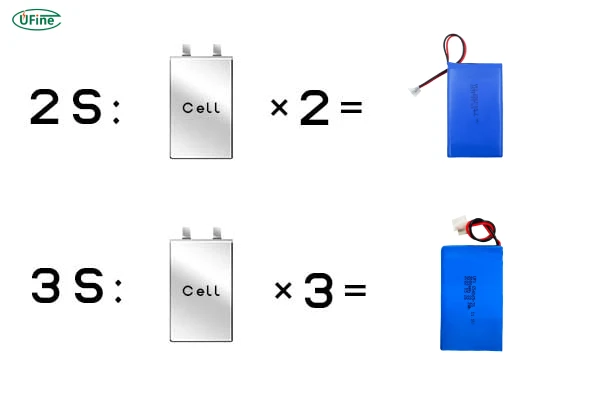
This is where we’ll dig deep. Below are the seven major factors that set these two types of LiPo batteries apart.
1. Voltage Output: Power at the Core
This is the most basic yet most important difference. A 2S LiPo battery has two cells, each producing 3.7 volts, totaling 7.4V. A 3S LiPo battery has three cells, giving it a total of 11.1V.
What does this mean for you?
More voltage = more power = more speed and torque. If you want your RC car or drone to really rip, that higher voltage from a 3S battery can give you a noticeable performance boost.
However, more isn’t always better. That extra power can also put more stress on your electronics, so you need to be sure your motor and ESC are up for the task.
2. Speed and Acceleration: Feel the Thrill
When you install a 3S LiPo in a vehicle that supports it, the difference in speed is thrilling. Your car accelerates faster, your drone climbs quicker, and your motors spin with more authority.
With a 2S LiPo, the speed is more manageable and controlled. This is often a better choice for beginners or those racing on tight indoor tracks where precision is more important than raw power.
3. Weight and Size: Portability vs Power
That extra cell in a 3S LiPo doesn’t come for free. It adds both weight and size. If you’re flying drones or using a compact RC chassis, that added weight can affect balance, agility, and flight time.
2S LiPo batteries are lighter and more compact, making them ideal for lightweight builds or compact devices.
4. Runtime and Efficiency: Longer Isn’t Always Better
Many assume that a 3S battery will last longer simply because it’s bigger. That’s not always the case. Yes, a 3S battery can have more capacity, but it also draws more current because it powers higher RPMs and stronger motors.
A 2S battery may actually give you more consistent runtime in low-to-medium power setups. It’s all about balance—power vs endurance.
5. Heat and Component Wear: A Hidden Cost
A higher-voltage battery like a 3S LiPo will generate more heat. This can overload ESCs, overheat motors, and shorten the lifespan of your electronics if your system isn’t built to handle it.
With a 2S LiPo, temperatures stay cooler and your components experience less wear and tear, which can save you money and frustration in the long run.
6. Cost and Availability: What Are You Willing to Spend?
Generally, a 3S battery will cost more than a 2S. You’re paying for more cells, more power, and usually higher performance. Not just that—sometimes a 3S battery requires upgraded ESCs, motors, and connectors too.
If you’re on a budget, a 2S setup is not only cheaper upfront but also cheaper to maintain. For hobbyists just starting out, this can make a huge difference.
7. Compatibility: Don’t Skip This Step
This is crucial. You cannot simply swap a 3S battery into a 2S-only system. Doing so can fry your electronics or even cause a fire. Always check your ESC and motor specs.
If your gear supports both 2S and 3S, then you’re free to test both and decide. If not, stick to what your setup is rated for.
Part 2. 2S and 3S battery: which one is better?
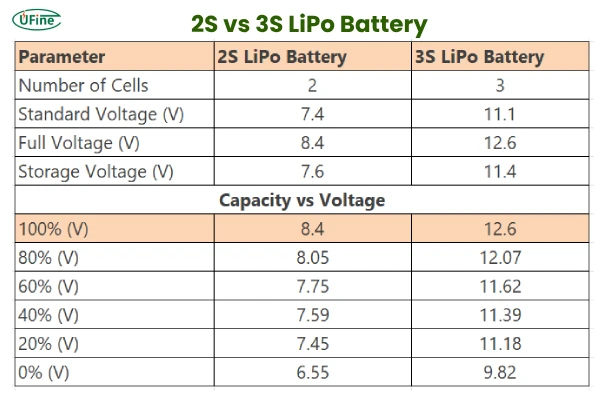
Now that you understand the differences, let’s answer the big question: Which one is better?
It depends on what you’re after:
- If you’re looking for speed, torque, and power, a 3S LiPo will blow your mind.
- If you value control, reliability, cooler temps, and lower costs, a 2S LiPo is a fantastic choice.
So, the better battery isn’t necessarily the one with the higher number—it’s the one that matches your goals, experience level, and equipment.
Part 3. Are 2S and 3S batteries interchangeable?
In most cases, no. You can’t just swap between a 2S and a 3S LiPo unless your system is rated for both. Plugging a 3S into a 2S-only rig can result in burnt ESCs, melted wires, or even explosions.
If your equipment supports both voltages, then yes—you can switch depending on your needs. But always remember to adjust your gear settings and monitor temperatures closely when changing battery types.
Part 4. 2S vs 3S LiPo for RC cars
For RC cars, the choice between 2S and 3S is usually determined by the vehicle’s electronics and the performance you want.
A 2S LiPo battery is often a good choice when you want balanced performance, easier voltage compatibility, and moderate power requirements.
A 3S LiPo battery can be attractive when you want more speed or power and your RC car is specifically designed for 3S operation.
Before changing battery configurations, check the specifications of your:
- ESC
- Motor
- Charger
- Battery connector
- Receiver and other electronics
If your RC car is rated for 2S only, do not assume that a 3S battery will work simply because the connector fits.
Part 5. Should I use a 2S or 3S battery?
Here’s a simple breakdown based on your situation:
Choose 2S if:
- Your RC system is rated for 2S.
- You want balanced speed and runtime.
- Your electronics have a lower voltage limit.
- You are building a lower-voltage robotics or electronics project.
- You want to minimize the electrical stress on the system.
Choose 3S if:
- Your RC system explicitly supports 3S.
- You want higher potential speed or power.
- Your motor and ESC are rated for 3S operation.
- Your application benefits from a higher operating voltage.
- You need more energy from a battery with similar mAh capacity.
The best choice is not necessarily the battery with the highest voltage. Choose the battery that matches your system’s electrical specifications.
Part 6. Looking for high-quality 2S or 3S LiPo batteries?
If you’re ready to upgrade—or customize—your battery setup, don’t settle for less. Ufine Battery is your trusted partner.
As a professional Chinese lithium battery manufacturer, Ufine Battery offers a wide range of solutions:
- 2S and 3S LiPo batteries
- LiFePO4 batteries
- 18650 cylindrical cells
- High-rate, ultra-thin, and high-temperature batteries
We specialize in custom lithium battery packs to suit your unique voltage, size, capacity, and performance requirements. Whether you need a battery for an RC project, drone fleet, industrial robot, or smart device—we’ve got you covered.
Ready to power up your ideas? Contact Ufine Battery today to get a custom quote or free consultation. We’re here to help you get the perfect battery, no matter how specific your needs are.
Part 7. FAQs
Can I use a 3S LiPo in a 2S system?
No. This could seriously damage your electronics. Always match your battery to your system’s voltage rating.
Is 3S always faster?
Yes, a 3S will almost always provide higher speed. But it can also cause instability if your setup isn’t tuned properly.
Can I charge 2S and 3S LiPo batteries with the same charger?
Only if your charger supports multi-cell LiPo batteries. Check for a balance port and cell count settings.
What’s the main reason to stick with 2S?
Better efficiency, longer life for components, and smoother control—especially useful for beginners.
Is it safe to store LiPo batteries fully charged?
No. LiPo batteries should be stored at about 3.8V per cell. Overcharging during storage can damage the battery or cause a fire hazard.
Related Tags:

More Articles
Dead Battery or Device Failure? How to Find the Cause
Think your device is broken? Learn how to tell if the problem comes from battery aging or hardware failure before replacing your electronics.
Why iPhone Duo Uses Two Batteries: The Engineering Behind Foldable Phone Power
Why do foldable phones need two batteries? Explore the engineering challenges behind iPhone Duo’s dual-battery architecture and future battery trends.
Solid-State Batteries: 3 Myths You Need to Know
Solid-state batteries promise safer EVs and longer range, but the reality is more complex. Discover the challenges behind this next-gen technology.
Battery Capacity vs Discharge Rate: The Choice Engineers Face
Higher capacity or higher discharge rate? Learn how to choose the right LiPo battery for longer runtime, stable power output, and better device performance.
Battery Cable Size Guide: Choose the Right Wire Fast
Not sure what battery cable size you need? Learn how to select the right wire gauge, terminal size, and cable for safer, more efficient battery systems.


