
- Key takeaways
- Part 1. What is an SLI battery and how does it work?
- Part 2. How is an SLI battery constructed?
- Part 3. Why can SLI batteries provide high starting current?
- Part 4. Types of SLI batteries
- Part 5. Important specifications: CCA and reserve capacity
- Part 6. SLI battery vs AGM battery
- Part 7. SLI battery vs deep cycle battery
- Part 8. SLI battery compared with lithium batteries
- Part 9. Advantages and limitations of SLI batteries
- Part 10. How long does an SLI battery last?
- Part 11. How to maintain and charge an SLI battery
- Part 12. Signs your SLI battery may be failing
- Part 13. How to choose the right SLI battery
- Part 14. FAQs
According to the Battery Council International, lead-acid batteries remain one of the most widely used energy storage technologies worldwide, with automotive starter batteries accounting for a significant portion of global demand.
You are usually trying to understand the role of this battery type in vehicles and how it differs from alternatives such as AGM, deep-cycle, or lithium batteries. An SLI battery is not designed to provide continuous power for long periods. Instead, it is engineered to deliver a powerful burst of electricity within seconds to start an engine and then recover through the vehicle’s charging system.
Understanding how an SLI battery works, its internal design, performance characteristics, and limitations can help you determine whether it is the right battery solution for a specific application.
Key takeaways
- An SLI battery is designed to provide high current output for engine starting rather than continuous energy supply.
- The internal plate design of SLI batteries allows rapid energy release but limits their ability to withstand repeated deep discharge cycles.
- CCA (Cold Cranking Amps) and Reserve Capacity are two important specifications when evaluating an SLI car battery.
- AGM batteries provide better cycling performance and vibration resistance, while deep-cycle batteries are designed for long-duration energy delivery.
- Lithium batteries can replace SLI batteries in some applications, but compatibility with charging systems and battery management requirements must be considered.
Part 1. What is an SLI battery and how does it work?
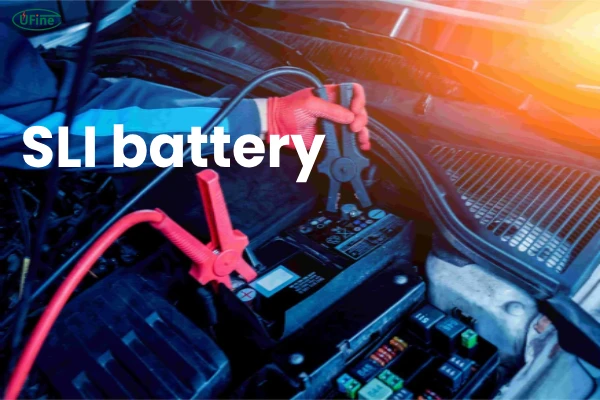
The term SLI battery meaning comes from the three primary functions it performs in automotive systems: Starting, Lighting, and Ignition.
The starting function refers to the battery’s ability to deliver a large amount of current to the starter motor. When you turn the ignition key or press the start button, the starter motor requires a significant amount of electrical power within a very short period. An SLI battery is designed specifically to handle this sudden demand.
The lighting function refers to powering vehicle lighting systems, including headlights, dashboard displays, and other electrical components when required.
The ignition function relates to supplying energy to the ignition system that allows the engine to begin operation. In modern vehicles, this also includes supporting electronic control systems and other onboard electrical components.
Unlike batteries designed for energy storage applications, an SLI battery prioritizes immediate power delivery instead of long operating duration.
An SLI battery is a rechargeable lead-acid battery primarily used in vehicles that require reliable engine starting performance. Common examples include passenger cars, trucks, motorcycles, and marine vehicles.
The operating principle of an SLI battery is based on an electrochemical reaction between lead-based plates and an electrolyte solution. During discharge, chemical energy stored inside the battery is converted into electrical energy. During charging, the process is reversed as the alternator or external charger restores the battery’s chemical state.
The typical starting process involves several steps:
- When the driver starts the vehicle, the starter motor creates a high electrical demand.
- The SLI battery releases a large current through its internal chemical reaction.
- The starter motor turns the engine until combustion begins.
- After the engine starts, the alternator supplies electricity and recharges the battery.
The entire process happens within seconds, which explains why SLI batteries are optimized for short, high-power output rather than extended discharge.
Part 2. How is an SLI battery constructed?
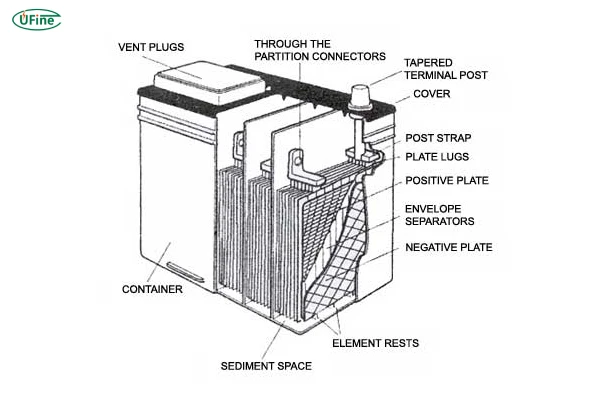
The internal construction of an SLI battery is designed around one main goal: maximizing current delivery during engine startup.
Traditional SLI batteries use multiple thin lead plates instead of fewer thick plates. The larger surface area created by these thin plates allows more chemical reactions to occur simultaneously, reducing internal resistance and enabling the battery to release a high amount of current quickly.
The main components include:
Lead plates
The positive plates are typically made with lead dioxide, while the negative plates contain sponge lead. These materials participate in reversible chemical reactions that store and release electrical energy.
Electrolyte solution
The electrolyte is usually a mixture of sulfuric acid and water. It allows ions to move between the plates during charging and discharging, enabling the battery to generate electricity.
Separators
Separators are placed between positive and negative plates to prevent electrical short circuits while still allowing ion movement through the electrolyte.
Battery case
The outer housing protects the internal components from vibration, temperature changes, and mechanical damage, which is especially important in automotive environments.
Part 3. Why can SLI batteries provide high starting current?
The biggest advantage of an SLI battery is its ability to deliver a large amount of current almost instantly. This characteristic comes from its internal design.
Because engine starting requires high power for only a few seconds, SLI batteries are built with many thin plates that provide a large reaction surface area. This design lowers internal resistance and allows electrons to move more efficiently during startup.
However, the same design creates a limitation. Thin plates are more vulnerable to damage caused by repeated deep discharge. When the battery is regularly drained to a low state of charge, the active materials on the plates can degrade, reducing capacity and shortening battery life.
This is why SLI batteries work well in vehicles that start frequently and are quickly recharged by an alternator, but perform poorly in applications requiring continuous energy delivery.
Part 4. Types of SLI batteries
Not all SLI batteries are the same. The three main types are:
A. Flooded (Wet Cell) SLI Batteries
-
Most common & affordable
-
Requires maintenance (checking electrolyte levels)
-
Vents hydrogen gas (must be installed upright)
-
Best for: Standard cars, trucks, and boats
B. AGM (Absorbent Glass Mat) SLI Batteries
-
Spill-proof & maintenance-free
-
Handles vibrations better (great for off-road vehicles)
-
Higher cranking power than flooded batteries
-
Best for: Luxury cars, performance vehicles, and harsh conditions
C. EFB (Enhanced Flooded Battery) SLI Batteries
-
Upgraded version of flooded batteries
-
Better charge acceptance (ideal for start-stop technology)
-
Longer lifespan than standard flooded batteries
-
Best for: Modern cars with auto start-stop systems
Part 5. Important specifications: CCA and reserve capacity
When selecting an SLI car battery, voltage is only one factor to consider. Two specifications are especially important: Cold Cranking Amps (CCA) and Reserve Capacity (RC).
1 Cold cranking amps (CCA)
CCA measures how much current a fully charged battery can deliver during cold temperature conditions. Since chemical reactions slow down in cold environments, starting an engine requires more battery power.
A higher CCA rating generally means the battery can provide stronger starting performance in winter conditions. However, choosing a battery with extremely high CCA is not always necessary if the vehicle operates in a moderate climate.
2 Reserve capacity (RC)
Reserve Capacity indicates how long a fully charged battery can continue supplying essential electrical power if the alternator stops working.
Although SLI batteries are not designed as primary energy storage devices, sufficient reserve capacity helps maintain important vehicle functions during unexpected charging system problems.
Part 6. SLI battery vs AGM battery
The comparison of SLI battery vs AGM is common because both are used in automotive applications.
AGM (Absorbent Glass Mat) batteries are an advanced form of lead-acid battery that use fiberglass separators to hold the electrolyte instead of allowing it to freely flow inside the battery. This design improves vibration resistance, reduces leakage risks, and provides better cycling performance.
| Feature | SLI battery | AGM battery |
|---|---|---|
| Main purpose | Engine starting | Starting and frequent cycling |
| Internal design | Flooded lead-acid plates | Absorbed electrolyte design |
| Starting performance | High | Very high |
| Deep discharge tolerance | Limited | Better |
| Vibration resistance | Moderate | Excellent |
| Cost | Lower | Higher |
An AGM battery is often preferred for vehicles with start-stop systems, advanced electronics, or higher electrical demands. However, a conventional SLI battery remains a practical choice for many standard vehicles because it provides sufficient starting performance at a lower cost.
Part 7. SLI battery vs deep cycle battery
The difference between SLI vs deep cycle batteries is mainly related to their discharge characteristics.
A deep-cycle battery is designed to provide steady power over a long period and tolerate repeated deep discharge cycles. This makes it suitable for applications such as RV systems, marine electronics, and renewable energy storage.
An SLI battery, in contrast, is designed to deliver maximum current quickly and return to a fully charged state soon after.
| Feature | SLI battery | Deep cycle battery |
|---|---|---|
| Primary purpose | Starting engines | Long-term energy supply |
| Discharge pattern | Short and powerful | Slow and continuous |
| Deep discharge ability | Low | High |
| Typical applications | Cars and trucks | Solar, RV, marine systems |
Using an SLI battery in a deep-cycle application can significantly reduce lifespan because the battery is repeatedly operated outside its intended design conditions.
Part 8. SLI battery compared with lithium batteries
Lithium battery technologies, especially LiFePO4 batteries, have gained popularity because they offer higher energy density, lighter weight, and longer cycle life compared with traditional lead-acid batteries.
However, replacing an SLI battery with lithium technology requires careful evaluation. A vehicle’s charging system, battery management system, operating temperature range, and electrical requirements must all be compatible.
Lithium batteries may be beneficial for applications where weight reduction, longer service life, or frequent cycling are important. However, for standard engine-starting applications, a properly selected SLI battery can still provide reliable and cost-effective performance.
Part 9. Advantages and limitations of SLI batteries
SLI batteries remain popular because they offer several practical advantages. Their manufacturing technology is mature, replacement options are widely available, and they provide excellent starting performance for conventional vehicles.
Their main limitation is that they are not designed for repeated deep discharge. Frequent low-charge operation can cause sulfation, plate degradation, and reduced capacity.
Environmental conditions also influence performance. Cold temperatures reduce available starting power, while excessive heat can accelerate corrosion and shorten battery life.
Part 10. How long does an SLI battery last?
The typical lifespan of an SLI battery is around three to five years, although actual service life depends on operating conditions.
Several factors can affect durability:
- Driving habits and trip length
- Charging system performance
- Climate conditions
- Battery maintenance
- Vibration exposure
- Frequency of discharge
Vehicles that frequently make short trips may experience shorter battery life because the alternator may not have enough time to fully restore the energy used during startup.
Part 11. How to maintain and charge an SLI battery
Proper maintenance helps maximize SLI battery performance.
You should regularly inspect battery terminals for corrosion, ensure the charging system operates correctly, and avoid leaving the battery in a deeply discharged condition for extended periods.
For vehicles stored for several months, using a suitable maintenance charger can help prevent excessive discharge and preserve battery condition.
Part 12. Signs your SLI battery may be failing
A failing SLI battery often shows several warning signs before complete failure.
Common symptoms include:
- Slow engine cranking caused by reduced current output
- Clicking sounds during startup because the battery cannot supply enough power
- Dim headlights caused by unstable voltage
- Frequent jump-start requirements
- Difficulty starting the vehicle in cold weather
Recognizing these signs early can help prevent unexpected breakdowns.
Part 13. How to choose the right SLI battery
Choosing the correct SLI battery requires more than selecting the highest capacity option available.
You should consider:
- Vehicle manufacturer specifications
- Battery size and terminal arrangement
- Required CCA rating
- Reserve Capacity requirements
- Climate conditions
- Driving patterns
A battery that matches the vehicle’s electrical system will provide better reliability and longer service life.
Part 14. FAQs
Can I use an SLI battery for my RV or solar system?
No. SLI batteries are not designed for deep cycling. Use a deep cycle or lithium battery instead.
How do I know if my SLI battery is dying?
Signs include: Slow engine cranking; Dim headlights; Swollen battery case; Frequent jump-starts needed
Can I replace a lead-acid SLI battery with a lithium one?
Yes! Lithium SLI batteries (like those from Ufine Battery) are direct replacements and offer better performance.
Why does my SLI battery die in cold weather?
Cold reduces chemical reactions in lead-acid batteries. Lithium SLI batteries handle cold much better.
How long can an SLI battery sit unused?
About 2-3 months before it discharges completely. Use a trickle charger for long-term storage.
Related Tags:

More Articles

Comparative Analysis: 14500 Battery Vs. 18650 Battery
Compare 14500 vs 18650 batteries by size, voltage, capacity, runtime, discharge current, charging, safety, and applications to choose the right cell.
12V Lithium-Ion What Voltage at Fully Charged and Why Your Battery Might Not Reach It
Check the 12V lithium battery voltage chart for 3S Li-ion and 4S LiFePO4. Learn full charge, resting voltage, charger limits, and fault checks.
LiFePO4 Voltage Chart Guide: Everything You Need to Know
Check the LiFePO4 voltage chart for 3.2V, 12V, 24V and 51.2V batteries. Compare SOC, charging voltage, cutoff limits and internal resistance.
Lithium Ion Cell Sizes: A Comprehensive Guide
Compare lithium ion cell sizes with a chart of dimensions, capacity ranges, cell types, applications, and key factors for selecting the right battery.
6 Volt Tractor Battery vs 12 Volt: Which One Fits Your Farm Equipment Best?
Compare 6V and 12V tractor batteries. Learn which voltage fits vintage or modern tractors, which specifications matter, and how to convert safely.


