- CCA battery key takeaways
- Part 1. What does cca mean on a battery?
- Part 2. How does a cca battery rating work?
- Part 3. CCA battery chemistry: flooded, agm, efb, and lithium
- Part 4. Cca vs ca vs mca: what is the difference?
- Part 5. Cca vs ah and reserve capacity: what do the ratings mean?
- Part 6. How much cca does a battery need?
- Part 7. How to choose the right cca battery
- Part 8. Is a high cca battery better?
- Part 9. Can a battery have too much cca?
- Part 10. How to test cca battery performance
- Part 11. How to maintain cca battery performance
- Part 12. Cca battery applications and selection priorities
- Part 13. Common cca battery selection mistakes
- Part 14. FAQs about cca battery meaning
CCA stands for Cold Cranking Amps. It shows how much current a battery can deliver in cold conditions to start an engine.
This rating matters because low temperatures reduce battery performance and make engines harder to start.
CCA is only one factor. You should also check voltage, size, battery type, and reserve capacity.
CCA battery key takeaways
- CCA meaning: CCA means Cold Cranking Amps. It shows how well a battery starts an engine in cold weather.
- Standard test: It measures how much current a fully charged 12V lead-acid battery can deliver for 30 seconds at 0°F (-18°C) while staying above 7.2V.
- Higher CCA: More CCA means stronger starting power. It does not mean longer runtime or longer life.
- CCA vs CA: CCA is tested at 0°F. CA is tested at 32°F (0°C), so CA numbers are usually higher.
- Correct selection: Follow the vehicle’s recommended CCA. Also check size, terminals, battery type, and reserve capacity.
Part 1. What does cca mean on a battery?
The CCA battery meaning is simple. It is not a battery type. It is a rating used on starting batteries.
CCA shows how much current a fully charged 12V lead-acid battery can deliver at 0°F (-18°C) for 30 seconds while staying above 7.2V.
For example, a battery marked 600 CCA can supply 600 amps under these cold test conditions.
The SAE J537 battery testing standard explains how this test works. You can also check the Battery Council International glossary of battery terms for clear definitions.
CCA answers one key question:
Can this battery start an engine in cold weather?
CCA does not show how long the battery can run devices. For that, check Ah, Wh, or reserve capacity.
Part 2. How does a cca battery rating work?
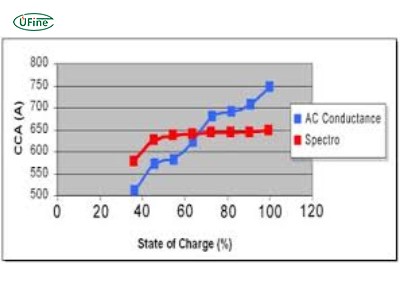
A CCA test puts a heavy load on a cold battery. It checks if the battery can keep supplying current without the voltage dropping too low.
Basic cca battery test conditions
| Test Item | Common SAE/BCI CCA Condition |
|---|---|
| Battery condition | New and fully charged |
| Battery temperature | 0°F (-18°C) |
| Discharge time | 30 seconds |
| Current | Same as the CCA rating |
| Minimum voltage | 7.2V for a 12V battery |
Higher CCA means more starting power in cold conditions. This helps with large engines or low temperatures.
Different standards exist worldwide. SAE, EN, DIN, IEC, and JIS may use different methods. Always compare batteries tested under the same standard.
Why does cold weather affect battery starting power?
Cold weather causes two problems:
- Battery slows down: Chemical reactions become weaker.
- Engine needs more power: Oil thickens and parts resist movement.
So the battery gives less power, while the engine needs more. That is why CCA matters.
What affects real cca battery performance?
The label shows a rated value. Real performance depends on:
- Temperature: Lower temperature reduces output.
- Charge level: A low battery gives less power.
- Battery age: Wear and sulfation reduce performance.
- Internal resistance: Lower resistance gives better output.
- Design: Plates and materials affect power.
- Terminals: Dirty or loose terminals reduce current.
- Cables: Poor cables cause voltage drop.
Part 3. CCA battery chemistry: flooded, agm, efb, and lithium
Different battery types can start engines. But do not choose only by CCA.
| Battery Type | CCA and Starting Characteristics | Important Selection Notes |
|---|---|---|
| Flooded lead-acid | Common and low cost | May need maintenance |
| EFB | Better cycling than standard flooded | Used in basic start-stop cars |
| AGM | Strong power and low resistance | Needs compatible charging system |
| Lithium starter battery | High power and light weight | Check BMS limits and cold performance |
AGM is still a lead-acid battery. It offers better performance but is not always a direct replacement.
For a deeper comparison, see AGM vs lithium vs lead-acid battery differences.
Lithium batteries use different rating methods. Some show CCA, others show peak current. Always check test conditions before comparing.
Part 4. Cca vs ca vs mca: what is the difference?
All three ratings measure starting current. The main difference is temperature.
| Battery Rating | Full Meaning | Test Temperature | Main Use |
|---|---|---|---|
| CCA | Cold Cranking Amps | 0°F (-18°C) | Cold weather starting |
| CA | Cranking Amps | 32°F (0°C) | Normal conditions |
| MCA | Marine Cranking Amps | 32°F (0°C) | Marine engines |
CCA meaning
CCA shows performance in cold weather. It is the most useful rating for winter use.
CA battery meaning
CA is tested at a warmer temperature. So the number is usually higher.
MCA battery meaning
MCA is used for marine batteries. It is also tested at 32°F.
Do not compare MCA or CA directly with CCA. They use different temperatures.
Can CA or MCA be converted to CCA?
No exact formula exists. Results vary by battery design and condition.
If your vehicle needs CCA, choose a battery with a real CCA rating.
Part 5. Cca vs ah and reserve capacity: what do the ratings mean?
CCA and Ah measure different things.
| Rating | What It Measures | Main Question |
|---|---|---|
| CCA | Cold starting current | Can it start the engine? |
| CA/MCA | Warm starting current | How much current at 32°F? |
| Ah | Charge capacity | How long can it run? |
| Wh | Total energy | How much energy stored? |
| RC | Runtime under load | How long without charging? |
A battery can have high CCA but low runtime.
Learn more here:
Part 6. How much cca does a battery need?
The right CCA depends on your vehicle and climate.
Check the owner’s manual or original battery label first.
Typical values range from 350 CCA for small cars to over 1000 CCA for large diesel engines.
| Factor | Effect on CCA |
|---|---|
| Engine size | Larger engines need more power |
| Diesel engine | Needs higher starting current |
| Cold climate | Needs higher CCA |
| Old vehicle | May need more power |
| Start-stop system | Needs AGM or EFB |
| Electrical load | Needs higher reserve capacity |
See this guide: how to choose the right CCA rating
Part 7. How to choose the right cca battery
Follow these steps:
1. Check required CCA
Use the manual or battery label. Do not go below this value.
2. Match voltage
Use the correct system voltage.
3. Check size
Make sure the battery fits.
Learn more about battery group size and fitment. You can also check the BCI group size chart.
4. Check terminals
Make sure polarity and layout match.
5. Use correct battery type
Do not replace AGM with flooded if not allowed.
6. Consider temperature
Cold areas may need higher CCA.
7. Check capacity
Look at Ah and reserve capacity.
8. Check date and warranty
Choose a fresh battery with good warranty.
Part 8. Is a high cca battery better?
A high CCA battery can help, but it is not always better.
Benefits
- Better cold starts
- More starting margin
- Works well in tough conditions
- Extra margin as battery ages
Limits
- Does not increase runtime
- Does not increase Ah
- Not a deep-cycle battery
- Does not guarantee longer life
- May not fit
- May cost more
The best battery matches all specs, not just CCA.
Part 9. Can a battery have too much cca?
A higher CCA battery will not force extra current into the starter.
The starter only draws what it needs.
But you must still check:
- Voltage
- Battery type
- Charging system
- Size
- Mounting
- Terminal layout
Too large a battery may not fit or may cost more.
Part 10. How to test cca battery performance
You can test CCA with different tools.
Electronic tester
This tool estimates battery health quickly.
It may show:
- Measured CCA
- Rated CCA
- State of health
- Charge level
- Internal resistance
Results can vary based on temperature and charge.
Load test
This checks voltage under heavy load.
Always test a fully charged battery.
See how to test car battery health for more details.
When is CCA too low?
Check the battery if:
- CCA is much lower than rated
- Engine cranks slowly
- Cold starts fail
- Battery needs jump-start often
- Battery cannot hold charge
Also check cables, starter, and alternator.
Part 11. How to maintain cca battery performance
- Keep charged: Avoid deep discharge
- Clean terminals: Remove corrosion
- Tighten connections: Prevent resistance
- Secure battery: Reduce vibration
- Check charging system: Avoid over/under charge
- Reduce idle loads: Save power
- Avoid short trips: Allow full recharge
- Test before winter: Prepare early
- Use charger: For stored vehicles
Do not open sealed batteries. Follow safety rules.
Part 12. Cca battery applications and selection priorities
| Application | Why CCA Matters | Other Specs |
|---|---|---|
| Cars | Reliable starting | Size, RC |
| Trucks | Higher power needed | Fitment, durability |
| Diesel | High compression | OEM spec |
| Marine | Engine start | MCA, corrosion resistance |
| Motorcycles | Compact systems | Weight, size |
| Equipment | Cold outdoor use | Durability |
| Generators | Standby start | Maintenance |
CCA is less important for energy storage or electronics.
For lithium systems, define voltage, current, temperature, and capacity clearly.
Part 13. Common cca battery selection mistakes
Too low CCA
May fail in cold weather.
Only choosing highest CCA
May not fit or match system.
Comparing CCA with CA/MCA
Different test temperatures.
Ignoring size
Battery may not fit.
Wrong battery type
May cause system issues.
Thinking high CCA means long life
Battery life depends on many factors.
Part 14. FAQs about cca battery meaning
What does CCA mean on a battery?
CCA (Cold Cranking Amps) shows how much current a battery can deliver at 0°F (-18°C) for 30 seconds while staying above 7.2V. It indicates cold-start ability.
Is a higher CCA battery always better?
No. Higher CCA improves cold starting, but it doesn’t mean longer runtime or lifespan. Always match the battery to your vehicle specs.
Can a battery with higher CCA damage a car?
No. The starter only draws what it needs. Higher CCA is safe if voltage, size, and type are correct.
Is CCA the same as Ah?
No. CCA measures starting power. Ah measures capacity (how long the battery can run).
Does CCA matter for lithium batteries?
Sometimes. Lithium batteries may use different ratings like peak or pulse current. Always check specs and compatibility.
Related Tags:

More Articles

Buck vs. Boost vs. Buck-Boost Converter: Which Is Best for Battery?
Not sure which converter your battery-powered device needs? Compare Buck, Boost, and Buck-Boost designs and discover what affects voltage stability and runtime.
How to Match 18650 Cells for a Reliable Battery Pack?
Building an 18650 battery pack? Learn how to compare cell capacity, voltage, and internal resistance to avoid mismatches and improve reliability.
Why Do 18650 Battery Packs Get Hot During Discharge?
Is your 18650 battery pack overheating under load? Learn what causes excess heat, how to spot dangerous symptoms, and what to do next.
18650 Battery BMS: How to Get the Specs Right
Learn how to choose a BMS for an 18650 battery pack. Compare voltage, current ratings, protection features, and balancing before you buy.
Why Does My Ring Camera Battery Drain So Fast or Stop Charging?
Is your Ring camera battery draining fast or not charging? Discover common causes, practical fixes, and when to replace the battery.