
- Key takeaways
- Part 1. What is an insulated battery box for lithium batteries?
- Part 2. Why lithium battery insulation matters
- Part 3. How temperature affects lithium batteries performance
- Part 4. Insulated battery box vs regular battery box
- Part 5. How to choose an insulated battery box for lithium batteries
- Part 6. What size insulated battery box do you need
- Part 7. Can you use a sealed insulated battery box for lithium batteries
- Part 8. Best use cases for insulated lithium battery boxes
- Part 9. Common mistakes when choosing an insulated battery box
- Part 10. How to maintain an insulated battery box
- Part 11. Insulated battery box selection checklist
- Part 12. FAQs about insulated battery boxes
An insulated battery box protects lithium batteries from cold, heat, moisture, and impact. It is widely used in RVs, boats, solar systems, and outdoor power setups.
Temperature affects lithium battery performance, safety, and lifespan. A proper insulated battery box helps keep the battery stable and protects wiring and components.
This guide shows how to choose the right insulated battery box for lithium batteries. It covers size, materials, ventilation, and safety.
Key takeaways
- An insulated battery box protects lithium batteries from temperature changes and environmental damage.
- It is important for outdoor, marine, RV, and solar systems.
- The box must fit battery size, wiring, and airflow needs.
- Do not fully seal the box without heat management.
- Choose strong materials, seals, and proper IP rating for harsh use.
Part 1. What is an insulated battery box for lithium batteries?
An insulated battery box is a protective enclosure with thermal insulation. It reduces the impact of outside temperature changes.
Compared to a basic battery case, it offers better sealing and stronger protection.
- Thermal protection: Slows heat loss and reduces heat exposure.
- Mechanical protection: Protects against vibration and impact.
- Environmental protection: Blocks dust, moisture, and salt.
It is used in RVs, boats, solar systems, and mobile equipment.

Learn more about battery cases here: The Ultimate Guide to Battery Storage Cases.
Part 2. Why lithium battery insulation matters
Lithium batteries are sensitive to temperature.
Low temperature reduces capacity. High temperature speeds up aging and increases risk.
Most lithium batteries should not be charged below 0°C unless designed for it. You can read more in this guide: lithium battery temperature range.
An insulated battery box helps:
- Reduce fast temperature changes
- Improve cold-weather performance
- Protect from heat and sunlight
- Keep wiring and terminals safe
- Support longer battery life
It works together with BMS and other protection systems.
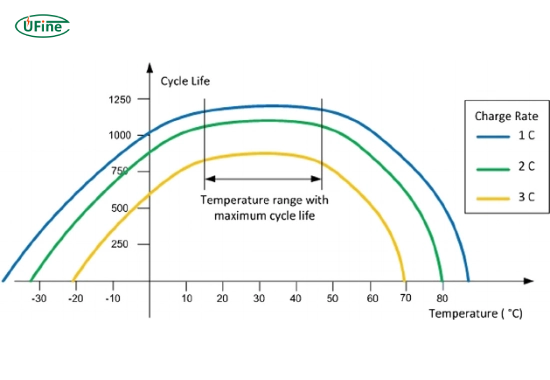
Part 3. How temperature affects lithium batteries performance
Temperature directly affects lithium battery behavior.
| Temperature Range | Battery Behavior | Note |
|---|---|---|
| Below 0°C | Lower capacity and slower reaction | Avoid charging unless supported |
| 20–25°C | Stable and efficient | Ideal range |
| Above 45°C | Faster aging | Needs cooling and ventilation |
| Very high | Safety risk increases | Requires full protection system |
Low temperature can cause lithium plating. High temperature speeds up chemical reactions.
Part 4. Insulated battery box vs regular battery box
A regular battery box offers basic protection. An insulated battery box adds thermal control and better sealing.
| Feature | Regular Box | Insulated Box |
|---|---|---|
| Thermal protection | Low | Medium to high |
| Cold support | Limited | Better |
| Moisture protection | Basic | Improved |
| Impact resistance | Basic | Stronger |
| Use case | Indoor | Outdoor and mobile |
For outdoor or mobile use, an insulated battery box is the better choice.
Part 5. How to choose an insulated battery box for lithium batteries
1. Battery size and internal space
Measure battery length, width, height, and terminal position.
Leave space for:
- Cables and terminals
- Fuse and BMS
- Battery monitor
- Air gap for heat
Keep at least 25 mm clearance when possible.
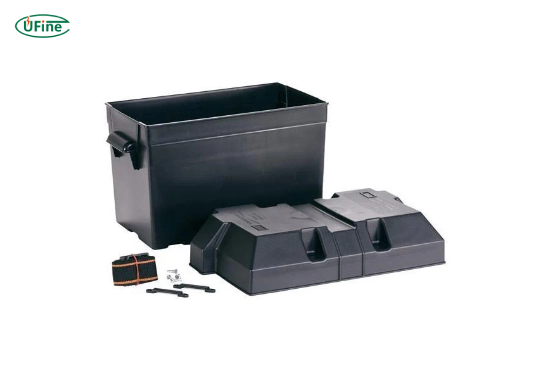
2. Insulation material selection
Material affects thermal performance.
| Material | Advantage | Use |
|---|---|---|
| Foam | Light and low cost | RV, camping |
| Double-wall plastic | Strong and water-resistant | Outdoor use |
| Thermal liner | Flexible | Retrofit |
| Steel with insulation | Very strong | Marine, industrial |
3. Ventilation and heat control
Do not fully seal the box without airflow. Heat builds up during charging and discharging.
Good design includes:
- Vent holes or membranes
- Air gap inside
- External mounting for hot devices
- BMS temperature sensor
Learn more: Battery Management System.
4. Application-based battery box selection
| Application | Main Risk | Feature |
|---|---|---|
| RV | Cold, vibration | Insulation, strong lid |
| Marine | Water, salt | Sealed, corrosion-resistant |
| Solar | Heat, outdoor | UV-resistant, ventilation |
| Backup | Long storage | Stable indoor design |
5. Waterproof and IP rating
Check seals, cable entries, and lid design. IP rating shows protection level. For example, IP65 means dust-tight and water-resistant.
6. Safety features for lithium battery box
- Battery fixing points
- Fuse or breaker space
- Terminal covers
- Heat-resistant materials
- Clear labeling
Large systems may need standards like UL 1973 or UN 38.3.
7. Portability and installation
Check weight and handle strength.
- Handles and mounting points
- Total weight
- Cable direction
- Maintenance access
Part 6. What size insulated battery box do you need
Choose size based on battery and accessories.
- Measure battery size
- Check terminal direction
- Add wiring space
- Include BMS and fuse space
- Check weight limit
For custom systems, consider custom lithium battery packs.
Part 7. Can you use a sealed insulated battery box for lithium batteries
Yes, but only with proper design.
Check:
- Heat generation
- Current load
- BMS protection
- Vent or pressure design
For high current, controlled ventilation is safer.
Part 8. Best use cases for insulated lithium battery boxes
- RV systems
- Marine batteries
- Solar storage
- Off-grid cabins
- Backup power
- Portable power stations
LiFePO4 batteries are common for these uses. See LiFePO4 battery solutions.
Part 9. Common mistakes when choosing an insulated battery box
- No clearance for cables
- No heat management
- Weak materials outdoors
- Poor cable routing
- Ignoring IP rating
Part 10. How to maintain an insulated battery box
- Clean dust and moisture
- Check seals and hinges
- Inspect cables and terminals
- Keep vents clear
- Store in dry place
Stop using the battery if you see swelling or overheating.
Part 11. Insulated battery box selection checklist
| Item | Check |
|---|---|
| Size | Fits battery and wiring |
| Insulation | Matches climate |
| Ventilation | Handles heat |
| Waterproof | Has seals and IP rating |
| Safety | Supports fuse and BMS |
Part 12. FAQs about insulated battery boxes
What is the purpose of an insulated battery box?
It protects lithium batteries from temperature changes, moisture, and damage.
Do lithium batteries need insulation?
Not always indoors. But it is important for outdoor and cold environments.
Can I use a regular battery box?
Yes for indoor use. For outdoor use, insulated boxes are better.
Are insulated battery boxes waterproof?
Some are. Always check IP rating and sealing design.
Can I build one myself?
Yes, but you must ensure safety, insulation, and heat control.
Related Tags:

More Articles
Dead Battery or Device Failure? How to Find the Cause
Think your device is broken? Learn how to tell if the problem comes from battery aging or hardware failure before replacing your electronics.
Why iPhone Duo Uses Two Batteries: The Engineering Behind Foldable Phone Power
Why do foldable phones need two batteries? Explore the engineering challenges behind iPhone Duo’s dual-battery architecture and future battery trends.
Solid-State Batteries: 3 Myths You Need to Know
Solid-state batteries promise safer EVs and longer range, but the reality is more complex. Discover the challenges behind this next-gen technology.
Battery Capacity vs Discharge Rate: The Choice Engineers Face
Higher capacity or higher discharge rate? Learn how to choose the right LiPo battery for longer runtime, stable power output, and better device performance.
Battery Cable Size Guide: Choose the Right Wire Fast
Not sure what battery cable size you need? Learn how to select the right wire gauge, terminal size, and cable for safer, more efficient battery systems.


