- Key Takeaways
- Part 1. What is an lco battery (Lithium Cobalt Oxide)
- Part 2. What is an lfp battery (Lithium Iron Phosphate)
- Part 3. Lco battery vs lfp battery: Key differences
- Part 4. Lfp battery advantages and disadvantages (Engineering View)
- Part 5. Cost comparison: Lco vs lfp batteries
- Part 6. How to choose: Lco or lfp battery
- Part 7. FAQs about Lco battery Vs Lfp battery
Lithium-ion batteries dominate modern energy storage. Among them, LCO battery (Lithium Cobalt Oxide) and LFP battery (Lithium Iron Phosphate) are widely used but serve very different purposes.
If you are selecting a battery for electronics, EVs, or industrial systems, understanding their differences is critical for performance, safety, and cost control.
Key Takeaways
- LCO batteries offer high energy density, ideal for compact devices like smartphones and laptops.
- LFP batteries prioritize safety and long cycle life, making them suitable for EVs and energy storage.
- LCO has higher risk of thermal runaway, while LFP is one of the safest lithium chemistries.
- LFP batteries have lower total cost of ownership due to longer lifespan and stability.
- Choose LCO for space-constrained designs, and LFP for durability, safety, and large systems.
Part 1. What is an lco battery (Lithium Cobalt Oxide)
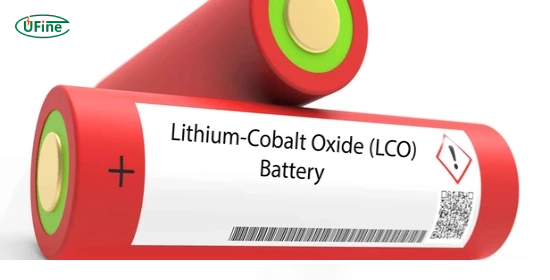
An LCO battery uses lithium cobalt oxide (LiCoO₂) as the cathode material. It is one of the earliest commercial lithium-ion chemistries.
Note: LCO battery full form: Lithium Cobalt Oxide battery
1 Key Characteristics Of Lco Batteries
- High energy density (150–200 Wh/kg)
- Stable discharge voltage (~3.7V nominal)
- Sensitive to high temperature and overcharge
- Relatively short cycle life (500–1000 cycles)
2 Advantages Of Lco Batteries
- Compact size for space-limited designs
- High energy storage per unit weight
- Stable voltage for consumer electronics
3 Disadvantages Of Lco Batteries
- Risk of thermal runaway under stress
- Shorter lifespan compared to LFP
- High cost due to cobalt sourcing
- Environmental and ethical concerns in cobalt mining
4 Typical Applications
- Smartphones
- Laptops
- Cameras
- Portable medical devices
Part 2. What is an lfp battery (Lithium Iron Phosphate)
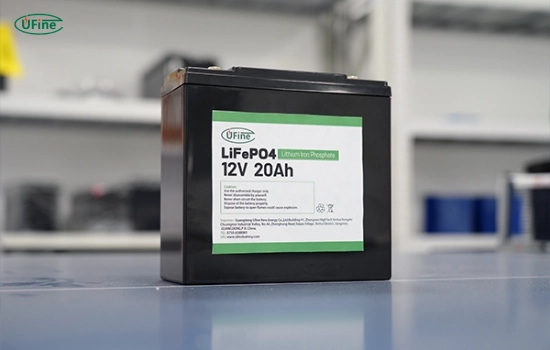
An LFP battery uses lithium iron phosphate (LiFePO₄) as the cathode. It is widely used in EVs and energy storage systems.
👉 Learn more: What is a LiFePO4 (LFP) battery?
1 Key Characteristics Of Lfp Batteries
- Moderate energy density (120–160 Wh/kg)
- Excellent thermal stability
- Long cycle life (2000–6000+ cycles)
- Lower nominal voltage (~3.2V)
2 Advantages Of Lfp Batteries
- Very high safety (low thermal runaway risk)
- Long lifespan → lower replacement frequency
- Better thermal performance in harsh environments
- No cobalt → more sustainable supply chain
3 Disadvantages Of Lfp Batteries
- Lower energy density → larger size required
- Lower voltage → more cells needed in series
- Slightly weaker performance in extreme cold
Part 3. Lco battery vs lfp battery: Key differences
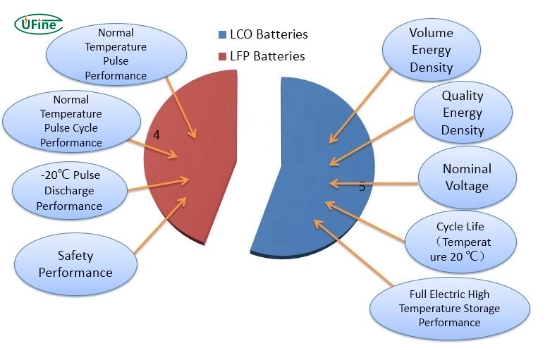
8 Performance Comparison Table
| Feature | LCO Battery | LFP Battery |
|---|---|---|
| Energy Density | High | Medium |
| Safety | Moderate (thermal risk) | Very high |
| Cycle Life | 500–1000 cycles | 2000–6000+ cycles |
| Cost | High (cobalt) | Lower |
| Thermal Stability | Low | Excellent |
| Environmental Impact | Higher | Lower |
| Typical Use | Consumer electronics | EVs, solar storage |
Part 4. Lfp battery advantages and disadvantages (Engineering View)
- Advantages
- Stable chemistry reduces failure rate in large packs
- Long cycle life improves ROI in energy storage systems
- Better suited for high-temperature environments
- Disadvantages
- Lower energy density limits portable device use
- Requires larger battery pack design
- Lower voltage increases system complexity
Part 5. Cost comparison: Lco vs lfp batteries
From a procurement perspective, cost must be evaluated beyond initial price.
Lco Battery Cost Drivers
- Cobalt price volatility
- Short lifespan → frequent replacement
- Higher safety management cost (BMS requirements)
Lfp Battery Cost Drivers
- Lower material cost (iron, phosphate)
- Longer lifespan → lower total cost of ownership
- Reduced safety system complexity
Note: According to International Energy Agency (IEA), LFP adoption is rising due to cost and safety advantages in EVs.
Part 6. How to choose: Lco or lfp battery
Choose Lco Battery If
- You need maximum energy density
- Device size and weight are critical
- Application: smartphones, laptops
Choose Lfp Battery If
- Safety is a priority
- You need long cycle life
- Application: EVs, solar storage, industrial systems
Lco Vs Lfp Battery Applications And Use Cases
| Application | Recommended Battery | Reason |
|---|---|---|
| Smartphone | LCO | High energy density |
| Laptop | LCO | Compact design |
| Electric Vehicle | LFP | Safety + long lifespan |
| Solar Energy Storage | LFP | Cycle life + stability |
| Industrial Backup Power | LFP | Reliability |
Part 7. FAQs about Lco battery Vs Lfp battery
What is the full form of LCO battery?
LCO stands for Lithium Cobalt Oxide battery, using LiCoO₂ as the cathode material.
Which is safer: LCO or LFP battery?
LFP battery is safer due to strong thermal stability and lower risk of thermal runaway.
Why do EVs prefer LFP batteries?
Because of long lifespan, safety, and lower cost, especially for large battery packs.
What is the main disadvantage of LFP batteries?
Lower energy density, which requires more space compared to LCO batteries.
Can LCO batteries be replaced with LFP?
Yes, but only if size and weight constraints allow, since LFP packs are larger.
Related Tags:

More Articles
Buck vs. Boost vs. Buck-Boost Converter: Which Is Best for Battery?
Not sure which converter your battery-powered device needs? Compare Buck, Boost, and Buck-Boost designs and discover what affects voltage stability and runtime.
How to Match 18650 Cells for a Reliable Battery Pack?
Building an 18650 battery pack? Learn how to compare cell capacity, voltage, and internal resistance to avoid mismatches and improve reliability.
Why Do 18650 Battery Packs Get Hot During Discharge?
Is your 18650 battery pack overheating under load? Learn what causes excess heat, how to spot dangerous symptoms, and what to do next.
18650 Battery BMS: How to Get the Specs Right
Learn how to choose a BMS for an 18650 battery pack. Compare voltage, current ratings, protection features, and balancing before you buy.
Why Does My Ring Camera Battery Drain So Fast or Stop Charging?
Is your Ring camera battery draining fast or not charging? Discover common causes, practical fixes, and when to replace the battery.