
- Key takeaways
- Part 1. What actually determines lithium battery cost
- Part 2. Main types of lithium batteries
- Part 3. Top manufacturers of affordable lithium batteries
- Part 4. Are cheap lithium batteries safe?
- Part 5. Where to find affordable lithium batteries
- Part 6. FAQs — Practical insights for buyers
Key takeaways
- The price of lithium batteries is driven by raw materials, chemistry, manufacturing scale, and design requirements.
- LiFePO₄ chemistry typically offers the best balance of cost, safety, and lifespan for many industrial and commercial applications.
- Cheap lithium batteries aren’t inherently low‑quality, but quality control, certifications, and supplier reputation matter.
- Strategic sourcing and proper evaluation (spec testing, certifications, long‑term reliability) help you avoid risk.
Part 1. What actually determines lithium battery cost
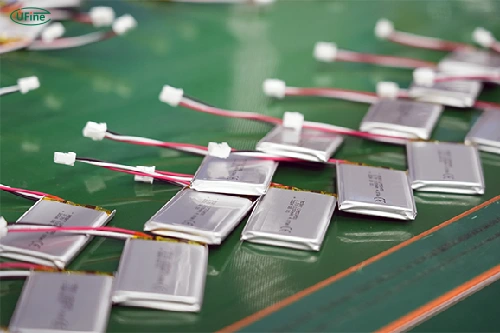
Understanding where the price comes from makes you a smarter buyer. These are the main cost drivers:
| Cost Driver | Why It Matters |
|---|---|
| Raw materials | Lithium, cobalt, nickel, iron, graphite — prices fluctuate with global supply chains. |
| Chemistry choice | LiFePO₄ often costs less than high‑nickel NMC or NCA but offers more cycles. |
| Manufacturing scale & automation | Larger factories produce at lower per‑unit cost. |
| Quality & certifications | Certified cells cost more but reduce risk and liability. |
| Design complexity | Ultra‑thin, high‑power, or high‑temperature cells increase costs. |
For many buyers, the biggest price differential isn’t brand name — it’s cell chemistry, quality control, and scale of production.
Part 2. Main types of lithium batteries
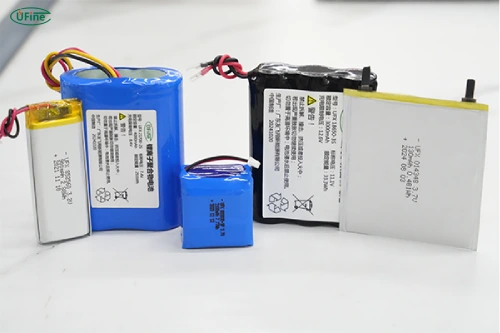
Here’s how the most common lithium chemistries compare in real‑world use:
| Chemistry | Strengths | Typical Uses | Cost Profile |
|---|---|---|---|
| Li‑ion (NMC/NCA) | High energy density, broad industry support | EVs, laptops, mobile devices | Mid to high |
| Li‑Polymer | Flexible form factor, thinner profiles | Drones, wearables, consumer devices | Mid |
| LiFePO₄ | Excellent cycle life, better thermal stability | Energy storage, EVs, industrial | Lower cost per life cycle |
💡 Insight: For businesses and engineers comparing cost vs performance, LiFePO₄ is often the best “value chemistry” — lower upfront cost, high safety, and reliable long‑term performance.
To compare different chemistries in detail, see our article on LFP vs NMC batteries and their key differences.
Part 3. Top manufacturers of affordable lithium batteries
The suppliers below are widely recognized for scalable production, competitive pricing, and international availability. Ranked for B2B relevance, global reach, and cost‑effective portfolio offerings:
1 CATL (Contemporary Amperex Technology Co., Ltd.)
China’s largest lithium battery supplier with massive gigafactory capacity and broad chemistry offerings including LiFePO₄ and NMC cells. CATL’s scale helps drive competitive pricing for EV, ESS, and industrial applications.
Pros:
- World’s largest lithium battery manufacturer; massive production scale reduces cost.
- Wide chemistry mix: LiFePO₄, NMC, and custom solutions.
- Proven track record with EV makers and large industrial customers.
Cons:
- Higher MOQs for smaller businesses.
- Long lead times during peak demand cycles.
Best For: EV packs, large ESS deployments, long‑term partnerships.
2 Ufine Battery (Guangdong Ufine New Energy Co., Ltd.)
Company Overview:
Ufine Battery (Guangdong Ufine New Energy Co., Ltd.) is a China‑based custom lithium battery manufacturer founded in 2008. They integrate R&D, design, production, and global sales — offering over 1,000 battery specifications.
Product Capabilities:
- Lithium Polymer (Li‑Poly) cells
- LiFePO₄ Battery
- 18650 and various cylindrical cells
- Ultra‑thin special‑shaped cells
- High/low temperature resistant, high‑rate batteries
- Custom voltage, capacity, and form factor options
Pros:
✔ Strong customization capabilities — excellent for unique product specifications.
✔ Wide chemistry portfolio, meaning versatility across industries.
✔ Dedicated R&D team and quality control processes.
✔ Competitive pricing due to efficient product lines and scale.
Cons:
⚠ Shipping lead times can vary depending on the order size and customization.
⚠ Like many OEM factories, buyers should verify samples and test results before scaling.
Best For: OEM partners, customized battery solutions, design‑specific requirements.
3 BYD Battery Technology Co., Ltd.
A vertically integrated Chinese supplier that produces Blade LFP batteries for a range of commercial applications, including EV fleets and energy storage systems.
Pros:
- Integrated EV and ESS battery supplier with strong LiFePO₄ lines.
- Established global presence.
- Excellent safety and reliability record.
Cons:
- Less flexibility for small‑scale customization compared to pure OEMs.
- Higher pricing on some niche product categories.
Best For: EV subsystems, large stationary storage, corporate fleets.
4 LG Energy Solution
South Korea‑based supplier with strong global distribution and quality control; increasingly competitive in LFP and ESS segments, backed by major supply contracts.
Pros:
- Strong product quality controls and global service networks.
- Broad chemistry offerings and deep industrial expertise.
Cons:
- Typically positioned at a premium compared to ultra‑low‑cost suppliers.
- Lead times vary by region.
Best For: High‑reliability systems and products where performance and certifications matter.
5 EVE Energy Co., Ltd.
A rapidly expanding battery maker with strong presence in energy storage and industrial cell formats; balances price with quality for OEM and commercial orders.
Pros:
- Growing presence in cylindrical and prismatic cells with competitive pricing.
- Increasing market share in ESS and EV markets.
Cons:
- Still scaling international service infrastructures.
- Some specialty formats may not be stocked globally.
Best For: Mid‑range cost systems with moderate customization needs.
Part 4. Are cheap lithium batteries safe?
Short answer: They can be. But not all are created equal.
Here’s how to think about it:
✔️ Advantages of Lower‑Cost Cells
- Lower CAPEX for prototypes and large deployments.
- Often sufficient for moderate‑demand systems (e.g., ESS for backup power).
- Easier to stock and replace.
⚠️ Risks to Watch
- Shorter lifespans or inconsistent manufacturing if quality control is lax.
- Cells lacking proper certification (UL, CE, UN38.3) pose safety and compliance risks.
- Inferior thermal management can increase fire risk.
For a deeper understanding of safety and compliance, check out our essential guide to battery certification, including types, costs, and standards.
How Professionals Mitigate Risk
- Require independent lab test reports and sample testing before bulk buys.
- Check for safety certifications and traceability documentation.
- Partner with suppliers that provide batch traceability and consistent QC data.
💡 A cheap cell with strong documentation and testing data >> expensive cell with none.
Part 5. Where to find affordable lithium batteries
Rather than just “Online vs Wholesale”, think in terms of strategy layers:
Direct from OEM (Best for Custom or Volume)
- Lowest unit cost with higher minimum orders.
- Custom voltage, capacity, form factor available.
- Best for long‑term product lines.
Authorized Distributors
- Good for smaller runs without high MOQs.
- Offers local support and easier warranty channels.
Marketplace Channels
- Useful for prototypes or urgent small orders.
- Must verify seller reputation and product specs.
Practical Sourcing Tips
- Compare quotes on same spec, same test data, not just price.
- Ask for sample batches for engineering evaluation before committing.
- Build relationships — long‑term partners often give better pricing and priority.
Part 6. FAQs — Practical insights for buyers
What’s the typical cycle life of inexpensive LiFePO₄ batteries?
Quality LiFePO₄ cells commonly deliver 2000–5000+ cycles, depending on usage profiles.
How should I assess a supplier’s quality before ordering?
Ask for detailed batch test reports, UL/CE/UN38.3 certification copies, and sample testing.
Are warranty terms generally reliable for cheap lithium batteries?
Warranty depends on supplier. OEMs with solid documentation typically offer 1–3 years, while marketplace sellers may offer limited support.
How do I reduce cost without lowering quality?
Volume commitments, multi‑year supply contracts, and engineering validation batches help secure lower pricing without compromising performance.
Related Tags:

More Articles

JST vs Molex: The Right Battery Connector Choice
JST or Molex for your battery? Learn how connector selection affects current, voltage drop, reliability, and device performance.
Custom Battery Pricing: Costs Manufacturers Don’t Mention
A low battery quote may not be the final cost. Discover common hidden expenses that affect custom lithium battery projects.
Battery Wire Length: Hidden Cause of Power Loss
A longer battery wire can cause voltage drop, power loss, and unstable operation. Learn how wire length affects battery performance.
How Device Sleep Modes Affect Battery Life
Think sleep mode extends battery life? Learn why devices still drain power and how firmware, hardware, and batteries affect runtime.
LiPo Battery and PCB Design: Clearance, Insulation, and Placement
Learn how to optimize LiPo battery PCB clearance, insulation, placement, wiring, and thermal design—and avoid common integration mistakes.


