- Key takeaways
- Part 1. Is it normal for a LiPo battery to get hot during fast charging?
- Part 2. Why does a LiPo battery get hot during fast charging?
- Part 3. How can you tell where the heat is coming from?
- Part 4. When is a hot LiPo battery dangerous?
- Part 5. How to troubleshoot and prevent battery overheating
- Part 6. How battery design affects fast-charging performance
- Part 7. FAQs
In a March 2026 technical report, the U.S. National Institute of Standards and Technology (NIST) estimated that approximately 198,000 lithium-ion battery fires occurred in structures in the United States since 2011. The researchers also estimated that consumer lithium-ion battery fires were increasing by around 10% annually, while emphasizing that available incident data remain incomplete. These figures cover lithium-ion battery fires broadly, not just incidents caused by fast charging. (NIST)
If your LiPo battery gets hot while charging, the cause may be normal electrical losses, excessive charging current, poor heat dissipation, or an underlying battery or charging-system problem.
Understanding the difference between normal warmth and abnormal overheating can help you protect your device, extend battery life, and reduce safety risks. This guide explains why LiPo batteries heat up during fast charging, how to identify potential problems, and what you can do about them.
Key takeaways
- Fast charging generates heat through internal resistance and electrochemical processes.
- Charging current, battery condition, ambient temperature, and heat dissipation all influence battery temperature.
- A warm battery is not necessarily defective, but rapid temperature increases, swelling, or smoke require immediate attention.
- Compatible charging equipment and appropriate thermal protection help reduce overheating risks.
- Battery charging limits must follow the specific cell manufacturer’s specifications.
Part 1. Is it normal for a LiPo battery to get hot during fast charging?
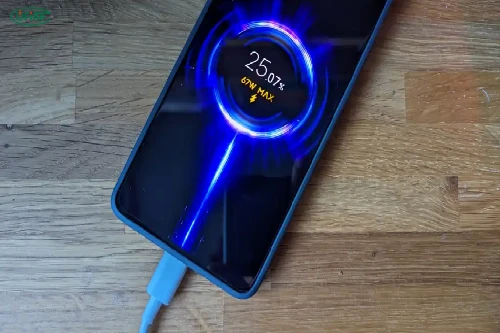
A lithium polymer (LiPo) battery can become warm during fast charging because electrical energy is not converted into stored chemical energy with 100% efficiency. Some energy is released as heat during charging.
Mild warmth may be normal when a battery operates within its specified charging conditions. However, a battery that becomes unusually hot, heats up rapidly, or continues getting hotter should not be assumed to be operating normally.
Several factors influence how much heat a battery generates:
- Charging current: Higher current can increase resistive heating.
- Battery condition: Aging or damaged cells may exhibit increased resistance or abnormal behavior.
- Ambient temperature: Warm surroundings reduce the battery’s ability to dissipate heat.
- Device design: Compact enclosures can trap heat around the battery and charging circuitry.
- Charging stage: Battery voltage, current, and electrochemical conditions change throughout charging.
There is no single temperature threshold that applies to every LiPo battery. Always follow the cell specifications and the finished device manufacturer’s charging limits. Remember that the temperature measured on a device’s exterior may differ from the temperature inside the battery.
Part 2. Why does a LiPo battery get hot during fast charging?
Several electrical and electrochemical processes can contribute to battery heating. Understanding them helps explain why the same charger may produce different temperature changes in different devices.
2.1 High charging current generates more heat
Fast charging increases the rate at which electrical energy enters a battery. When current flows through the battery’s internal resistance, some energy is dissipated as heat.
The basic relationship is:
P = I²R
Here, P represents resistive heating power, I is current, and R is electrical resistance.
If resistance remains constant, doubling the current produces four times the resistive heating. Tripling it produces nine times the heating.
| Charging current | Relative resistive heating |
|---|---|
| 1 A | 1× |
| 2 A | 4× |
| 3 A | 9× |
This is a simplified theoretical comparison, not a prediction of actual battery temperature. Real battery resistance and heat dissipation change with operating conditions.
A battery’s capacity alone does not determine its safe charging current. Its design, specified charging rate, temperature limits, and charging system must all be considered.
2.2 Internal resistance converts electrical energy into heat
Every battery has internal resistance. During charging, this resistance contributes to heat generation.
Battery resistance can change with temperature, state of charge, age, and cell design. Aging, manufacturing defects, physical damage, or abnormal operating conditions may also affect resistance.
Connections can be another source of heat. A loose, damaged, or poorly designed connector may develop localized heating even when the battery itself is functioning normally.
2.3 Electrochemical reactions also contribute to heat
Charging a LiPo battery involves lithium ions moving between the electrodes through the electrolyte. This process is influenced by temperature, charging current, and the battery’s state of charge.
When ion transport and electrode reactions cannot keep pace with the applied charging conditions, polarization and other losses can increase. Under unsuitable conditions, lithium plating may also become a concern, potentially affecting battery life and safety.
Therefore, battery heating is not determined by electrical resistance alone. Electrochemical processes and heat transfer also play important roles.
2.4 Charging stages affect temperature
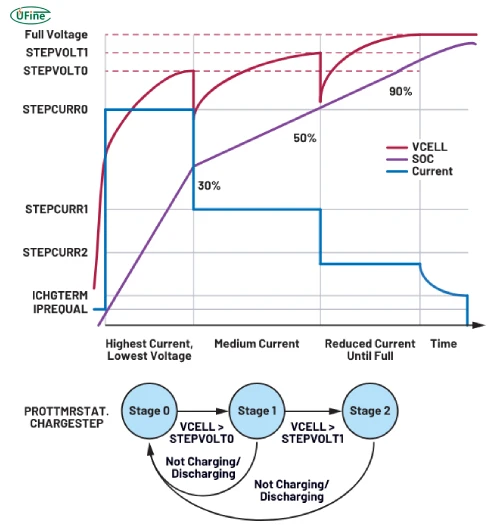
Most conventional LiPo charging systems use a constant-current/constant-voltage (CC-CV) charging profile.
During the constant-current stage, the charger maintains a specified current while battery voltage rises. Once the target voltage is reached, the system transitions to constant-voltage charging, and current generally decreases over time.
As current decreases, resistive heating may also decline. However, temperature does not necessarily peak at a particular battery percentage because resistance, electrochemical conditions, and cooling also change throughout charging.
2.5 Charger compatibility and poor heat dissipation
A charger, charging circuit, and battery must work together within their specified operating limits. An incompatible charging configuration or faulty control circuit can cause abnormal heating.
Environmental conditions matter, too. Direct sunlight, hot surroundings, restricted airflow, and intensive device use during charging can make heat accumulate faster than it escapes.
Part 3. How can you tell where the heat is coming from?
When a device becomes hot during charging, the battery is not necessarily the source. The charging circuit, connector, cable, processor, or other components may also generate heat.
Consider the following possibilities:
| Observed symptom | Possible explanation | Recommended action |
|---|---|---|
| Mild, stable warmth | Normal charging losses | Follow the manufacturer’s charging guidance |
| Rapidly increasing temperature | Excessive current, a fault, or inadequate cooling | Stop charging if heating is abnormal |
| Localized heat near a connector | Contact resistance or connector damage | Stop using damaged connections and seek inspection |
| Device is hot, but battery temperature is unknown | Charging circuit, processor, battery, or another component | Avoid assuming the battery is the source |
| Swelling, leakage, or smoke | Potential battery failure | Stop use, avoid handling, and follow appropriate emergency guidance |
These symptoms are clues, not definitive diagnoses. Do not dismantle a device or handle a hot or damaged battery to identify the heat source.
Part 4. When is a hot LiPo battery dangerous?
The important distinction is between expected warmth and signs of a potential battery failure.
Warning signs include:
- Temperature rising rapidly or becoming unusually high.
- Swelling or deformation of the battery pouch.
- Electrolyte leakage or an unusual chemical odor.
- Hissing, smoke, or other signs of an active failure.
If a battery shows signs of damage or abnormal overheating, stop charging and using the device if you can do so safely. Do not continue charging at a lower current to see whether the problem disappears.
If the battery is smoking, hissing, or showing signs of thermal runaway, move away from the danger area and contact local emergency services. Do not attempt to carry, dismantle, or handle the affected battery.
The U.S. Consumer Product Safety Commission recommends a system-level approach to battery safety, including appropriate cells, charging controls, protection circuits, compatible chargers, and testing of the complete product. See its battery safety guidance.
Part 5. How to troubleshoot and prevent battery overheating
If your battery gets hot while charging, the appropriate response depends on the severity of the symptoms.
5.1 Stop charging and assess the situation
If the battery is unusually hot, rapidly heating, swollen, leaking, or smoking, stop using it and follow the safety precautions above. Do not continue testing a potentially damaged battery.
If the device is only mildly warm and shows no warning signs, review its charging instructions and temperature limits.
5.2 Check the charger and charging specifications
Confirm that the charger and device are compatible. Verify that the charging voltage and current comply with the battery and device manufacturer’s requirements.
Do not assume that a higher-power charger will force its maximum power into every device. Actual charging behavior depends on the power source, charging protocol, charging circuit, and battery limitations.
5.3 Consider the environment and device workload
Avoid charging in direct sunlight, near heat sources, or on bedding and other soft surfaces that can trap heat.
Running demanding applications while charging can also increase the device’s overall temperature. Reducing unnecessary workloads may help, but it is not a substitute for investigating abnormal battery heating.
5.4 Monitor temperature and charging behavior
Use built-in temperature readings or diagnostic information when available. For product developers, appropriately positioned temperature sensors can help the charging system reduce or stop charging when specified temperature limits are reached.
Do not rely exclusively on touch to judge battery temperature. If overheating repeatedly occurs, stop using the device and arrange a qualified inspection.
5.5 Replace damaged or failing batteries
A swollen, leaking, physically damaged, or persistently overheating battery should not be returned to normal use. Follow the manufacturer’s replacement guidance and local battery disposal requirements.
Part 6. How battery design affects fast-charging performance
For consumer electronics manufacturers, managing battery heat starts during product development rather than after overheating occurs.
Match charging current to the cell design
A suitable charging rate depends on the specific cell’s chemistry, electrode design, capacity, construction, and operating limits. Selecting a battery based solely on capacity or physical dimensions can overlook important charging and thermal requirements.
Design for temperature monitoring and protection
Temperature sensors, charging-control circuits, and appropriate protection mechanisms help keep the battery within its specified operating range. Their effectiveness depends on correct component selection, placement, calibration, and system integration.
Consider thermal management in compact devices
Wireless earbuds, smartwatches, handheld electronics, and other compact products have limited internal space. The proximity of the battery to charging circuits and other heat-generating components can influence temperature distribution.
Engineers should evaluate charging performance, temperature rise, enclosure design, and operating conditions together. Testing should reflect the intended battery, charger, and finished product rather than relying only on isolated component specifications.
For custom LiPo battery applications, Ufine Battery can work with product developers to evaluate requirements such as battery dimensions, capacity, charging rate, operating environment, and integration constraints. The appropriate solution depends on the specific application and validated cell specifications.
Part 7. FAQs
1. Why does my LiPo battery get hotter near the end of charging?
Battery temperature depends on charging current, internal resistance, electrochemical conditions, and heat dissipation. Although charging current generally decreases during the constant-voltage stage, temperature may remain elevated because heat takes time to dissipate. Unusual or continuing temperature increases should be investigated.
2. Can using my phone while fast charging make the battery hotter?
Yes. Running demanding applications, playing games, streaming video, or using navigation can increase heat generated by the device’s processor and other components. This additional heat may raise the temperature around the battery.
3. Does fast charging generate more heat than slow charging?
Generally, higher charging current increases resistive heating when other conditions remain comparable. However, actual temperature rise also depends on battery design, internal resistance, charging efficiency, and cooling performance.
4. Can cold temperatures cause a LiPo battery to heat up during charging?
Charging at low temperatures can increase electrochemical limitations and create additional risks, including lithium plating under unsuitable conditions. Follow the battery manufacturer’s permitted charging temperature range, and never attempt to warm a cold battery rapidly to make it charge faster.
5. Why does my battery heat up more in summer?
Higher ambient temperatures reduce the temperature difference available for heat to escape into the surroundings. If the battery is already warm, additional charging heat can push it closer to its specified temperature limit.
Related Tags:

More Articles

How to Route Battery Wires in a Compact Electronic Enclosure
Routing battery wires in tight spaces? Learn how to prevent pinched cables, voltage drop, insulation damage, and costly electronic failures.
How to Match Battery Discharge Current to Motor Startup Demand
Does your motor struggle to start? Learn how to calculate startup current, prevent voltage drop, and choose a battery that delivers reliable power.
Dead Battery or Device Failure? How to Find the Cause
Think your device is broken? Learn how to tell if the problem comes from battery aging or hardware failure before replacing your electronics.
Why iPhone Duo Uses Two Batteries: The Engineering Behind Foldable Phone Power
Why do foldable phones need two batteries? Explore the engineering challenges behind iPhone Duo’s dual-battery architecture and future battery trends.
Solid-State Batteries: 3 Myths You Need to Know
Solid-state batteries promise safer EVs and longer range, but the reality is more complex. Discover the challenges behind this next-gen technology.