
- Key Takeaways
- Part 1. What is a lawn mower battery?
- Part 2. Lawn mower battery types (comparison guide)
- Part 3. How long do lawn mower batteries last?
- Part 4. How lawn mower battery power works
- Part 5. How to choose the right lawn mower battery?
- Part 6. Lawn mower battery maintenance tips
- Part 7. Common lawn mower battery problems (fix guide)
- Part 8. Can you replace a lawn mower battery yourself?
- Part 9. FAQ: Lawn mower battery selection & use
A lawn mower battery is the core power source of any electric or battery-powered mower. Choosing the right battery affects runtime, cutting performance, and total cost. This guide explains lawn mower battery types, lifespan, power requirements, and selection steps in a clear, practical way.
Key Takeaways
- Lithium-ion batteries are the best choice for most electric mowers due to longer lifespan and higher efficiency.
- Typical lawn mower battery lifespan ranges from 3 to 10 years, depending on chemistry and usage.
- Always match voltage, capacity (Ah), and connector type with your mower model.
- Higher Ah means longer runtime; higher voltage means more power.
- Proper charging and storage can extend battery life by 30–50%.
- For OEM or custom needs, consider a tailored solution like Ufine Battery.
Part 1. What is a lawn mower battery?
A lawn mower battery stores electrical energy and powers the motor and blades in electric mowers. Unlike gas mowers, battery-powered models rely entirely on stored energy.
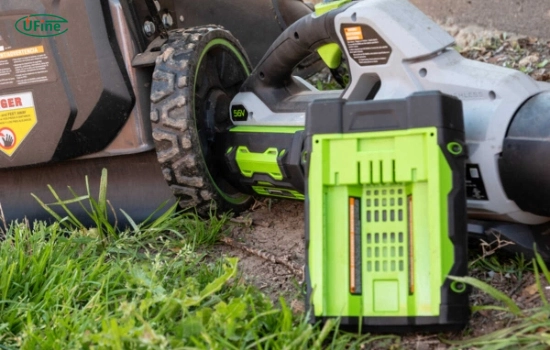
Modern systems use removable battery packs, making charging and replacement easier. This shift supports cleaner, quieter lawn care.
Part 2. Lawn mower battery types (comparison guide)
Choosing the right lawn mower battery type depends on cost, performance, and maintenance needs.
1 Lead-acid batteries (FLA & SLA)
- Low cost and widely available
- Heavy and lower energy density
- Lifespan: 3–5 years
- Flooded (FLA): requires maintenance
- Sealed (SLA): maintenance-free
👉 Best for: Entry-level or riding mowers
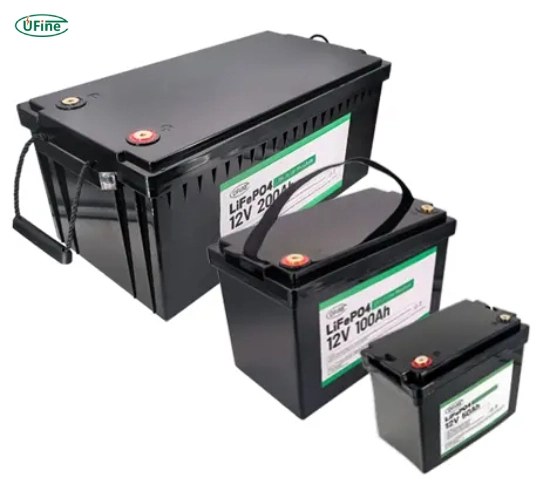
2 Lithium-ion batteries (Li-ion / LiFePO4)
- Lightweight and high energy density
- Fast charging (often <2 hours)
- Lifespan: 5–10 years
- Stable output and better efficiency
👉 Best for: Modern electric mower battery systems
Learn more about lithium battery design: Lithium battery technology insights
3 Nickel-cadmium (NiCd) batteries
- Good temperature tolerance
- Memory effect reduces capacity over time
- Less common due to environmental concerns
👉 Best for: Legacy systems only
Part 3. How long do lawn mower batteries last?
The lifespan depends on battery chemistry, usage cycles, and maintenance.
| Battery Type | Typical Lifespan | Key Limitation |
|---|---|---|
| Lead-acid | 3–5 years | Sulfation, weight |
| Lithium-ion | 5–10 years | Higher upfront cost |
| NiCd | 2–5 years | Memory effect |
👉 According to U.S. Department of Energy, lithium-ion batteries typically offer higher cycle life and efficiency than traditional chemistries.
Part 4. How lawn mower battery power works
A lawn mower battery power system converts stored electrical energy into mechanical motion:
- Battery supplies current
- Motor converts electricity into rotation
- Blades spin and cut grass
Key performance factors:
- Voltage (V) → determines power output
- Capacity (Ah) → determines runtime
- Discharge rate → affects cutting strength under load
Part 5. How to choose the right lawn mower battery?
If you’re asking: “What battery will work on my lawn mower?” Follow this structured approach:
Check compatibility
- Match brand and model requirements
- Verify connector type and size
Confirm voltage
Common options:
- 12V → small mowers
- 24V / 36V → mid-range
- 40V–80V → high-performance electric mowers
⚠️ Never use the wrong voltage. It can damage the motor.
Evaluate capacity (Ah)
Higher Ah = longer runtime
Example:
- 4Ah → small yard
- 6–10Ah → medium to large yard
Consider weight & design
- Lightweight batteries improve handling
- Important for push mowers
Check charging system
- Ensure charger compatibility
- Prefer smart chargers with auto cut-off
Part 6. Lawn mower battery maintenance tips
Good maintenance extends battery life and improves safety.
Best Practices
- Charge after each use
- Avoid deep discharge
- Store at 40–60% charge (long-term)
- Keep terminals clean
For lead-acid batteries:
- Check electrolyte levels regularly
👉 For battery safety standards, refer to UL (Underwriters Laboratories).
Part 7. Common lawn mower battery problems (fix guide)
Battery Won’t Charge
- Check charger and outlet
- Inspect connectors
- Replace faulty charger if needed
Short Runtime
- Battery aging (capacity fade)
- Incomplete charging
- High load (thick grass)
Corrosion on Terminals
- Clean with baking soda solution
- Use protective grease
Part 8. Can you replace a lawn mower battery yourself?
Yes, most batteries are user-replaceable.
Basic Steps
- Turn off and disconnect mower
- Remove battery cover
- Disconnect negative (-) first, then positive (+)
- Install new battery (positive first)
- Reassemble and test
👉 Always follow manufacturer guidelines.
Part 9. FAQ: Lawn mower battery selection & use
How do I know what battery will work on my lawn mower?
Check your mower manual for voltage, capacity, and connector type. Always match these specifications exactly.
How long do lawn mower batteries last on a single charge?
Most electric mower batteries run 30–90 minutes, depending on capacity and load.
What steps should I take to identify the right battery size?
Check voltage (V), match capacity (Ah), verify physical size and connector, confirm compatibility with charger.
Can I upgrade to a higher capacity battery?
Yes, if voltage matches. A higher Ah battery gives longer runtime but may increase weight.
What is the best battery for an electric mower?
Lithium-ion (especially LiFePO4) is the best choice due to long lifespan, safety, and stable performance.
Ufine Battery provides custom lithium battery solutions for electric mowers, designed to meet specific voltage, capacity, size, and safety requirements for OEM and industrial applications.
Find A Solution NowRelated Tags:

More Articles
How to Charge Lithium Ion Battery Without Charger?
Learn how to charge lithium-ion batteries without a charger safely. Covers 18650, 3.7V Li-ion cells, alternative methods, and key safety tips.
The Ultimate Guide to C Type Battery
Learn C battery size, types (alkaline, NiMH, lithium), key uses, and C vs D battery differences. A practical guide for selecting the right C cell.
Are Leaking Batteries Dangerous?
Are leaking batteries dangerous? Learn why batteries leak, health risks, safe handling, and what to do if battery acid touches skin or leaks from devices.
What Is a Semi Solid State Battery and Why Should You Care?
Learn what a semi solid state battery is, how it works, and how it compares to lithium-ion and solid-state batteries for EVs and energy storage.
Lithium Battery PCB vs. BMS: Key Differences Explained
PCB battery vs BMS PCB board explained. Discover how each works, when you need them, and how to choose the right lithium battery design.


