
- Key Takeaways
- Part 1. Understanding how charging a 24 volt battery works
- Part 2. Lithium vs lead-acid chargers: why compatibility matters
- Part 3. What makes the best 24V lithium battery charger?
- Part 4. Choosing the right charger based on battery capacity
- Part 5. How the charger works with the battery management system (BMS)
- Part 6. Common applications for 24V lithium battery chargers
- Part 7. Signs you're using the wrong 24V battery charger
- Part 8. How smart chargers extend battery lifespan
- Part 9. FAQ
If you use a 24V lithium battery, choosing the right charger is more important than many people realize. A poorly matched charger can shorten battery life, reduce charging efficiency, or even damage your battery pack over time.
Whether you’re powering a solar storage system, electric vehicle, marine equipment, RV setup, or industrial device, the right 24V lithium battery charger ensures your battery charges safely, quickly, and efficiently.
But here’s the challenge: search for a best 24v battery charger, and you’ll see hundreds of options—many of which are not designed specifically for lithium batteries.
So how do you choose the best 24V lithium battery charger for your setup?
In this guide, we’ll walk through how 24V battery charging actually works, what features matter most, and how to select the charger that protects your battery investment for years to come.
Key Takeaways
- A 24V lithium battery charger must match the correct charging voltage (typically 29.2V for LiFePO4 batteries).
- Using a charger designed for lead-acid batteries can reduce lithium battery lifespan.
- Smart chargers use multi-stage charging algorithms to protect battery health.
- The best 24V LiFePO4 battery charger includes temperature protection, automatic shutoff, and high efficiency.
- Choosing the right charger depends on battery capacity, application, and charging speed needs.
Part 1. Understanding how charging a 24 volt battery works
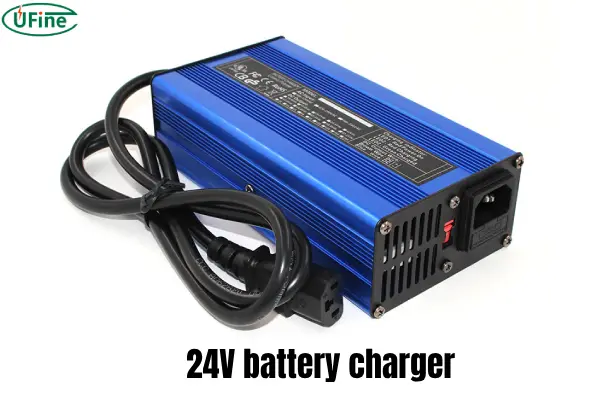
At first glance, charging a battery seems simple—you connect a charger and wait until it’s full. However, charging a 24 volt battery, especially lithium batteries, involves carefully controlled voltage and current.
Most 24V lithium batteries are made from 8 LiFePO4 cells connected in series, which means their full charge voltage is around 29.2 volts.
A proper 24v lithium ion battery charger follows a two-stage charging process:
- Constant Current (CC) – The charger delivers steady current to quickly replenish energy.

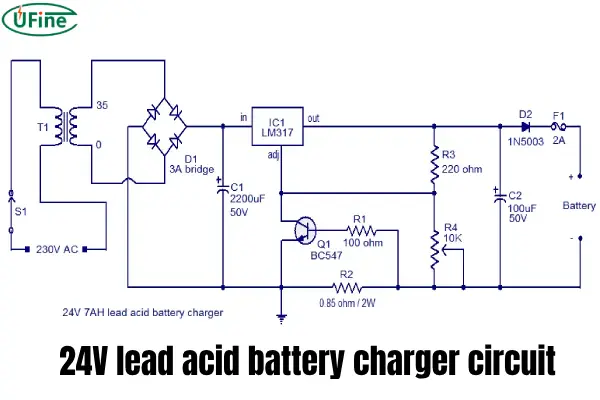
- Constant Voltage (CV) – The voltage is held at the maximum level while current gradually decreases.
This method ensures the battery charges quickly without overheating or overcharging.
Without proper voltage control, batteries can suffer from:
- Capacity loss
- Reduced cycle life
- Internal cell imbalance
That’s why choosing the best 24v lithium battery charger is not just about charging speed—it’s about protecting the battery chemistry.
If you want a deeper understanding of battery behavior, this guide explains how to read lithium battery curves and interpret charging performance.
Part 2. Lithium vs lead-acid chargers: why compatibility matters
One of the most common mistakes users make is charging lithium batteries with chargers designed for lead-acid systems.
Although both may be labeled 24V battery chargers, their charging profiles are completely different.
| Feature | Lithium Battery Charger | Lead-Acid Charger |
|---|---|---|
| Charging Voltage | ~29.2V | 28.8V or lower |
| Charging Stages | CC / CV | Bulk / Absorption / Float |
| Float Charging | Not recommended | Required |
| Efficiency | High | Moderate |
| Battery Protection | Advanced electronics | Limited |
Lead-acid chargers often include a float stage, which continuously trickle-charges the battery.
However, lithium batteries do not require float charging, and extended float charging can actually stress the cells.
If you’re using LiFePO4 batteries, the safest option is a dedicated 24v lithium battery charger specifically designed for this chemistry.
Part 3. What makes the best 24V lithium battery charger?
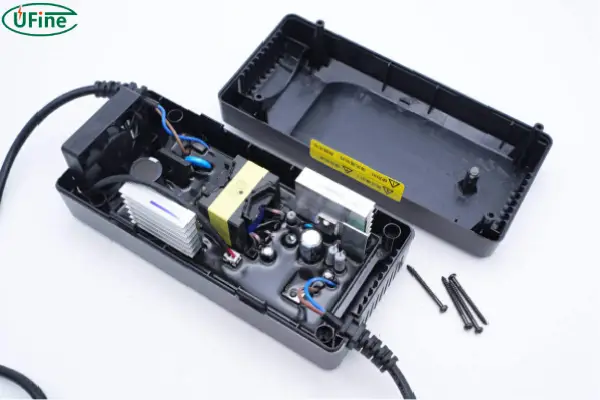
With so many models available, it helps to understand what separates an average charger from the best 24v lifepo4 battery charger.
Look for these key features:
- Accurate charging voltage (29.2V ± tolerance)
- Automatic charge cutoff
- Short-circuit and over-temperature protection
- High charging efficiency (90% or higher)
- Cooling system or smart thermal management
Some advanced chargers also include CAN communication or Bluetooth monitoring, which allows integration with modern battery management systems (BMS).
In other words, the charger becomes part of a smart energy ecosystem rather than just a power supply.
Part 4. Choosing the right charger based on battery capacity
Another factor people often overlook is charging current.
The charger should match your battery capacity to avoid extremely long charge times or unnecessary stress on the cells.
Below is a quick guideline.
| Battery Capacity | Recommended Charger Current | Typical Charging Time |
|---|---|---|
| 50Ah | 10A charger | 5–6 hours |
| 100Ah | 20A charger | 5 hours |
| 200Ah | 40A charger | 5 hours |
| 300Ah+ | 50A+ charger | 5–6 hours |
As a general rule:
Recommended charging current = 0.2C of battery capacity
For example:
- 100Ah battery → 20A charger
- 200Ah battery → 40A charger
This balance ensures safe, efficient charging without overheating.
Part 5. How the charger works with the battery management system (BMS)
Inside every modern lithium battery is a Battery Management System (BMS).
This small circuit board constantly monitors:
- cell voltage
- current
- temperature
- charge balance
When you connect a charger 24v battery system, the charger and BMS work together.
If something unusual happens—such as overheating or excessive voltage—the BMS can temporarily disconnect the battery to prevent damage.
This collaboration between charger and BMS is one of the reasons lithium batteries can achieve 3,000–5,000 charge cycles.
Modern charging systems rely heavily on the battery management system. Learn more about lithium battery BMS technolog and how it enables safe fast charging.
Part 6. Common applications for 24V lithium battery chargers
The demand for 24V lithium battery chargers has increased rapidly as lithium batteries replace lead-acid in many industries.
You’ll often see them used in:
- Solar energy storage systems
- Electric forklifts and warehouse vehicles
- Marine trolling motors
- RV and camper power systems
- Off-grid backup power setups
Imagine you’re out on a boat after a long day of fishing. Your trolling motor battery is nearly drained, and you need reliable power the next morning. A high-quality 24v lithium battery charger can recharge the battery overnight without overheating or damaging the cells.
That reliability is exactly why many professionals now upgrade to lithium-specific chargers.
For additional technical battery guidance, the U.S. Department of Energy explains lithium battery charging and performance fundamentals.
Part 7. Signs you’re using the wrong 24V battery charger
Sometimes users don’t realize their charger isn’t compatible until problems appear.
Watch for these warning signs:
- Battery never reaches full charge
- Charger shuts off too early
- Battery gets unusually warm during charging
- Charging time becomes extremely long
If any of these occur, it’s worth verifying that your charger is truly designed for charging 24 volt battery lithium systems, not just generic 24V batteries.
Replacing the charger early can prevent permanent battery degradation.
Part 8. How smart chargers extend battery lifespan
Modern lithium chargers are becoming increasingly intelligent.
The best 24v lithium battery charger today often includes microprocessor-controlled charging algorithms that monitor voltage, current, and temperature in real time.
This brings several advantages:
- Faster charging without overheating
- Balanced energy distribution
- Automatic safety shutdown
- Longer battery lifespan
In practical terms, a smart charger can help extend battery life from 2,000 cycles to 4,000+ cycles depending on battery quality.
For businesses running fleets of electric vehicles or solar storage systems, this difference can represent thousands of dollars in long-term savings.
Part 9. FAQ
What voltage should a 24V lithium battery charger output?
Most 24V LiFePO4 batteries require a charging voltage of around 29.2V.
Can I charge a 24V lithium battery with a lead-acid charger?
It may work temporarily, but it is not recommended because the charging profile is different.
How long does it take to charge a 24V lithium battery?
Charging time depends on battery capacity and charger current. A 100Ah battery with a 20A charger usually takes around 5 hours.
What is the best 24V battery charger for LiFePO4 batteries?
The best chargers include correct voltage output, safety protection, and high efficiency, specifically designed for lithium chemistry.
Can a lithium battery be overcharged?
Most lithium batteries include a BMS that prevents overcharging, but using the correct charger is still important.
Related Tags:

More Articles

JST vs Molex: The Right Battery Connector Choice
JST or Molex for your battery? Learn how connector selection affects current, voltage drop, reliability, and device performance.
Custom Battery Pricing: Costs Manufacturers Don’t Mention
A low battery quote may not be the final cost. Discover common hidden expenses that affect custom lithium battery projects.
Battery Wire Length: Hidden Cause of Power Loss
A longer battery wire can cause voltage drop, power loss, and unstable operation. Learn how wire length affects battery performance.
How Device Sleep Modes Affect Battery Life
Think sleep mode extends battery life? Learn why devices still drain power and how firmware, hardware, and batteries affect runtime.
LiPo Battery and PCB Design: Clearance, Insulation, and Placement
Learn how to optimize LiPo battery PCB clearance, insulation, placement, wiring, and thermal design—and avoid common integration mistakes.


