- Key Takeaways:
- Part 1. Understanding 12V 7Ah batteries
- Part 2. How long will a 12V 7Ah battery last?
- Part 3. Battery size and weight considerations
- Part 4. Charging 12V 7Ah batteries
- Part 5. Environmental and safety considerations
- Part 6. Cost vs. longevity: a practical comparison
- Part 7. Where 12V 7Ah batteries are commonly used
- Part 8. Choosing the right 12V 7Ah battery
- Part 9. FAQs
Key Takeaways:
- 12V 7Ah batteries are versatile for UPS systems, home security, electric scooters, and portable medical devices.
- Lead-acid batteries are affordable and reliable for low-use applications, but they’re heavier and shorter-lived.
- Lithium-ion (LiFePO4) batteries are lightweight, long-lasting, and ideal for portable, high-use devices.
- Understanding battery chemistry, depth of discharge, temperature tolerance, and proper charging is crucial for maximizing lifespan.Part
Part 1. Understanding 12V 7Ah batteries
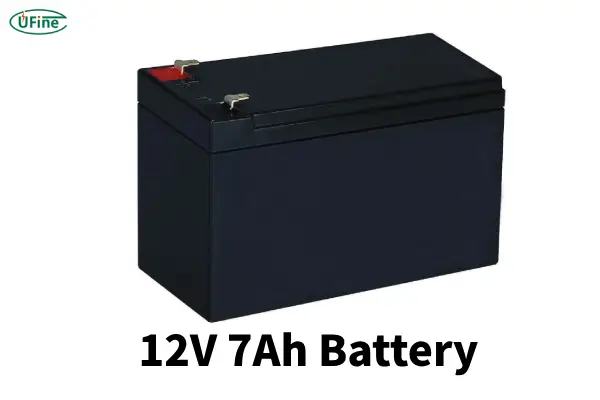
A 12V 7Ah battery indicates 12 volts nominal voltage and 7 amp-hours capacity, but what really matters is the chemistry inside. Different chemistries offer unique benefits and limitations, affecting performance, lifespan, and weight. Let’s break them down.
1. Lead-Acid Batteries (Including SLA)
Overview: The classic, budget-friendly choice. SLA (Sealed Lead-Acid) versions are maintenance-free, leak-proof, and ideal for indoor use.
| Feature | Lead-Acid (SLA) |
|---|---|
| Weight | 5–6 lbs (2.3–2.7 kg) |
| Lifespan | 3–5 years |
| Cycle Life | 300–500 cycles |
| Self-Discharge | 3–5% / month |
| Pros | Affordable, durable, reliable for low-power devices |
| Cons | Heavy, shorter lifespan, slower charging |
Best For: Home security systems, UPS units, and emergency lighting.
Scenario: If you need a stationary battery that rarely moves, SLA is cost-effective and dependable.
2. Lithium-Ion (LiFePO4) Batteries
Overview: Lightweight and long-lasting, LiFePO4 batteries are excellent for portable applications.
| Feature | LiFePO4 |
|---|---|
| Weight | 3.5–4 lbs (1.6–1.8 kg) |
| Lifespan | 8–10+ years |
| Cycle Life | 2000–3000 cycles |
| Self-Discharge | 1–2% / month |
| Pros | Lightweight, fast charging, long lifespan |
| Cons | Higher upfront cost, sensitive to extreme temperatures |
Best For: Electric scooters, portable medical devices, and high-use mobile devices.
Scenario: For a daily commuter e-scooter, LiFePO4 can last years without performance loss, unlike lead-acid, which may need replacement after just a couple of years.
3. Nickel-Metal Hydride (NiMH) Batteries
Overview: Less common for 12V 7Ah, NiMH is used in specialized applications. They are safer than Li-ion in harsh conditions and environmentally friendlier than lead-acid.
Pros: Rechargeable, non-toxic, stable under tough conditions.
Cons: Shorter lifespan, lower energy density, less widely available.
Part 2. How long will a 12V 7Ah battery last?
Battery cycle life and depth of discharge (DoD) are crucial for estimating longevity.
- DoD: How much of the battery’s capacity is used before recharging.
- Rule of Thumb: Higher DoD → shorter cycle life.
| Battery Type | Typical DoD | Cycle Life |
|---|---|---|
| Lead-Acid | 50% | 400–500 cycles |
| LiFePO4 | 80% | 2000–3000 cycles |
Formula for lifespan estimation:
Battery Lifespan (years)=Cycle Life/Average Cycles per Year
Example: A LiFePO4 battery cycled 200 times per year at 80% DoD → 2000 ÷ 200 ≈ 10 years.
Part 3. Battery size and weight considerations
| Type | Dimensions (inches/mm) | Weight | Ideal For |
|---|---|---|---|
| SLA | 5.94 x 2.56 x 3.7 (151 x 65 x 94) | 5–6 lbs | Stationary devices |
| LiFePO4 | 4.9 x 2.6 x 3.6 (125 x 65 x 92) | 3.5–4 lbs | Portable devices |
Compactness and weight matter if your device is mobile or has tight space constraints.
Part 4. Charging 12V 7Ah batteries
Proper charging significantly extends battery life.
- Standard Chargers: Provide constant current. Affordable, but can overcharge lead-acid batteries.
- Smart Chargers: Adjust current based on voltage, prevent overcharging, and are essential for LiFePO4.
| Charger Type | Stage | Description |
|---|---|---|
| Standard | Bulk | Constant current charging |
| Smart | Absorption | Voltage-controlled tapering current |
| Smart | Float | Maintains full charge safely |
Learn more about charging best practices at Battery University.
Part 5. Environmental and safety considerations
- Lead-Acid: Risk of leakage, must avoid tipping, needs proper recycling.
- LiFePO4: Heat-stable, safer than Li-ion in extreme conditions, recyclable.
- NiMH: Non-toxic, stable, environmentally friendly.
Never mix different brands or chemistries in the same battery bank; it can cause imbalance and reduce lifespan.
Part 6. Cost vs. longevity: a practical comparison
| Battery Type | Initial Cost | Lifespan | Annualized Cost |
|---|---|---|---|
| SLA | $25 | 3–5 years | ~$8.3 |
| LiFePO4 | $60 | 10+ years | ~$6 |
Long-term, LiFePO4 can be more cost-effective despite the higher upfront investment.
Part 7. Where 12V 7Ah batteries are commonly used
- UPS & Backup Power: Keeps computers and servers running during outages.
- Home Security Systems: Ensures alarms work even if power fails.
- Portable Medical Devices: Lightweight batteries enable mobility.
- Electric Scooters & Mobility Devices: High energy density and small size fit compact designs.
For a UPS that cycles daily, LiFePO4 offers 4–5 times more cycles than SLA, reducing replacements and maintenance.
Part 8. Choosing the right 12V 7Ah battery
Your best choice depends on application, mobility needs, budget, and maintenance preferences:
- Lead-Acid: Stationary, low-use, budget-friendly.
- LiFePO4: High-use, portable, long-term cost-saving.
- NiMH: Specialized or environmentally conscious applications.
Combine the right charger, proper maintenance, and environmental considerations to maximize the lifespan and performance of your 12V 7Ah battery.
Part 9. FAQs
Is a 7Ah battery enough for a UPS system?
In most small UPS systems, a 12V 7Ah battery is sufficient for short backup times. Runtime depends on load, inverter efficiency, and battery type.
Can I connect multiple 12V 7Ah batteries together?
Yes. You can connect them in series to increase voltage or in parallel to increase capacity, but all batteries should be the same type, age, and brand.
Does a 12V 7Ah lithium battery need a BMS?
Yes. A Battery Management System (BMS) is essential for lithium batteries to protect against overcharge, over-discharge, and overheating.
Can temperature reduce the capacity of a 12V 7Ah battery?
Absolutely. Cold temperatures reduce available capacity temporarily, while high temperatures permanently shorten battery lifespan, especially for lead-acid batteries.
Why does my 12V 7Ah battery drain faster than expected?
Common reasons include high load demand, aging cells, incorrect charger voltage, or operating the battery below its recommended depth of discharge.
Related Tags:

More Articles

JST vs Molex: The Right Battery Connector Choice
JST or Molex for your battery? Learn how connector selection affects current, voltage drop, reliability, and device performance.
Custom Battery Pricing: Costs Manufacturers Don’t Mention
A low battery quote may not be the final cost. Discover common hidden expenses that affect custom lithium battery projects.
Battery Wire Length: Hidden Cause of Power Loss
A longer battery wire can cause voltage drop, power loss, and unstable operation. Learn how wire length affects battery performance.
How Device Sleep Modes Affect Battery Life
Think sleep mode extends battery life? Learn why devices still drain power and how firmware, hardware, and batteries affect runtime.
LiPo Battery and PCB Design: Clearance, Insulation, and Placement
Learn how to optimize LiPo battery PCB clearance, insulation, placement, wiring, and thermal design—and avoid common integration mistakes.