- Key Takeaways
- Part 1. What is a battery cell?
- Part 2. What is a battery?
- Part 3. Cell vs battery: Key differences
- Part 4. Practical cell vs battery example (engineering view)
- Part 5. When to focus on cell vs battery?
- Part 6. Common cell vs battery misunderstandings explained
- Part 7. FAQs about cell vs battery
Many people use the terms battery cell and battery interchangeably. In practice, they are not the same. Understanding cell vs battery is essential when selecting power systems for electronics, EVs, or energy storage.
This guide explains the difference, how each works, and how to choose the right option for your application.
Key Takeaways
- A battery cell is the smallest unit that generates electricity through chemical reactions.
- A battery is a system made of one or more cells connected together.
- Cells determine chemistry and performance, while batteries define voltage, capacity, and system integration.
- In real applications, engineers design at the battery pack level, not just the cell level.
- Choosing between cell and battery depends on voltage requirements, form factor, and safety design.
Part 1. What is a battery cell?
A battery cell is the fundamental electrochemical unit. It converts stored chemical energy into electrical energy.
A single cell can power small devices, but in most industrial applications, multiple cells are combined.
1 Cell structure
Each cell includes four core components:
- Anode – releases electrons during discharge (oxidation reaction)
- Cathode – receives electrons (reduction reaction)
- Electrolyte – allows ion movement between electrodes
- Separator – prevents short circuits while enabling ion flow
These components directly determine performance such as energy density, cycle life, and safety.
2 Types of battery cells
Cells are classified based on rechargeability and chemistry:
- Primary Cells (Non-rechargeable)
Used once, then discarded
Examples: alkaline cells in remote controls - Secondary Cells (Rechargeable)
Can be charged and reused
Used in smartphones, EVs, and power tools - Common Chemistries
Alkaline cells – stable voltage, long shelf life
Lithium-ion cells – high energy density, lightweight
Nickel-based cells (NiCd, NiMH) – durable, moderate energy density
👉 For a deeper breakdown of lithium technologies, see:
What are Lithium Polymer Batteries?
Part 2. What is a battery?
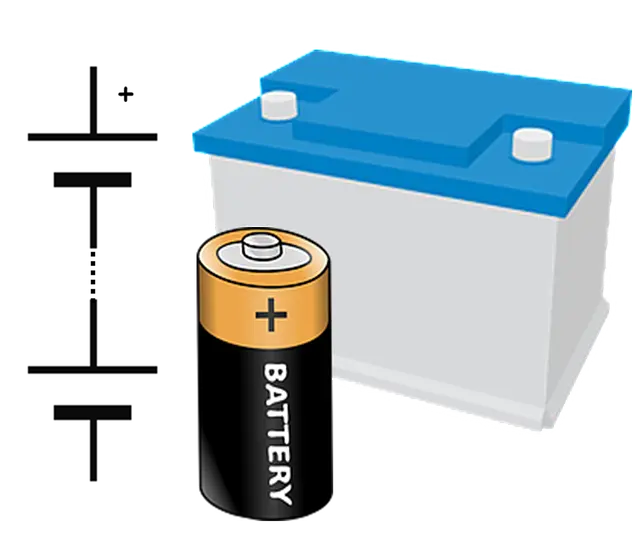
A battery is a complete energy storage system made of one or more cells connected together.
- A single AA unit is technically a single-cell battery
- A laptop or EV battery contains dozens to thousands of cells
1 Battery structure
A typical battery includes:
- Cells – the energy source
- Terminals – electrical connection points
- Casing – mechanical protection
- Battery Management System (BMS) – monitors voltage, temperature, and safety
👉 Learn more about BMS design:
What Does BMS Mean? (Battery Management System)
2 Battery configurations
Cells are connected to meet system requirements:
- Series connection → increases voltage
- Parallel connection → increases capacity (Ah)
For example:
- 3.7V lithium cell × 3 in series → 11.1V battery
- Parallel cells → longer runtime
3 Types of batteries
Common battery systems include:
- Lithium-ion batteries – EVs, electronics, energy storage
- Lead-acid batteries – automotive, UPS
- NiCd / NiMH batteries – tools, backup systems
For standards and safety references, see:
- International Electrotechnical Commission (IEC battery standards)
- UL Solutions (UL battery safety testing)
Part 3. Cell vs battery: Key differences
| Aspect | Battery Cell | Battery |
|---|---|---|
| Definition | Single electrochemical unit | Assembly of one or more cells |
| Function | Generates electricity | Stores and delivers usable power |
| Voltage | Low (e.g., 3.7V Li-ion) | Higher (combined voltage) |
| Capacity | Limited | Scalable |
| Complexity | Simple | Includes BMS and structure |
| Application | Small devices, building blocks | Full systems (EVs, storage, electronics) |
Part 4. Practical cell vs battery example (engineering view)
- A 18650 lithium cell = ~3.7V, ~3000mAh
- An EV battery pack = thousands of cells → hundreds of volts
👉 This shows:
- Cells define material performance
- Batteries define system-level output
Part 5. When to focus on cell vs battery?
Focus on Cells When:
- You are selecting chemistry (Li-ion, LFP, NiMH)
- You need to optimize energy density or cycle life
- You are designing custom battery packs
Focus on Batteries When:
- You need a ready-to-use power system
- You are matching voltage and capacity requirements
- You care about safety, BMS, and packaging
Part 6. Common cell vs battery misunderstandings explained
“Is a battery just a cell?”
Not always. A battery can be:
- A single cell (AA battery)
- Multiple cells (most modern devices)
“Does more cells mean more batteries?”
No. Multiple cells connected together usually form one battery, not multiple batteries.
“Is lithium battery a cell or battery?”
- Lithium cell → single unit
- Lithium battery → system made of lithium cells
Part 7. FAQs about cell vs battery
What is the main difference between a cell and a battery?
A cell is a single energy unit, while a battery is one or more cells connected to deliver usable power.
How many cells are in a battery?
It varies. A battery can have: 1 cell (AA battery) or dozens or thousands (EV battery packs).
Can a single cell be called a battery?
Yes. In common usage, a single cell (like AA) is often called a battery, though technically it is a cell.
Why do batteries need multiple cells?
To increase: Voltage (series connection) and Capacity (parallel connection).
Which is more important: cell or battery?
Both matter: Cells determine performance and chemistry. Batteries determine system output and safety.
Related Tags:

More Articles
Dead Battery or Device Failure? How to Find the Cause
Think your device is broken? Learn how to tell if the problem comes from battery aging or hardware failure before replacing your electronics.
Why iPhone Duo Uses Two Batteries: The Engineering Behind Foldable Phone Power
Why do foldable phones need two batteries? Explore the engineering challenges behind iPhone Duo’s dual-battery architecture and future battery trends.
Solid-State Batteries: 3 Myths You Need to Know
Solid-state batteries promise safer EVs and longer range, but the reality is more complex. Discover the challenges behind this next-gen technology.
Battery Capacity vs Discharge Rate: The Choice Engineers Face
Higher capacity or higher discharge rate? Learn how to choose the right LiPo battery for longer runtime, stable power output, and better device performance.
Battery Cable Size Guide: Choose the Right Wire Fast
Not sure what battery cable size you need? Learn how to select the right wire gauge, terminal size, and cable for safer, more efficient battery systems.