- Key takeaways
- Part 1. What is a lithium battery and how does it do work?
- Part 2. What does battery energy density mean?
- Part 3. Why lithium battery weight matters
- Part 4. Battery energy density chart: lithium battery chemistry comparison
- Part 5. How to calculate 1kWh battery weight
- Part 6. How lithium chemistry affects weight and energy density
- Part 7. 18650 battery energy density
- Part 8. Choosing the best lithium battery by application
- Part 9. Lithium battery weight vs lead-acid battery weight
- Part 10. Are 1000 wh/kg batteries available?
- Part 11. Future battery technologies: solid-state and lithium-sulfur
- Part 12. Safety, standards, and certification considerations
- Part 13. How to select a battery based on weight and energy density
- Part 14. FAQs about lithium battery weight and energy density
What is the relationship between lithium battery weight and energy density? Higher energy density means more energy stored at the same weight or size, which is why lithium batteries are widely used in EVs, drones, portable devices, and energy storage systems.
However, battery selection is not only about weight. Chemistry, safety, cycle life, and cost also matter. For example, NMC batteries are lighter per kWh, while LiFePO4 batteries are heavier but offer better safety and longer lifespan.
This guide provides a clear overview of lithium battery energy density, weight comparison, 1kWh battery weight, and key chemistry differences to help you choose the right battery.
Key takeaways
- Battery energy density shows how much energy a battery stores by weight or volume. It is usually measured in Wh/kg or Wh/L.
- 1kWh battery weight depends on chemistry. A 1kWh lithium battery may weigh about 4.5–20 kg at cell or pack level.
- NMC and LCO usually offer higher lithium ion battery energy density, making them suitable for EVs, drones, and compact devices.
- LiFePO4 has lower energy density but better safety, longer cycle life, and strong thermal stability.
- LTO is heavy per kWh, but it supports very fast charging, long life, and strong low-temperature performance.
- 1000 Wh/kg batteries are not common commercial lithium-ion batteries today. Most are still in lab, theoretical, or next-generation research stages.
Part 1. What is a lithium battery and how does it do work?
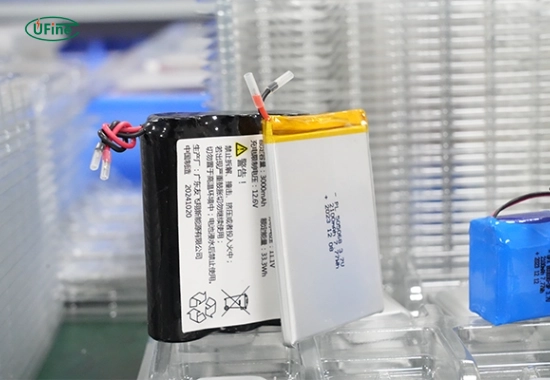
A lithium battery is a rechargeable battery that stores and releases energy through lithium ions. These ions move between the positive electrode and the negative electrode during charge and discharge.
- During charging: lithium ions move from the cathode to the anode.
- During discharging: lithium ions move back to the cathode and release electrical energy.
Lithium is light and has a high electrochemical potential. This gives lithium batteries a strong energy-to-weight ratio. That is why lithium-ion batteries can be smaller and lighter than lead-acid, NiMH, and many other rechargeable batteries.
Energy output is not only about “free electrons per unit volume.” In real battery design, energy density depends on active materials, voltage, electrode loading, electrolyte, separator, current collectors, casing, and pack structure. The lithium energy levels and voltage difference between electrodes help decide how much energy the cell can provide.
Part 2. What does battery energy density mean?
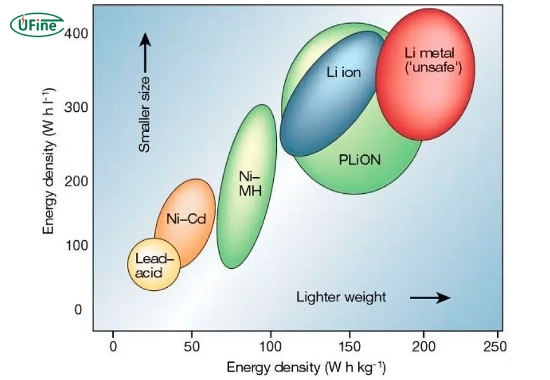
Lithium battery energy density means how much energy a battery can store compared with its weight or volume. It is one of the most important factors in battery selection.
There are two common types:
- Gravimetric energy density: measured in Wh/kg. It shows how much energy is stored per kilogram.
- Volumetric energy density: measured in Wh/L. It shows how much energy is stored per liter of space.
For weight-sensitive products, Wh/kg is very important. For space-limited products, Wh/L is also important. A wearable device, drone, smart tracker, power bank, and EV battery pack all need a good balance between lithium battery weight and energy density.
Part 3. Why lithium battery weight matters
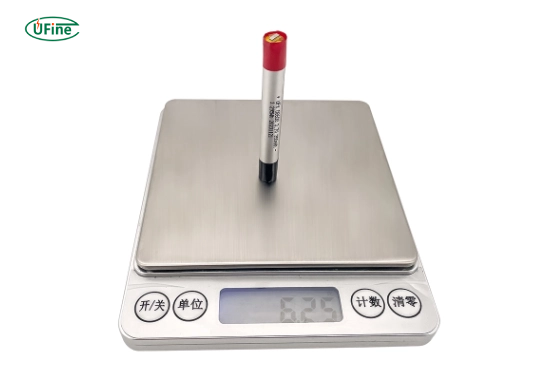
Lithium battery weight affects product performance, running time, shipping cost, installation, and user experience. In mobile systems, every gram can matter.
- Electric vehicles: lower battery weight can improve range, acceleration, and energy use.
- Drones and robots: lighter batteries can increase flight time or working time.
- Portable electronics: users want thin and light devices with long battery life.
- Medical and wearable devices: small size and low weight improve comfort.
- RV and marine systems: lighter batteries reduce system weight and are easier to install.
- Solar and backup storage: weight is less critical, so safety and cycle life may matter more.
Part 4. Battery energy density chart: lithium battery chemistry comparison
The table below gives a practical battery energy density comparison by chemistry. Values may change by cell design, brand, format, BMS, casing, and pack structure. Pack-level energy density is usually lower than cell-level energy density.
| Battery Chemistry | Typical Gravimetric Energy Density | Approx. 1kWh Battery Weight | Main Strength | Common Applications |
|---|---|---|---|---|
| LiFePO4 / LFP | 90–160 Wh/kg | 6.5–11 kg | Safety and long cycle life | Solar storage, RV, marine, backup power, industrial systems |
| LCO | 150–200 Wh/kg | 5–6.6 kg | High energy in small size | Smartphones, tablets, laptops, compact electronics |
| NMC | 150–220 Wh/kg | 4.5–6.6 kg | High energy density and balanced performance | EVs, e-bikes, scooters, power banks, portable power systems |
| NCA | 200–260 Wh/kg | 3.8–5 kg | Very high specific energy | EVs, high-end mobility systems, advanced battery packs |
| LTO | 50–80 Wh/kg | 12.5–20 kg | Fast charging and very long life | Industrial equipment, grid systems, high-power applications |
Key point: Higher lithium battery energy density usually means lower weight per kWh. But safety, life span, power output, and temperature performance may change at the same time.
Part 5. How to calculate 1kWh battery weight
You can estimate lithium battery weight from energy density with this simple formula:
Battery weight in kg = Battery energy in Wh ÷ Energy density in Wh/kg
For a 1kWh battery:
1kWh = 1000Wh
| Energy Density | Estimated Weight for 1kWh |
|---|---|
| 50 Wh/kg | 20 kg |
| 100 Wh/kg | 10 kg |
| 150 Wh/kg | 6.7 kg |
| 200 Wh/kg | 5 kg |
| 250 Wh/kg | 4 kg |
Example: if a lithium-ion battery has 200 Wh/kg energy density, then a 1000Wh battery weighs about 5 kg at the cell level. The final pack can be heavier because it also includes the BMS, wires, case, protection parts, thermal materials, and connectors.
Part 6. How lithium chemistry affects weight and energy density
1. LiFePO4 battery energy density
LiFePO4, also called LFP, has lower energy density than NMC or LCO. But it is one of the safest lithium chemistries. It has strong thermal stability and long cycle life.
- Typical energy density: 90–160 Wh/kg
- Weight: heavier for the same kWh
- Main advantage: safety, long cycle life, stable performance
- Main limitation: lower lithium energy density than NMC or NCA
- Best for: solar storage, RV batteries, marine batteries, backup power, industrial systems
For stationary storage, LiFePO4 is often a better choice than high-energy chemistries. Weight is not the only factor. Long service life and safety can lower lifetime cost.
2. LCO battery energy density
LCO, or lithium cobalt oxide, has high energy density and works well in small consumer electronics. It can store a lot of energy in a compact size.
- Typical energy density: 150–200 Wh/kg
- Weight: light per Wh
- Main advantage: compact size and high energy
- Main limitation: lower thermal stability and shorter cycle life under high load
- Best for: phones, tablets, laptops, cameras, and small smart devices
LCO is not usually the best choice for high-power industrial packs or long-life storage systems.
3. NMC battery energy density
NMC means lithium nickel manganese cobalt oxide. It offers a strong balance of energy density, power, safety, and cost. This is why it is common in EVs, e-bikes, scooters, power tools, and portable power systems.
- Typical energy density: 150–220 Wh/kg
- Weight: light per kWh
- Main advantage: high lithium ion battery energy density and balanced performance
- Main limitation: cycle life and thermal stability are usually lower than LiFePO4
- Best for: EVs, e-mobility, drones, robotics, and energy-dense battery packs
If your product needs long runtime but cannot accept a heavy pack, NMC is often a practical choice.
4. NCA battery energy density
NCA means lithium nickel cobalt aluminum oxide. It can reach very high specific energy. It is often used where long range and low battery weight are important.
- Typical energy density: 200–260 Wh/kg
- Weight: very light per kWh
- Main advantage: high specific energy
- Main limitation: requires careful battery management and thermal control
- Best for: advanced EV battery packs and high-end mobility systems
5. LTO battery energy density
LTO, or lithium titanate, has much lower energy density. So it is heavier and larger for the same energy. But it can charge very fast and can last for many cycles.
- Typical energy density: 50–80 Wh/kg
- Weight: heavy per kWh
- Main advantage: fast charging, long cycle life, strong safety
- Main limitation: low energy density and high cost
- Best for: buses, grid storage, industrial backup, cold-weather systems, and high-power use
Part 7. 18650 battery energy density
The 18650 cell is one of the most common cylindrical lithium-ion cell formats. Its energy density depends on the chemistry, capacity, and design.
A typical 18650 lithium-ion cell may offer about 180–260 Wh/kg at the cell level. High-capacity 18650 cells are often used in laptops, e-bikes, medical devices, lighting systems, and battery packs. However, pack-level energy density is lower because the pack includes holders, nickel strips, wires, BMS, casing, and thermal design.
When comparing 18650 battery energy density, do not only check mAh. Also check nominal voltage, discharge current, weight, internal resistance, cycle life, and safety certifications.
Part 8. Choosing the best lithium battery by application
| Application | Key Requirement | Suggested Chemistry | Why It Fits |
|---|---|---|---|
| Drone / UAV | Low weight and high discharge rate | NMC, high-rate Li-polymer | Better runtime with lower battery weight |
| EV / E-bike / Scooter | Energy density, power, cycle life | NMC, NCA, LiFePO4 | NMC/NCA reduce weight; LiFePO4 improves safety and life |
| Solar storage | Safety, cycle life, cost per cycle | LiFePO4 | Weight is less critical, long life matters more |
| Portable electronics | Thin size and high energy density | LCO, NMC pouch cell | High energy in a compact package |
| Industrial backup | Reliability and long service life | LiFePO4, LTO | Stable chemistry and long cycle performance |
| Cold environment | Low-temperature performance | Low-temperature lithium battery, LTO | Better performance under low-temperature conditions |
Part 9. Lithium battery weight vs lead-acid battery weight
Lithium batteries are much lighter than lead-acid batteries for the same usable energy. This is one of the main reasons many systems are moving from lead-acid to lithium.
| Parameter | Lithium Battery | Lead-Acid Battery |
|---|---|---|
| Weight | Usually 50–70% lighter | Heavy |
| Usable Capacity | Often 80–95% | Often around 50% for long life |
| Cycle Life | Usually 1000–5000+ cycles depending on chemistry | Usually 300–500 cycles |
| Maintenance | Low maintenance | More maintenance required |
| Best Use | Mobile power, solar, RV, marine, industrial systems | Low-cost backup and legacy systems |
For the same real usable energy, lithium batteries can reduce battery weight and improve system efficiency. They can also save space and reduce maintenance work.
Part 10. Are 1000 wh/kg batteries available?
A 1000 Wh/kg battery is a common search topic, but it is not a normal commercial lithium-ion battery today. Most commercial lithium-ion cells are far below 1000 Wh/kg. Current high-energy lithium-ion cells often focus on the 200–300 Wh/kg range, depending on chemistry and design.
Next-generation systems such as solid-state lithium metal, lithium-sulfur, and lithium-air aim for much higher energy density. Some lab targets may reach or discuss 500 Wh/kg, 600 Wh/kg, or higher. But cycle life, safety, cost, charging speed, and mass production remain major challenges.
For real product design, engineers should use proven battery data, not theoretical values. A battery that looks excellent in Wh/kg may not meet safety, cycle life, discharge current, or certification needs.
Part 11. Future battery technologies: solid-state and lithium-sulfur
New battery technologies try to improve energy density while reducing battery weight. Two important directions are solid-state batteries and lithium-sulfur batteries.
Solid-state lithium batteries
Solid-state batteries replace liquid electrolyte with a solid electrolyte. They may improve safety and energy density. The DOE Battery500 Consortium has reported progress on high-energy lithium-metal pouch cells. However, large-scale commercial use still needs cost, cycle life, and manufacturing improvements.
Lithium-sulfur batteries
Lithium-sulfur batteries can have high theoretical energy density because sulfur is light and can store many lithium ions. But practical challenges remain. These include short cycle life, polysulfide shuttle, low conductivity, and volume change.
For most current B2B projects, LiFePO4, NMC, LCO, NCA, and LTO are still the more practical options.
Part 12. Safety, standards, and certification considerations
Energy density should not be checked alone. Higher energy density can increase design pressure on safety, thermal control, and protection circuits. For industrial and commercial products, buyers should also check standards, transport rules, and test reports.
- UN 38.3: important for lithium battery transport. See the UN Manual of Tests and Criteria.
- IEC 62619: used for safety requirements of secondary lithium cells and batteries for industrial applications. See IEC 62619:2022.
- Thermal design: high-energy packs need good heat control and proper spacing.
- BMS design: overcharge, over-discharge, over-current, short-circuit, and temperature protection are important.
- Cell matching: voltage, capacity, internal resistance, and batch consistency affect pack performance.
Part 13. How to select a battery based on weight and energy density
Use the steps below when comparing lithium batteries:
- Define the required energy. Calculate Wh from voltage and Ah.
- Check the weight limit. This is critical for drones, wearables, portable tools, and robots.
- Compare Wh/kg and Wh/L. Use both if your product has weight and space limits.
- Select the right chemistry. NMC and LCO are energy-dense. LiFePO4 is safer and longer-lasting. LTO is best for fast charging and long cycle life.
- Check discharge current. A high-energy cell may not support high current.
- Check cycle life and temperature range. These affect long-term cost and reliability.
- Review certifications. Transport and safety documents are important for export and mass production.
- Compare pack-level data. Cell-level energy density is not the same as final battery pack energy density.
Part 14. FAQs about lithium battery weight and energy density
What is lithium battery energy density?
It shows how much energy a battery stores per weight or volume, usually in Wh/kg or Wh/L. Higher values mean more energy in a lighter or smaller battery.
How much does a 1kWh lithium battery weigh?
About 4.5–20 kg, depending on chemistry and design. NMC/NCA are lighter, LiFePO4 is heavier but safer, and LTO is the heaviest.
Which lithium battery has the highest energy density?
NCA, NMC, and LCO typically have higher energy density. The best choice still depends on safety, lifespan, cost, and use case.
What is the energy density of an 18650 battery?
Usually around 180–260 Wh/kg at cell level. Pack-level density is lower due to added components like BMS and casing.
Are 1000 Wh/kg lithium batteries commercially available?
No. This level is still in research. Most commercial lithium batteries are far below this range.
Related Tags:

More Articles

JST vs Molex: The Right Battery Connector Choice
JST or Molex for your battery? Learn how connector selection affects current, voltage drop, reliability, and device performance.
Custom Battery Pricing: Costs Manufacturers Don’t Mention
A low battery quote may not be the final cost. Discover common hidden expenses that affect custom lithium battery projects.
Battery Wire Length: Hidden Cause of Power Loss
A longer battery wire can cause voltage drop, power loss, and unstable operation. Learn how wire length affects battery performance.
How Device Sleep Modes Affect Battery Life
Think sleep mode extends battery life? Learn why devices still drain power and how firmware, hardware, and batteries affect runtime.
LiPo Battery and PCB Design: Clearance, Insulation, and Placement
Learn how to optimize LiPo battery PCB clearance, insulation, placement, wiring, and thermal design—and avoid common integration mistakes.