- Part 1. What is a LiFePO4 pouch cell?
- Part 2. Structure and working principle
- Part 3. Chemical comparison: LCO, NMC, LFP, and LiFePO4
- Part 4. How long do LiFePO4 pouch cells last?
- Part 5. Energy density: Is it enough?
- Part 6. Advantages and disadvantages
- Part 7. LiPo pouch cell vs LiFePO4 pouch cell
- Part 8. LiFePO4 pouch cell vs LiFePO4 prismatic cell
- Part 9. Applications
- Part 10. How to choose high-quality LiFePO4 pouch cells?
- Part 11. FAQs
Key Takeaways
- A LiFePO4 pouch cell uses lithium iron phosphate chemistry inside a flexible aluminum-laminated pouch instead of a rigid metal case.
- Compared with cylindrical and prismatic batteries, pouch cells are lighter, offer higher packaging efficiency, and can be customized into various shapes and sizes.
- LFP pouch cells provide excellent safety, long cycle life, and stable performance, making them suitable for medical devices, robotics, drones, portable electronics, and energy storage systems.
- Proper mechanical compression and Battery Management System (BMS) design are important for maximizing performance and lifespan.
- When comparing pouch cells vs prismatic cells, neither is universally better—the ideal choice depends on your application’s design priorities.
Part 1. What is a LiFePO4 pouch cell?
First things first: a LiFePO4 pouch cell is a lithium battery that uses lithium iron phosphate (LiFePO4) as its cathode material. Unlike traditional rigid batteries, it’s wrapped in a soft, flat aluminum-laminated pouch rather than a hard metal case.
Why does this matter?
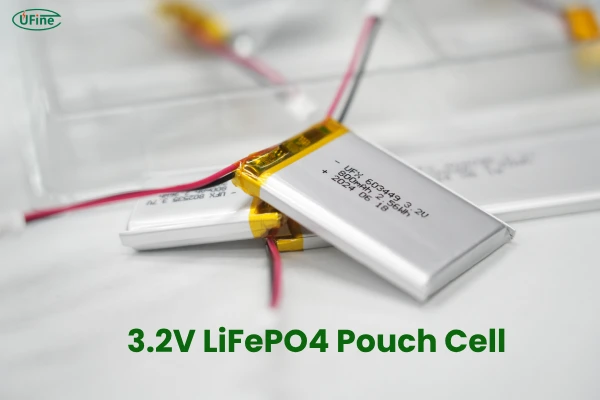
The pouch design gives it an amazing balance of being lightweight, space-efficient, and flexible. Perfect for designs where every gram and every millimeter counts.
But the real magic is inside. LiFePO4 chemistry provides outstanding thermal stability, safety, and long lifespan. In fact, it solves many of the problems associated with older lithium-ion technologies.
Part 2. Structure and working principle
Let’s unpack what’s inside.
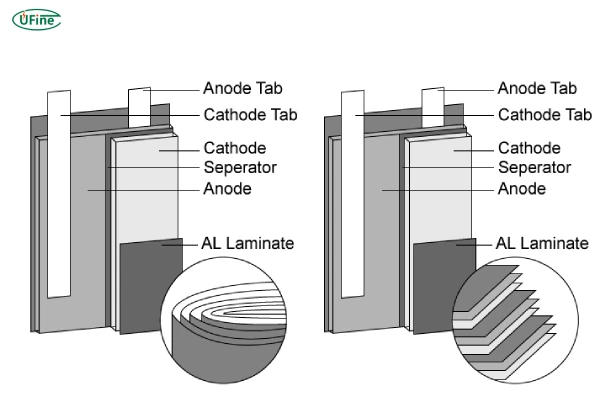
Each LiFePO4 pouch cell is made up of four essential parts:
- Cathode: Lithium Iron Phosphate, providing safety and stability.
- Anode: Typically graphite, serving as the host for lithium ions during charging.
- Separator: A thin, micro-porous film that keeps the positive and negative sides from touching.
- Electrolyte: A liquid or gel that allows lithium ions to flow freely.
When you charge the battery, lithium ions move from the cathode to the anode. When you use the battery, they flow back from the anode to the cathode, releasing the energy you need.
Because of the pouch structure, the internal materials are compressed tightly, reducing internal resistance and making energy transfer more efficient.
Part 3. Chemical comparison: LCO, NMC, LFP, and LiFePO4
Choosing the right chemistry is crucial. Let’s look closely:
| Property | LCO (Lithium Cobalt Oxide) | NMC (Nickel Manganese Cobalt) | LFP (Generic Lithium Iron Phosphate) | LiFePO4 Pouch Cell |
|---|---|---|---|---|
| Chemical Formula | LiCoO₂ | LiNiMnCoO₂ | LiFePO₄ | LiFePO₄ |
| Nominal Voltage | 3.7V | 3.6–3.7V | 3.2V | 3.2V |
| Energy Density | 150–200 Wh/kg | 160–220 Wh/kg | 90–140 Wh/kg | 110–160 Wh/kg |
| Cycle Life (80% Capacity) | 500–800 cycles | 1,000–2,000 cycles | 2,000–3,000 cycles | 3,000–6,000 cycles |
| Thermal Stability | Poor (150°C) | Moderate (180°C) | Excellent (270°C) | Excellent (270°C+) |
| Safety | Low | Medium | High | Very High |
| Environmental Impact | High (Cobalt mining) | Moderate | Low | Very Low |
➡ Key Takeaway: If your priority is safety, lifespan, and eco-friendliness, LiFePO4 pouch cells win hands down. They may not offer the absolute highest energy density, but they offer everything else in spades.
Part 4. How long do LiFePO4 pouch cells last?
If you’re tired of batteries dying after a year or two, you’ll love this part.
A high-quality LiFePO4 pouch cell can last between 3,000 to 5,000 full charge cycles.
Imagine charging your device every day and having it still going strong 10 years later!
And that’s not even the best part. Even after 5,000 cycles, a good LiFePO4 cell often still retains around 80% of its original capacity. This incredible longevity dramatically lowers your total cost over time.
Part 5. Energy density: Is it enough?
When it comes to energy density, LiFePO4 pouch cells typically offer 90 to 160 Wh/kg.
Sure, it’s lower than LCO or NMC batteries. However, the practical impact is much smaller than you might think. In most real-world applications — like solar storage, electric vehicles, and backup systems — safety and lifespan are far more important than squeezing out an extra 10% of energy.
So yes, while others might boast about slightly higher numbers, LiFePO4 pouch cells provide the real-world reliability that users truly need.
Part 6. Advantages and disadvantages
Let’s not sugarcoat it. Every technology has pros and cons.
Advantages:
- Superb Safety: One of the safest lithium chemistries.
- Extreme Longevity: Up to 10 years of use!
- High Thermal Stability: Operates safely even in high temperatures.
- Lightweight and Compact: Thanks to the flexible pouch design.
- Lower Cost Over Time: Higher upfront cost, but cheaper over the battery’s life.
- Eco-Friendly: No cobalt, less mining impact.
Disadvantages:
- Lower Energy Density: Slightly larger size for the same capacity.
- Risk of Swelling: Without proper BMS, overcharging can cause swelling.
- Handling Care: Pouch designs are more sensitive to mechanical damage.
Part 7. LiPo pouch cell vs LiFePO4 pouch cell
You might wonder, aren’t LiPo and LiFePO4 pouch cells similar? Not really.
| Feature | LiPo Pouch Cell | LiFePO4 Pouch Cell |
|---|---|---|
| Chemistry Type | Lithium-ion Polymer | Lithium Iron Phosphate |
| Nominal Voltage | 3.7V | 3.2V |
| Energy Density | 150–250 Wh/kg | 110–160 Wh/kg |
| Cycle Life | 300–800 cycles | 3,000–6,000 cycles |
| Safety | Medium | Very High |
| Typical Application | Drones, RC Models | EVs, Solar Storage, Marine |
➡ Verdict: LiFePO4 pouch cells are built for serious, long-term, high-safety use. LiPo cells are fine for hobby projects, but nowhere near as durable.
Part 8. LiFePO4 pouch cell vs LiFePO4 prismatic cell
Even within the LiFePO4 world, you’ve got options.
| Feature | LiFePO4 Pouch Cell | LiFePO4 Prismatic Cell |
|---|---|---|
| Design Type | Flexible Pouch | Rigid Case |
| Weight | Lighter | Heavier |
| Cycle Life | 3,000–6,000 cycles | 3,000–5,000 cycles |
| Mechanical Strength | Moderate (handle carefully) | Very High (robust) |
| Space Efficiency | High (thin stacking) | Lower (bulkier design) |
➡ Conclusion: If you need lightweight flexibility, go pouch. If you need heavy-duty ruggedness, go prismatic.
Part 9. Applications
Where are LiFePO4 pouch cells shining today? Pretty much everywhere.
- Electric Vehicles: Cars, buses, e-scooters.
- Solar Storage Systems: Residential and commercial battery banks.
- Marine Applications: Boats, yachts, and underwater vehicles.
- Medical Equipment: Thanks to their excellent safety record.
- Portable Power Stations: Camping, RVs, off-grid living.
- Industrial Backup Systems: Reliable energy when the grid goes down.
LiFePO4 pouch cells aren’t just versatile — they’re helping build a greener, more dependable world.
Part 10. How to choose high-quality LiFePO4 pouch cells?
Choosing the right LiFePO4 pouch cell can feel overwhelming. Here’s a cheat sheet:
- Brand Matters: Stick to known manufacturers with a strong reputation.
- Certification Check: Look for UL, CE, UN38.3, and RoHS marks.
- Cycle Life Rating: Never settle for less than 3,000 cycles.
- Capacity Consistency: Ask for test reports showing stable capacity over time.
- Good BMS: Make sure a proper Battery Management System is included or recommended.
- Warranty: Reliable suppliers stand behind their products.
Remember: If it sounds too good to be true, it probably is.
Part 11. FAQs
Are LiFePO4 pouch cells safer than other lithium batteries?
Absolutely. They are the gold standard for safety and thermal stability.
Can I use LiFePO4 pouch cells in cold temperatures?
Yes, though performance below -20°C may drop slightly without heating systems.
Are LiFePO4 pouch cells better for solar systems?
Definitely! Their long life and stability make them perfect for solar energy storage.
How can I tell if a LiFePO4 pouch cell is swollen?
Swelling looks like a ballooning of the pouch. If you see it, stop using the cell immediately.
Is fast-charging safe for LiFePO4 pouch cells?
Yes, as long as you follow the manufacturer’s recommended limits.
Related Tags:

More Articles
LiFePO4 Voltage Chart Guide: Everything You Need to Know
Check the LiFePO4 voltage chart for 3.2V, 12V, 24V and 51.2V batteries. Compare SOC, charging voltage, cutoff limits and internal resistance.
Lithium Ion Cell Sizes: A Comprehensive Guide
Compare lithium ion cell sizes with a chart of dimensions, capacity ranges, cell types, applications, and key factors for selecting the right battery.
6 Volt Tractor Battery vs 12 Volt: Which One Fits Your Farm Equipment Best?
Compare 6V and 12V tractor batteries. Learn which voltage fits vintage or modern tractors, which specifications matter, and how to convert safely.
The Ultimate Guide to a Molten Salt Battery
Learn how a molten salt battery works, its main types, advantages, disadvantages, operating temperature, safety, and grid energy storage uses.
2000mAh Battery Runtime: How Long Will It Last in Real Devices?
Learn how to calculate 2000mAh battery runtime and backup time. See real device examples, power-loss factors, and battery replacement checks.