
- Part 1. Types of oxygen concentrator batteries
- Part 2. How to choose the right battery
- Part 3. How to calculate battery runtime
- Part 4. How much does an oxygen concentrator battery cost?
- Part 5. Battery compatibility with different oxygen concentrators
- Part 6. Best battery backup for oxygen concentrators
- Part 7. Can you take an oxygen concentrator battery on an airplane?
- Part 8. Required certifications for oxygen concentrator batteries
- Part 9. Common oxygen concentrator battery problems
- Part 10. Tips to extend battery life
- Part 11. FAQs
Portable oxygen concentrators (POCs) have transformed oxygen therapy by giving users the freedom to travel, work, and enjoy daily activities without being tied to a stationary oxygen source. However, even the best oxygen concentrator is only as reliable as its battery.
Whether you’re replacing an aging battery, searching for the best battery backup for an oxygen concentrator, or developing a new medical device, understanding how oxygen concentrator batteries work can help you make a smarter decision.
This guide explains everything you need to know, including battery types, battery life, runtime calculations, compatibility, pricing, safety certifications, air travel regulations, and tips for selecting the right rechargeable lithium battery for an oxygen concentrator.
Key Takeaways
- Choosing the right portable oxygen concentrator battery depends on compatibility, battery capacity, voltage, runtime, and safety certifications.
- Lithium-ion batteries offer longer runtime, lighter weight, faster charging, and longer cycle life than older battery technologies.
- Battery runtime can be estimated using Battery Capacity (Wh) ÷ Power Consumption (W), although actual performance varies with oxygen flow settings and operating conditions.
- If you travel frequently, understanding FAA lithium battery regulations is essential before flying with spare batteries.
- A high-quality battery should include an advanced Battery Management System (BMS) and certifications such as UN38.3 and IEC 62133.
- For OEMs and medical device manufacturers, custom lithium battery packs can optimize runtime, weight, safety, and product performance.
Part 1. Types of oxygen concentrator batteries
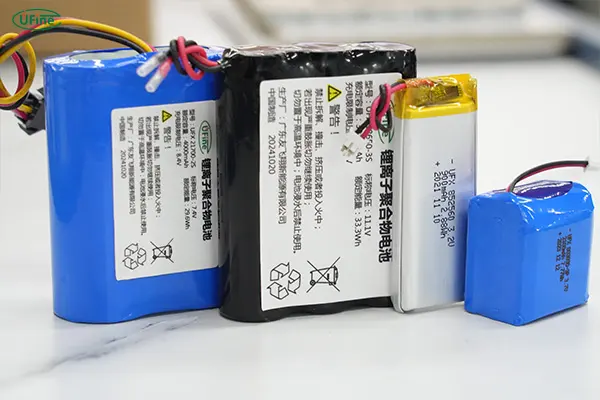
Not all batteries offer the same performance. Understanding the differences helps you choose the right solution for your application.
| Battery Type | Advantages | Limitations | Typical Applications |
|---|---|---|---|
| Lithium-ion (Li-ion) | Lightweight, high energy density, fast charging | Higher initial cost | Most portable oxygen concentrators |
| Lithium Iron Phosphate (LiFePO₄) | Excellent safety, long cycle life | Lower energy density than Li-ion | Specialized medical devices |
| Nickel Metal Hydride (NiMH) | Reliable and rechargeable | Heavier, lower capacity | Older portable devices |
| Sealed Lead Acid | Low cost | Heavy, short cycle life | Stationary backup systems |
Today, lithium-ion batteries dominate the portable oxygen concentrator market because they strike the best balance between weight, runtime, and portability.
Want a deeper comparison? Read our guide on Li-ion vs NiMH vs NiCd.
Part 2. How to choose the right battery
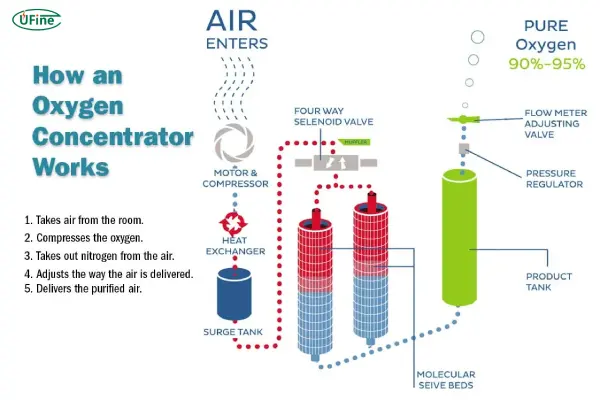
Selecting a battery for a portable oxygen concentrator involves much more than choosing the highest capacity. A battery that is incompatible with your device can reduce performance or even damage the equipment.
1. Compatibility
Compatibility should always be your first consideration.
Check:
- Device model
- Battery voltage
- Connector type
- Physical dimensions
- Communication protocol (if applicable)
Even batteries with similar specifications may not work if they use different connectors or battery management systems.
2. Battery capacity
Capacity determines how much energy the battery can store.
It is commonly expressed in:
- Watt-hours (Wh)
- Amp-hours (Ah)
Higher capacity generally means longer runtime, but it also increases battery size and weight.
3. Weight
Patients often carry their concentrator for several hours each day.
A lighter battery:
- Reduces fatigue
- Improves portability
- Makes travel easier
Lithium batteries are significantly lighter than traditional battery technologies while delivering more usable energy.
4. Charging time
Fast charging minimizes downtime.
Many modern oxygen concentrator batteries can reach approximately 80% charge in only a few hours, depending on the charger and battery design.
5. Cycle life
Cycle life indicates how many complete charge and discharge cycles a battery can deliver before its capacity noticeably decreases.
A quality lithium battery often provides:
- 500–1,000+ charge cycles
- Several years of regular use under proper operating conditions
6. Safety features
Medical equipment requires consistent and reliable power.
Look for batteries equipped with:
- Overcharge protection
- Over-discharge protection
- Short-circuit protection
- Temperature monitoring
- Overcurrent protection
These functions are typically managed by an integrated Battery Management System (BMS), which helps improve both safety and battery longevity.
Part 3. How to calculate battery runtime
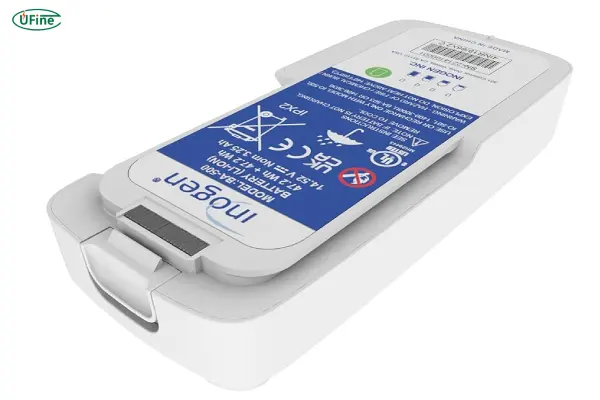
Many users ask whether a portable oxygen concentrator 8 hour battery really delivers eight hours of operation.
The answer depends on the device’s power consumption.
A simple estimate is:
Runtime (hours) = Battery Capacity (Wh) ÷ Device Power Consumption (W)
For example:
| Battery Capacity | Device Power | Estimated Runtime |
|---|---|---|
| 98Wh | 35W | About 2.8 hours |
| 160Wh | 35W | About 4.6 hours |
| 300Wh | 35W | About 8.6 hours |
These values are estimates. Actual runtime varies because oxygen concentrators do not always consume constant power.
Factors affecting runtime include:
- Oxygen flow setting
- Pulse flow or continuous flow mode
- Battery age
- Ambient temperature
- Device efficiency
- Patient usage patterns
A battery advertised as an 8-hour battery may achieve that runtime only under lower flow settings or intermittent use.
Estimate battery life using our online calculator:
Part 4. How much does an oxygen concentrator battery cost?
One of the most common questions is about oxygen concentrator battery price.
The answer depends on several factors, including battery chemistry, capacity, certifications, and whether you’re purchasing an OEM or aftermarket product.
Typical price ranges are shown below.
| Battery Type | Typical Price Range |
|---|---|
| Standard replacement battery | $150–300 |
| OEM battery | $250–600 |
| High-capacity battery | $300–700+ |
| Custom lithium battery pack | Depends on specifications and order quantity |
Several factors influence pricing:
- Battery capacity (Wh)
- Cell quality
- Battery management system
- Safety certifications
- Brand reputation
- Warranty
- Production volume
While lower-priced batteries may seem attractive, reliability is especially important for medical equipment. Choosing a high-quality battery often reduces long-term replacement costs.
Part 5. Battery compatibility with different oxygen concentrators
When replacing an oxygen concentrator battery, choosing the correct specifications is more important than selecting the highest capacity.
Different manufacturers use different battery designs, voltages, communication systems, and connectors. Even if two batteries look similar, they may not be interchangeable.
Before purchasing a replacement battery, verify:
- Device brand and model
- Rated voltage
- Connector design
- Battery dimensions
- Charging compatibility
- Manufacturer recommendations
If you’re sourcing batteries for OEM production, custom-designed lithium battery packs can be engineered to match your device’s electrical, mechanical, and safety requirements while maximizing runtime and portability.
Part 6. Best battery backup for oxygen concentrators
A single battery may not provide enough runtime for long trips, outdoor activities, or emergency situations. That’s why many users invest in an additional oxygen battery pack or spare battery.
The best battery backup for an oxygen concentrator depends on how you plan to use your device.
| Backup Option | Best For | Advantages |
|---|---|---|
| Spare OEM Battery | Daily users | Perfect compatibility and reliable performance |
| High-capacity Battery | Long-distance travel | Extended runtime with fewer battery changes |
| External Battery Pack* | Outdoor activities | Additional power for compatible devices |
| Custom Lithium Battery Pack | Medical device manufacturers | Optimized capacity, size, and performance |
*Always confirm that your concentrator supports external battery packs before use.
If you rely on oxygen therapy for extended periods away from home, carrying at least one fully charged spare battery is generally recommended.
Part 7. Can you take an oxygen concentrator battery on an airplane?
For many users, traveling with a portable oxygen concentrator is essential. Fortunately, rechargeable lithium batteries are generally permitted on commercial flights, but they are subject to airline and aviation regulations.
The Federal Aviation Administration (FAA) classifies lithium batteries according to their energy rating (Wh):
| Battery Capacity | Typical Rule* |
|---|---|
| Up to 100Wh | Usually allowed in carry-on baggage |
| 100–160Wh | Often allowed with airline approval |
| Above 160Wh | Generally prohibited for passenger transport |
*Requirements may vary by airline and country.
Many manufacturers design batteries just under 100Wh because they are easier to carry during air travel.
Before your trip, always review your airline’s battery policy and consult the latest FAA guidance:
FAA – PackSafe for Lithium BatteriesIf you’re flying from or through the United States, you can also review battery guidance from the Transportation Security Administration:
TSA – What Can I Bring?Part 8. Required certifications for oxygen concentrator batteries
Medical device batteries must meet strict transportation and safety requirements.
Depending on the application and target market, common certifications include:
| Certification | Purpose |
|---|---|
| UN38.3 | Safe transportation of lithium batteries |
| IEC 62133 | International safety standard for portable rechargeable batteries |
| CE | Compliance with European regulations |
| RoHS | Restricts hazardous substances |
| MSDS | Battery safety documentation for transport and handling |
If you’re sourcing batteries for commercial medical devices, verify certification requirements before production or import.
Part 9. Common oxygen concentrator battery problems
Even high-quality batteries eventually experience wear. Recognizing common issues early can help prevent unexpected downtime.
| Problem | Possible Cause | Suggested Solution |
|---|---|---|
| Battery won’t charge | Charger fault, damaged battery, BMS protection | Check charger and battery connections |
| Runtime is much shorter | Battery aging or high oxygen flow setting | Replace the battery if capacity has significantly declined |
| Battery overheats | Poor ventilation or abnormal charging | Stop using the battery and inspect the system |
| Battery is not recognized | Connector or compatibility issue | Confirm compatibility with your concentrator |
| Rapid power loss | Cell degradation | Replace the battery with a certified model |
If a battery becomes swollen, emits unusual odors, or shows signs of physical damage, discontinue use immediately and replace it.
Part 10. Tips to extend battery life
Good charging and storage habits can significantly improve portable oxygen concentrator battery life.
Follow these best practices:
- Use the original or manufacturer-approved charger.
- Avoid exposing the battery to extreme heat or freezing temperatures.
- Recharge the battery before it becomes completely depleted whenever possible.
- Store spare batteries in a cool, dry place if they won’t be used for an extended period.
- Charge stored batteries periodically to maintain their condition.
- Keep battery contacts clean and free of moisture.
- Avoid dropping or impacting the battery.
Proper maintenance helps maximize both runtime and overall battery lifespan.
Part 11. FAQs
1. Can I upgrade to a higher-capacity battery?
In many cases, yes—as long as the higher-capacity battery is specifically designed for your concentrator model and has the correct voltage, connector, and communication protocol. Always verify compatibility before upgrading.
2. What is the difference between an OEM battery and an aftermarket battery?
OEM batteries are produced or approved by the original equipment manufacturer and are designed for guaranteed compatibility. Aftermarket batteries are made by third-party manufacturers and can vary in quality, performance, and reliability.
3. How long does it take to fully recharge a portable oxygen concentrator battery?
Charging time depends on battery capacity and charger output. Most lithium batteries require approximately 2 to 5 hours to reach a full charge under normal conditions.
4. Can I use a portable power station to charge my oxygen concentrator battery?
Some portable power stations can recharge oxygen concentrator batteries or power compatible concentrators directly. However, you should always verify the output voltage, wattage, and manufacturer recommendations before use.
5. Does using a higher oxygen flow rate drain the battery faster?
Yes. Higher flow settings require more power, which increases energy consumption and shortens battery runtime. Continuous flow mode generally consumes more power than pulse dose mode.
Related Tags:

More Articles

JST vs Molex: The Right Battery Connector Choice
JST or Molex for your battery? Learn how connector selection affects current, voltage drop, reliability, and device performance.
Custom Battery Pricing: Costs Manufacturers Don’t Mention
A low battery quote may not be the final cost. Discover common hidden expenses that affect custom lithium battery projects.
Battery Wire Length: Hidden Cause of Power Loss
A longer battery wire can cause voltage drop, power loss, and unstable operation. Learn how wire length affects battery performance.
How Device Sleep Modes Affect Battery Life
Think sleep mode extends battery life? Learn why devices still drain power and how firmware, hardware, and batteries affect runtime.
LiPo Battery and PCB Design: Clearance, Insulation, and Placement
Learn how to optimize LiPo battery PCB clearance, insulation, placement, wiring, and thermal design—and avoid common integration mistakes.


