
- Key Takeaways
- Part 1. What is a high voltage battery?
- Part 2. What is a low voltage battery?
- Part 3. High voltage vs low voltage battery: Core differences
- Part 4. Advantages and disadvantages: High voltage vs low voltage battery
- Part 5. High voltage vs low voltage battery: Application scenarios and selection guide
- Part 6. FAQ: High voltage vs low voltage battery
Choosing between a high voltage battery and a low voltage battery is not just about voltage. It directly affects system efficiency, cost, safety design, and long-term performance.
This guide explains the difference between high voltage and low voltage batteries, with a clear focus on engineering decisions, real applications, and system design.
Key Takeaways
- High voltage battery systems reduce current and improve efficiency, especially in large power systems.
- Low voltage batteries are simpler, safer, and more cost-effective for small devices.
- High voltage battery packs are ideal for EVs, ESS, and industrial equipment.
- Low voltage battery systems are better for consumer electronics and portable tools.
- System design (BMS, wiring, insulation) becomes more complex as voltage increases.
- Choosing between high voltage vs low voltage depends on power demand, safety requirements, and total system cost.
Part 1. What is a high voltage battery?
A high voltage battery typically operates above 12V. Common system levels include 24V, 48V, 96V, and even 400V–800V in advanced applications.
In engineering practice, a high voltage battery pack is usually defined by system-level voltage rather than a single cell.
Key Characteristics
- Higher energy density: More energy stored per volume and weight
- Lower current, higher efficiency: According to electrical principles, higher voltage reduces current for the same power, lowering heat loss
- Faster charging capability: Especially in lithium-ion high voltage systems
- Better for scaling: Suitable for modular battery pack design
Common Types
- Lithium-ion (most dominant in high voltage systems)
- Nickel-metal hydride (NiMH)
- Lead-acid (used in backup and industrial setups)
Typical Applications
- Electric vehicles (EVs)
- Industrial machinery
- Renewable energy storage systems (ESS)
Part 2. What is a low voltage battery?
A low voltage battery operates below 12V. Typical values include 1.2V, 3.7V, 6V, and 9V.
These systems are designed for simplicity, safety, and low power consumption.
Key Characteristics
- High safety margin: Lower risk of electric shock
- Lower system cost: Easier manufacturing and integration
- Simple system design: No complex insulation or high-voltage protection required
Common Types
- Alkaline batteries
- Nickel-cadmium (NiCd)
- Zinc-carbon batteries
Typical Applications
- Consumer electronics
- Medical portable devices
- Remote controls and sensors
Part 3. High voltage vs low voltage battery: Core differences
| Parameter | High Voltage Battery | Low Voltage Battery |
|---|---|---|
| Voltage Range | >12V up to 800V+ | <12V |
| Energy Density | High | Low |
| Efficiency | Higher (lower current loss) | Lower |
| Charging Speed | Faster | Slower |
| Safety Design | Complex | Simple |
| Cost | Higher upfront | Lower |
| Applications | EV, ESS, industrial | Consumer electronics |
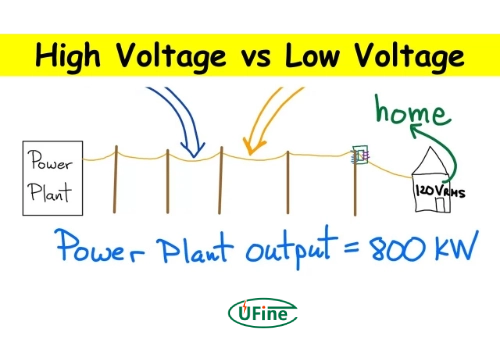
Why High Voltage Battery Systems Are More Efficient
The key reason behind the high voltage vs low voltage efficiency difference is:
Power = Voltage × Current
For the same power:
- Higher voltage → lower current
- Lower current → less heat loss (I²R loss)
This makes high voltage battery packs more efficient, especially in:
- Long cable systems
- High-power applications
- Energy storage systems
For reference, system design standards such as International Electrotechnical Commission emphasize efficiency and safety considerations in high-voltage systems.
Part 4. Advantages and disadvantages: High voltage vs low voltage battery
Advantages Of High Voltage Battery
- Higher system efficiency → less energy loss during transmission
- Faster charging → supports high-power charging infrastructure
- Compact system design → less current → thinner cables → smaller system
Advantages Of Low Voltage Battery
- Better safety → lower risk of electric hazards
- Lower cost → cheaper materials and simpler BMS
- Easy integration → ideal for small and portable devices
Disadvantages
High Voltage Battery
- Higher cost (cells + BMS + insulation)
- Complex safety requirements
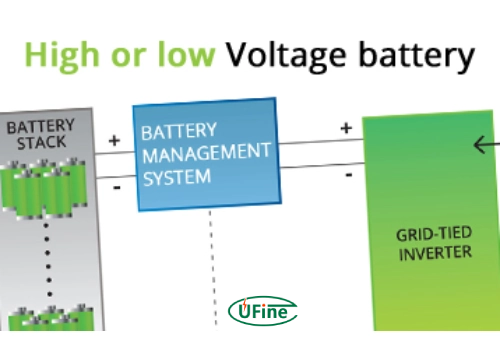
- Requires advanced battery management system (BMS)
👉 For deeper understanding, see our internal guide: 👉 Battery Management System (BMS) explained
Low Voltage Battery
- Lower efficiency
- Limited power output
- Not suitable for large-scale systems
Part 5. High voltage vs low voltage battery: Application scenarios and selection guide
Choose High Voltage Battery If You Need
- Electric vehicles (EVs)
- Solar or wind energy storage (ESS)
- Industrial automation systems
- High power tools or robotics
👉 Example: Most EV platforms use 400V–800V systems for efficiency and fast charging.
Choose Low Voltage Battery If You Need
- Consumer electronics
- Portable medical devices
- IoT devices and sensors
- Backup power for small systems
Engineering Selection Tips (Practical Guide)
When selecting between high voltage battery vs low voltage battery, consider:
- Power Requirement: High power → choose high voltage; Low power → low voltage is enough
- System Complexity: High voltage needs advanced BMS and insulation; Low voltage is plug-and-play
- Cost Structure: High voltage = higher upfront, lower long-term loss; Low voltage = lower initial investment
- Safety & Compliance: High voltage systems must comply with standards like UL, IEC
Part 6. FAQ: High voltage vs low voltage battery
What is the main difference between high voltage and low voltage batteries?
High voltage batteries offer better efficiency and power output, while low voltage batteries are safer and simpler to use.
Is a high voltage battery always better?
No. It depends on the application. High voltage is better for power systems, while low voltage is better for small devices.
Why are high voltage battery packs used in EVs?
They reduce current, improve efficiency, and support fast charging, which is critical for electric vehicles.
Are low voltage batteries safer?
Yes. They have lower electrical risk and require fewer protection systems.
Can I replace a low voltage battery with a high voltage battery?
Not directly. It requires system redesign, including BMS, wiring, and safety protection.
Related Tags:

More Articles

Best 24V Lithium Battery: Top 10 Compared
Discover the top 24V lithium batteries. We compare capacity, price, cycle life, safety features, and the best options for different applications.
Top LFP Cell Manufacturers in China You Should Know
Looking for reliable LiFePO4 cells? Explore China's top LFP battery manufacturers, key technologies, production capabilities, and supplier selection tips.
Check If Your Charger Works: Simple Test Guide
Think your battery charger's broken? Quick tests can show you for sure. See if it’s the charger or the battery that's causing issues. Read more.
Best Camera Batteries: 7 Brands Compared & Tested
Looking for the best camera battery? Compare 7 top brands, including OEM and third-party options, to find the right battery for your camera.
What You Need to Know About Portable Fan Batteries
Discover the best portable electric fan battery, its types, lifespan, and maintenance tips. Learn how to choose the right one and keep it running longer.


