
- Key Takeaways
- Part 1. What is a 12V lithium battery?
- Part 2. Is a 12V lithium battery really 12V?
- Part 3. 12V lithium battery specifications
- Part 4. Lithium-ion vs LiFePO4: Which is better for 12V systems?
- Part 5. How long does a 12V lithium battery last?
- Part 6. Common applications of 12V lithium batteries
- Part 7. How to choose the right 12V lithium battery
- Part 8. 12V Lithium battery charger requirements
- Part 9. Choosing a reliable 12V lithium battery manufacturer
- Part 10. Conclusion
- Part 11.FAQs
Key Takeaways
- A “12V lithium battery” is typically 12.8V, not exactly 12V, especially for LiFePO4 chemistry.
- Compared with lead-acid batteries, 12V lithium batteries are lighter, longer-lasting, and more efficient.
- Understanding specifications—not just capacity—is critical if you want the right battery for your application.
- LiFePO4 is usually the best choice for solar, RV, marine, and trolling motor use.
- Choosing the wrong charger or chemistry can shorten battery life significantly.
Part 1. What is a 12V lithium battery?
A 12V lithium battery is a rechargeable battery designed to replace traditional 12V lead-acid batteries in many systems. It uses lithium-based chemistry to store and release energy more efficiently, with far less weight and maintenance.
In practice, when people say “12V lithium battery,” they are usually referring to a 12.8V LiFePO4 battery pack. This voltage closely matches the operating range of lead-acid systems, which is why lithium batteries are considered “drop-in replacements” in many applications.
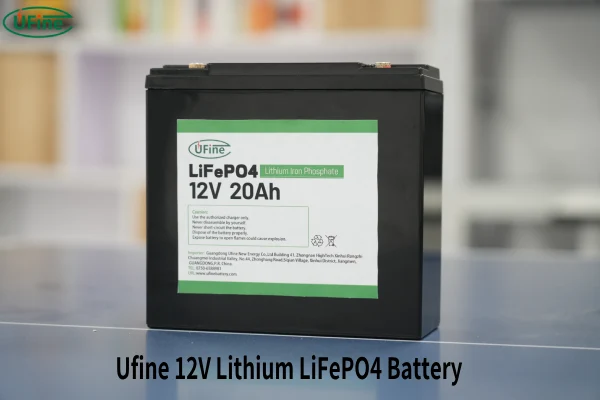
Unlike lead-acid batteries, lithium batteries deliver stable voltage, meaning your devices receive consistent power until the battery is nearly depleted. As a result, you get more usable energy from the same rated capacity.
Part 2. Is a 12V lithium battery really 12V?
Not exactly—and this is where confusion often starts.
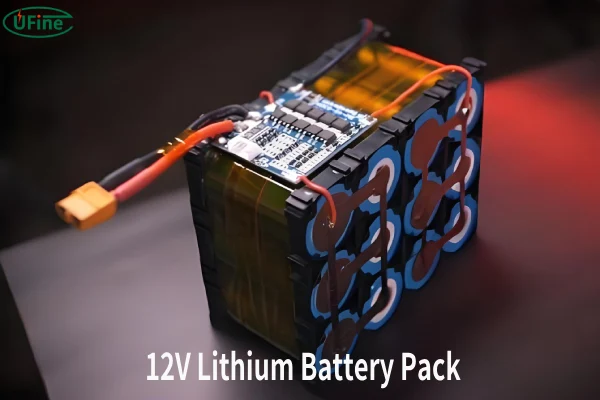
Most 12V lithium batteries are built from four lithium cells connected in series. Each cell has a nominal voltage of about 3.2V (LiFePO4), which adds up to 12.8V.
Typical Voltage Behavior
| State | Voltage Range |
|---|---|
| Fully Charged | 14.4–14.6V |
| Nominal Voltage | 12.8V |
| Discharge Cutoff | ~10.0–11.0V |
This voltage profile is actually a benefit. Because lithium batteries hold voltage more steadily, your equipment performs better for longer compared with lead-acid batteries, which suffer from voltage drop early in the discharge cycle.
If you’re planning to expand your 12V system or combine multiple batteries for higher voltage or capacity, check out our guide on how to connect lithium batteries in series and parallel to do it safely and efficiently.
Part 3. 12V lithium battery specifications
When evaluating a 12V lithium battery, specifications matter more than marketing terms. Here are the parameters you should focus on.
Key Technical Specifications
| Parameter | Typical Range |
|---|---|
| Capacity | 10Ah – 300Ah |
| Energy | 128Wh – 3840Wh |
| Cycle Life | 2000 – 6000 cycles |
| Weight Reduction vs Lead-Acid | 30% – 60% lighter |
| Efficiency | 95%+ |
In addition, pay attention to internal resistance and whether the battery includes a built-in Battery Management System (BMS). A quality BMS protects against overcharge, over-discharge, overheating, and short circuits.
Part 4. Lithium-ion vs LiFePO4: Which is better for 12V systems?
Although both fall under “lithium batteries,” not all chemistries are equal.
| Feature | Lithium-Ion (NMC) | LiFePO4 |
|---|---|---|
| Safety | Moderate | Very high |
| Cycle Life | 800–1500 | 3000–6000 |
| Thermal Stability | Medium | Excellent |
| Best Use | Consumer electronics | Solar, RV, marine |
For most 12V applications—especially solar storage, RV systems, marine electronics, and trolling motors—LiFePO4 is the preferred choice. It offers longer life, better safety, and superior temperature tolerance.
To understand the differences between LiFePO4, NMC, and other lithium chemistries—and choose the right one for your application—read our detailed article on types of lithium-ion battery chemistry.
Part 5. How long does a 12V lithium battery last?
Under normal conditions, a 12V lithium battery can last 5 to 10 years, depending on how you use it.
Several factors influence lifespan:
- Depth of discharge: Shallow cycles extend battery life.
- Charging quality: Using a lithium-compatible charger is critical.
- Temperature: Extreme heat or cold accelerates aging.
- Load profile: Continuous high current draws increase stress.
Compared with lead-acid batteries—which often fail after 300–500 cycles—lithium batteries offer dramatically lower lifetime cost, even if the upfront price is higher.
Part 6. Common applications of 12V lithium batteries
Thanks to their efficiency and durability, 12V lithium batteries are now widely used across multiple industries:
- Solar energy systems, where long cycle life and efficiency matter most
- RV and camper power, reducing weight while increasing usable capacity
- Marine and trolling motors, where vibration resistance is critical
- Backup power systems, delivering reliable emergency energy
Because lithium batteries maintain stable voltage, sensitive electronics perform better and last longer.
Part 7. How to choose the right 12V lithium battery
Before you buy, slow down and match the battery to your real-world needs. Capacity alone is not enough.
Focus on these essentials:
- Make sure the chemistry fits your application (LiFePO4 for most uses).
- Confirm the continuous and peak discharge current meets your load.
- Check physical dimensions and terminal layout.
- Verify the battery includes a high-quality BMS.
If you plan to expand your system later, also consider whether the battery supports parallel or series connections.
Part 8. 12V Lithium battery charger requirements
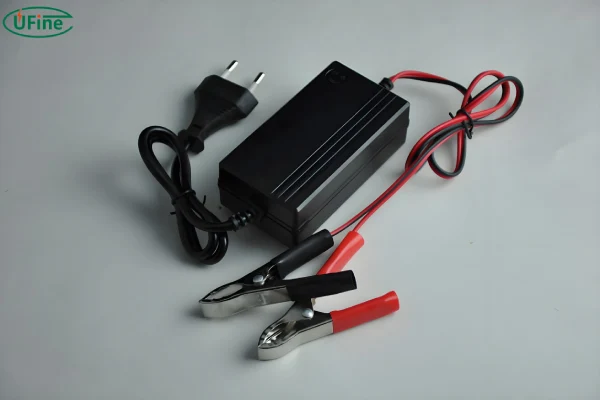
A lithium battery is only as good as the charger you use.
A proper 12V lithium charger should:
- Match the battery’s charging voltage profile
- Include CC/CV charging logic
- Stop charging automatically at full capacity
Using a lead-acid charger may appear to work at first, but over time it can reduce capacity and shorten battery life significantly.
Part 9. Choosing a reliable 12V lithium battery manufacturer
Not all lithium batteries are created equal. A reputable manufacturer should offer:
- Transparent specifications
- Verified safety certifications
- Customization options for voltage, capacity, and BMS
- Proven experience with lithium battery engineering
Working with an experienced manufacturer helps ensure long-term performance, safety, and consistency across applications.
Ufine Battery offers flexible customization for capacity, voltage, form factor, and dimensions, helping you match exact technical requirements—whether you’re developing a prototype or scaling up for mass production.
Find a Solution NowPart 10. Conclusion
A 12V lithium battery is far more than a lightweight alternative to lead-acid—it’s a fundamentally better energy solution. By understanding voltage behavior, specifications, chemistry differences, and charging requirements, you can confidently choose a battery that lasts longer, performs better, and delivers real value over time.
If you choose wisely, a 12V lithium battery won’t just power your system—it will upgrade it.
Part 11.FAQs
1. Can you connect multiple 12V lithium batteries together?
Yes, you can—but only if the batteries are designed for it. Most 12V lithium batteries support parallel connection to increase capacity, while some also allow series connection to raise system voltage. Always check the manufacturer’s guidelines, because mismatched batteries or unsupported wiring can cause imbalance and reduce lifespan.
2. Do 12V lithium batteries lose capacity when not in use?
Very slowly. One advantage of lithium batteries is their low self-discharge rate, typically around 1–3% per month. This makes them ideal for seasonal equipment like boats, RVs, or backup systems that may sit unused for long periods.
3. Can a 12V lithium battery replace a lead-acid battery directly?
In many cases, yes—but compatibility matters. While the voltage range is similar, lithium batteries behave differently during charging and discharging. You should confirm that your charger, inverter, or controller supports lithium charging profiles before making a direct replacement.
4. How does cold weather affect a 12V lithium battery?
Cold temperatures mainly affect charging, not discharging. Most 12V lithium batteries can discharge in cold conditions, but charging below 0°C (32°F) may damage the cells unless the battery includes low-temperature protection or self-heating features.
5. Can a 12V lithium battery power high-current devices?
Yes, as long as the battery’s continuous and peak discharge ratings meet the demand. Many 12V lithium batteries are well-suited for high-current applications such as inverters, trolling motors, and electric winches, provided the BMS is properly rated.
Related Tags:

More Articles

JST vs Molex: The Right Battery Connector Choice
JST or Molex for your battery? Learn how connector selection affects current, voltage drop, reliability, and device performance.
Custom Battery Pricing: Costs Manufacturers Don’t Mention
A low battery quote may not be the final cost. Discover common hidden expenses that affect custom lithium battery projects.
Battery Wire Length: Hidden Cause of Power Loss
A longer battery wire can cause voltage drop, power loss, and unstable operation. Learn how wire length affects battery performance.
How Device Sleep Modes Affect Battery Life
Think sleep mode extends battery life? Learn why devices still drain power and how firmware, hardware, and batteries affect runtime.
LiPo Battery and PCB Design: Clearance, Insulation, and Placement
Learn how to optimize LiPo battery PCB clearance, insulation, placement, wiring, and thermal design—and avoid common integration mistakes.


