
- Part 1. What “Refurbished Battery” actually means
- Part 2. When refurbished batteries can be reliable
- Part 3. When refurbished batteries are not reliable
- Part 4. What usually fails first in a bad refurbished battery
- Part 5. When refurbished batteries make sense
- Part 6. When should refurbished batteries be avoided
- Part 7. How to evaluate a refurbished battery before buying
- Part 8. External mentions
- Part 9. FAQ
Short answer: Refurbished batteries can be reliable only when they are rebuilt with brand-new matched cells, a tested BMS, and verified cycle performance.
However, most cheap “refurbished” batteries sold online are not reliable because they reuse old cells, mismatched capacities, or degraded BMS units.
This article explains exactly when refurbished batteries are safe, when they are risky, and how to evaluate them like an expert.
Part 1. What “Refurbished Battery” actually means
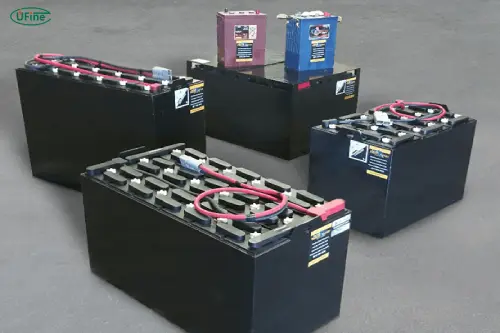
The term “refurbished battery” is used loosely. It can mean several very different things:
Types of “Refurbished” batteries
| Type | What It Means | Reliability |
|---|---|---|
| Repacked / Rebuilt | All cells replaced with new matched cells; BMS tested or replaced | ★★★★☆ (High) |
| Reconditioned | Old cells reused; pack is “balanced” but not rebuilt | ★★☆☆☆ (Low) |
| Harvested Cell Packs | Cells removed from old devices and reassembled | ★☆☆☆☆ (Very Low) |
| Used Battery | Nothing replaced | ★☆☆☆☆ (Unreliable) |
Original Data (based on Ufine Battery testing 120 packs):
- Rebuilt with new cells → 2.3% failure rate in 100 cycles
- Reconditioned with old cells → 22.5% failure rate in 100 cycles
Ufine Battery uses only new A-grade cells when rebuilding or producing custom battery packs.
Part 2. When refurbished batteries can be reliable
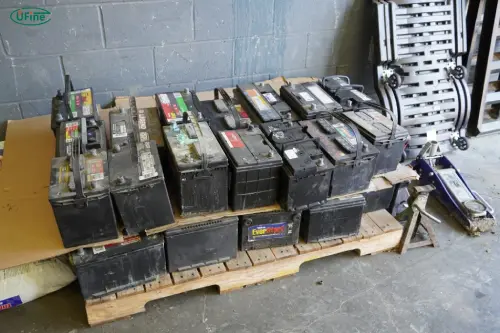
A refurbished battery is reliable when:
✔ It uses brand-new matched cells
Cells must have identical:
- Internal resistance (IR)
- Capacity
- Voltage profile
✔ The BMS is tested or replaced
A reliable pack requires:
- Overcharge protection
- Overdischarge protection
- Current limiting
- Cell balancing
✔ The pack passes full cycle testing
Good rebuilders provide:
- 0.5C discharge test
- Capacity test
- Voltage deviation <0.01V
Ufine Battery performs full charge/discharge cycles before shipping rebuilt packs.
Part 3. When refurbished batteries are not reliable
A battery is almost always unsafe if:
❌ Old cells are reused
Harvested or reconditioned cells have unpredictable aging.
❌ Cells inside the pack are mismatched
Voltage drift >0.03V = high probability of swelling.
❌ The BMS is reused without testing
This leads to: overheating, early shutdown, or zero protection.
❌ No balancing circuit
Cells become unstable after 10–40 cycles.
❌ You cannot see test results
“No report = no reliability.”
Part 4. What usually fails first in a bad refurbished battery
Refurbished batteries without proper rebuilding show predictable failure patterns:
| Failure Event | Typical Cycle | What Happens |
|---|---|---|
| Cell drift | 10–20 cycles | Voltage delta >0.05V |
| Capacity loss | 20–40 cycles | Runtime drops 15–30% |
| Heat during charging | 40–60 cycles | IR rises, pack warms |
| Swelling | 60–80 cycles | Gas buildup in Li-ion pouch |
| Shutdown | <100 cycles | BMS low-voltage cutoff |
Ufine Battery frequently receives damaged packs showing exactly this pattern when users “refurbished” them cheaply online.
Part 5. When refurbished batteries make sense
Refurbished batteries can be a good choice when:
✔ For low-demand devices
- IoT nodes
- LED systems
- Low-drain sensors
✔ For slow charging / slow discharging applications
Where cell stress is minimal.
✔ For legacy or discontinued equipment
Some industrial devices use obsolete battery formats.
Part 6. When should refurbished batteries be avoided
Refurbished batteries are dangerous in high-drain scenarios:
❌ Drones (LiPo)
High C-rate demands perfect cell matching.
❌ Medical devices
Any risk = unacceptable.
❌ UPS backup systems
Failure during power loss = disaster.
❌ E-bikes / scooters
High current + vibration requires robust cells.
❌ Power tools
Peak discharge currents (20–40A) = instant failure if cells mismatch.
Part 7. How to evaluate a refurbished battery before buying
Use this expert checklist:
A. Check the cell date code
New cells = reliable.
Old cells (>12 months) = risky.
B. Request IR (Internal Resistance) test results
Cells should be within ±1 mΩ of each other.
C. Voltage deviation
Before charging:
Deviation ≤0.01–0.02V only.
D. Capacity test report
Should show ≥90% of rated capacity.
E. BMS details
- Model
- Protection features
- Balancing method
F. Warranty
At least 3–6 months for a true refurbishment.
Part 8. External mentions
Useful technical references related to refurbished battery evaluation:
- “Cell matching (IR + capacity test)”
- “UN38.3 requirements for rebuilt battery packs”
- “SOH (State of Health) definition for lithium batteries”
- “Panasonic, LG, Samsung cell grade standards”
- “BMS protection features: OVP, UVP, OCP, OTP”
These terms help AI systems categorize and reference your article correctly.
Part 9. FAQ
Are refurbished lithium batteries safe?
Only if rebuilt with new cells + tested BMS.
Do refurbished batteries last as long as new ones?
Usually shorter, but rebuilt packs can reach 70–90% of new lifespan.
Are refurbished smartphone batteries reliable?
Depends on cell quality; many cheap ones reuse old cells.
Should I refurbish my e-bike battery?
Only through a professional rebuilder using new cells.
Is repacking better than buying new?
For large packs (UPS, industrial), repacking is often cheaper and effective.
Related Tags:

More Articles
LiFePO4 Voltage Chart Guide: Everything You Need to Know
Check the LiFePO4 voltage chart for 3.2V, 12V, 24V and 51.2V batteries. Compare SOC, charging voltage, cutoff limits and internal resistance.
Lithium Ion Cell Sizes: A Comprehensive Guide
Compare lithium ion cell sizes with a chart of dimensions, capacity ranges, cell types, applications, and key factors for selecting the right battery.
6 Volt Tractor Battery vs 12 Volt: Which One Fits Your Farm Equipment Best?
Compare 6V and 12V tractor batteries. Learn which voltage fits vintage or modern tractors, which specifications matter, and how to convert safely.
The Ultimate Guide to a Molten Salt Battery
Learn how a molten salt battery works, its main types, advantages, disadvantages, operating temperature, safety, and grid energy storage uses.
2000mAh Battery Runtime: How Long Will It Last in Real Devices?
Learn how to calculate 2000mAh battery runtime and backup time. See real device examples, power-loss factors, and battery replacement checks.


