
Batteries are essential in modern technology, and the 3.2V battery is no exception. These batteries power various devices, from solar energy systems to electric vehicles, and even off-grid solutions. If you’ve come across a 3.2V battery and are curious about its characteristics, charging methods, or potential applications, you’re in the right place. In this article, we’ll cover everything you need to know, from what a 3.2V battery is, to its different types, uses, and how it compares to other battery voltages like the popular 3.7V.
Let’s dive into the world of 3.2V batteries and explore their many facets!
Key takeaways
- Always respect the full charge voltage (3.6–3.65v) and discharge cutoff (2.5v) to protect your LiFePO4 battery.
- Temperature and discharge rate significantly affect usable capacity and lifespan.
- CC/CV charging with a BMS is the safest and most effective method for both single cells and battery banks.
- For longevity and real-world applications like solar or UPS, 3.2v LiFePO4 generally outperforms 3.7v Li-ion in safety, cycles, and stability.
- Monitoring, proper storage, and avoiding mixed cells are simple but crucial steps that prevent early failure.
Part 1. Understanding 3.2V battery
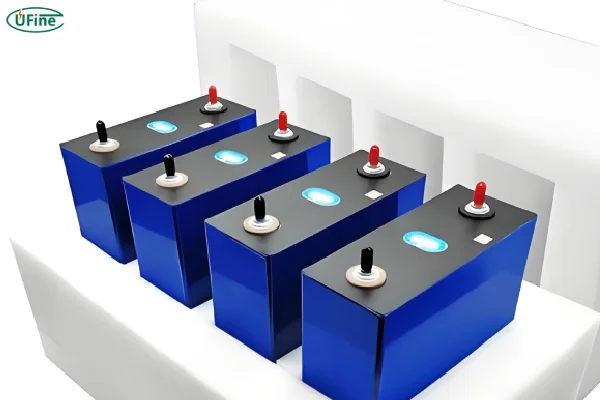
A 3.2V battery refers to a battery with a nominal voltage of 3.2 volts. This voltage is characteristic of certain types of lithium-based batteries, particularly LiFePO4 (Lithium Iron Phosphate) batteries. The 3.2V is the nominal operating voltage, while the voltage can fluctuate based on the charge or discharge cycle.
The voltage range of 3.2V battery in different states is as follows:
- Nominal voltage: 3.2V
- Fully charged voltage: 3.6V to 3.65V
- Minimum discharge voltage: 2V
- Charge cut-off voltage: 3.65V
- Discharge cut-off voltage: 2.5V
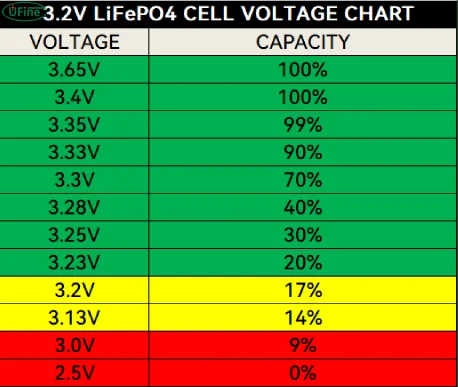
Compared to other common battery voltages, like 1.5V (AA) or 3.7V, the 3.2V range sits in a sweet spot for various applications, offering high energy density while maintaining safety and long cycle life.
In terms of voltage, 3.2V is a bit lower than 3.7V (which is common in many lithium-ion batteries). However, 3.2V batteries typically have a higher safety profile and longer lifespan, making them ideal for certain applications, especially in energy storage and renewable energy systems.
Part 2. Types of 3.2V batteries
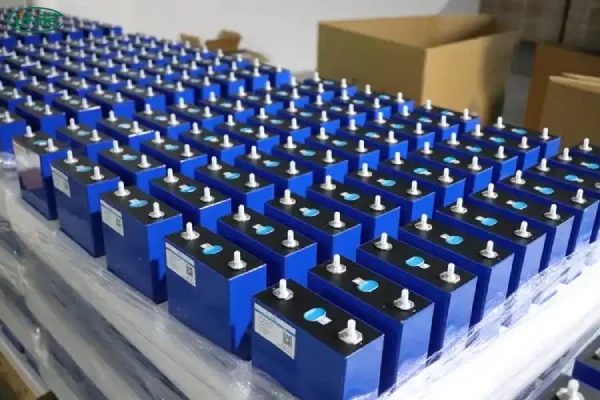
When discussing 3.2V batteries, it’s important to note that there are a few different types, each with unique characteristics and applications. Let’s break them down:
1 LiFePO4 Batteries
LiFePO4 (Lithium Iron Phosphate) is the most common type of 3.2V battery. It is known for its high thermal stability and long lifespan. These batteries are widely used in energy storage systems, electric vehicles (EVs), and renewable energy setups.
Characteristics of LiFePO4 batteries:
- Stable and safe: LiFePO4 is known for being non-toxic and safer than other lithium-based batteries like LiCoO2 (Lithium Cobalt Oxide).
- Long cycle life: They can last between 2,000 to 5,000 cycles depending on the usage.
- Lower energy density: While not as energy-dense as some other lithium-ion chemistries, the trade-off is better longevity and safety.
2 Lithium-ion Batteries (Other Chemistries)
In addition to LiFePO4, 3.2V can also be seen in other lithium-ion variants, though these are less common. These might offer slightly higher energy density, but they tend to be less stable and may have a shorter lifespan compared to LiFePO4.
Characteristics of lithium-ion batteries:
- Higher energy density: Provides more energy in a smaller package.
- Less safe than LiFePO4: Higher risk of overheating and fire hazards, especially if mishandled.
Part 3. 3.2V solar battery
A 3.2V solar battery is specifically designed for use in solar energy systems. These batteries are commonly LiFePO4 batteries, chosen for their reliability, longevity, and stable voltage output.
Characteristics and Applications:
- Efficient Energy Storage: Solar panels generate energy during the day, but you need batteries to store this energy for use at night or during cloudy days. The 3.2V solar battery is perfect for this job.
- Durable: 3.2V solar batteries are designed to handle frequent charging and discharging cycles without significant degradation.
- Application: These batteries are used in solar power systems, both off-grid and grid-tied systems, to store excess energy for later use.
Part 4. 3.2V LiFePO4 battery
The 3.2V LiFePO4 battery is one of the most common 12V battery banks in applications like solar energy storage, RV use, and electric vehicles. As previously mentioned, these batteries are built using lithium iron phosphate as the cathode material, offering a great combination of safety, long lifespan, and stable performance.
Characteristics of 3.2V LiFePO4 Batteries:
- Stable Performance: They perform consistently even under high loads, making them suitable for energy-hungry applications like RVs or off-grid homes.
- Extended Cycle Life: Unlike traditional lead-acid batteries, LiFePO4 batteries offer far more charge/discharge cycles—as many as 5,000, which is 5-10 times longer than lead-acid batteries.
- Lightweight and Compact: LiFePO4 batteries are generally lighter than lead-acid alternatives, making them ideal for mobile applications.
Part 5. Comparing 3.2v and 3.7v lithium batteries
You might see 3.7v lithium batteries in power tools or laptops and wonder: should I stick with 3.2v LiFePO4? Let’s break it down:
| Feature | 3.2v LiFePO4 | 3.7v Li-ion (NMC) |
|---|---|---|
| Nominal voltage | 3.2v | 3.7v |
| Full charge voltage | 3.6–3.65v | 4.2v |
| Cycle life | 2000–5000 | 500–1000 |
| Safety | High | Medium |
| High-temperature performance | Excellent | Sensitive |
| Energy density | Moderate | Higher |
What this means for you: if your project prioritizes longevity, safety, or high-temperature tolerance—think solar panels, UPS, or home energy storage—3.2v LiFePO4 is the better choice. If energy density and compactness are critical, 3.7v NMC might win for portable electronics.
Additionally, considering cost over time, a 3.2v LiFePO4 bank can actually be more economical because of its long cycle life and lower maintenance.
Can a 3.7V battery be used instead of a 3.2V battery?
The 3.7V battery and 3.2V battery are similar in many ways, but there are important differences to consider:
- Voltage Difference: The 3.7V battery has a higher voltage than the 3.2V battery, which could cause issues in certain devices designed to run specifically on 3.2V.
- Battery Chemistry: A 3.7V lithium-ion battery (often using LiCoO2 or LiMn2O4) typically has a higher energy density but may not offer the same safety and cycle life as a 3.2V LiFePO4 battery.
In most cases, a 3.7V battery cannot safely replace a 3.2V battery, as it could result in overvoltage issues and potential battery damage or failure.
Part 6. How to charge a 3.2V LiFePO4 battery?
1 3.2V Battery Charge
During the charging process, the charger will first charge the battery in a constant current mode, and the battery voltage will gradually rise. When the battery voltage approaches 3.6V, the charger will switch to constant voltage mode to ensure that the battery voltage does not exceed 3.65V, and the current will gradually decrease until charging is completed.
Charging a 3.2V battery requires attention to ensure both efficiency and safety. A proper charging system will maintain the battery health and extend its lifespan.
Charging Characteristics:
- Voltage Range: The voltage range for charging a 3.2V LiFePO4 battery typically falls between 3.6V to 3.65V. Charging beyond this range may lead to battery damage.
- Current Regulation: Always use a constant current (CC) charger, followed by constant voltage (CV) charging to avoid overcharging.
Charging Precautions:
- Never exceed the recommended voltage limit to prevent thermal runaway.
- Avoid charging the battery too quickly, as this can reduce lifespan.
- Always use a charger designed specifically for LiFePO4 to ensure proper charging.
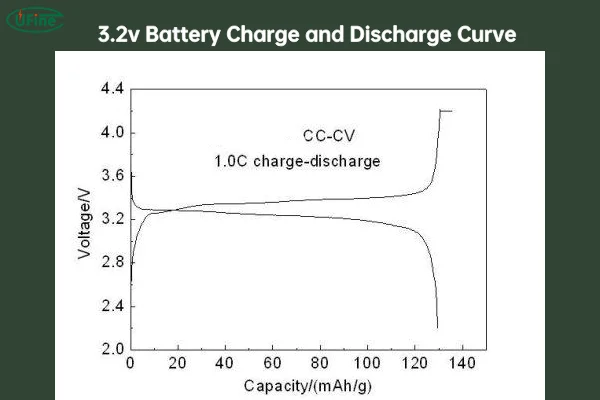
How to Read Lithium Battery Discharge Curve and Charging Curve?
2 3.2V Battery Discharge
Discharging a 3.2V battery refers to using the energy stored within it for powering devices. Just like with charging, proper discharge practices are necessary to maintain battery health. During the discharge process, the battery voltage will gradually decrease, and the minimum discharge voltage is 2V.b
Discharge Characteristics:
- Voltage Drop: As the battery discharges, its voltage will gradually drop. For LiFePO4 batteries, this drop is fairly consistent, but it’s important not to allow the voltage to go below 2V per cell, as this could damage the battery.
- Energy Efficiency: These batteries tend to be more energy-efficient during discharge, meaning they release energy in a more stable and consistent manner compared to other battery types.
Discharge Precautions:
- Avoid deep discharges: It’s best to stop discharging the battery when it reaches 20% to 30% of its total capacity.
- Monitor voltage: Use a battery management system (BMS) to prevent the battery from over-discharging.
Part 7. Advanced tips and real-world applications
Beyond voltage numbers and charging, here are some strategies to maximize performance:
Battery pack design
When connecting multiple cells in series or parallel, plan your layout carefully. Uneven connections can lead to imbalanced charging and reduce lifespan.
Monitor continuously
Using a simple voltage/temperature monitor—or even a CAN-bus system for larger packs—helps you catch issues early.
Optimize for solar setups
LiFePO4 is excellent for solar because it tolerates partial charges and high discharge cycles. Make sure your solar charge controller supports LiFePO4 chemistry for proper voltage regulation.
Avoid mixing brands or capacities
Mixing cells can lead to inconsistent performance and unexpected voltage drops. Stick to the same brand, capacity, and cycle history if possible.
Part 8. FAQs
Is it safe to connect a 3.2V LiFePO4 battery to a 3.7V system temporarily?
It’s risky. Even short-term overvoltage can stress cells and reduce lifespan. Always use voltage-compatible systems or converters.
Can I use a solar charge controller designed for 12V on a 3.2V LiFePO4 battery?
Not directly. You need a controller compatible with LiFePO4 chemistry and the battery’s nominal voltage. Using the wrong controller can overcharge or undercharge your battery.
What is the best way to store a 3.2V LiFePO4 battery long-term?
Keep it at 3.3–3.4V in a cool, dry place. Avoid full charge or complete discharge, and check the voltage every few months.
Do high temperatures permanently damage 3.2V LiFePO4 batteries?
Extended exposure to temperatures above 45°C can degrade capacity and shorten cycle life. Short spikes are usually fine if not repeated often.
Can I mix old and new 3.2V cells in the same battery pack?
Mixing cells of different ages is not recommended. It can cause imbalanced charging, uneven voltage, and faster wear on older cells.
How do I calculate usable capacity from a 3.2V battery’s rated capacity?
Consider the safe discharge range (typically 2.5–3.65V) and C-rate. Real usable capacity is often slightly below nominal due to efficiency and voltage sag.
Related Tags:

More Articles

Battery Calibration: Why Is Your Battery % Wrong?
Is your battery percentage inaccurate? Learn how battery calibration works, when you need it, and how to fix unexpected battery drops.
Battery Calibration Guide: Fix SOC Errors in Lithium Systems
SOC accuracy problems can reduce device reliability. Learn how battery calibration, BMS, and fuel gauge optimization improve lithium battery performance.
How Internal Resistance Limits LiPo Battery Performance
Your LiPo Battery may have enough capacity but still fail under load. Discover how Internal Resistance causes voltage sag, heat, and power loss.
What Engineers Can Learn From a Discharge Curve for LithiumBattery?
What can a discharge curve for lithium ion battery tell engineers? Learn how voltage, C-rate, temperature, and capacity affect real-world performance.


