104060 3.7V 3000mAh Rechargeable Pouch Battery


- 16 Years Experience
- 200+ Certifications
- 1000+ Customers
- 7X24 Customer Support
-
Product Details
-
Specs
-
Content
-
FAQs

The Ufine 104060 is a rechargeable lithium polymer pouch battery with 3.7V nominal voltage, 3000mAh capacity, and 11.1Wh nominal energy. Its listed maximum size is 10 × 40 × 62mm. The standard version includes a protection board. UL1642 cell certification details can be reviewed for your project.
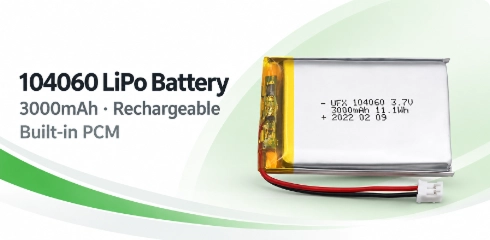
104060 Battery Performance
Check battery output, cycle ratings, storage limits, and temperature before choosing this model. See Specs for the full ratings.
- Battery Output
- Cycle Life
- Storage
- Temperature
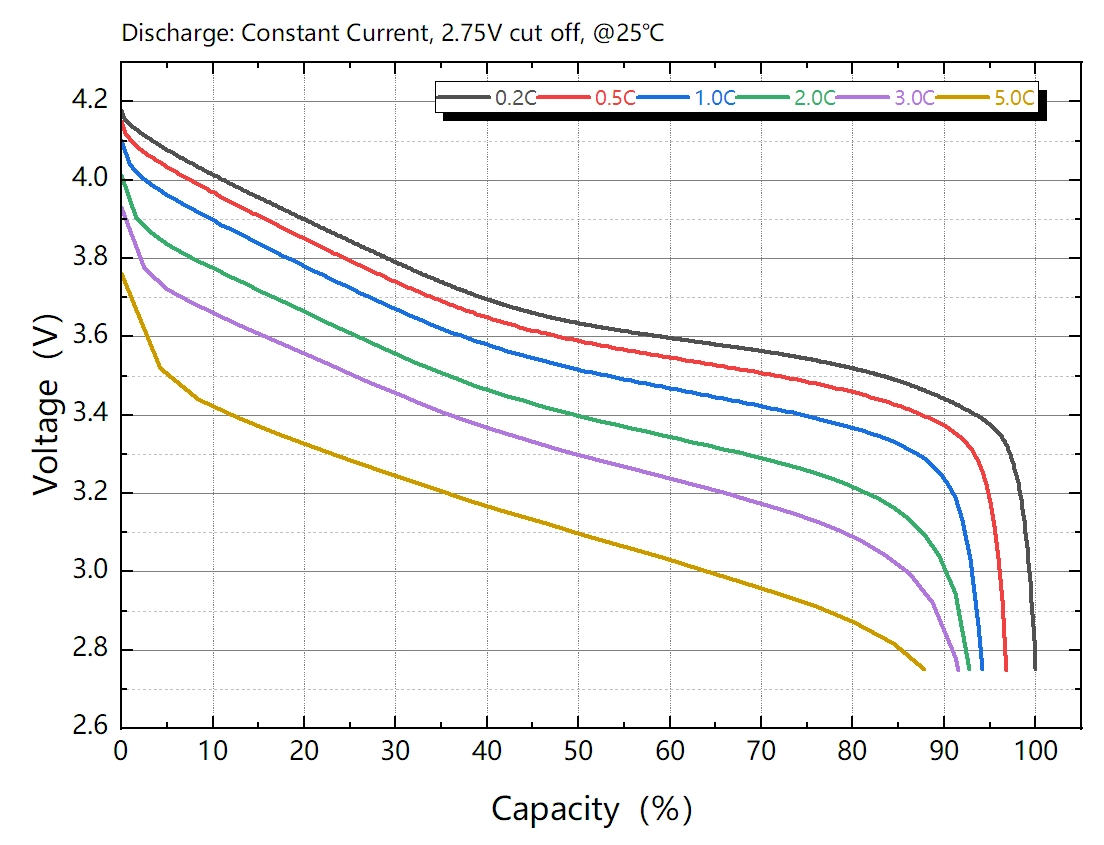
Match the Current Rating to Your Load
The listed standard discharge current is 1500mA (0.5C). The listed maximum is 3000mA (1C). Confirm the complete battery assembly rating against your device load.
- Measure normal current and brief startup peaks.
- Check the PCM, wire, and connector current limits.
- Do not use the protection trip current as the working limit.
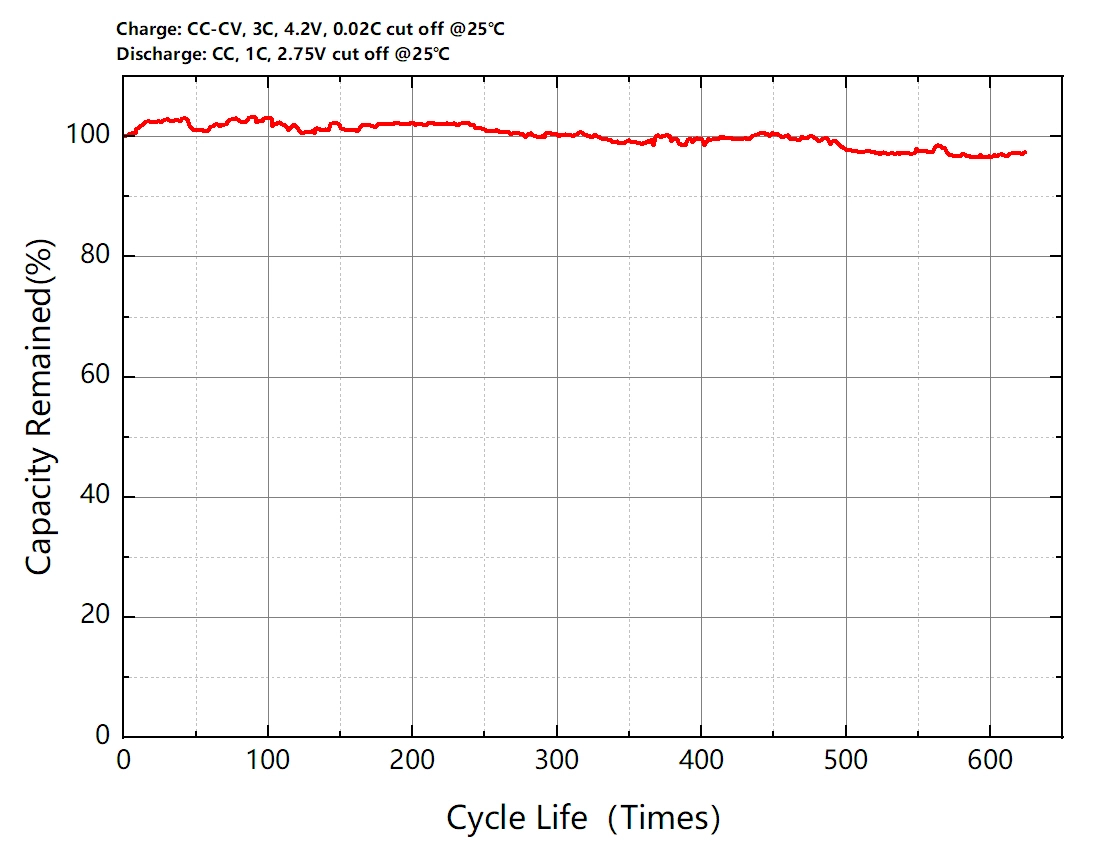
Review Capacity After Repeated Charging
The detailed specification lists at least 80% capacity after 500 cycles. Review the matching test report for the conditions behind this rating. Actual battery life depends on the device load, heat, and charging pattern.
- Check the charge and discharge rates used in testing.
- Confirm the test temperature and voltage limits.
- Compare cycle results under the same conditions.
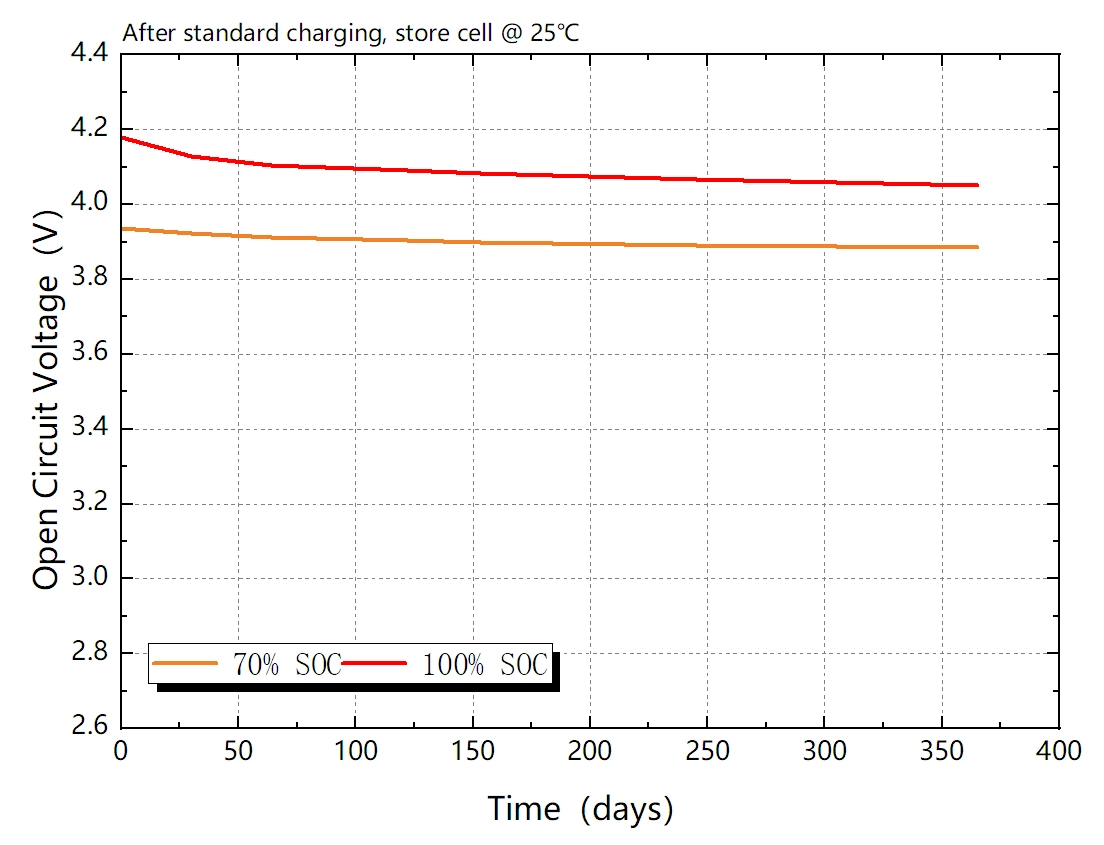
Use Storage Limits for the Planned Duration
The allowed storage temperature changes with storage time. Follow the matching range in Specs. A short-term limit should not be used for long-term storage.
- Keep the battery in a cool, dry place.
- Protect the leads and connector from short circuits.
- Check battery voltage after long storage.
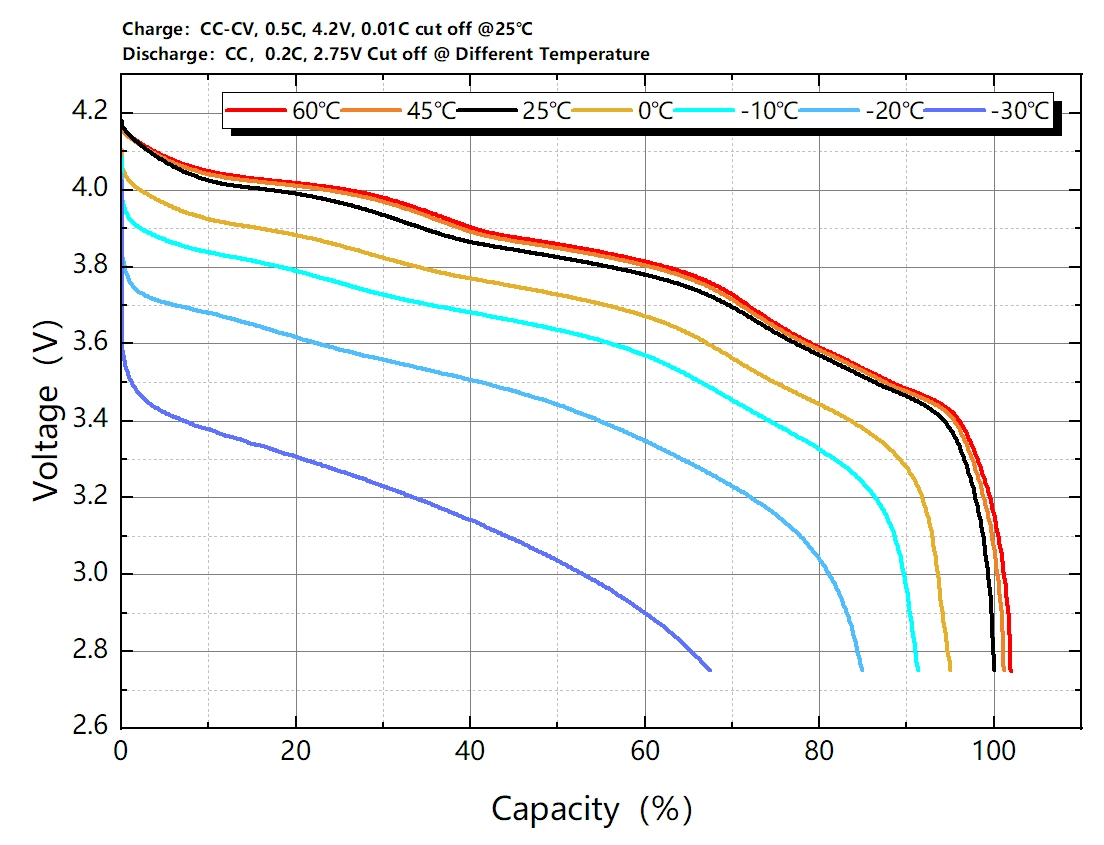
Check Charging and Discharge Temperatures
The listed charging range is 0°C to 45°C. The discharge range is −20°C to 60°C. The discharge range does not apply to charging.
- Measure battery temperature inside the closed device.
- Keep the battery away from parts that produce heat.
- Test available runtime at the expected use temperature.
Fit the 104060 Into Your Device
Plan for the battery body, wire route, connector, and assembly clearance.
Plan Around the 10 × 40 × 62mm Size
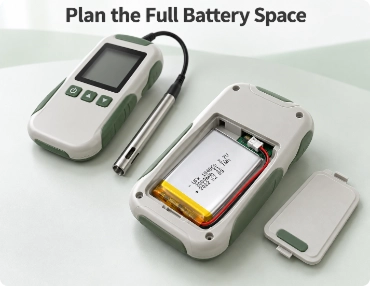
The listed maximum battery size is 10 × 40 × 62mm. Confirm the final drawing before fixing the housing. Leave room for the leads and connector without squeezing the pouch.
- Battery space: Check thickness, width, length, and installation clearance.
- Wire route: Avoid sharp edges, tight bends, and pinched leads.
- Connector: Confirm the part number, current rating, and polarity.
- Protection: The standard version includes a PCM.
- Temperature sensing: The standard version has no NTC. Share your sensor needs for review.
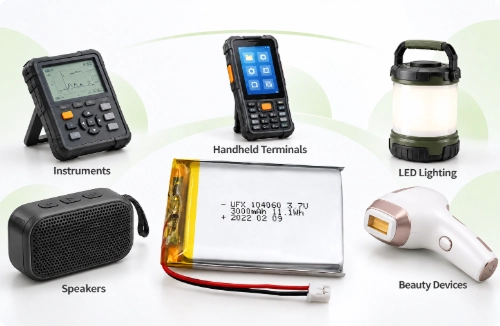
Where the 104060 Can Be Used
The 104060 is an option for rechargeable products that need a 3.7V battery and have room for its pouch format. Possible uses include portable instruments, handheld terminals, LED lighting, portable speakers, and beauty devices.
Check full-brightness current for lighting. Review startup demand for motors and brief high loads for speakers. Final suitability depends on battery space, current limits, and the charging circuit.
How We Check the 104060
Quality checks cover materials, assembly, electrical values, and finished batteries.
View the Production Process 


Adapt the 104060 Assembly to Your Device
Share your device requirements so we can review the connection and protection details.
- Connector: part number, current rating, and polarity
- Wire: length, gauge, and exit direction
- Protection: PCM settings for the device load
- Temperature sensing: optional NTC requirements
- Installation: insulation and assembly layout
-
01Available battery space or an enclosure drawing.
-
02Normal current, peak current, and peak duration.
-
03Connector details and charging requirements.
-
04Use temperature and temperature sensing needs.
-
05Sample quantity, target market, and required documents.
Compare 3.7V LiPo Batteries by Size and Capacity
Compare these options if the 104060 does not match your battery space or capacity target. All sizes below are maximum dimensions. A similar voltage or capacity does not make a battery a direct replacement. Check the finished drawing, current limits, connector, and protection. For the 654065-cell option, confirm which parts are included before comparing the finished assembly size.
| Recommended Products | Voltage | Model | Capacity | Max. Size (mm) |
|---|---|---|---|---|
| LiPo Pouch Battery | 3.7V | 954058 | 2500mAh | 9.5 × 40 × 60 |
| LiPo Pouch Battery | 3.7V | 804258 | 2500mAh | 8 × 42 × 60 |
| LiPo Pouch Battery | 3.7V | 903759 | 2500mAh | 9 × 37 × 63 |
| High-Capacity LiPo Battery | 3.7V | 104867 | 4000mAh | 10 × 48 × 69 |
| LiPo Pouch Battery | 3.7V | 123252 | 2500mAh | 12 × 32 × 54 |
| LiPo Pouch Cell | 3.7V | 654065-cell | 2000mAh | 6.5 × 40 × 65 |
| LiPo Pouch Battery | 3.7V | 104547 | 2000mAh | 10 × 45 × 49 |
| LiPo Pouch Battery | 3.7V | 654267 | 2000mAh | 6.5 × 42 × 69 |
Battery Specification
-
1. Mechanical Characteristics
Cell 104060 PCM Yes NTC No Weight appr. 52g Configuration 1S1P -
2. Electrical Specification
Capacity 3000mAh Nominal Voltage 3.7V Energy 11.1Wh Internal Resistance less than 120mΩ Max. Charge Voltage 4.2V Discharge Cut Off 2.75V Max. Charge Current 3000mA Max. Discharge Current 3000mA Standard Charge Current 1500mA Standard Discharge Current 1500mA Charging Temperature 0℃ to 45℃ Discharging Temperature -20℃ to 60℃ Storage Temp.Range 1 year at -20℃ to +30℃ 3 mos. at -20℃ to +45℃ 1 mo. at -20℃ to +60℃ Cycle life 100 cycles ≥92% 300 cycles ≥88% 500 cycles ≥80% -
3. Cell protection
Overcharge Detection 4.28V ±50mV (80 to 200msec delay, release 4.08V ±50mV) Overdischarge Detection 2.4V ±100mV (40 to 120msec. delay, release 3.0V ±100mV) Overcurrent Detection 2.5A to 4.5A (5 to 10msec. delay) Short protection Yes
The Ufine 104060 is a 3.7V 3000mAh rechargeable LiPo battery with 11.1Wh of nominal energy. It uses one pouch cell with a protection board.
This guide focuses on choosing the right capacity, reviewing the device load, and testing the battery in your product. See Specs for the full ratings.
Part 1. Define what the 104060 needs to power
Start with a clear use pattern. A device that runs all day has different battery needs from one used for a few minutes at a time.
-
Continuous use: measure power during normal operation.
-
Short sessions: record the current and length of each session.
-
Long standby: measure sleep current and how often the device wakes.
-
Mixed loads: test functions that can run at the same time.
Use these results to set the required time between charges. Leave capacity in reserve for battery aging and changes in use temperature.
Part 2. Estimate runtime from the 104060 battery energy
Use battery energy in Wh when the device has a voltage converter or several supply voltages. Add the power used by each active circuit.
Estimated runtime (hours) ≈ 11.1Wh × overall power efficiency ÷ device power (W)
-
Example device load: 2W.
-
Assumed overall power efficiency: 85%.
-
Estimated runtime: 11.1 × 0.85 ÷ 2 ≈ 4.7 hours.
This is a planning example, not a measured result. It assumes the full nominal battery energy is available. Early device shutdown, temperature, and battery age can reduce runtime.
Part 3. Check battery current as the 104060 discharges
A device that draws constant power may need more battery current as battery voltage falls. A current reading taken only at full charge can miss this change.
-
Measure battery current at full, middle, and low charge levels.
-
Repeat startup and high-load tasks at each level.
-
Record voltage drops, resets, and protection trips.
-
Check that the PCM, wires, and connector support the measured load.
The listed standard discharge current is 1500mA. The listed maximum is 3000mA. Confirm the finished assembly rating before approving the device load.
Part 4. Balance 104060 capacity against housing space
The listed maximum battery size is 10 × 40 × 62mm. If the battery does not fit, identify which dimension limits the design before choosing another model.
-
Limited depth: compare thinner batteries and their larger footprints.
-
Limited width: compare narrower formats and their thickness.
-
Limited length: check whether a shorter battery still meets the energy target.
A 4000mAh option may offer more nominal energy but also need more space. A 2500mAh option may fit better but provide less runtime under the same conditions. Compare finished drawings and test results.
Part 5. Plan charging around the 104060 and the device
Use a single-cell Li-ion CC/CV charging circuit with a 4.2V charge limit. The listed standard charge current is 1500mA. The final setting should follow the approved battery specification.
-
Confirm that the input supply can power the charger and any active device functions.
-
If the device runs while charging, review how power is shared.
-
Measure battery temperature with the housing closed.
-
Review temperature sensing needs. The standard version has no NTC sensor.
Dividing 3000mAh by 1500mA gives two hours. This is not the full charging time. Current falls during the final charging stage, and device power use can also affect the result.
Part 6. Match 104060 documents to the approved sample
The supplied product information lists UL1642 for the cell. Review the exact model and document scope. Cell certification does not by itself establish approval of the finished device.
-
Confirm the 104060 3000mAh version on the specification and drawing.
-
Record the connector, wire, PCM, and any added sensor.
-
Keep sample test results with the matching battery version.
-
Request a review of document scope if the assembly changes.
Send your runtime target, measured load, available space, and sample quantity. These details help us review the standard 104060 assembly or discuss changes for your project.
FAQs
-
Is this 104060 battery rated at 2800mAh or 3000mAh?
This version is rated at 3000mAh, with 3.7V nominal voltage and 11.1Wh nominal energy. Confirm the capacity on the approved specification when ordering, as the model code alone does not define capacity. -
What space does the 104060 battery need?
The listed maximum body size is 10 × 40 × 62mm. Allow extra space for the leads, connector, and installation clearance. Use the final assembly drawing to confirm the fit. -
Can the 104060 supply 3A to my device?
The specification lists 3000mA (3A) as the maximum discharge current. Confirm that the selected PCM, wires, and connector support your load. Share any startup peaks and their duration for review. -
How long can the 104060 run a 500mA load?
About six hours in theory, based on 3000mAh ÷ 500mA measured at the battery. Actual runtime depends on usable capacity, temperature, battery age, and the device's shutdown voltage. -
Does the 104060 provide a constant 3.7V output?
No. 3.7V is the nominal voltage. Battery voltage changes during charging and use. A device that needs a fixed supply voltage requires a suitable voltage regulator. -
Will a 1500mA charger fully charge the 104060 in two hours?
Not necessarily. Two hours is a simple capacity-to-current estimate. Current falls during the final charging stage. Starting charge level and device power use also affect the total time. Use a compatible 4.2V CC/CV charger. -
Does the standard 104060 have an NTC temperature sensor?
No. The standard version includes PCM protection but no NTC sensor. If your charging circuit needs one, share the sensor value and wiring requirements for review. -
Can the 104060 be charged below 0°C?
Charging below 0°C is outside the listed charging range of 0°C to 45°C. The −20°C to 60°C range applies to discharge only. -
Does UL1642 coverage for the 104060 also approve my finished device?
No. The supplied information lists UL1642 for the cell. Review the exact document and model scope. The finished battery assembly and device may need separate evaluation.
Ready to Power Your Project?
We’ll help you design the perfect power source — tailored to your voltage, capacity, size, C-rate, and performance needs.
Contact Us NowWhat Our Customers Are Saying
We love hearing from you! Your experiences help us improve and inspire others. Check out what our happy customers have to say about our lithium batteries—share your thoughts with us too!











Latest Articles
About Lithium Battery Industry News

Can Power Bank Charge an Action Camera Battery?
Find out which power banks work with action cameras, whether you can record while charging, and what to use when your camera runs out of power.
2026-10-28 Ufine

Compare DJI Osmo batteries by model, capacity, runtime, and compatibility. Find the right battery before you buy and avoid costly mistakes.
2026-10-28 Ufine

Are GoPro Batteries Interchangeable? A Model-by-Model Guide
Compare GoPro batteries by model, price, capacity, and runtime. Find compatible options, avoid costly mistakes, and choose the best battery for you.
2026-10-28 Ufine