
- Part 1. What is a LiPo battery?
- Part 2. Why LiPo batteries are popular for RC cars
- Part 3. LiPo vs NiMH battery for RC cars
- Part 4. Understanding LiPo battery specifications
- Part 5. How to choose the best LiPo battery for RC Cars
- Part 6. Types of RC LiPo battery chargers
- Part 7. How to make an RC car faster with a LiPo battery
- Part 8. Do I need to buy RC battery connectors?
- Part 9. FAQs
Remote control (RC) cars require a reliable and powerful power source to deliver speed, acceleration, and runtime. Among different battery types, the LiPo battery (Lithium Polymer battery) has become the most popular choice for hobbyists and professional racers.
Compared with traditional battery types, RC LiPo batteries offer higher discharge rates, lighter weight, and better performance. This is why most modern remote control car LiPo batteries are designed to maximize speed and power.
In this guide, we will explain how LiPo batteries work, how they compare to NiMH batteries, how to choose the right battery for your RC car, and how to safely charge and maintain them.
Key Takeaways
- LiPo batteries are the most popular power source for modern RC cars due to their high power output and lightweight design.
- Compared with NiMH batteries, LiPo batteries offer faster acceleration, higher top speed, and better overall performance.
- Important LiPo specifications include voltage, capacity (mAh), and C rating, all of which affect RC car performance.
- Choosing the right LiPo battery requires matching the battery voltage and connector with your RC car’s ESC and motor.
- Upgrading to a higher-voltage or higher C-rating LiPo battery can significantly increase RC car speed and acceleration.
Part 1. What is a LiPo battery?
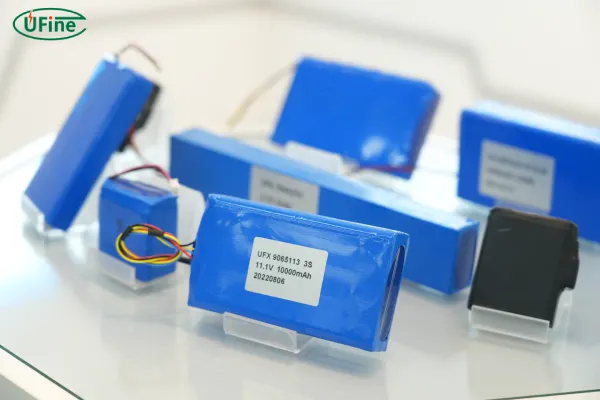
A LiPo battery (Lithium Polymer battery) is a rechargeable battery that uses lithium-ion technology with a polymer electrolyte. Unlike traditional cylindrical lithium batteries, LiPo batteries use flexible pouch cells, which makes them lighter and more compact.
Because of these characteristics, RC lithium polymer batteries are widely used in high-performance RC vehicles such as racing cars, drones, and RC airplanes.
Each LiPo battery pack is made up of multiple cells connected in series. Each cell has a nominal voltage of 3.7V.
Common RC battery configurations include:
- 2S LiPo – 7.4V
- 3S LiPo – 11.1V
- 4S LiPo – 14.8V
Higher voltage generally results in higher motor speed and stronger overall performance.
This is why LiPo batteries are considered the standard power source for modern RC cars.
Part 2. Why LiPo batteries are popular for RC cars
There are several reasons why hobbyists prefer LiPo batteries for RC cars instead of older battery technologies.
High discharge rate
LiPo batteries can deliver a large amount of current instantly. This allows RC cars to accelerate quickly and maintain strong performance even under heavy load.
Lightweight design
Compared with traditional batteries, LiPo packs are significantly lighter. A lighter battery reduces the overall weight of the vehicle, improving speed and handling.
Better performance
Because of their higher voltage stability and discharge capability, remote control car LiPo batteries can provide faster acceleration and higher top speeds.
For this reason, most racing-grade RC LiPo batteries are designed with high C-ratings to maximize performance.
Part 3. LiPo vs NiMH battery for RC cars
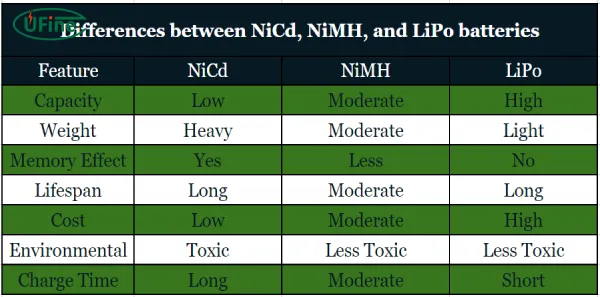
Many beginners wonder whether they should choose LiPo or NiMH batteries. Both types can power RC cars, but they have significant differences.
| Feature | LiPo Battery | NiMH Battery |
|---|---|---|
| Weight | Lightweight | Heavier |
| Power Output | High | Moderate |
| Charging Time | Faster | Slower |
| Maintenance | Requires careful handling | Easy to use |
| Performance | Ideal for racing | Suitable for beginners |
In general, LiPo batteries provide significantly better performance, which is why they are commonly used in competitive RC racing.
However, NiMH batteries can still be a good option for beginners because they require less maintenance and have lower safety risks.
Part 4. Understanding LiPo battery specifications
To choose the right RC LiPo battery, it is important to understand the key specifications.
1 Voltage (V)
Voltage determines how fast the motor spins.
Higher voltage usually means higher top speed.
Typical RC configurations include:
- 2S (7.4V) – beginner level
- 3S (11.1V) – higher speed
- 4S (14.8V) – extreme performance
However, the ESC and motor must support the higher voltage before upgrading.
If you want to better understand how battery packs increase voltage and capacity, check our guide on lithium batteries in series and parallel.
2 Capacity (mAh)
Battery capacity is measured in milliamp hours (mAh) and determines how long the battery can power the RC car.
For example:
- 3000mAh → shorter runtime
- 5000mAh → longer runtime
A rough runtime estimate can be calculated using:
Runtime ≈ Capacity ÷ Current Draw
For example:
5000mAh battery with a 25A average current draw may run for around 10–12 minutes.
3 C Rating
The C rating indicates how quickly a battery can safely discharge its energy.
The maximum current output can be calculated using:
Maximum Current = Capacity × C rating
Example:
5000mAh 50C battery
5Ah × 50 = 250A maximum discharge
A higher C rating allows stronger acceleration and better performance under heavy load.
You can also learn more about performance and safety considerations in our article about high C-rating RC batteries.
Part 5. How to choose the best LiPo battery for RC Cars
When selecting RC LiPo batteries, several factors should be considered.
1.Battery voltage
Choose a voltage compatible with your motor and ESC.
For most 1/10 scale RC cars, a 2S 5000mAh LiPo battery is a common choice.
2. Capacity
Higher capacity increases runtime but also adds weight.
3. C rating
A higher C rating improves performance but may increase cost.
4. Connector type
Common connectors used in remote control car LiPo batteries include:
- XT60
- Deans (T plug)
- EC5
The connector must match the ESC or adapter being used.
Part 6. Types of RC LiPo battery chargers
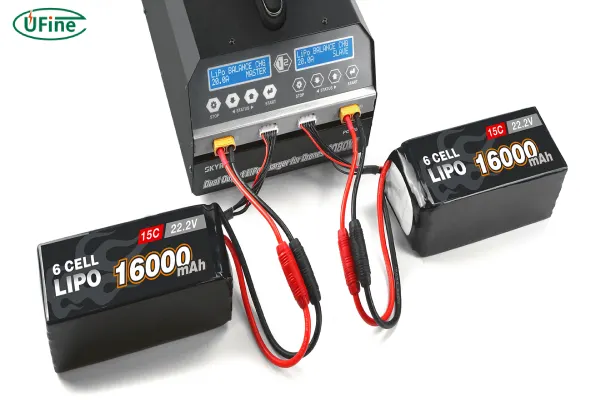
To keep your LiPo batteries in top condition, choosing the right charger is essential. Here are the common types of LiPo battery chargers:
1. Basic Chargers
These are simple and affordable, making them suitable for beginners. They offer straightforward functionality but may lack advanced features like balance charging.
2. Balance Chargers
Balance chargers ensure each cell in a LiPo battery is charged evenly. This balance is crucial for maintaining the health and performance of multi-cell batteries.
3. Smart Chargers
Equipped with advanced features, smart chargers offer automatic shut-off, charge monitoring, and adjustable settings. They optimize the charging process and enhance battery lifespan.
4. Dual/Quad Chargers
For those with multiple batteries, dual or quad chargers can charge several batteries simultaneously. This saves time and is convenient for frequent users.
5. Field Chargers
Portable and compact, field chargers are designed for on-the-go charging. They’re perfect for field use, allowing you to charge batteries without access to a power outlet.
Part 7. How to make an RC car faster with a LiPo battery
Many hobbyists search for ways to make an RC car faster, and upgrading the battery is one of the most effective methods.
1. Upgrade to a higher voltage battery
Switching from a 2S LiPo to a 3S LiPo battery can significantly increase top speed.
However, always ensure the ESC and motor support the higher voltage.
2. Choose a higher C-rating battery
Higher C-rating batteries deliver more current to the motor, which improves acceleration.
For racing setups, 50C or higher LiPo batteries are commonly used.
3. Reduce vehicle weight
A lighter RC car requires less energy to accelerate, improving overall speed and efficiency.
Using a lightweight LiPo battery pack instead of heavier batteries can also contribute to faster performance.
Part 8. Do I need to buy RC battery connectors?
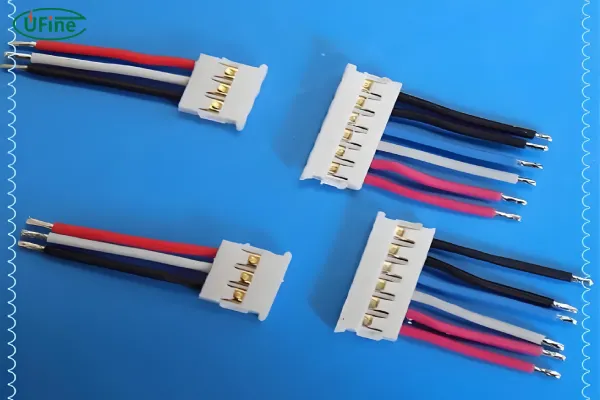
When setting up your RC car, you might wonder if purchasing battery connectors is necessary. Let’s explore the types and their importance:
Types of RC Battery Connectors
- Deans/T-Plug: Widely used for high-current applications, known for their reliable connection.
- XT60: Popular for their secure fit and ease of use, ideal for moderate power needs.
- EC3/EC5: Known for their robust and durable design, suitable for high-power setups.
- Traxxas Connector: Offers plug-and-play functionality, designed for Traxxas models.
Why Buy RC Battery Connectors?
- Compatibility: Ensures a secure and proper fit between your battery and RC car, preventing connectivity issues.
- Performance: High-quality connectors reduce resistance, improving power delivery and efficiency.
- Safety: Secure connections prevent loose wires, reducing the risk of short circuits and battery damage.
Part 9. FAQs
1. Can any RC car use a LiPo battery?
Not all RC cars are designed for LiPo batteries. The ESC (electronic speed controller) and motor must support the voltage of the LiPo battery. Always check your RC car specifications before switching from NiMH to LiPo.
2. How many cells should an RC LiPo battery have?
The number of cells depends on your vehicle setup. 2S batteries are common for beginners, while 3S or 4S batteries are often used for higher-performance RC cars.
3. What happens if a LiPo battery is too powerful for an RC car?
If the battery voltage is too high, it may damage the ESC, motor, or drivetrain components. Always use a battery within the voltage range recommended by the manufacturer.
4. Do LiPo batteries improve RC car acceleration?
Yes. Because LiPo batteries can deliver high current quickly, they allow the motor to reach high torque faster, which significantly improves acceleration.
5. Are LiPo batteries more expensive than NiMH batteries?
LiPo batteries are usually more expensive initially, but they often provide better performance and longer lifespan when properly maintained.
Related Tags:

More Articles
Dead Battery or Device Failure? How to Find the Cause
Think your device is broken? Learn how to tell if the problem comes from battery aging or hardware failure before replacing your electronics.
Why iPhone Duo Uses Two Batteries: The Engineering Behind Foldable Phone Power
Why do foldable phones need two batteries? Explore the engineering challenges behind iPhone Duo’s dual-battery architecture and future battery trends.
Solid-State Batteries: 3 Myths You Need to Know
Solid-state batteries promise safer EVs and longer range, but the reality is more complex. Discover the challenges behind this next-gen technology.
Battery Capacity vs Discharge Rate: The Choice Engineers Face
Higher capacity or higher discharge rate? Learn how to choose the right LiPo battery for longer runtime, stable power output, and better device performance.
Battery Cable Size Guide: Choose the Right Wire Fast
Not sure what battery cable size you need? Learn how to select the right wire gauge, terminal size, and cable for safer, more efficient battery systems.


