
- Part 1. The main types of moped batteries
- Part 2. Why lithium performs better in real life
- Part 3. Clear comparison: Lithium vs. Lead-Acid
- Part 4. Range & power: what you feel when riding
- Part 5. Safety & why BMS matters
- Part 6. Charging differences
- Part 7. Cost: upfront vs. long-term value
- Part 8. Which moped riders should choose which battery?
- Part 9. Signs it’s time to upgrade to lithium
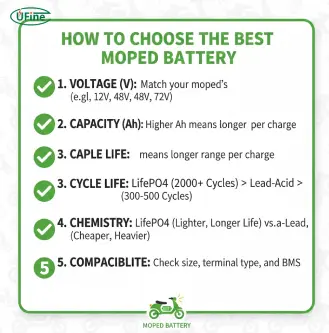
Quick Answer: Lithium is the Best Moped Battery. If you just want the answer upfront: the best moped battery you can buy today is a lithium (LiFePO4) battery. It lasts longer, charges faster, weighs much less, and keeps steady power all the way to the end of the ride. Lead-acid batteries are cheaper to buy, but lithium wins in every real-world performance test.
Part 1. The main types of moped batteries
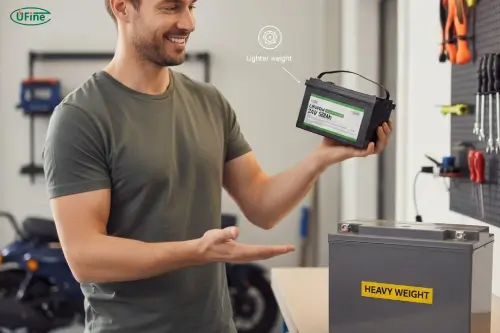
Before choosing the best one, it helps to know what’s out there:
1 Lead-Acid (Flooded/Wet Cell)
The old-school option. Cheap, but heavy and needs more attention.
2 AGM (Absorbent Glass Mat)
Maintenance-free, more durable, and a bit better for everyday riders.
3 Gel Batteries
Spill-proof and vibration-resistant. Good for hot climates and rough roads.
4 Lithium (Li-ion / LiFePO4)
Lightweight, powerful, and extremely long-lasting. The modern upgrade.
Part 2. Why lithium performs better in real life
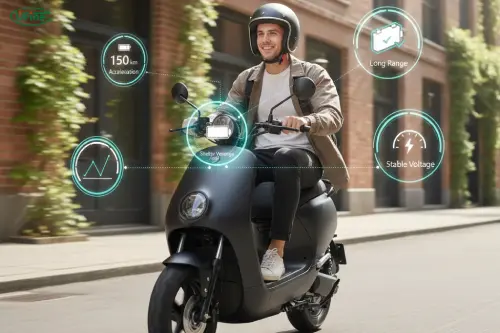
Lithium batteries have some big advantages that riders instantly notice:
- Much lighter — your moped feels quicker and more responsive
- Holds voltage longer — strong power until the battery is almost empty
- Charges in a fraction of the time
- Lasts years longer (3–5× the cycle life of lead-acid)
- No maintenance at all
- Handles deep discharges without damage
Lead-acid batteries simply can’t match this. They sag under heavy load, lose power quickly, and degrade faster.
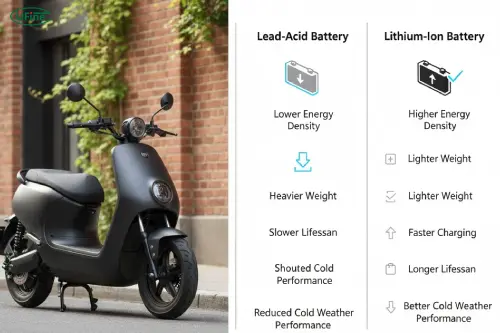
Part 3. Clear comparison: Lithium vs. Lead-Acid
| Feature | Lithium Battery | Lead-Acid Battery |
|---|---|---|
| Weight | Very light | Heavy |
| Lifespan | 2000–4000 cycles | 300–500 cycles |
| Charging Time | Fast | Slow |
| Power Output | Strong & stable | Drops quickly |
| Deep Discharge | Safe | Damaging |
| Winter Performance | Good | Poor |
| Maintenance | None | Regular charging needed |
In almost every category, lithium comes out on top.
Part 4. Range & power: what you feel when riding
Lithium batteries deliver smooth, consistent power. That means:
- Better acceleration
- More torque on hills
- Longer usable range
- No “weak battery feeling” halfway through the ride
Lead-acid, on the other hand, starts losing power the moment it goes below 50% charge—something you definitely feel on the road.
Part 5. Safety & why BMS matters
Lithium moped batteries include a BMS (Battery Management System) that protects the battery from:
- Overcharging
- Over-discharging
- Short circuits
- Overheating
- Cell imbalance
Think of it as built-in smart protection. Lead-acid batteries don’t have this.
Part 6. Charging differences
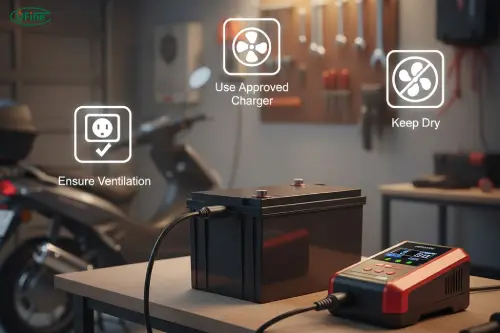
Lithium Charging
- Simple: plug in, unplug when full
- No “memory effect”
- Can charge anytime
- No risk of sulfation
Lead-Acid Charging
- Must be charged immediately after riding
- Overcharging can damage the battery
- Often needs trickle charging
- Loses lifespan if left partially discharged
Lithium makes charging much easier overall.
Part 7. Cost: upfront vs. long-term value
Lithium does cost more initially. But over time, the math is simple:
- Fewer replacements
- Longer lifespan
- Better reliability
- Lower electricity use
- Less maintenance
When you look at total ownership cost over several years, lithium is actually cheaper.
Part 8. Which moped riders should choose which battery?
Daily Commuters
Lithium is perfect—fast charging + long lifespan.
Budget-Conscious Riders
AGM lead-acid works, but expect earlier replacement.
Cold-Climate Riders
Lithium with low-temp protection is the best option.
Performance Riders
Lithium all the way—lighter and more powerful.
Part 9. Signs it’s time to upgrade to lithium
- Your moped feels sluggish
- Range has dropped noticeably
- Battery needs frequent charging
- Starts are unreliable
- Ride performance feels inconsistent
- You replace batteries every 1–2 years
If more than one of these applies, you’ll get a huge improvement from switching to lithium.
Related Tags:

More Articles

D Battery vs. C Battery: A Comprehensive Comparison for Modern Applications
Compare D battery vs C battery size, capacity, runtime, and applications. Learn the key differences and choose the right battery for your device.
What Does BMS Mean? (Battery Management System)
Discover what a BMS is, its main components, key functions, applications, and why it’s essential for lithium battery safety.
Can Lithium Batteries Catch Fire When Not in Use?
Can lithium batteries catch fire when not in use? Learn the main causes of lithium battery fires, storage safety tips, and how to reduce fire risks.
How Battery Heaters Improve Performance in Low Temperatures
Learn how battery heaters improve battery performance in cold weather. Explore battery heating systems, benefits, applications, and selection tips.
Learn About the 18650 Li-ion Battery Price
Compare 18650 battery prices by capacity, brand, and order quantity. See real factory pricing and bulk buying tips before you buy.


