
- Key Takeaways
- Part 1. Understanding high temperature batteries
- Part 2. Types of high temperature batteries
- Part 3. How high temperature battery design works
- Part 4. Advantages of high temperature batteries
- Part 5. Disadvantages and limitations
- Part 6. High temperature battery vs lithium-ion battery
- Part 7. Applications: Where high temperature batteries are used
- Part 8. How to choose the best battery for high temperature
- Part 9. Maintenance tips for high temperature batteries
- Part 10. FAQs: High temperature battery
High temperature batteries are engineered energy storage systems designed to operate reliably in extreme heat conditions, typically above 100°C and up to 200°C or more.
Unlike standard lithium-ion batteries—which degrade quickly under heat—these batteries maintain stable electrochemical performance, safety, and lifespan even in harsh environments such as oil drilling, aerospace, and industrial monitoring.
Key Takeaways
- High temperature batteries can operate from 100°C to over 200°C, far beyond standard lithium-ion limits.
- Common chemistries include Li/SOCl₂ and Li/SO₂, optimized for thermal stability and long shelf life.
- They are critical in oil & gas, military, aerospace, and downhole tools.
- Design focuses on heat-resistant materials, sealed structures, and safety mechanisms.
- The best battery for high temperature depends on temperature range, lifespan, and discharge profile.
Part 1. Understanding high temperature batteries
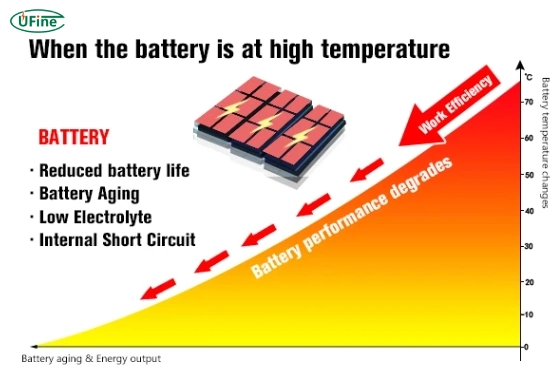
High temperature batteries are built to handle environments where standard batteries fail due to thermal runaway, electrolyte breakdown, or rapid capacity loss.
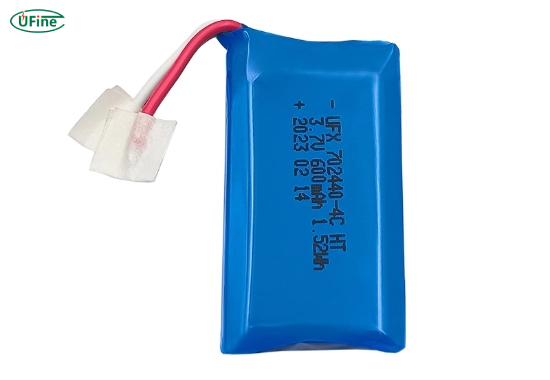
Temperature Classification
| Temperature Range | Design Requirement | Typical Use Case |
|---|---|---|
| ≤100°C | Minimal modification | Industrial electronics |
| 125°C | Enhanced sealing & materials | Automotive / sensors |
| 150–175°C | Specialized chemistry | Oil & gas tools |
| ≥180°C | Lithium alloy / advanced systems | Aerospace / military |
At very high temperatures (>180°C), traditional lithium materials become unstable. Advanced alloys and sealed systems are required.
Part 2. Types of high temperature batteries
Different chemistries are used depending on thermal tolerance, energy density, and application needs:
- Lithium/Sulfur Dioxide (Li/SO₂)
- High energy density
- Strong performance in extreme environments
- Used in military and aerospace systems
- Lithium/Thionyl Chloride (Li/SOCl₂)
- Excellent long shelf life (10–20 years)
- Stable in high battery temperature conditions
- Ideal for remote sensors, metering, and IoT
- Nickel-Cadmium (NiCd)
- Moderate high-temperature tolerance
- Durable and robust
- Used in industrial backup systems
- Zinc Chloride
- Lower cost option
- Limited use in niche high-temperature scenarios
Part 3. How high temperature battery design works
The ability to survive extreme heat comes from engineering at material and structural levels:
- Heat-Resistant Materials
- Lithium alloys or thionyl chloride cathodes
- Resist decomposition at high temperatures
- Specialized Electrolytes
- Non-aqueous or solid electrolytes
- Maintain ionic conductivity under heat
- Thermal Management
- Internal insulation layers
- Heat dissipation structures
- Hermetic Sealing
- Prevent leakage under pressure
- Essential for oilfield and deep-well environments
- Built-in Safety Mechanisms
- Pressure relief valves
- Thermal fuses
- Overcurrent protection
- Vibration & Shock Resistance
- Reinforced internal structure
- Critical for drilling and military use
Part 4. Advantages of high temperature batteries
- Stable performance in extreme heat (key for industrial reliability)
- High energy density, especially in Li/SOCl₂ systems
- Long service life in harsh environments
- Low maintenance, suitable for remote deployment
Part 5. Disadvantages and limitations
- Higher cost due to specialized materials
- Limited availability compared to standard lithium-ion
- Requires careful handling and matching chargers
- Not suitable for general consumer electronics
Part 6. High temperature battery vs lithium-ion battery
| Feature | High Temperature Battery | Standard Lithium-Ion |
|---|---|---|
| Operating Temp | Up to 200°C+ | 0°C to 60°C |
| Safety in Heat | High | Risk of thermal runaway |
| Lifespan in Heat | Long | Rapid degradation |
| Application | Industrial / extreme | Consumer / EV |
👉 If your application involves continuous high battery temperature, lithium-ion is not suitable.
Part 7. Applications: Where high temperature batteries are used
High temperature batteries are critical where failure is not an option:
- Oil & Gas (Downhole Tools)
- Aerospace & Defense Systems
- Industrial Sensors & Monitoring
- Geothermal Exploration
- High-temperature data logging systems
For design standards and safety references, see:
Part 8. How to choose the best battery for high temperature
When selecting a high temperature battery, focus on:
- Maximum Operating Temperature
Match battery rating with real environment (not average temp) - Discharge Profile
Continuous vs pulse discharge
Peak current requirements - Lifespan Requirements
Short-term mission vs long-term deployment - Size & Integration
Custom form factor may be required
👉 For custom solutions, see: Ufine Battery custom lithium solutions
Part 9. Maintenance tips for high temperature batteries
- Keep terminals clean and corrosion-free
- Store in controlled environments when idle
- Use dedicated chargers only
- Avoid unnecessary thermal cycling
Part 10. FAQs: High temperature battery
What is considered a high temperature battery?
A battery designed to operate safely above 100°C, often up to 200°C or higher.
What is the best battery for high temperature environments?
Li/SOCl₂ batteries are widely considered the best due to their stability, energy density, and long shelf life.
Why do normal lithium-ion batteries fail at high temperatures?
They suffer from electrolyte breakdown, gas generation, and thermal runaway, leading to safety risks.
Where are high temperature batteries most commonly used?
Mainly in oil & gas, aerospace, military, and industrial sensing applications.
Can high temperature batteries be customized?
Yes. Many manufacturers offer custom voltage, size, and capacity solutions for specific industrial needs.
Related Tags:

More Articles

Comparative Analysis: 14500 Battery Vs. 18650 Battery
Compare 14500 vs 18650 batteries by size, voltage, capacity, runtime, discharge current, charging, safety, and applications to choose the right cell.
12V Lithium-Ion What Voltage at Fully Charged and Why Your Battery Might Not Reach It
Check the 12V lithium battery voltage chart for 3S Li-ion and 4S LiFePO4. Learn full charge, resting voltage, charger limits, and fault checks.
LiFePO4 Voltage Chart Guide: Everything You Need to Know
Check the LiFePO4 voltage chart for 3.2V, 12V, 24V and 51.2V batteries. Compare SOC, charging voltage, cutoff limits and internal resistance.
Lithium Ion Cell Sizes: A Comprehensive Guide
Compare lithium ion cell sizes with a chart of dimensions, capacity ranges, cell types, applications, and key factors for selecting the right battery.
6 Volt Tractor Battery vs 12 Volt: Which One Fits Your Farm Equipment Best?
Compare 6V and 12V tractor batteries. Learn which voltage fits vintage or modern tractors, which specifications matter, and how to convert safely.


