
key takeaways
- LFP (Lithium Iron Phosphate) batteries are safe, durable, and reliable, especially in 48 V configurations.
- Understanding the internal structure, cell count, and assembly can help you choose or maintain your battery wisely.
- Performance parameters like cycle life, discharge rate, and energy density vary by design — knowing them helps you match the battery to your application.
- LFP is often more cost-effective over time than NMC for daily-use systems, solar storage, and urban EVs, even if it’s not the lightest chemistry.
Part 1. What are LFP batteries?
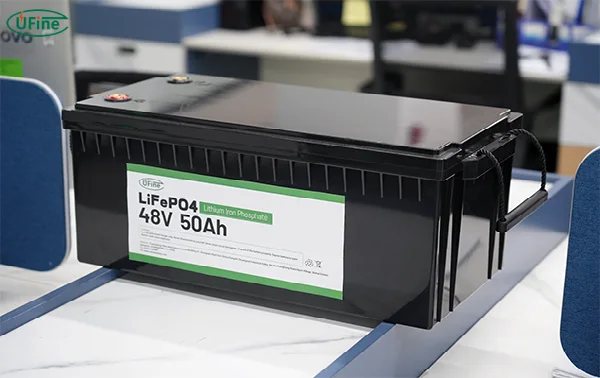
An LFP battery is a Lithium Iron Phosphate battery, a type of lithium-ion battery where the cathode is made from iron phosphate (LiFePO₄).
This chemistry prioritizes safety and long cycle life over maximum energy density. The olivine crystal structure in LFP is stable, which is why these batteries can often handle 2,000–5,000 deep cycles with minimal capacity loss.
LFP batteries are used in solar storage systems, e-bikes, electric vehicles, and backup power because they combine good energy, long life, and strong safety features.
Advantages
1. Safety
One of the primary advantages of 48v LFP batteries is their safety. Unlike other lithium-ion batteries, LFP batteries are less prone to overheating and thermal runaway. This makes them a safer choice for applications where battery safety is paramount, such as in electric vehicles and residential energy storage systems.
2. Long Lifespan
48v LFP batteries are known for their long lifespan. They can endure thousands of charge and discharge cycles without significant degradation in performance. This longevity translates to a lower total cost of ownership, as the batteries need to be replaced less frequently compared to other types of batteries.
3. Efficiency
Efficiency is another key benefit of 48v LFP batteries. They have a high discharge rate, which means they can deliver energy quickly when needed. This makes them ideal for high-demand applications such as electric vehicles and backup power systems. Additionally, LFP batteries have a low self-discharge rate, meaning they retain their charge for longer periods when not in use.
4. Environmentally Friendly
48v LFP batteries are more environmentally friendly compared to other types of batteries. They do not contain harmful heavy metals like lead or cadmium, and their components are more easily recyclable. This makes them a more sustainable choice for energy storage solutions.
Disadvantages
1. Energy Density
One of the main disadvantages of 48v LFP batteries is their lower energy density compared to other lithium-ion batteries. This means they store less energy for a given size and weight. While this may not be a significant issue for stationary applications, it can be a limitation in portable devices and electric vehicles where space and weight are critical factors.
2. Cost
Another potential drawback is the cost. 48v LFP batteries can be more expensive upfront compared to other battery types. However, their long lifespan and lower maintenance requirements can offset this initial investment over time.
Part 2. Inside a 48V LFP battery: structure and assembly
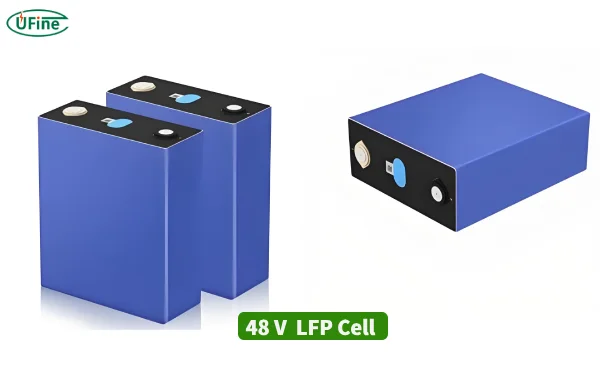
Understanding the technical structure can help you make smarter choices. Here’s a breakdown:
1. Cell configuration
A standard 48 V LFP battery usually consists of 16 series-connected cells (16S × 3.2 V = 51.2 V nominal). Each LFP cell often ranges 50 to 100 Ah, depending on the pack.
- Parallel connections: To increase capacity or output, cells are connected in parallel within modules. For example, 4 cells in parallel per series, then 16 of these strings in series.
2. Modules and assembly
The battery is typically built as modules for easier maintenance and thermal management:
- Cell → Module → Pack: Cells are grouped into modules (4–8 cells/module) for organization.
- BMS integration: The Battery Management System monitors voltage, temperature, and balance across all cells.
- Safety and heat management: Insulating layers, shock-absorbing mounts, and ventilation channels keep the pack safe and thermally stable.
To better understand the structure of a 48V LFP battery, check out our guide on battery cells, modules, and packs.
3. Practical assembly tips
- Ensure all cells in a series have similar capacity and internal resistance.
- Parallel cells must be voltage-matched before assembly.
- Include thermal management — even LFP generates heat under high current.
If you want to safely expand or configure your system, learn how to connect lithium batteries in series and parallel.
Part 3. Performance characteristics and specifications
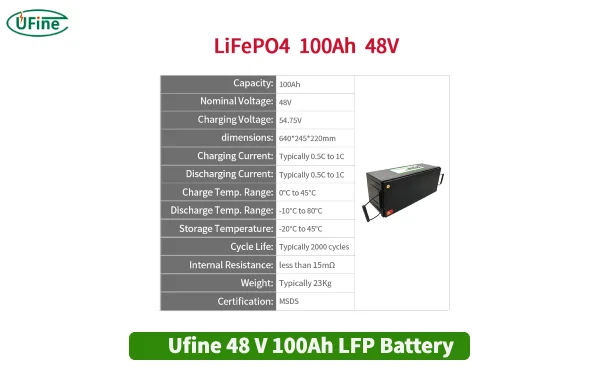
To give you a real sense of what a 48 V LFP battery can do, here’s a typical 100 Ah pack performance table:
| Parameter | Value | Notes |
|---|---|---|
| Nominal voltage | 51.2 V | 16S × 3.2 V |
| Capacity | 100 Ah | Total energy: 5.12 kWh |
| Max continuous discharge | 100 A | Instantaneous peak up to 200 A |
| Cycle life | 2,000–5,000+ cycles | Deep discharge 80% |
| Weight | 55–60 kg | Including casing and BMS |
| Dimensions | 500×300×220 mm | Approximate; varies by design |
| Energy density | 90–120 Wh/kg | Lower than NMC, higher stability |
| Safety | Very high | Low risk of thermal runaway |
Key performance traits:
- High cycle life — ideal for frequent daily use.
- Stable voltage output — maintains performance over time.
- High efficiency — typical charge/discharge efficiency >95%.
- Temperature tolerance — stable operation 0–45 °C; low self-discharge at room temperature.
Part 4. How different 48 V battery types compare
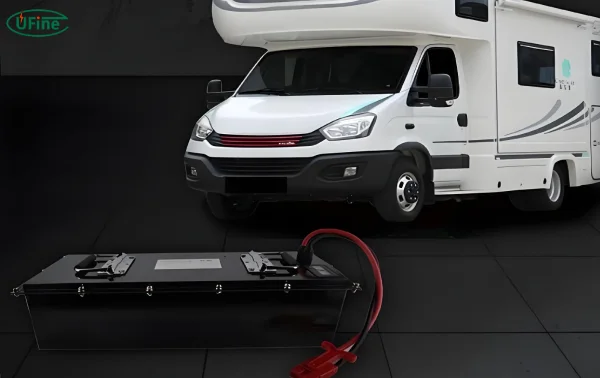
When you talk about a 48 V battery, you’re really talking about a voltage class — not a single chemistry. Within that class, there are three major families you’ll encounter:
- Lead‑acid (AGM/Gel / VRLA) — classic old‑school tech
- Lithium‑ion NMC / NCA type — high energy, lighter weight
- LFP (LiFePO₄) — stable, safe, long-lived
Each of these has its own strengths and trade‑offs depending on what you plan to use the battery for. Let’s break it down in a way that’s actionable rather than academic.
1 48 V lead‑acid — cheap but old tech
Before lithium revolutionized energy storage, lead‑acid was the go‑to choice for 48 V systems. You build a 48 V lead‑acid pack by wiring four 12 V blocks in series, and that simple series string (along with AGM or gel variations) still shows up in budget UPS, golf carts, or basic solar systems.
Lead‑acid key practical traits:
| Feature | Typical Value | What That Means |
|---|---|---|
| Cycle life | ~300–500 cycles | Needs replacement every couple of years |
| Depth of Discharge (DoD) | ~30–50% | You can only safely use half or less of the stored energy |
| Weight | Heaviest | Bulky systems and heavy to install |
| Efficiency | ~70–80% | More energy is lost as heat |
✅ Why some people still pick it:
Low upfront cost, easy compatibility with old chargers and equipment, and well‑known maintenance procedures.
⚠️ Why you generally avoid it today:
Short lifespan, poor usable capacity, and low efficiency make costs add up quickly compared to lithium alternatives.
2 48 V NMC/NCA lithium‑ion — high energy density
If you’ve ever looked at lithium‑ion 48 V batteries outside of LFP, most of those are NMC (Nickel‑Manganese‑Cobalt) or NCA chemistries — what many people call “standard lithium‑ion.”
What sets them apart:
- Higher energy density — typically ~150–250 Wh/kg, meaning smaller and lighter packs for the same stored energy.
- Nominal cell voltage ~3.6–3.7 V — fewer cells in series to hit 48 V, so simpler module layouts.
- Typical cycle life ~1,000–2,000 cycles — shorter than LFP, but still significantly better than lead‑acid.
Who it fits:
- Portable e‑bikes or scooters where weight and compactness matter
- Performance‑focused applications (better cold‑weather performance)
- Situations where every pound or centimeter counts
Trade‑offs:
- You’ll pay more per kWh than lead‑acid
- You’ll likely need more careful thermal management — these chemistries are more sensitive to overheating than LFP.
3 48 V LFP — long life and safety first
Then there’s your main hero: 48 V LFP battery (Lithium Iron Phosphate). This sits in the lithium‑ion family but with chemistry that’s optimized for safety and longevity rather than raw energy density.
The table below shows how these chemistry families stack up in practical terms:
| Feature | Lead‑acid | NMC / NCA lithium | LFP lithium |
|---|---|---|---|
| Typical energy density | ~30–50 Wh/kg | ~150–250 Wh/kg | ~90–160 Wh/kg |
| Cycle life | ~300–500 cycles | ~1,000–2,000 cycles | ~2,000–7,000+ cycles |
| Safe operating temp | Low | Moderate | High — very stable |
| Depth of Discharge | ~30–50% | 70–90% | 80–100% |
| Weight | Heaviest | Lightest | Moderate |
| Cooling required | Usually none | Often yes | Usually minimal |
| Best use cases | Budget/legacy systems | Lightweight EV/e‑mobility | Solar storage / UPS / daily‑use EV |
| Compiled from multiple industry guides |
Part 5. How do you decide on your 48 V system?
Here’s how I’d think about it, loosely based on how different users actually end up using these batteries:
👉 If you’re cost‑conscious and don’t mind replacements — lead‑acid might keep the upfront bill low, but long‑term you’ll pay more and carry more weight.
👉 If weight and compact design are priorities — an NMC system might give you the smallest, lightest battery for your size, especially if you’re dealing with mobility devices.
👉 If you want longevity, reliability, and peace of mind — LFP often gives the best long‑term value thanks to excellent cycle life, high usable capacity, and superior safety.
Part 6. Custom 48V LFP battery
For those who need specific battery configurations, custom 48V LFP batteries are available. Ufine, a Chinese lithium battery manufacturer, offers customization options to meet unique requirements. They can tailor the shape, size, capacity, and voltage of their batteries to suit various applications. Whether you need lithium polymer batteries, cylindrical batteries, or LiFePO4 batteries, Ufine can provide a solution that meets your specific needs.
Part 7. FAQs
Can I expand a 48V LFP battery pack by adding more modules?
Yes — but you must match cell capacity, series-parallel configuration, and ensure the BMS supports expansion.
What happens if a single LFP cell fails in a 48V pack?
The BMS will detect imbalance or low voltage; you may lose partial capacity, but a properly designed pack prevents catastrophic failure.
How does temperature affect the charging speed of 48V LFP batteries?
Optimal charging occurs 15–35°C; charging below 0°C or above 45°C can slow charging and reduce lifespan.
Can I use a 48V LFP battery outdoors?
Yes, if it’s housed in a weatherproof enclosure; however, avoid direct sunlight or freezing conditions for optimal performance.
Is there a weight advantage of LFP over lead-acid in 48V systems?
Yes — LFP batteries are typically 50–60% lighter than lead-acid for the same capacity, easing installation and transport.
Do LFP batteries degrade faster if stored fully charged?
Yes, long-term storage at 100% SOC can slightly reduce lifespan; keeping ~50–60% SOC is optimal.
Related Tags:

More Articles
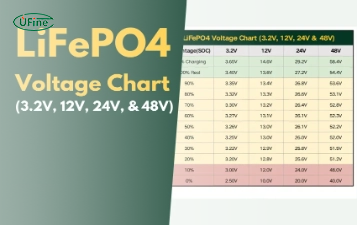
LiFePO4 Voltage Chart Guide: Everything You Need to Know
Check the LiFePO4 voltage chart for 3.2V, 12V, 24V and 51.2V batteries. Compare SOC, charging voltage, cutoff limits and internal resistance.
Lithium Ion Cell Sizes: A Comprehensive Guide
Compare lithium ion cell sizes with a chart of dimensions, capacity ranges, cell types, applications, and key factors for selecting the right battery.
6 Volt Tractor Battery vs 12 Volt: Which One Fits Your Farm Equipment Best?
Compare 6V and 12V tractor batteries. Learn which voltage fits vintage or modern tractors, which specifications matter, and how to convert safely.
The Ultimate Guide to a Molten Salt Battery
Learn how a molten salt battery works, its main types, advantages, disadvantages, operating temperature, safety, and grid energy storage uses.
2000mAh Battery Runtime: How Long Will It Last in Real Devices?
Learn how to calculate 2000mAh battery runtime and backup time. See real device examples, power-loss factors, and battery replacement checks.


