
- Key Takeaways
- Part 1. What are lithium button batteries?
- Part 2. Flat round batteries vs. coin cell batteries
- Part 3. Major lithium coin cell battery types
- Part 4. Button battery size coding explained
- Part 5. Lithium coin cell battery voltage, rechargeability & safety
- Part 6. Lithium button battery lifespan, storage & disposal
- Part 7. Lithium coin cell battery common applications
- Part 8. FAQ: Lithium button & coin cell batteries
Lithium button batteries and coin cell batteries provide compact, reliable power for a wide range of electronic devices, from medical equipment to consumer electronics. Understanding their characteristics, sizing standards, and application requirements is essential for proper selection and use.
Key Takeaways
- Lithium button batteries (coin cell batteries) are non-rechargeable, 3V primary cells optimized for compact, low-drain electronics.
- Coin cell batteries are a standardized subset of flat round batteries, offering higher voltage stability and longer shelf life.
- CR-series lithium coin cells (CR2032, CR2025, CR2016) dominate applications requiring long standby time and consistent voltage.
- Battery selection should prioritize size code, voltage compatibility, discharge profile, and leakage resistance.
- Most lithium button batteries are not rechargeable; using the wrong type can cause device failure or safety risks.
Part 1. What are lithium button batteries?
Definition & Core characteristics
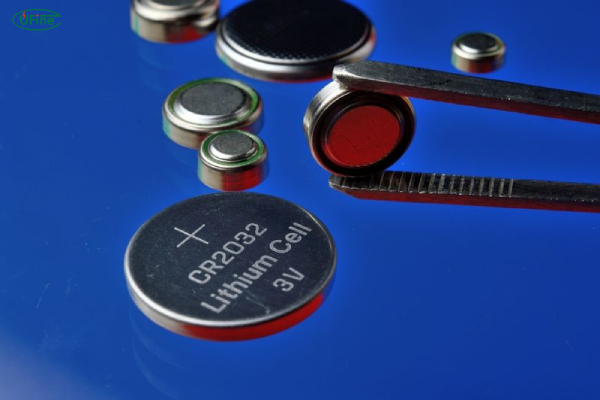
Lithium button batteries, also commonly called coin cell batteries, are flat, round, non-rechargeable primary batteries that use lithium-based chemistry to deliver long-lasting and highly stable power.
Unlike cylindrical AA or AAA batteries, lithium button batteries are designed for:
- Ultra-compact electronic devices
- Low to moderate continuous current draw
- Long shelf life and standby reliability
Key Technical Specifications:
- Nominal voltage: 3.0V
- Typical chemistry: Lithium manganese dioxide (Li-MnO₂)
- Operating temperature range: -30°C to +60°C
- Self-discharge rate: <1% per year
Lithium vs other button battery chemistries
| Feature | Lithium (CR) | Alkaline (LR) | Silver Oxide (SR) |
|---|---|---|---|
| Nominal Voltage | 3.0V | 1.5V | 1.55V |
| Energy Density | High (e.g. 220mAh in CR2032) | Moderate (~100mAh in LR44) | High (~165mAh in SR44) |
| Self-Discharge | <1% / year | ~5% / year | ~3% / year |
| Leakage Risk | Very Low | High | Low |
| Cost | Moderate | Low | High |
Why Lithium Coin Cells Are Preferred:
- Stable voltage output until end-of-life
- Excellent cold-temperature performance
- Minimal leakage risk for sensitive electronics
What Is Battery Self-Discharge Rate?
Part 2. Flat round batteries vs. coin cell batteries
What are flat round batteries?
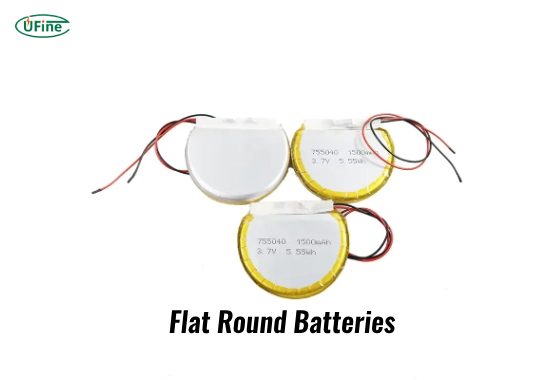
Flat round batteries are a broad category of disc-shaped batteries that includes lithium, alkaline, silver oxide, and zinc-based chemistries. Sizes typically range from 5mm to over 40mm in diameter.
They are commonly used in:
- Watches
- Hearing aids
- Remote controls
- Calculators
- Simple toys
What are coin cell batteries?
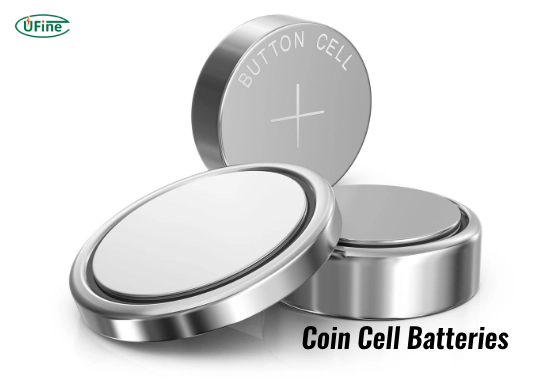
Coin cell batteries are a standardized subset of flat round batteries, most commonly lithium-based, designed with defined IEC size codes (e.g. CR2032).
Key differences at a glance
| Parameter | Coin Cell Batteries | Flat Round Batteries |
|---|---|---|
| Standardization | Highly standardized (CR, SR codes) | Broader, less uniform |
| Typical Voltage | 3V (Lithium) | 1.5V–3V (varies) |
| Chemistry | Mainly lithium | Alkaline, silver oxide, lithium |
| Primary Use | Precision electronics, medical, IoT | General low-power devices |
Part 3. Major lithium coin cell battery types
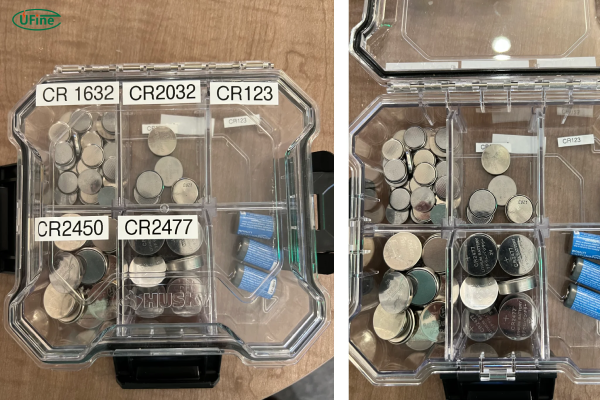
CR2032 – Industry standard
- Size: 20mm × 3.2mm
- Capacity: ~220mAh
- Applications: PC motherboards, car key fobs, medical devices
CR2025 – Slim profile
- Size: 20mm × 2.5mm
- Capacity: ~170mAh
- Applications: fitness trackers, slim remotes
CR2016 – Ultra-thin
- Size: 20mm × 1.6mm
- Capacity: ~90mAh
- Applications: Bluetooth trackers, compact sensors
Part 4. Button battery size coding explained
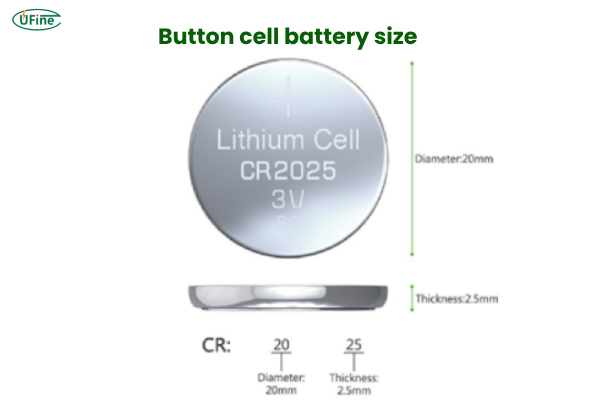
- CR = Lithium chemistry
- First two digits = diameter (mm)
- Last two digits = thickness (0.1mm)
Part 5. Lithium coin cell battery voltage, rechargeability & safety
Why 3V matters
- Direct compatibility with CMOS and low-power ICs
- Reduced need for voltage regulation
- Higher energy per cell
Are lithium button batteries rechargeable?
No. Standard CR-series lithium button batteries are not rechargeable.
Recharge attempts may cause overheating, rupture, or fire.
Rechargeable exceptions:
- LIR2032 (3.7V Li-ion, lower capacity)
- ML series (industrial backup use)
Part 6. Lithium button battery lifespan, storage & disposal
Typical lifespan
- Storage: 10+ years
- Low-drain devices: 3–7 years
- Moderate-drain devices: 1–3 years
Safe storage
- Original packaging
- Dry, room-temperature environment
- Away from children and pets
Disposal & Environmental impact
- Recycle at certified battery centers
- Tape terminals before disposal
- Never discard in household trash
Part 7. Lithium coin cell battery common applications
- Watches & key fobs
- Medical devices (glucose meters, thermometers)
- PC motherboards (BIOS memory)
- IoT sensors & wireless modules
Part 8. FAQ: Lithium button & coin cell batteries
Are coin cell batteries and lithium button batteries the same?
Yes. Coin cell batteries usually refer to lithium button batteries with standardized CR size codes.
Can I replace CR2032 with CR2025?
Only if the device tolerates reduced thickness and lower capacity. Electrical compatibility must be confirmed.
Why do engineers prefer lithium coin cells?
Because of stable voltage, long shelf life, low leakage risk, and wide operating temperature range.
Related Tags:

More Articles

JST vs Molex: The Right Battery Connector Choice
JST or Molex for your battery? Learn how connector selection affects current, voltage drop, reliability, and device performance.
Custom Battery Pricing: Costs Manufacturers Don’t Mention
A low battery quote may not be the final cost. Discover common hidden expenses that affect custom lithium battery projects.
Battery Wire Length: Hidden Cause of Power Loss
A longer battery wire can cause voltage drop, power loss, and unstable operation. Learn how wire length affects battery performance.
How Device Sleep Modes Affect Battery Life
Think sleep mode extends battery life? Learn why devices still drain power and how firmware, hardware, and batteries affect runtime.
LiPo Battery and PCB Design: Clearance, Insulation, and Placement
Learn how to optimize LiPo battery PCB clearance, insulation, placement, wiring, and thermal design—and avoid common integration mistakes.


