
- Key Takeaways
- Part 1. 3.7v lithium battery comparison: How this guide was built
- Part 2. Best 3.7v rechargeable battery options: Quick comparison
- Part 3. 3.7v lithium battery products and commonly confused alternatives
- Part 4. 3.7v lithium battery engineering criteria: How to choose the right battery
- Part 5. 3.7v rechargeable battery charging and safety basics
- Part 6. FAQs about 3.7v rechargeable lithium batteries
The best 3.7V rechargeable battery is the one that matches your device’s voltage range, dimensions, capacity, discharge current, protection, and charging system. This guide compares common 3.7V lithium battery formats and also identifies products that are often confused with rechargeable 3.7V Li-ion batteries but are not direct replacements.
Disclosure: Ufine publishes this article and one Ufine product is included in the comparison. Ufine specializes in custom lithium battery solutions, particularly configurable batteries for electronic devices, rather than universal retail replacement batteries. Its inclusion represents a custom pouch-battery option and should not be interpreted as a first-place ranking or independent endorsement.
Key Takeaways
- Chemistry and voltage: Whether the battery is actually a rechargeable 3.7V-class lithium-ion product.
- Capacity and discharge: Whether its energy capacity and current capability suit the device load.
- Physical format: Pouch cell, cylindrical cell, camera pack, radio pack, dimensions, and terminals.
- Charging and protection: Charger compatibility, protection circuitry, and device voltage range.
- Product documentation: Whether important specifications can be verified from current manufacturer information.
Part 1. 3.7v lithium battery comparison: How this guide was built
This comparison uses publicly available manufacturer information and practical compatibility criteria. We did not independently laboratory-test every product listed here.
- Chemistry and voltage: Whether the battery is actually a rechargeable 3.7V-class lithium-ion product.
- Capacity and discharge: Whether its energy capacity and current capability suit the device load.
- Physical format: Pouch cell, cylindrical cell, camera pack, radio pack, dimensions, and terminals.
- Charging and protection: Charger compatibility, protection circuitry, and device voltage range.
- Product documentation: Whether important specifications can be verified from current manufacturer information.
Part 2. Best 3.7v rechargeable battery options: Quick comparison
| Battery | Type | Typical Application | Main Consideration |
|---|---|---|---|
| Ufine 503040 | 3.7V 600mAh pouch battery | Compact electronic devices | Designed for device-specific integration and customization |
| Streamlight SL-B26 / 22104 | Protected rechargeable Li-ion pack | Compatible Streamlight products | Integrated protection and charging hardware affect size and compatibility |
| Nikon EN-EL19 | 3.7V 700mAh Li-ion pack | Select Nikon COOLPIX cameras | Proprietary camera format |
| BENKIA 18650 | 3.7V rechargeable 18650 format | Compatible cylindrical-cell devices | Verify capacity, protection, dimensions, and discharge rating |
| Duracell CR123A | 3V primary lithium battery | CR123A-compatible devices | Not a rechargeable 3.7V Li-ion battery |
| LCLEBM USB Rechargeable Battery | 3.7V rechargeable cylindrical battery | Compatible portable devices | Integrated USB charging can affect physical dimensions |
| Lankoo Rechargeable CR2 | 3.7V rechargeable CR2-style battery | Devices supporting rechargeable CR2 formats | Higher voltage than standard 3V CR2 batteries |
| Vivitar NB-6L / NB-6LH | 3.7V camera replacement battery | Compatible Canon cameras | Camera and charger compatibility are model-specific |
| SAMCOM FPCN10A Battery | Radio battery system | SAMCOM FPCN10A radios | Current FPCN10A information references a 7.4V system |
| Motorola PMNN4497AR | 1800mAh Li-ion radio battery | Compatible Motorola CLS Series radios | Proprietary radio battery pack |
Capacity alone does not determine compatibility. Voltage range, battery format, dimensions, discharge current, terminals, and charging requirements also matter.
Part 3. 3.7v lithium battery products and commonly confused alternatives
1. Ufine 503040 3.7V 600mAh lithium-ion battery: Custom pouch format
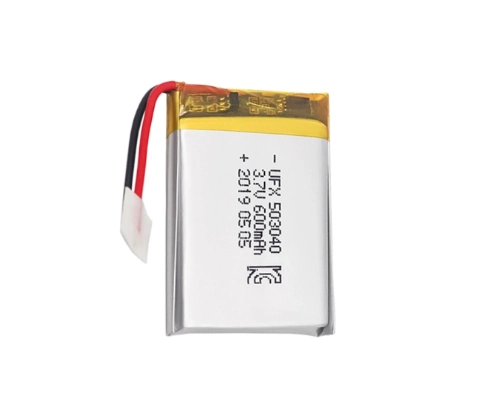
The Ufine 503040 3.7V 600mAh lithium-ion battery is a compact pouch-format rechargeable battery intended for integration into electronic devices.
Best fit: Products that require a compact pouch battery with device-specific wires, connectors, protection, or mechanical dimensions.
Key consideration: It is better suited to product integration and customization than to users looking for a universal retail replacement battery.
2. Streamlight SL-B26 / 22104 rechargeable Li-ion battery: Protected cylindrical format
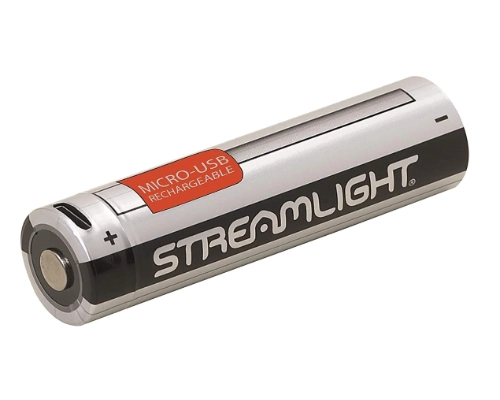
The Streamlight SL-B26 rechargeable battery pack is a protected Li-ion battery with an integrated USB-C charging port and safety circuit. It is designed as a power source for compatible Streamlight products.
Best fit: Streamlight equipment that specifically supports the SL-B26 battery system.
Key consideration: Protection and charging hardware make it different from a standard unprotected cylindrical cell, including in overall length.
3. Nikon EN-EL19 3.7V 700mAh rechargeable Li-ion battery: Camera pack
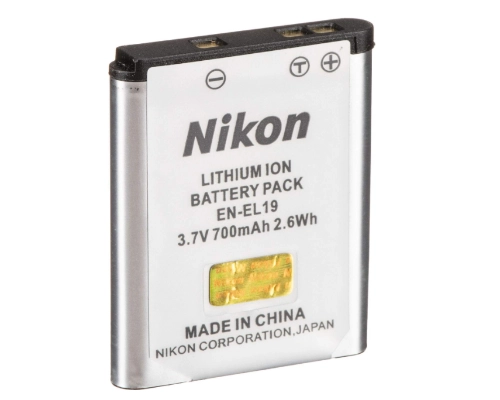
The Nikon EN-EL19 is a 3.7V 700mAh rechargeable Li-ion battery designed for selected Nikon COOLPIX cameras.
Best fit: Nikon camera models that officially specify the EN-EL19.
Key consideration: Its housing and contacts are camera-specific, so it should not be treated as a general-purpose 3.7V battery.
4. BENKIA 18650 3.7V rechargeable battery: Cylindrical 18650 format
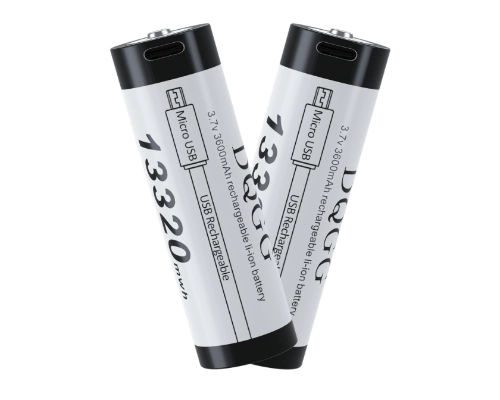
BENKIA has sold rechargeable 3.7V batteries in the 18650 format, including button-top versions. Because detailed current manufacturer documentation is limited, important specifications should be checked at the point of purchase.
Best fit: Devices designed for the exact 18650 dimensions, terminal style, and electrical characteristics being purchased.
Key consideration: A printed capacity rating does not establish compatibility; protection circuits and button-top terminals can also change battery length. See the 18650 battery dimensions and size guide for common dimensional differences.
5. Duracell CR123A 3V lithium battery: Not a 3.7V rechargeable battery
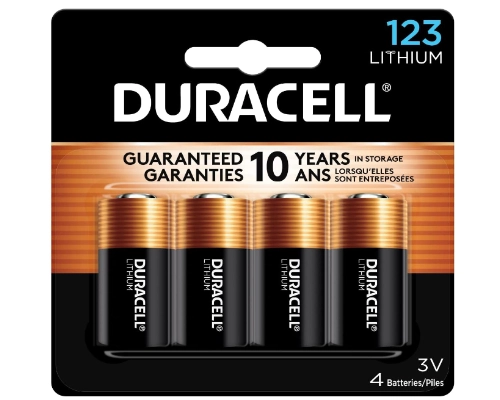
Duracell CR123A is a 3V primary lithium battery, not a rechargeable 3.7V Li-ion cell. It remains relevant here because CR123A batteries are sometimes confused with similarly sized rechargeable alternatives.
Compatibility warning: Do not replace a CR123A with a 3.7V rechargeable battery unless the device explicitly supports the higher voltage. The CR123A vs. 16340 rechargeable battery comparison explains the voltage difference in more detail.
6. LCLEBM 3.7V USB rechargeable lithium battery: Integrated-charging format
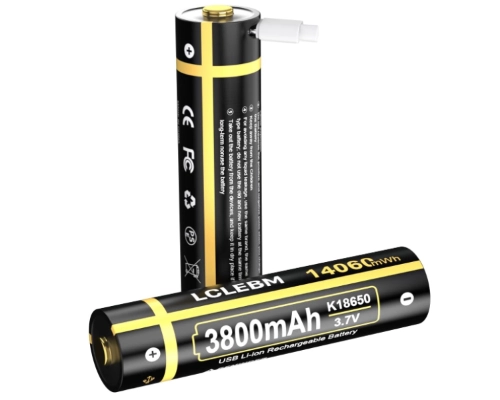
LCLEBM batteries have been sold as USB-rechargeable 3.7V lithium batteries for compatible portable devices. The integrated charging interface reduces the need for a separate external cell charger.
Best fit: Devices that match the battery’s exact cylindrical format, terminals, and voltage requirements.
Key consideration: USB charging hardware can increase battery length, so physical dimensions should be checked instead of assuming all cylindrical batteries of the same type are identical.
7. Lankoo 3.7V rechargeable CR2 battery: RCR2-style format
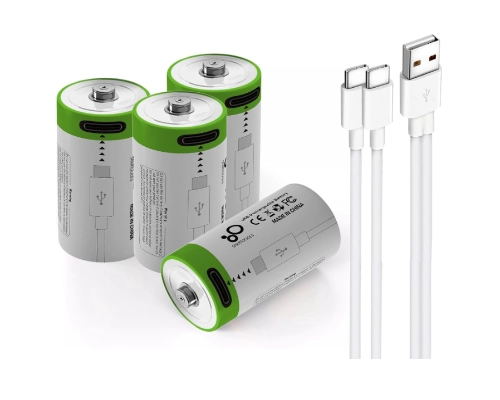
Lankoo rechargeable CR2-style products are examples of rechargeable lithium-ion batteries that resemble conventional CR2 primary batteries in size.
Best fit: Equipment explicitly designed to support a rechargeable CR2 or RCR2-style battery.
Key consideration: Physical similarity does not guarantee electrical compatibility because standard primary CR2 batteries and rechargeable Li-ion versions can use different voltages.
8. Vivitar NB-6L / NB-6LH 3.7V Li-ion battery: Camera replacement format
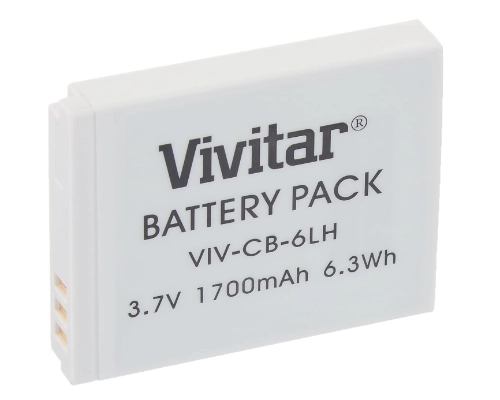
Vivitar NB-6L / NB-6LH batteries have been offered as replacement Li-ion packs for compatible Canon digital cameras.
Best fit: Camera models that support the corresponding NB-6L or NB-6LH battery format.
Key consideration: Check the exact camera model and charger compatibility rather than choosing a replacement solely by voltage or advertised capacity.
9. SAMCOM FPCN10A battery pack: Not a generic 3.7V Li-ion battery
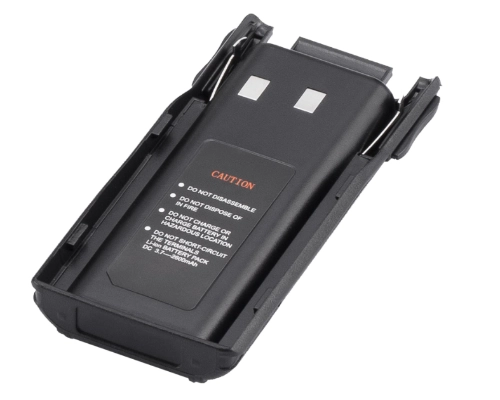
SAMCOM FPCN10A radios use dedicated rechargeable battery systems, and current product information for the FPCN10A platform references a 7.4V configuration.
Compatibility warning: This battery system should not be treated as a generic 3.7V replacement. Match the radio model, battery specification, and charger as one system.
10. Motorola PMNN4497AR 1800mAh Li-ion battery: Radio-specific pack
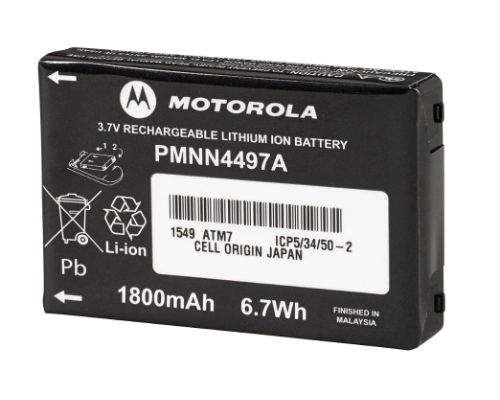
The Motorola Solutions PMNN4497AR is an 1800mAh Li-ion battery designed for compatible Motorola CLS Series radios.
Best fit: CLS Series radios specifically listed for this battery pack.
Key consideration: Replacement should be based on the radio and battery part number, not nominal voltage alone.
Part 4. 3.7v lithium battery engineering criteria: How to choose the right battery
When choosing a 3.7V lithium battery, start with the device specification rather than the highest advertised capacity. Five checks are particularly important.
1. Check the 3.7V battery voltage range
3.7V is a nominal voltage, not a constant output voltage. Conventional rechargeable Li-ion cells commonly reach about 4.2V when fully charged, so the device and charging circuit must support the battery’s complete operating range.
For a broader overview of formats and electrical differences, see the guide to common 3.7V lithium-ion battery types.
2. Match 3.7V battery capacity to available space
Higher mAh can increase runtime, but more capacity normally requires additional battery volume. Confirm the maximum thickness, width, length, and weight before comparing capacities.
3. Check lithium battery discharge current
The battery must support both normal operating current and short-duration peak loads without excessive voltage drop or protection shutdown. This is especially important for motors, wireless transmitters, lighting, speakers, and other devices with pulse or startup currents.
4. Verify 3.7V battery dimensions, connector, and polarity
“3.7V battery” describes voltage, not a standardized physical size. Check battery dimensions, terminal type, wire length, connector model, pinout, and polarity before replacement or product integration.
5. Check lithium battery protection and documentation
Confirm whether the application requires overcharge, over-discharge, overcurrent, short-circuit, or temperature protection. For product-development applications, also verify the datasheet, tolerances, connector specification, traceability, and applicable certification or transport documentation.
Part 5. 3.7v rechargeable battery charging and safety basics
Use a charger or charging circuit designed for the battery’s chemistry, maximum charge voltage, and allowable charging current. The battery datasheet should take priority over generic charging recommendations.
- Do not charge swollen, punctured, overheated, or otherwise damaged batteries.
- Keep lithium batteries away from excessive heat during charging, use, and storage.
- Use the correct charger for the battery chemistry and configuration.
- Follow the manufacturer’s specified charging and storage limits.
Part 6. FAQs about 3.7v rechargeable lithium batteries
What is the best 3.7V rechargeable battery?
There is no single best option for every device. Choose by voltage range, dimensions, capacity, discharge current, protection, connector, and charging compatibility.
Can I replace a 3V battery with a 3.7V lithium battery?
Not automatically. A 3.7V Li-ion battery can reach about 4.2V when fully charged, so the device must support the higher voltage.
What voltage is a fully charged 3.7V lithium-ion battery?
A conventional 3.7V Li-ion cell is typically about 4.2V when fully charged. Always follow the battery datasheet’s specified maximum charge voltage.
Does a higher mAh 3.7V battery last longer?
Usually, if the device load is the same. However, the higher-capacity battery must still match the required size, voltage, discharge current, and charging system.
How do I know if a 3.7V lithium battery is compatible with my device?
Check voltage range, dimensions, discharge current, connector, polarity, protection circuit, and charger requirements. All critical specifications should match the device.
Related Tags:

More Articles

Headphone Battery Comparison for Bluetooth Headphones: 10 Options and Selection Guide
Compare 10 headphone battery options for Bluetooth devices by capacity, size, voltage, connector, supplier role, compatibility, and price factors.
Speaker Battery Guide: 10 Bluetooth Speaker Battery Options Compared
Compare 10 speaker battery options by voltage, capacity, chemistry, connector and fit, including 2000mAh and 10000mAh Bluetooth speaker batteries.
Is Battery Acid Dangerous? How to Prevent & Clean It
Learn what battery acid is, why it forms, its dangers, and how to handle spills safely. Discover ways to reduce battery acid leakage and dispose of batteries.
10 Car Battery Manufacturers and Brands Compared in 2026
Compare 10 leading car battery manufacturers and brands in 2026, covering AGM, EFB, lead-acid and lithium types, uses, and key strengths.
How to Tell if Battery Is AGM?
Learn how to tell if a battery is AGM by checking the label, model, case design, and charging specs. Compare AGM vs regular lead-acid batteries.


