- Key Takeaways
- Part 1. What makes a battery box more than just a box?
- Part 2. Technical specs that matter
- Part 3. Safety standards & compliance
- Part 4. Battery box sizes & dimensions
- Part 5. Battery box types & applications
- Part 6. Installation & maintenance tips
- Part 7. Advanced features & smart trends
- Part 8. Conclusion
- Part 9. FAQs
If you’ve got a battery, you need a safe, reliable place to store it. Enter the battery box – your battery’s very own protective home. Beyond just holding your battery, the right box keeps it safe, organized, and functioning optimally. In this guide, we’ll explore everything from types and sizes to safety features, technical specs, and real-life scenarios, so you can confidently choose the perfect battery box for your needs.
Key Takeaways
- A battery box protects your battery from environmental damage, accidental short circuits, and movement.
- Choosing the right battery box size and type is essential for safety and optimal battery performance.
- Features like ventilation, mounting brackets, temperature monitoring, and BMS can extend your battery’s lifespan.
- Not all battery boxes are created equal—material, type, and application matter.
Part 1. What makes a battery box more than just a box?
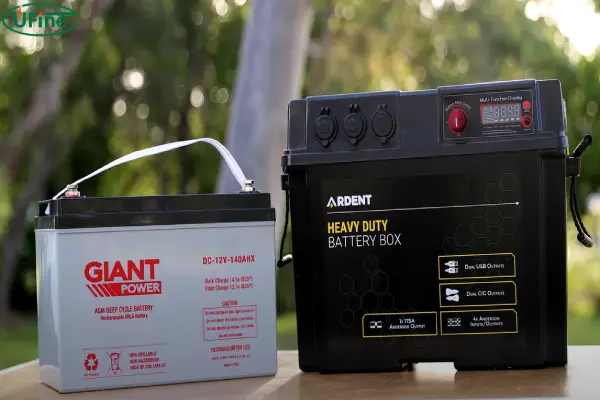
You might think a battery box is just a container—and it is—, but it’s also a carefully engineered system designed to protect your battery and keep it performing at its best.
| Component | Purpose |
|---|---|
| Enclosure | Protects your battery from rain, dust, UV rays, and bumps. Made from plastic, metal, fiberglass, or stainless steel. |
| Battery Terminals | Keeps connections organized and safe from accidental shorts. Terminal covers enhance safety. |
| Ventilation | Crucial for lead-acid and lithium batteries to release gases safely. Prevents overheating and hydrogen buildup. |
| Mounting Brackets | Secure the battery in place, preventing shifting or damage during vibration. |
| Extra Features | Fuses, circuit breakers, built-in chargers, temperature monitors, or balancing circuits for lithium batteries. |
For lithium-ion batteries, look for temperature monitoring and cell balancing, as these batteries are sensitive to heat and charge imbalances.
Extreme cold can reduce battery performance — check out low-temperature effects on lithium batteries to see how to protect yours.
Part 2. Technical specs that matter

When evaluating a battery box, these technical parameters are crucial:
- Operating Temperature Range: Lithium batteries perform best between 15–35°C, while lead-acid batteries tolerate slightly wider ranges.
- IP Rating: IP65/IP67 boxes resist dust and water ingress; critical for outdoor or marine applications.
- Vibration & Shock Resistance: Automotive, marine, and industrial batteries need boxes that can withstand bumps without damaging terminals or connections.
- Terminal Compatibility: Make sure the box supports your battery’s terminal type (bolt, stud, or plug-in).
Always check specs against the battery manufacturer’s recommendations to avoid voiding warranties.
Safety is key for marine and outdoor setups — read our guide on battery fire, waterproofing, and BMS safety before choosing a box.
Part 3. Safety standards & compliance
Ensuring compliance with recognized standards protects you and your battery investment:
- UL Certification (UL 2054, UL 94) – Safety for US markets
- CE Marking – Conforms to EU safety, health, and environmental protection
- UN38.3 – Required for shipping lithium batteries
- IEC Standards – International standards for battery enclosures and safety
A battery box that meets these certifications ensures safe operation in automotive, marine, and industrial settings.
Part 4. Battery box sizes & dimensions
A box that’s too small risks overheating and makes installation tricky; too big, and the battery shifts dangerously.
| Battery Box Size | Fits Battery Types | Notes |
|---|---|---|
| Small (8×5×5) | 12V lead-acid, small AGM | Motorcycles, golf carts |
| Medium (12×7×8) | Standard car/truck batteries | Most versatile for automotive use |
| Large (16×10×9) | Deep cycle, lithium-ion | Solar or marine applications |
| Extra Large (20×12×10) | Industrial, multiple batteries | Requires secure mounting and ventilation |
Factor in cable routing, ventilation, and extra features when checking dimensions.
Part 5. Battery box types & applications
Not all battery boxes are created equal. Here’s a professional breakdown:
| Battery Type | Recommended Box Features | Ideal Use Case |
|---|---|---|
| Lead-Acid | Plastic or metal, ventilated | Cars, trucks, industrial equipment |
| AGM | Leak-proof, optional temperature monitor | High-performance vehicles, UPS |
| Lithium-Ion | Advanced ventilation, balancing circuits, temperature monitoring | Solar, RV, EV, marine |
| Deep Cycle | Robust construction, built-in chargers | Solar, marine, off-grid systems |
| Marine | Corrosion-resistant, sealed design | Boats, yachts |
On a hot summer day, a lithium battery in a solar system could degrade quickly without proper ventilation and monitoring—but a well-chosen battery box prevents this.
Part 6. Installation & maintenance tips
To get the most out of your battery box:
- Optimal Placement: Avoid high-heat areas, direct sunlight, or wet locations.
- Secure Mounting: Use brackets or straps to prevent movement.
- Regular Inspection: Check for corrosion, loose connections, and blocked ventilation.
- Cleaning & Care: Keep the box clean, free of debris, and periodically wipe down terminals.
A marine battery box on a boat deck should be cleaned weekly to prevent salt corrosion from accumulating on terminals.
Keeping terminals clean is essential inside your battery box — see our tips on preventing battery corrosion for longer-lasting connections.
Part 7. Advanced features & smart trends
Modern battery boxes aren’t just static containers—they’re becoming smart and modular:
- Built-in BMS (Battery Management System) monitors voltage, temperature, and charge balance.
- Remote Monitoring via smartphone apps for off-grid solar or EV systems.
- Modular Design allows expansion with multiple batteries, simplifying upgrades.
These features not only improve safety but also extend your battery’s lifespan and optimize performance.
Part 8. Conclusion
A battery box is more than just a container—it’s the unsung hero of your battery system. By carefully considering type, size, materials, ventilation, and safety features, you can:
- Protect your battery from environmental damage
- Ensure safe operation and compliance with standards
- Maximize performance and longevity
Next time you think about your battery, remember the box that keeps it safe, organized, and running smoothly.
Part 9. FAQs
Can I use one battery box for multiple batteries?
Yes, but only if the box is designed for multiple batteries with proper spacing, ventilation, and secure mounting to avoid overheating or short circuits.
Do battery boxes help prevent battery leaks?
Absolutely. A quality box contains spills from lead-acid batteries and keeps terminals protected, reducing corrosion risks.
Are lithium battery boxes different from lead-acid ones?
Yes. Lithium boxes often include temperature monitoring, balancing circuits, and enhanced ventilation to handle high energy density safely.
Can a battery box improve battery performance?
Indirectly, yes. By keeping the battery cool, secure, and clean, a box ensures optimal performance and extends lifespan.
How often should I inspect my battery box?
At least every 3–6 months, or more frequently in harsh environments. Look for cracks, loose terminals, corrosion, or blocked vents.
Related Tags:

More Articles

JST vs Molex: The Right Battery Connector Choice
JST or Molex for your battery? Learn how connector selection affects current, voltage drop, reliability, and device performance.
Custom Battery Pricing: Costs Manufacturers Don’t Mention
A low battery quote may not be the final cost. Discover common hidden expenses that affect custom lithium battery projects.
Battery Wire Length: Hidden Cause of Power Loss
A longer battery wire can cause voltage drop, power loss, and unstable operation. Learn how wire length affects battery performance.
How Device Sleep Modes Affect Battery Life
Think sleep mode extends battery life? Learn why devices still drain power and how firmware, hardware, and batteries affect runtime.
LiPo Battery and PCB Design: Clearance, Insulation, and Placement
Learn how to optimize LiPo battery PCB clearance, insulation, placement, wiring, and thermal design—and avoid common integration mistakes.