- Key Takeaways
- Part 1. What is a nickel cadmium battery (ni-cd)?
- Part 2. What is a nickel metal hydride battery (ni-mh)?
- Part 3. Ni-cd vs ni-mh battery: Key differences
- Part 4. How to choose: Ni-cd vs ni-mh battery
- Part 5. Ni-cd vs ni-mh battery applications: Which battery is best for each use case?
- Part 6. FAQs: Ni-cd vs ni-mh battery
Nickel-based rechargeable batteries remain widely used in industrial and consumer applications. The two main types—Nickel Cadmium Battery (Ni-Cd) and Nickel Metal Hydride Battery (Ni-MH)—offer different strengths in power delivery, durability, and environmental impact.
Understanding nickel metal hydride vs nickel cadmium helps engineers and buyers select the right solution for tools, backup systems, and electronics.
Key Takeaways
- Ni-Cd batteries perform better in high-drain and extreme environments.
- Ni-MH batteries offer higher energy density and lower toxicity.
- Ni-Cd has a strong memory effect, while Ni-MH is more flexible in charging.
- Ni-MH is the better choice for consumer electronics and longer runtime needs.
- Ni-Cd is still preferred for industrial, aviation, and emergency systems.
- Environmental regulations increasingly limit Ni-Cd usage due to cadmium.
Part 1. What is a nickel cadmium battery (ni-cd)?
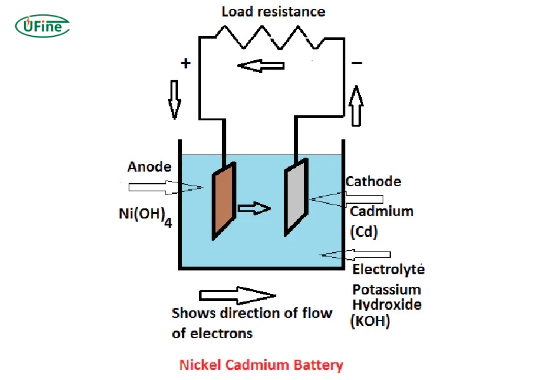
A Nickel Cadmium Battery (Ni-Cd) uses:
- Positive electrode: Nickel hydroxide (Ni(OH)₂)
- Negative electrode: Cadmium (Cd)
- Electrolyte: Alkaline solution (KOH)
Ni-Cd technology is mature and known for robust, stable performance under demanding conditions.
👉 Learn more about battery fundamentals in our guide: what is a battery and how it works
1 Typical applications of ni-cd batteries
- Power tools (drills, saws)
- Aviation emergency systems
- Industrial backup power
- Medical equipment
- Telecom systems
2 Ni-cd battery advantages
- Strong High-Drain Performance
Ni-Cd batteries deliver stable current under heavy loads, ideal for tools and industrial devices. - Wide Temperature Tolerance
They operate reliably in extreme cold and heat, making them suitable for aerospace and outdoor use. - Long Service Life
With proper maintenance, Ni-Cd batteries can achieve 1000+ charge cycles. - Fast Charging Capability
They support rapid charging, reducing downtime. - Overcharge Resistance
Ni-Cd batteries tolerate overcharging better than most chemistries.
3 Ni-cd battery disadvantages
- Environmental Risk (Cadmium)
Cadmium is toxic. Disposal must follow strict regulations.
Reference: US EPA battery recycling guidelines - Memory Effect
Repeated partial charging reduces usable capacity. - Lower Energy Density
Compared to Ni-MH, Ni-Cd stores less energy per size/weight. - Regulatory Restrictions
Many regions limit Ni-Cd usage in consumer products.
Part 2. What is a nickel metal hydride battery (ni-mh)?
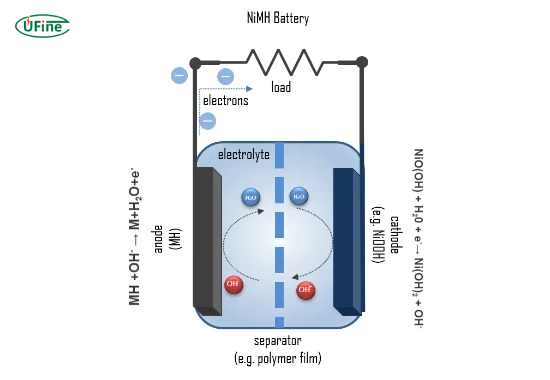
A Nickel Metal Hydride Battery (Ni-MH) replaces cadmium with a hydrogen-absorbing alloy:
- Positive electrode: Nickel oxyhydroxide (NiOOH)
- Negative electrode: Metal hydride alloy
- Electrolyte: Potassium hydroxide (KOH)
Ni-MH was developed as a safer and higher-capacity alternative to Ni-Cd.
1 Ni-mh battery advantages
- Higher Energy Density
Ni-MH offers 30–50% more capacity than Ni-Cd in the same size. - Lower Environmental Impact
No cadmium. Easier to recycle and safer for users. - Reduced Memory Effect
Supports flexible charging without major capacity loss. - Better for Consumer Devices
Ideal for:- Cameras
- AA/AAA rechargeable batteries
- Portable electronics
- Improved Cycle Life (in many use cases)
Modern Ni-MH cells can reach 500–1000 cycles.
2 Ni-mh battery disadvantages
- Higher Self-Discharge
Ni-MH loses charge faster when idle (unless using low-self-discharge types). - Sensitive to Overcharging
Requires smart chargers to avoid damage. - Weaker High-Current Output
Not as strong as Ni-Cd in extreme high-drain scenarios. - Heat Generation
Can heat up during fast charging or heavy use.
Part 3. Ni-cd vs ni-mh battery: Key differences
| Feature | Ni-Cd Battery | Ni-MH Battery |
|---|---|---|
| Energy Density | Lower | Higher |
| Memory Effect | Strong | Mild |
| Environmental Impact | High (cadmium) | Lower |
| High-Drain Performance | Excellent | Moderate |
| Self-Discharge | Low | Higher |
| Charging Flexibility | Low | High |
| Weight | Heavier | Lighter |
| Typical Use | Industrial | Consumer electronics |
Part 4. How to choose: Ni-cd vs ni-mh battery
Choose Ni-Cd if:
- You need high discharge current
- The device operates in extreme temperatures
- Reliability is critical (aviation, emergency systems)
Choose Ni-MH if:
- You need longer runtime
- Environmental impact matters
- The device is portable or consumer-focused
👉 For modern alternatives, also compare lithium options: lithium-ion vs LiFePO4 batteries
Part 5. Ni-cd vs ni-mh battery applications: Which battery is best for each use case?
| Application | Recommended Battery |
|---|---|
| Power tools | Ni-Cd |
| Emergency lighting | Ni-Cd |
| AA/AAA consumer batteries | Ni-MH |
| Cameras & electronics | Ni-MH |
| Aerospace systems | Ni-Cd |
| Hybrid vehicles (older models) | Ni-MH |
Part 6. FAQs: Ni-cd vs ni-mh battery
Are Ni-Cd and Ni-MH batteries interchangeable?
Not fully. They have different charging profiles and performance. Substitution may cause reduced lifespan or safety risks.
Can I charge a Ni-MH battery with a Ni-Cd charger?
No. Ni-MH requires different charging control. Use a compatible smart charger.
How to identify Ni-Cd vs Ni-MH batteries?
Check the label. Ni-MH typically shows higher mAh capacity for the same size.
Which is better: NiMH vs NiCd battery?
For most users, Ni-MH is better due to higher capacity and lower toxicity. For industrial use, Ni-Cd may still outperform.
Do Ni-MH batteries last longer than Ni-Cd?
In runtime, yes. In harsh environments, Ni-Cd may last longer overall.
Related Tags:

More Articles

JST vs Molex: The Right Battery Connector Choice
JST or Molex for your battery? Learn how connector selection affects current, voltage drop, reliability, and device performance.
Custom Battery Pricing: Costs Manufacturers Don’t Mention
A low battery quote may not be the final cost. Discover common hidden expenses that affect custom lithium battery projects.
Battery Wire Length: Hidden Cause of Power Loss
A longer battery wire can cause voltage drop, power loss, and unstable operation. Learn how wire length affects battery performance.
How Device Sleep Modes Affect Battery Life
Think sleep mode extends battery life? Learn why devices still drain power and how firmware, hardware, and batteries affect runtime.
LiPo Battery and PCB Design: Clearance, Insulation, and Placement
Learn how to optimize LiPo battery PCB clearance, insulation, placement, wiring, and thermal design—and avoid common integration mistakes.